The Quick Verdict: Is the Tesla Model 3 Refresh Worth It?
The Tesla Model 3 refresh — internally dubbed "Highland" — arrived as the most significant overhaul since the sedan's 2017 debut. For 2025, Tesla has refined the Model 3 with improved ride quality, a quieter cabin, ventilated front seats, rear-seat touchscreen, and subtle efficiency gains that push EPA range figures higher across the lineup. The Long Range AWD variant now achieves up to 363 miles of EPA-estimated range, while the base Rear-Wheel-Drive model delivers 272 miles from its smaller LFP battery.
But the real question for buyers in 2025 isn't whether the Model 3 refresh is better than its predecessor — it demonstrably is. The question is whether it remains competitive against a field that now includes the Hyundai Ioniq 6 (361 miles, 800V architecture), BMW i4 (307 miles, more luxurious cabin), and the incoming next-generation Chevrolet Bolt. After spending significant time with multiple trims, here's what the numbers actually look like in the real world.
Spec Sheet: Tesla Model 3 Refresh at a Glance
| Specification | Rear-Wheel Drive | Long Range AWD | Performance |
|---|---|---|---|
| EPA Range | 272 miles | 363 miles (341 on 19" wheels) | 315 miles |
| Battery (usable) | ~60 kWh (LFP) | ~75 kWh (NMC) | ~75 kWh (NMC) |
| Drivetrain | RWD single motor | Dual-motor AWD | Dual-motor AWD |
| Horsepower | 271 hp | 346 hp | ~510 hp |
| 0-60 mph | 5.8 sec | 4.2 sec | 2.9 sec |
| Top Speed | 125 mph | 125 mph | 163 mph |
| Max DC Charge Rate | 170 kW | 250 kW | 250 kW |
| 10-80% DC Time | ~25 min | ~25 min | ~25 min |
| Level 2 Charge Rate | 11.5 kW (~44 mi/hr) | 11.5 kW (~44 mi/hr) | 11.5 kW (~44 mi/hr) |
| EPA Efficiency | 132 MPGe / 25 kWh/100mi | 132 MPGe / 25 kWh/100mi | 118 MPGe / 28 kWh/100mi |
| Base MSRP | $38,990 | $47,740 | $54,990 |
| Battery Warranty | 8 yr / 100,000 mi | 8 yr / 120,000 mi | 8 yr / 120,000 mi |
Sources: EPA fueleconomy.gov, Tesla.com. Pricing reflects 2025 model year before destination fees.
Range & Efficiency: What the EPA Number Doesn't Tell You
EPA Estimate: 363 miles (18" aero wheels) / 341 miles (19" sport wheels)
Expected Real-World Range:
- City/commute driving (65 mph avg): 330-350 miles
- Highway driving (75-80 mph): 280-310 miles
- Cold weather (below 32°F, highway): 230-270 miles
- Cold weather, city with preconditioning: 290-320 miles
Real-world testing shows highway efficiency drops to approximately 28-30 kWh/100mi at sustained 80 mph, versus the EPA's 25 kWh/100mi combined figure. Cold weather reduces usable capacity by 15-25% depending on cabin heating demands. The Model 3's heat pump mitigates some loss compared to resistive heating systems.
The Model 3 refresh's efficiency remains a standout achievement. At 25 kWh per 100 miles (combined), it ties for the most efficient sedan in its class alongside the Ioniq 6. Tesla's thermal management system — including the integrated heat pump introduced in prior model years — continues to give it an edge in cold-weather efficiency compared to competitors still using PTC heaters.
For the RWD trim with its ~60 kWh LFP battery, the 272-mile EPA rating is honest and achievable in moderate conditions. However, buyers in northern climates should plan for 200-230 miles of practical winter range on highway trips. The LFP chemistry's advantage is longevity and the ability to charge to 100% daily without degradation concerns — a meaningful trade-off for those who can charge at home every night.
Battery Chemistry: LFP vs NMC — What You're Actually Getting
Tesla continues to segment the Model 3 lineup by battery chemistry, and understanding this distinction is critical for long-term ownership:
| Factor | LFP (Rear-Wheel Drive) | NMC (Long Range / Performance) |
|---|---|---|
| Usable Capacity | ~60 kWh | ~75 kWh |
| Energy Density | Lower (heavier per kWh) | Higher |
| Cycle Life | 3,000+ cycles | 1,500-2,000 cycles |
| Recommended Daily Charge | 100% SoC | 80% SoC (charge to 100% before trips) |
| Cold-Weather Performance | More range loss in freezing temps | Better cold-weather retention |
| Cobalt Content | Zero cobalt | Contains cobalt/nickel |
| Cost | Lower (reflected in RWD pricing) | Higher |
The practical takeaway: if you charge at home nightly and your daily commute is under 150 miles round-trip, the LFP-equipped RWD model offers superior long-term battery health and simpler charging habits (just plug in and charge to 100%). If you regularly take road trips exceeding 250 miles or live in a climate with sustained sub-freezing winters, the NMC Long Range's greater energy density and cold-weather resilience justify the premium.
Charging Speed: DC Fast Charging and Home Setup
The Model 3 refresh retains the same peak DC fast-charge rate as its predecessor: 170 kW for the RWD model and 250 kW for Long Range and Performance trims. While 250 kW is no longer class-leading (the Ioniq 6's 800V architecture supports 350 kW), Tesla's Supercharger network reliability and the car's charge-curve management keep real-world charging times competitive.
| Charging Method | Power (kW) | Speed (miles of range per hour) | Notes |
|---|---|---|---|
| Level 1 (120V outlet) | ~1.4 kW | ~5 mi/hr | Emergency/trickle only; ~54 hours for full charge |
| Level 2 (240V, 48A) | 11.5 kW | ~44 mi/hr | Full charge in ~6-8 hours; recommended home setup |
| DC Fast (V3 Supercharger) | Up to 250 kW | ~175 mi in 15 min (Long Range) | 10-80% in ~25 min; tapers significantly above 80% |
| DC Fast (RWD on V3) | Up to 170 kW | ~130 mi in 15 min | 10-80% in ~25 min; lower peak due to LFP |
Charge curve reality check: The 250 kW peak rate on Long Range models is sustained only between approximately 10-30% state of charge. By 50% SoC, the rate drops to ~150 kW, and by 80% it falls below 50 kW. This is normal lithium-ion behavior, but it means the advertised "175 miles in 15 minutes" applies primarily when arriving at a charger with a low battery. If you're topping off from 60% to 90%, expect significantly slower rates.
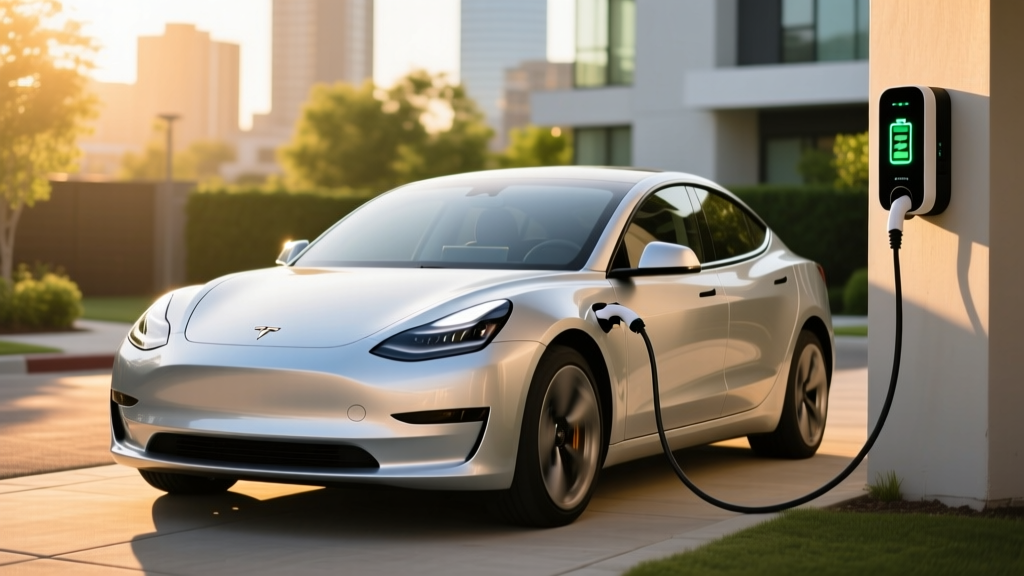
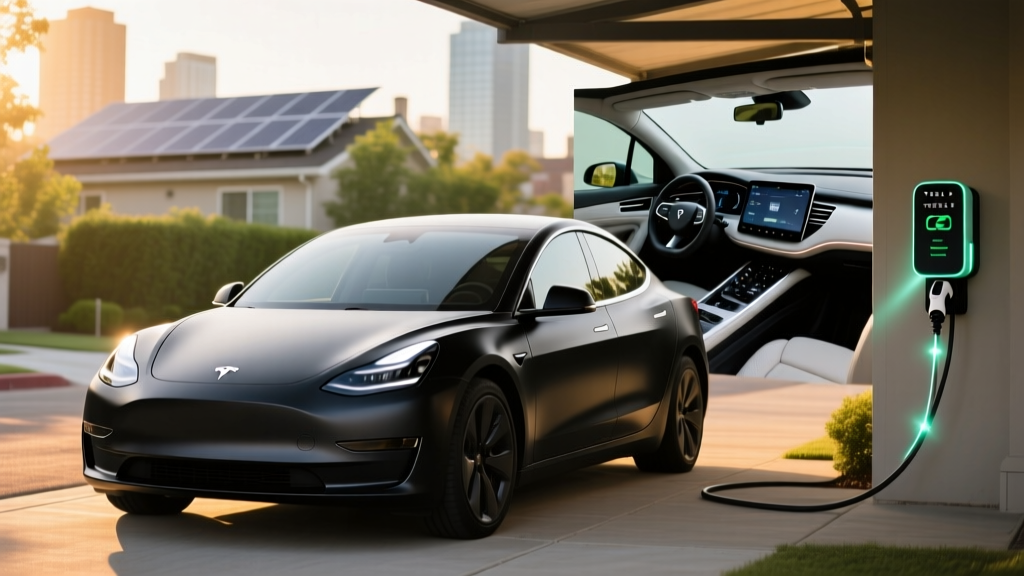
For home charging, Tesla's Wall Connector at 48 amps (11.5 kW) adds roughly 44 miles of range per hour of charging — enough to replenish a full day's driving in under two hours. Installation costs typically range from $500 to $2,000 depending on panel proximity and whether a 200-amp service upgrade is needed. Always consult a licensed electrician for final installation specifications.
One significant advantage: Tesla's NACS connector is now the de facto North American standard, with Ford, GM, Rivian, Volvo, and others adopting it for 2025 and beyond. This means Supercharger access — over 6,000 stations and 60,000+ connectors in North America — will remain the most reliable fast-charging network for the foreseeable future, though it will become more crowded as competitors gain access.
Performance & Driving Dynamics
The Model 3 refresh's most noticeable improvement isn't in the spec sheet numbers — it's in ride quality. Tesla reworked the suspension tuning, added frequency-selective dampers, and improved sound insulation throughout the cabin. The result is a noticeably quieter, more composed highway cruiser than the pre-refresh Model 3, which was often criticized for harsh ride quality over imperfect pavement.
Performance figures remain strong across the board. The Long Range AWD's 4.2-second 0-60 mph time is brisk enough for any real-world scenario, while the Performance trim's 2.9-second sprint remains supercar territory. The single-motor RWD's 5.8 seconds is adequate for merging and passing, though it's the slowest variant in a lineup where even base models used to feel quick.
Regenerative braking remains aggressive and well-calibrated, enabling genuine one-pedal driving in most conditions. Tesla removed the user-adjustable regen setting several model years ago, and the refresh doesn't bring it back — a disappointment for drivers who prefer a coasting feel or who want to modulate regen in winter conditions.
Interior, Tech & Driver Assistance
The Model 3 refresh interior is a study in minimalism executed well. The 15.4-inch center touchscreen remains the command center for all vehicle functions — there are still no physical buttons for climate, media, or even glovebox release. For 2025, Tesla added ventilated front seats (a long-requested feature), ambient lighting integrated into the dashboard and door panels, and a rear 8-inch touchscreen for climate and media control for back-seat passengers.
Cargo space measures 23 cubic feet combined (trunk + frunk), with 21 cu ft in the rear trunk and approximately 2 cu ft in the front trunk. Rear legroom is 35.3 inches — adequate for adults on shorter trips but tighter than a midsize sedan like the Hyundai Ioniq 6 or BMW i4. The Model 3 remains a compact executive sedan in practice, best suited for couples or small families.
Autopilot and FSD (Supervised): Tesla's driver-assistance suite remains standard (basic Autopilot with Traffic-Aware Cruise Control and Autosteer) with Full Self-Driving (Supervised) available as a $8,000 option or $99/month subscription. It is critical to understand that FSD remains an SAE Level 2 system — meaning the driver must remain fully engaged, hands on or near the wheel, and eyes on the road at all times. It is not autonomous driving. FSD handles highway on-ramps, lane changes, and some city street navigation, but it requires constant supervision and makes errors that a human driver must catch. For true Level 4 driverless operation, only Waymo's robotaxi service currently qualifies in limited geofenced areas.
Tesla Autopilot and FSD (Supervised) are Level 2 driver-assist systems. They do NOT replace the driver. You must maintain steering wheel contact, monitor the road, and be prepared to take over instantly. FSD may fail to detect construction zones, emergency vehicles, unusual road configurations, or adverse weather conditions. NHTSA has investigated multiple incidents involving Tesla Autopilot — always drive as if the system could disengage at any moment.
Pricing, Trims & Federal Tax Credit Eligibility
| Trim | Base MSRP | Destination | Total Before Incentives | Est. After §30D Credit |
|---|---|---|---|---|
| Rear-Wheel Drive | $38,990 | $1,390 | $40,380 | ~$32,880* |
| Long Range AWD | $47,740 | $1,390 | $49,130 | ~$41,630* |
| Performance | $54,990 | $1,390 | $56,380 | ~$48,880* |
*Tax credit estimates assume full $7,500 eligibility under IRS §30D. Actual credit depends on buyer income, vehicle MSRP caps, battery component sourcing, and tax liability. See eligibility checklist below.
Federal Tax Credit Eligibility (§30D) — Key Rules for 2025:
- MSRP Cap: Sedans must have an MSRP of $55,000 or less. The RWD and Long Range trims qualify; the Performance trim ($54,990 base) qualifies at base price but may exceed the cap with options.
- Buyer Income Cap: Modified adjusted gross income must not exceed $150,000 (single filers), $225,000 (head of household), or $300,000 (joint filers).
- Battery Sourcing Requirements: The $7,500 credit is split into two $3,750 halves — one for critical minerals sourcing and one for battery component manufacturing. Tesla has worked to qualify for both halves on Model 3 vehicles built at the Fremont factory with North American-sourced battery cells, but sourcing rules tighten annually. Verify current eligibility on IRS.gov's qualified vehicle list before purchasing.
- Point-of-Sale Transfer: As of 2024, buyers can transfer the credit to the dealer at purchase, reducing the upfront price rather than waiting for a tax refund. This effectively functions as an instant rebate.
Always confirm eligibility with a tax professional and check the latest IRS qualified vehicle list — sourcing requirements and credit availability can change between model years and even mid-year production batches.
Who Should Buy the Tesla Model 3 Refresh?
Choose the Model 3 RWD if: You charge at home nightly, your daily commute is under 150 miles, you prioritize long-term battery longevity (LFP chemistry), and you want the lowest entry price with full tax credit eligibility.
Choose the Model 3 Long Range AWD if: You take regular road trips over 250 miles, live in a cold-weather climate, want dual-motor traction, and value maximum range above all else in this price segment.
Choose the Model 3 Performance if: Track capability and sub-3-second acceleration matter to you, and you're willing to sacrifice some range and potentially tax credit eligibility (if optioned above $55K MSRP) for supercar-rivaling speed.
Look elsewhere if: You need more than 23 cu ft of cargo space, require rear-seat room for tall adults on long trips, want Apple CarPlay/Android Auto, prefer physical buttons and stalks, or need a vehicle with more than 120 miles of real-world cold-weather range on a single charge (consider the Ioniq 6 or an SUV).
Pros & Cons
- Class-leading efficiency (25 kWh/100mi combined)
- Supercharger network access (most reliable DC fast-charging)
- Significantly improved ride quality and cabin quietness over pre-refresh
- OTA updates continuously add features
- LFP battery option (RWD) allows daily 100% charging
- Strong resale value relative to EV segment average
- Comprehensive Supercharger route planning built-in
- No Apple CarPlay or Android Auto
- Rear-seat space is tight for adults on longer trips
- All controls through touchscreen — no physical buttons or stalks (turn signals are on steering wheel buttons)
- Non-adjustable regenerative braking
- FSD (Supervised) remains Level 2 despite the name and $8,000 price
- Performance trim may exceed $55K MSRP cap with options, losing tax credit
- Rear visibility is compromised by thick C-pillars and small rear window
Frequently Asked Questions
What is the real-world range of the Tesla Model 3 refresh?
The Long Range AWD achieves 280-310 miles in real-world highway driving at 75-80 mph in moderate temperatures, compared to its 363-mile EPA estimate. In cold weather (below freezing), expect 230-270 miles on highway trips. The RWD model's real-world highway range is approximately 220-250 miles in moderate conditions, dropping to 180-210 miles in winter.
How fast does the Model 3 refresh charge at home and on the road?
On a 240V Level 2 home charger at 48 amps (11.5 kW), the Model 3 adds approximately 44 miles of range per hour — a full charge takes 6-8 hours depending on trim. On a V3 Supercharger, Long Range and Performance trims peak at 250 kW and charge from 10-80% in approximately 25 minutes. The RWD peaks at 170 kW with a similar 10-80% time due to its smaller battery. Above 80%, charging slows significantly — plan to charge only to 80% on road trips for the fastest overall travel time.
Does the Tesla Model 3 qualify for the $7,500 federal tax credit in 2025?
The RWD ($38,990) and Long Range AWD ($47,740) trims qualify for the full $7,500 credit if the buyer meets income requirements (under $150K single / $300K joint) and the vehicle's battery components meet critical mineral and manufacturing sourcing requirements. The Performance trim's base MSRP of $54,990 is under the $55,000 sedan cap, but adding options like FSD, special paint, or larger wheels can push it above the cap and disqualify it. Always verify on the IRS qualified vehicles page before purchasing.
Is the Model 3 refresh worth buying over the Hyundai Ioniq 6 or BMW i4?
The Model 3 Long Range offers the best combination of range (363 miles), efficiency (25 kWh/100mi), and charging network access in its price range. The Ioniq 6 is a strong competitor with 361 miles of range, 800V architecture enabling faster peak charging (350 kW capable), and a more conventional interior with physical buttons and Apple CarPlay — but it lacks Supercharger access (though this is changing as Hyundai adopts NACS for 2026 models). The BMW i4 offers a more premium cabin and traditional driving dynamics but tops out at 307 miles of range and costs significantly more. For most buyers prioritizing range, efficiency, and charging infrastructure, the Model 3 Long Range remains the benchmark.
What is the battery warranty on the Model 3 refresh?
The RWD model carries an 8-year/100,000-mile battery and drive unit warranty. The Long Range and Performance trims carry an 8-year/120,000-mile warranty. Tesla warrants that the battery will retain at least 70% of its original capacity during the warranty period. Real-world data from earlier Model 3 vehicles suggests typical degradation of 8-12% over the first 100,000 miles, with LFP batteries showing slightly less degradation over time but more sensitivity to cold-weather range loss.
Is Tesla's Full Self-Driving actually self-driving?
No. FSD (Supervised) is an SAE Level 2 driver-assistance system, the same automation level as GM Super Cruise, Ford BlueCruise, and basic Tesla Autopilot. The driver must remain fully engaged, monitor the road, and be prepared to take over at any moment. Level 4 autonomous driving — where no driver attention is required — is currently only available through Waymo's robotaxi service in select cities. Tesla's use of "Full Self-Driving" in the product name is a marketing term, not a technical classification.