Quick Verdict: The Benchmark Sedan Keeps Getting Sharper
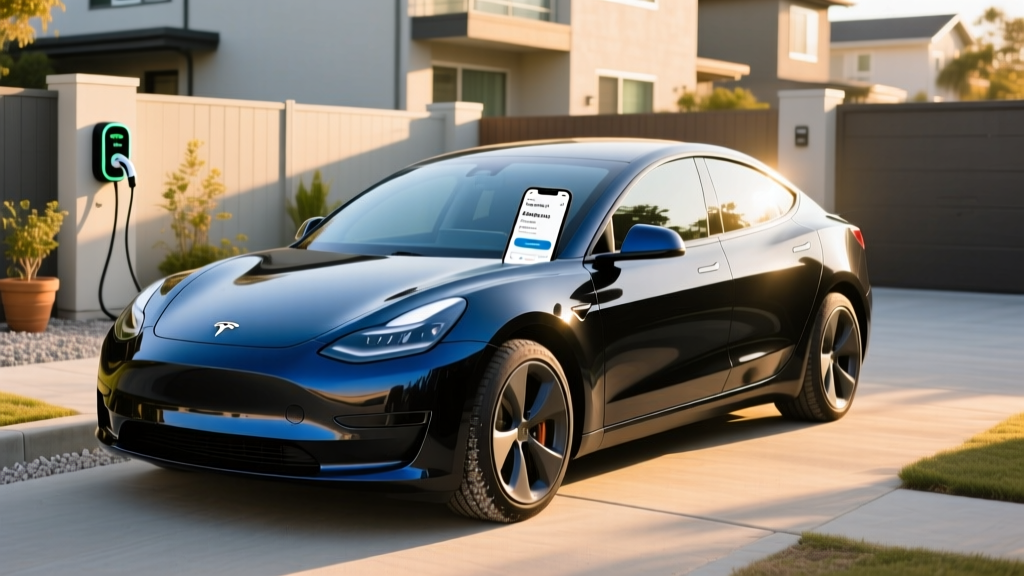
The 2026 Tesla Model 3 remains the default answer for buyers entering the EV market. With up to 363 miles of EPA-estimated range in Long Range AWD trim, access to the most reliable DC fast-charging network in North America, and a starting price that undercuts most rivals, it is the vehicle against which every other electric sedan is measured. The Tesla referral program adds a modest but real financial incentive on top — typically $500 to $1,000 in credit for both the referrer and the new buyer — which can meaningfully reduce out-of-pocket cost when stacked with federal and state incentives.
This review covers every spec that matters: real-world range, charging speed, battery chemistry, pricing after tax credits, and the ownership trade-offs that spec sheets don't show.
2026 Tesla Model 3 Spec Table
| Specification | Model 3 RWD | Model 3 Long Range AWD | Model 3 Performance |
|---|---|---|---|
| EPA Range | 272 mi | 363 mi | 315 mi |
| Battery (usable, est.) | ~57 kWh (LFP) | ~75 kWh (NMC) | ~75 kWh (NMC) |
| Peak DC Fast Charge | 170 kW | 250 kW | 250 kW |
| 10–80% DC Time | ~30 min | ~25 min | ~25 min |
| Level 2 Home Rate | 11.5 kW (~37 mi/hr) | 11.5 kW (~44 mi/hr) | 11.5 kW (~40 mi/hr) |
| 0–60 mph | 5.8 sec | 4.2 sec | 2.9 sec |
| Horsepower | 271 hp | 346 hp | 510 hp |
| Drivetrain | RWD (single motor) | AWD (dual motor) | AWD (dual motor) |
| MPGe (combined) | 132 MPGe | 132 MPGe | 121 MPGe |
| kWh/100 mi | 25 | 25 | 28 |
| Cargo (trunk + frunk) | 23 cu ft (21 + 2) | 23 cu ft (21 + 2) | 23 cu ft (21 + 2) |
| Rear Legroom | 35.2 in | 35.2 in | 35.2 in |
| Base MSRP (incl. dest.) | $38,990 | $45,490 | $52,990 |
| Battery Warranty | 8 yr / 100,000 mi | 8 yr / 120,000 mi | 8 yr / 120,000 mi |
Source: fueleconomy.gov and Tesla official specifications.
Range: EPA Sticker vs. Real-World Expectations
EPA Estimate: 363 miles (Long Range AWD)
Expect in practice: ~290–320 miles on mixed highway driving at 70–75 mph; ~240–270 miles in sustained sub-30°F winter conditions with cabin heat. The RWD trim's 272-mile EPA figure translates to roughly 220–240 miles highway in mild weather, dropping to ~180–200 miles in deep cold.
Tesla's efficiency engineering is genuine. The Model 3 Long Range achieves 132 MPGe combined — translating to just 25 kWh per 100 miles — which is among the best in the segment. That efficiency is what stretches a ~75 kWh usable battery pack to a 363-mile EPA rating.
However, EPA testing uses a specific drive cycle that includes significant low-speed and city driving, where regenerative braking recovers energy. On a sustained 75 mph highway run in 70°F weather, expect to use roughly 27–28 kWh/100 mi, which nets about 290–310 miles from a full charge. In winter, lithium-ion batteries lose both capacity and efficiency: internal resistance rises, cabin heating draws 2–5 kW continuously, and regen effectiveness drops. Plan for 25–35% range reduction in sub-freezing conditions.
The RWD trim uses an LFP (lithium iron phosphate) battery, which is slightly heavier per kWh but offers longer cycle life and can be charged to 100% daily without accelerating degradation — a real advantage for commuters who need every mile of that 272-mile EPA figure every day.
Charging Speed: DC Fast Charge and Home Level 2
| Charging Level | Power / Rate | Miles Added per Hour | Notes |
|---|---|---|---|
| Level 1 (120V outlet) | ~1.4 kW | ~4–5 mi/hr | Emergency/trickle only; full charge takes 40+ hours |
| Level 2 (240V, 48A) | 11.5 kW | 37–44 mi/hr | Full overnight charge in 6–8 hours; requires 60A circuit |
| DC Fast Charge (Long Range/Perf) | Peak 250 kW | ~1,000 mi/hr (peak) | 10–80% in ~25 min; tapers sharply above 80% |
| DC Fast Charge (RWD) | Peak 170 kW | ~700 mi/hr (peak) | 10–80% in ~30 min; LFP chemistry charges more linearly |
The Long Range and Performance trims peak at 250 kW on a V3 or V4 Tesla Supercharger, but that peak is not sustained. The charge curve holds above 200 kW from roughly 10% to 35% state of charge (SoC), then tapers to ~150 kW by 55%, and drops below 100 kW past 70%. This is why Tesla quotes 10–80% times rather than 0–100%: charging from 80% to 100% at a DC fast charger can take as long as 10–80% itself. For road trips, plan stops around the 15–20% SoC mark and charge to 80% for optimal time efficiency.
At home on a Level 2 Wall Connector (up to 48 amps / 11.5 kW), the Long Range adds roughly 44 miles of range per hour of charging. A full charge from 10% to 90% takes about 7 hours — ideal for overnight top-ups. The RWD's smaller LFP battery fills slightly faster in wall-clock time due to lower total capacity, even at the same 11.5 kW rate.
Home installation note: A 60-amp dedicated circuit is required for 48A continuous charging. Budget $800–$2,000 for a licensed electrician to install a NEMA 14-60 or hardwired Wall Connector, depending on panel proximity and whether a service upgrade is needed. Always get a quote from a licensed electrician for your specific home.
Performance and Driving Dynamics
Even the base RWD Model 3 delivers 271 hp and a 5.8-second 0–60 mph time — quicker than most gas-powered sport sedans in its price class. The single-motor rear-wheel-drive layout provides balanced handling, and the low center of gravity (battery pack under the floor) minimizes body roll.
The Long Range AWD steps up to 346 hp with dual motors and a 4.2-second 0–60, adding all-weather traction that makes it the pragmatic choice for buyers in snow-belt states. The Performance trim's 510 hp and 2.9-second 0–60 put it in supercar territory, with adaptive dampers, larger brakes, and a track mode that adjusts torque distribution and regen behavior.
All trims feature Tesla's regenerative braking with one-pedal driving capability. Lift off the accelerator and the motor generates up to ~0.3g of deceleration, returning energy to the battery. In practice, you use the friction brakes rarely in daily driving, which extends pad life significantly.
Pricing, Tax Credits, and the Tesla Referral Program
| Cost Factor | Model 3 RWD | Model 3 Long Range AWD | Model 3 Performance |
|---|---|---|---|
| Base MSRP (incl. dest.) | $38,990 | $45,490 | $52,990 |
| Federal §30D Credit (max) | Up to $7,500 | Up to $7,500 | Up to $7,500 |
| Effective Price (after max credit) | ~$31,490 | ~$37,990 | ~$45,490 |
| Tesla Referral Discount (typical) | -$500 to -$1,000 | -$500 to -$1,000 | -$500 to -$1,000 |
Federal tax credit eligibility (§30D): The Model 3 qualifies for up to $7,500 under IRS rules, but eligibility depends on three factors that change periodically:
- Buyer income caps: Modified AGI must not exceed $150,000 (single), $225,000 (head of household), or $300,000 (joint filers).
- MSRP cap: The vehicle's MSRP must not exceed $55,000 for sedans — the RWD and Long Range qualify, while the Performance trim at $52,990 clears this threshold as of the 2026 model year.
- Battery sourcing requirements: A percentage of critical minerals and battery components must be sourced from the U.S. or free-trade-agreement countries. Tesla's U.S. battery manufacturing has largely met these thresholds, but the exact credit amount ($3,750 or $7,500) can shift as sourcing rules tighten. Check the IRS clean vehicle credit page for current-year sourcing percentages.
The credit is available as a point-of-sale transfer to the dealer (Tesla), reducing your purchase price directly rather than waiting for a tax refund.
The Tesla referral program is a separate incentive layer. When a current Tesla owner shares their referral link and a new buyer uses it at purchase, both parties typically receive $500 to $1,000 in Tesla credit (the exact amount varies by quarter and promotion). This credit can be applied to the vehicle purchase, Supercharging, accessories, or future service. It stacks with the federal tax credit and any applicable state incentives. The program's terms change periodically — confirm the current offer on Tesla's website before purchase.
Interior, Tech, and Driver Assistance
The Model 3's cabin follows Tesla's minimalist philosophy: a single 15.4-inch touchscreen handles navigation, climate, media, and vehicle settings. The 2026 "Highland" refresh added ventilated front seats, ambient lighting, a rear 8-inch touchscreen for passengers, and acoustic glass that noticeably reduces road noise compared to pre-2024 models.
Cargo space: 21 cubic feet in the rear trunk (with a wide-opening hatch) plus a 2-cubic-foot front trunk (frunk). That 23 cu ft total is competitive with the Hyundai Ioniq 6 (12.3 cu ft trunk) and significantly more usable than traditional sedans due to the hatch design. Rear legroom measures 35.2 inches — adequate for adults but tighter than a midsize sedan like the Hyundai Sonata Hybrid.
Driver assistance: Tesla's Autopilot (standard) includes adaptive cruise control, lane-centering, and automatic emergency braking. Full Self-Driving (Supervised) — a $8,000 option or $99/month subscription — adds automated lane changes, traffic-light recognition, and city-street navigation.
Both Autopilot and FSD (Supervised) are SAE Level 2 driver-assistance systems. The driver must remain fully engaged, hands on or near the wheel, and eyes on the road at all times. These are not self-driving systems. Tesla's cabin camera monitors driver attention and will issue escalating warnings if engagement lapses.
Notable drawbacks: The absence of physical stalks (turn signals are steering-wheel buttons), no Apple CarPlay or Android Auto, and a ride quality that, while improved, still transmits more road imperfection than luxury competitors like the BMW i4.
Pros and Cons
- Class-leading efficiency (25 kWh/100 mi)
- Access to Tesla Supercharger network — highest reliability of any DC network
- Over-the-air updates continuously add features
- Strong resale value relative to EV segment average
- LFP battery in RWD allows daily 100% charging without degradation concern
- Referral program + §30D credit can reduce RWD effective price below $31,000
- No Apple CarPlay / Android Auto
- Turn-signal buttons on steering wheel require relearning
- Rear seat space tighter than midsize competitors
- FSD (Supervised) is expensive and still requires full driver attention
- Insurance premiums run 15–25% higher than comparable gas sedans
- RWD range (272 mi EPA) may not satisfy road-trip-heavy buyers
Who Should Buy the 2026 Tesla Model 3?
Choose the Model 3 RWD if: You commute under 100 miles round-trip, have reliable home Level 2 charging, want the lowest entry price into the Tesla ecosystem, and value the ability to charge to 100% daily without battery-health anxiety. The LFP battery is the longevity play.
Choose the Model 3 Long Range AWD if: You take regular road trips (300+ miles), live in a region with cold winters where range drops 25–35%, need all-wheel-drive traction, or simply want the flexibility of 363 EPA miles without frequent charging stops. This is the volume trim for good reason.
Choose the Model 3 Performance if: Acceleration and handling are priorities, budget allows the ~$53,000 MSRP, and you want adaptive suspension and track capability. It clears the $55,000 MSRP cap for the federal credit, which is a meaningful advantage.
Consider alternatives if: You need maximum rear-seat space (look at the Hyundai Ioniq 6 or the Tesla Model Y crossover), prefer physical controls and CarPlay (BMW i4, Hyundai Ioniq 6), or want a luxury badge (BMW i4, Mercedes EQB).
Frequently Asked Questions
What is the real-world range of the 2026 Tesla Model 3?
The Long Range AWD achieves 363 miles EPA, but expect roughly 290–320 miles on highway trips at 70–75 mph in mild weather, and 240–270 miles in sustained sub-30°F cold. The RWD's 272-mile EPA rating translates to approximately 220–240 miles highway in temperate conditions.
How fast does the Model 3 charge at home and on the road?
On a home Level 2 charger (11.5 kW / 48A), the Long Range adds about 44 miles of range per hour, filling overnight in 6–8 hours. On a 250 kW Supercharger, the Long Range and Performance achieve a 10–80% charge in approximately 25 minutes. The RWD peaks at 170 kW and takes about 30 minutes for the same 10–80% session.
How much does the Model 3 cost after federal tax credits?
The RWD starts at $38,990 and drops to approximately $31,490 after the maximum $7,500 §30D federal credit. The Long Range falls from $45,490 to ~$37,990. The Performance, at $52,990, drops to ~$45,490. Eligibility requires meeting IRS income caps and battery-sourcing thresholds — verify current rules on IRS.gov.
How does the Tesla referral program work?
A current Tesla owner shares their referral link. When a new buyer uses that link at purchase, both parties typically receive $500 to $1,000 in Tesla credit, applicable to the vehicle price, Supercharging, or accessories. The program terms change periodically; confirm the current offer before ordering. This credit stacks with the federal tax credit.
Is the Tesla Model 3 worth buying versus competitors?
Against the Hyundai Ioniq 6 (EPA 361 mi, starting ~$37,500) and BMW i4 (EPA 307 mi, starting ~$52,200), the Model 3 Long Range offers comparable range, superior charging-network access, and a lower effective price after credits. Its weaknesses are the lack of CarPlay, tighter rear seat, and the learning curve of its all-touchscreen interface. If Supercharger reliability and OTA updates matter most, the Model 3 wins. If physical controls and CarPlay are non-negotiable, test-drive the Ioniq 6.
Does the Model 3 qualify for the full $7,500 federal EV tax credit?
All three trims meet the MSRP cap (under $55,000 for sedans) and Tesla's U.S.-manufactured battery packs have generally met critical-mineral and component sourcing thresholds. However, buyer income must fall under IRS limits ($150K single / $300K joint), and sourcing rules evolve. The credit can be transferred at point of sale to reduce your purchase price directly. Always confirm eligibility at purchase.
What is the battery warranty on the Model 3?
Tesla covers the RWD battery for 8 years or 100,000 miles, and the Long Range and Performance batteries for 8 years or 120,000 miles — whichever comes first. The warranty guarantees at least 70% capacity retention over that period. Real-world data from high-mileage Tesla owners suggests NMC packs retain roughly 85–90% capacity at 100,000 miles when fast-charging is not the exclusive charging method.