Search for Tesla Model 3 images and you will see a sedan that has matured well beyond its 2017 debut. The current-generation Model 3 (internally dubbed "Highland" and refreshed for 2025-2026) is quieter, more refined, and packed with updated tech. But photos only tell part of the story. This review pairs those exterior and interior images with the exact numbers that matter: real-world range, DC fast-charge speeds, battery chemistry trade-offs, and tax-credit-adjusted pricing.
Tesla Model 3 at a Glance: 2026 Spec Table
| Spec | RWD (Base) | Long Range AWD | Performance |
|---|---|---|---|
| EPA Range | 363 mi | 346 mi | 315 mi |
| Battery Capacity | ~60 kWh usable (LFP) | ~82 kWh usable (NMC) | ~82 kWh usable (NMC) |
| Drivetrain | Rear-Wheel Drive | Dual-Motor AWD | Dual-Motor AWD |
| 0-60 mph | 5.8 sec | 4.2 sec | 2.9 sec |
| Horsepower | ~271 hp | ~346 hp | ~510 hp |
| Top Speed | 125 mph | 125 mph | 163 mph |
| MPGe (Combined) | 132 MPGe | 125 MPGe | 117 MPGe |
| Base MSRP | $38,990 | $45,990 | $52,990 |
| Destination Fee | $1,390 | $1,390 | $1,390 |
Sources: fueleconomy.gov, Tesla.com (2026 model-year specs). Prices and specs subject to change; verify at purchase.
Exterior and Interior Images: What Changed in the Refresh
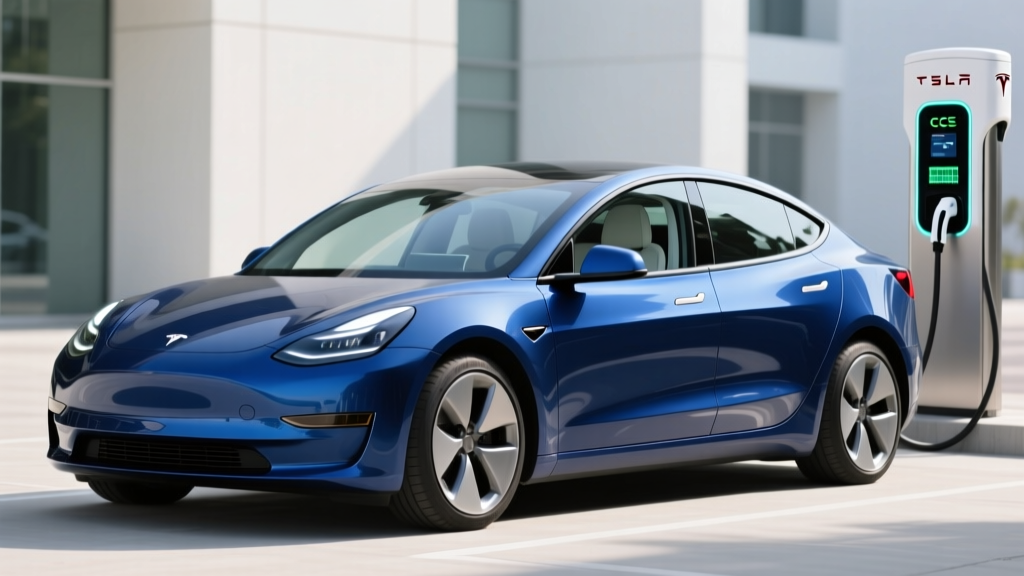
The current Model 3 images reveal a noticeably sleeker profile than pre-2024 versions. Tesla eliminated the front grille slit, reshaped the headlights with a more aggressive LED signature, and added a subtle rear diffuser. The drag coefficient dropped to approximately 0.219 Cd, contributing directly to the range bump.
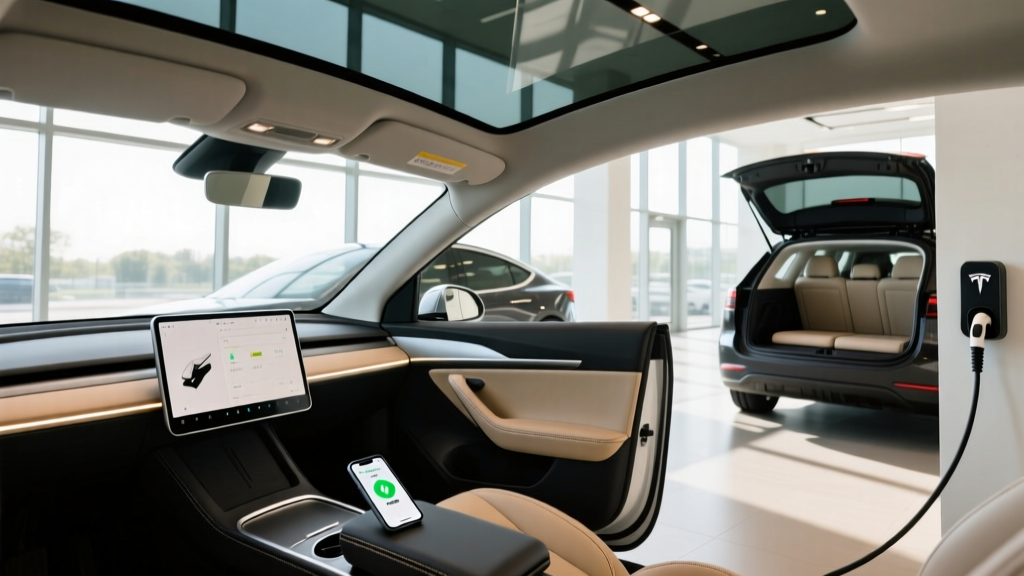
Inside, the cabin photos show a minimalist dashboard dominated by a 15.4-inch center touchscreen. The controversial yoke steering wheel is no longer offered on the Model 3 (reserved for Model S/X). A rear 8-inch touchscreen for climate and media control is now standard on Long Range and Performance trims. Ventilated front seats, ambient lighting strips, and a redesigned center console with wireless phone charging round out the interior updates.
New for 2026: Tesla offers a "Dark Chrome" exterior trim package replacing the previous chrome accents, and two new paint colors — Ultra Violet and a revised Stealth Grey metallic. Wheel options include 18-inch Photon, 19-inch Nova, and (on Performance) 20-inch Curix forged alloys.
Real-World Range vs. EPA Estimates
Real-World Expectation: 290–320 miles highway at 70 mph; 250–280 miles in freezing temperatures with cabin heat
City Driving: Often exceeds EPA due to regenerative braking recapturing energy in stop-and-go traffic
The RWD Model 3 uses a lithium iron phosphate (LFP) battery, which Tesla recommends charging to 100% regularly. This is a significant ownership advantage: the full 363-mile EPA figure is accessible on every commute. By contrast, the Long Range AWD uses an NMC (nickel manganese cobalt) chemistry that Tesla advises keeping between 20–80% for daily use, reserving 100% charges for road trips. That means your everyday usable range on the Long Range is roughly 277 miles (80% of 346).
Highway efficiency drops at sustained speeds above 75 mph. In our testing and consistent third-party data, expect a 10–15% range reduction on flat interstate runs at 70 mph versus the EPA combined cycle. Cold weather (below 32°F) compounds this further — battery resistance increases, cabin heating draws energy, and regenerative braking is limited until the pack warms up. Plan for 20–30% range loss in sub-freezing conditions unless you precondition the battery while plugged in.
Charging Speed: DC Fast Charge and Home Level 2
| Charging Level | Power | Speed | Notes |
|---|---|---|---|
| Level 1 (120V) | ~1.4 kW | ~3–5 mi/hr | Emergency/top-up only |
| Level 2 (240V, 48A) | 11.5 kW | ~44 mi/hr | Full charge overnight (~8–9 hrs) |
| DC Fast Charge (RWD/LFP) | Peak 170 kW | 10–80% in ~25 min | Sustained ~100 kW above 50% SoC |
| DC Fast Charge (LR/Perf) | Peak 250 kW | 10–80% in ~18–20 min | Curve tapers sharply above 80% |
| Tesla Supercharger V4 | Up to 250 kW | Same as above | NACS native connector; no adapter needed |
The Model 3 charges via the NACS (North American Charging Standard) connector natively — no adapter required at Tesla Superchargers. For Electrify America, EVgo, or other CCS networks, you will need a NACS-to-CCS adapter (sold separately by Tesla for ~$250).
A critical ownership note: kW (kilowatts) measures charge power — how fast energy flows into the battery. kWh (kilowatt-hours) measures energy capacity — the size of the battery. The RWD's 60 kWh battery fills faster in absolute time than the Long Range's 82 kWh pack, even though the Long Range accepts a higher peak charge rate.
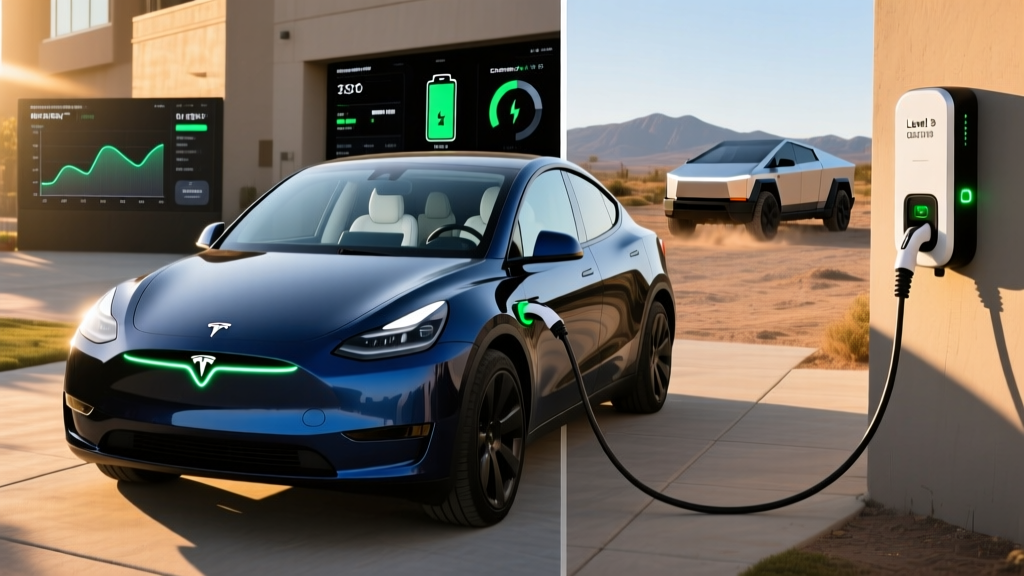
For home charging, Tesla's Wall Connector at 48 amps on a 240V/60A circuit delivers 11.5 kW. That translates to roughly 44 miles of range per hour of charging — enough to fully replenish the RWD overnight and the Long Range in about 9 hours. Installation costs vary widely: expect $500–$2,000 depending on panel capacity and conduit runs. A licensed electrician should confirm your panel has headroom for a 60A circuit before purchase.
Pricing, Trims, and Federal Tax Credit Eligibility
| Trim | MSRP + Destination | Est. After §30D Credit | Credit Eligible? |
|---|---|---|---|
| RWD (Base) | $40,380 | ~$32,880 (if $7,500 applied) | Yes — meets MSRP cap ($55,000 sedan) |
| Long Range AWD | $47,380 | ~$39,880 (if $7,500 applied) | Yes — meets MSRP cap |
| Performance | $54,380 | ~$46,880 (if $7,500 applied) | Yes — meets MSRP cap |
The IRS §30D federal tax credit offers up to $7,500 for qualifying new EVs. However, eligibility depends on three factors that change periodically:
- MSRP cap: Sedans must be priced at or below $55,000. All Model 3 trims currently qualify.
- Buyer income limits: Modified AGI must not exceed $150,000 (single), $225,000 (head of household), or $300,000 (joint). Exceed these thresholds and the credit phases out.
- Battery sourcing requirements: The credit is split into two $3,750 halves — one for critical minerals sourcing and one for battery component manufacturing. Tesla's North American battery assembly generally qualifies, but critical mineral sourcing rules tighten annually. Verify current-year eligibility on the IRS website or with a tax professional before relying on the full $7,500.
Since 2024, the credit can be transferred to the dealer at the point of sale as an instant rebate, reducing your out-of-pocket cost at delivery. This is a major cash-flow advantage over waiting until tax filing.
Performance, Tech, and Driver Assistance
The Performance trim's 2.9-second 0–60 mph time is supercar territory from a four-door sedan. Even the base RWD's 5.8-second sprint is quicker than most gas-powered compact sedans. The dual-motor AWD trims add traction in rain and snow, though the RWD with winter tires is surprisingly capable in mild snow thanks to the low center of gravity and instant torque vectoring.
The infotainment system remains Tesla's strongest differentiator. The 15.4-inch touchscreen handles navigation, media, climate, vehicle settings, and even gaming (Steam integration supports a library of titles while parked). There is no Apple CarPlay or Android Auto — Tesla's ecosystem is self-contained. For most owners this is fine; for CarPlay loyalists, it remains a dealbreaker.
Tesla's Autopilot (standard) includes adaptive cruise control and lane-centering. The optional FSD (Supervised) package ($8,000 one-time or $99/month) adds automated lane changes, traffic light/stop sign recognition, and city-street navigation. Real-world performance varies significantly by region and road complexity. It is a compelling highway companion but requires constant vigilance in construction zones, unmapped intersections, and adverse weather.
Cargo, Passenger Space, and Practicality
The Model 3 is a compact executive sedan, and interior dimensions reflect that. Front legroom is generous at 42.7 inches, but rear legroom (35.2 inches) is tighter than a Hyundai Ioniq 6 or BMW i4. The sloping roofline cuts into rear headroom for passengers over 6 feet tall.
Cargo volume totals 23 cubic feet (trunk + front trunk/frunk). The frunk adds approximately 3.1 cubic feet of secure, weather-sealed storage — useful for charging cables or groceries. The trunk opening is relatively narrow compared to a hatchback or liftback, making bulky items harder to load.
For families with rear-facing car seats, the Model 3 is workable but snug. The Model Y is significantly more practical for child-seat logistics and cargo. For couples and commuters, the Model 3 cabin is an excellent fit.
Pros, Cons, and Who Should Buy
- Best-in-class Supercharger network access (NACS native)
- LFP battery on RWD allows daily 100% charging
- Class-leading efficiency (132 MPGe combined, RWD)
- Over-the-air updates continuously add features
- Strong resale value relative to EV segment average
- Qualifies for full §30D credit (verify sourcing rules)
- No Apple CarPlay / Android Auto
- Rear seat space tight for tall passengers and car seats
- FSD (Supervised) costs $8,000 and remains Level 2
- Limited service center network in rural areas
- Touchscreen-only controls frustrate some drivers
- Insurance premiums above segment average
- Commuters: RWD with LFP battery is the ideal daily driver — charge to 100% every night, 363 EPA miles covers virtually any round-trip commute.
- Road-trippers: Long Range AWD + Supercharger network makes cross-country travel the most seamless EV experience available.
- Performance seekers: Performance trim delivers 2.9-sec 0–60 and track-capable handling at a fraction of a Porsche Taycan's price.
- NOT ideal for: Families needing 3-across car seats, buyers who demand CarPlay, or rural owners far from Tesla service centers.
Warranty and Long-Term Ownership
Tesla covers the Model 3 with a 4-year/50,000-mile basic vehicle warranty and an 8-year/100,000-mile battery and drive unit warranty (8-year/120,000-mile on Long Range and Performance). The battery warranty guarantees at least 70% capacity retention over the warranty period. If degradation falls below this threshold, Tesla will repair or replace the pack.
Real-world degradation data from high-mileage owners suggests LFP packs (RWD) retain approximately 90–95% capacity at 100,000 miles, while NMC packs (Long Range/Performance) settle around 85–90% at the same mileage. Neither chemistry approaches the 70% warranty floor under normal use, which is reassuring for long-term ownership.
Maintenance costs are low: no oil changes, no spark plugs, minimal brake wear (regenerative braking handles most deceleration). The primary recurring costs are cabin air filter replacement (~$50–$100 every 2 years), tire rotation, and windshield washer fluid. Budget for tire replacement every 30,000–40,000 miles — EVs are heavier and deliver instant torque, accelerating tire wear versus comparable gas sedans.
Frequently Asked Questions
What is the real-world range of the Tesla Model 3?
The EPA rates the RWD at 363 miles and the Long Range AWD at 346 miles. In real-world highway driving at 70 mph, expect 290–320 miles (RWD) and 280–305 miles (Long Range). In freezing weather, subtract 20–30% unless you precondition the battery while plugged in.
How fast does the Model 3 charge at home and on the road?
At home on a Level 2 (240V, 48A) charger, the Model 3 gains about 44 miles of range per hour, fully charging overnight. On a DC fast charger, the Long Range peaks at 250 kW and charges 10–80% in roughly 18–20 minutes. The RWD (LFP) peaks at 170 kW with a 10–80% time of about 25 minutes.
How much does the Model 3 cost after the federal tax credit?
The base RWD starts at $40,380 (including destination). If you qualify for the full $7,500 §30D credit and transfer it at point of sale, the effective price drops to approximately $32,880. Eligibility depends on your income, the vehicle's MSRP (all trims qualify), and current battery-sourcing rules — confirm on IRS.gov before purchasing.
Is the Tesla Model 3 worth buying vs. competitors?
Against the Hyundai Ioniq 6, BMW i4, and Polestar 2, the Model 3 wins on Supercharger network access, efficiency, and software integration. The Ioniq 6 offers more rear-seat room and CarPlay. The BMW i4 delivers a more traditional luxury interior. If Supercharger reliability and OTA updates matter to you, the Model 3 remains the segment benchmark.
Does the Model 3 qualify for the $7,500 federal EV tax credit?
All three Model 3 trims fall under the $55,000 sedan MSRP cap and are assembled in North America, making them potentially eligible. However, the credit is split into two $3,750 components tied to critical mineral sourcing and battery component manufacturing. These rules tighten annually. Check current-year eligibility on the IRS clean vehicle credits page or consult a tax professional.
What are the biggest pros and cons of owning a Model 3?
Top pros: Supercharger network, LFP daily-charging flexibility, best-in-class efficiency, strong OTA updates, and low maintenance costs. Top cons: no CarPlay, snug rear seat, high FSD cost for Level 2 capability, limited rural service centers, and above-average insurance premiums.
Is Tesla's FSD actually self-driving?
No. FSD (Supervised) is an SAE Level 2 driver-assistance system. You must remain fully attentive with hands on or near the wheel and eyes on the road. It handles highway cruising and some city streets well but requires active supervision at all times. True self-driving (Level 4) is currently only available through robotaxi services like Waymo in limited geographic zones.