Quick Verdict: The Benchmark Sedan Gets Sharper
The 2026 Tesla Model 3 remains the default answer for buyers entering the EV space. With EPA range topping 363 miles in Long Range AWD trim, a NACS-native charging advantage on the Supercharger network, and a starting price that undercuts most luxury sedans, it sets the bar for efficiency and tech integration. But the minimalist cabin, panel-gap inconsistencies, and the subscription-heavy approach to advanced driver assists mean it isn't the right fit for every buyer. This review breaks down the exact numbers — range, charging curves, pricing after tax credits — and explains one of the most-searched ownership questions: what the Tesla dashcam icon means and how to use the built-in camera system.
| Spec | RWD (Base) | Long Range AWD | Performance |
|---|---|---|---|
| EPA Range | 272 mi | 363 mi | 315 mi |
| Battery (usable) | ~57.5 kWh (LFP) | ~75 kWh (NMC) | ~75 kWh (NMC) |
| Peak DC Charge Rate | 170 kW | 250 kW | 250 kW |
| 10–80% DC Fast Charge | ~30 min | ~25 min | ~25 min |
| Level 2 Home Charge | 11.5 kW (~44 mi/hr) | 11.5 kW (~44 mi/hr) | 11.5 kW (~44 mi/hr) |
| 0–60 mph | 5.8 sec | 4.2 sec | 2.9 sec |
| Horsepower | 271 hp | 384 hp | 510 hp |
| Drivetrain | RWD | Dual-Motor AWD | Dual-Motor AWD |
| MPGe (combined) | 132 MPGe | 125 MPGe | 118 MPGe |
| Base MSRP | $38,990 | $45,990 | $52,990 |
Range & Efficiency: EPA vs the Real World
The 2026 Model 3 Long Range AWD carries an EPA-estimated 363 miles of range — one of the highest figures in the midsize electric sedan segment. The base RWD model delivers 272 miles from its smaller LFP pack, while the Performance trim lands at 315 miles.
EPA 363 mi (Long Range AWD) is measured under controlled conditions. In real-world highway driving at 70–75 mph, expect roughly 290–320 miles. In cold weather (below 32°F), range can drop 20–30%, yielding as low as 250–260 miles on a full charge. The LFP battery in the RWD model is more resistant to cold degradation but starts from a lower baseline of 272 mi EPA.
Efficiency is where Tesla's engineering shows. The Long Range AWD achieves roughly 26 kWh/100 mi in mixed driving — a figure that rivals the Hyundai Ioniq 6 and beats most competitors. The LFP RWD model is slightly more efficient per kWh but carries less total energy. Tesla's heat pump is standard across all trims, reducing the cabin-heating penalty that plagues older EVs in winter.
Charging Speed: DC Fast, Level 2, and the Charge Curve
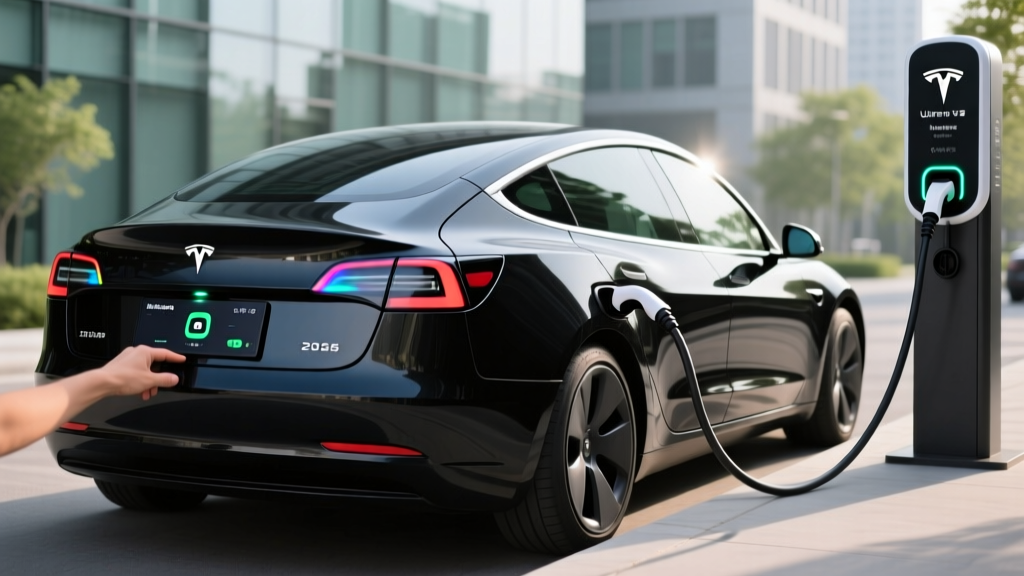
Charging is where the Model 3's NACS connector and Supercharger access pay dividends. The Long Range and Performance trims peak at 250 kW on V3 Superchargers, while the RWD model tops out at 170 kW due to its LFP chemistry and smaller pack.
| Charging Level | Power | Speed (Long Range) | Notes |
|---|---|---|---|
| Level 1 (120V) | ~1.4 kW | ~5 mi/hr | Emergency/trickle only |
| Level 2 (240V, 48A) | 11.5 kW | ~44 mi/hr | Full charge in ~8 hrs (LR) |
| DC Fast (V3 Supercharger) | Peak 250 kW | 10–80% in ~25 min | Tapers significantly above 80% |
| DC Fast (CCS adapter, non-Tesla) | Up to 250 kW | Varies by station | Requires NACS-to-CCS adapter for older networks |
Charge curve reality: The 250 kW peak is sustained only between roughly 10–30% State of Charge (SoC). Above 50%, the rate drops to ~150 kW, and above 80%, it falls below 60 kW. Tesla's navigation system preconditions the battery when a Supercharger is set as your destination, which is essential for hitting peak charge rates in cold weather. Without preconditioning, a cold battery may peak at only 50–80 kW even at a V3 stall.
For home charging, a Wall Connector on a 60-amp circuit delivers the full 11.5 kW (48A continuous), adding roughly 44 miles of range per hour. Most owners charging overnight from 20–80% will wake to a full battery in under 6 hours. Installation costs for a 240V/60A circuit typically run $800–$2,500 depending on panel proximity and local permitting.
The Tesla Dashcam Icon: What It Means and How to Use It
One of the most common questions from new Tesla owners centers on the Tesla dashcam icon — the small camera symbol that appears on the touchscreen or instrument display. This icon indicates the status of Tesla's built-in Dashcam and Sentry Mode systems, which use the vehicle's Autopilot cameras to record video without requiring any aftermarket hardware.
Here's what the icon states mean:
- Gray camera icon: Dashcam is available but not actively recording. Tap to start manual recording.
- Red dot on camera icon: Dashcam is actively recording. The system continuously buffers the last 10 minutes and saves clips when you tap the icon or when an incident is detected.
- Red eye icon (Sentry Mode): The vehicle's external cameras are monitoring the surroundings while parked. If a threat is detected, the system records and sends an alert to your phone.
- Icon with slash: Dashcam/Sentry is disabled, or the USB drive is not detected or full.
Setup requirements: You need a USB-C flash drive (or a USB-A drive with an adapter) formatted to exFAT or FAT32, plugged into the glovebox USB-C port. Create a folder named "TeslaCam" on the root directory. The system writes to three subfolders: RecentClips, SavedClips, and SentryClips. A 128 GB drive holds roughly 24–48 hours of Sentry Mode footage depending on activity.
Sentry Mode energy cost: Expect roughly 1–1.5 miles of range lost per hour of Sentry Mode standby, or about 25–35 miles over a 24-hour parking period. Tesla allows you to set Sentry Mode to disable automatically when SoC drops below 20%, which is worth enabling for airport parking or extended stops.
Performance, Interior, and Tech
The Model 3 Performance model year 2026 posts a 2.9-second 0–60 mph time, making it one of the quickest sedans at any price. The Long Range AWD hits 60 in 4.2 seconds — quick enough for any real-world merge or passing scenario. The base RWD's 5.8-second time is respectable and adequate for daily commuting.
Inside, the refreshed Model 3 cabin uses ventilated seats, ambient lighting, and a 15.4-inch center touchscreen. The rear-seat entertainment screen (8 inches) is standard on Long Range and Performance trims. Cargo volume measures 23 cu ft in the trunk plus a small frunk suitable for a charging cable bag. Rear legroom is 35.3 inches — adequate for adults on short trips but tight compared to a Hyundai Ioniq 6 or BMW i4.
Driver assists: Basic Autopilot (lane centering + traffic-aware cruise) is standard. Full Self-Driving (Supervised) remains a $8,000 add-on or $99/month subscription. FSD is a SAE Level 2 system — it does not drive itself. The driver must remain attentive, keep hands on the wheel, and intervene at any time. Despite the "Full Self-Driving" name, it is not autonomous.
Tesla Autopilot and FSD (Supervised) are SAE Level 2 driver-assistance systems. They require continuous driver supervision. They do NOT handle all road scenarios, construction zones, or adverse weather reliably. You are legally responsible for the vehicle at all times.
Pricing, Tax Credits, and Total Cost
The 2026 Model 3 RWD starts at $38,990 (including destination). The Long Range AWD is $45,990, and Performance is $52,990. Adding FSD (Supervised) pushes the Long Range to nearly $54,000 before other options.
| Trim | Base MSRP | §30D Credit Potential | Effective Price* |
|---|---|---|---|
| RWD | $38,990 | Up to $7,500 | ~$31,490 |
| Long Range AWD | $45,990 | Up to $7,500 | ~$38,490 |
| Performance | $52,990 | Up to $7,500 | ~$45,490 |
*Effective price assumes full §30D credit eligibility. Actual credit depends on battery sourcing, buyer income, and MSRP caps. See IRS §30D guidelines for current rules.
Federal tax credit eligibility (§30D): The Model 3 qualifies for up to $7,500 in federal tax credits, but eligibility is not automatic. Requirements include:
- MSRP cap: Sedan price must be ≤ $55,000. The RWD and Long Range trims qualify; the Performance trim at $52,990 qualifies before options push it over.
- Buyer income cap: Modified AGI must not exceed $150,000 (single), $225,000 (head of household), or $300,000 (joint).
- Battery sourcing: Critical minerals and battery components must meet phased-in domestic/free-trade-partner thresholds. Tesla's sourcing has improved but the exact credit amount ($3,750 or $7,500) depends on the build date and supply chain. Check the DOE/IRS eligible vehicle list before purchasing.
- Point-of-sale transfer: As of 2024, the credit can be transferred to the dealer at purchase, reducing your out-of-pocket cost immediately rather than waiting for tax filing.
Warranty and Ownership Costs
Tesla covers the Model 3 with a 4-year/50,000-mile basic warranty and an 8-year/120,000-mile battery and drive unit warranty (Long Range/Performance). The RWD model's battery warranty is 8 years/100,000 miles. The battery warranty guarantees at least 70% capacity retention over the warranty period.
Insurance costs are higher than average for the segment — expect $1,800–$2,600 annually depending on state, age, and driving record. Tesla offers its own insurance product in many states, which uses real-time driving data and can be cheaper for low-mileage, safe drivers. Maintenance is minimal: no oil changes, cabin air filter replacement every 2–3 years, brake fluid checks, and tire rotations. Tesla recommends tire rotation every 6,250 miles due to the instant torque wearing front tires faster on AWD models.
- Class-leading efficiency (26 kWh/100 mi)
- Supercharger network access (17,000+ US stalls)
- Built-in Dashcam and Sentry Mode — no aftermarket hardware
- Over-the-air updates add features post-purchase
- Strong resale value relative to most EVs
- No physical buttons — all controls via touchscreen
- Rear visibility and legroom trail competitors
- FSD subscription cost adds up ($99/mo or $8,000 one-time)
- Panel gap quality inconsistent across build lots
- Sentry Mode drains ~25–35 mi of range per 24 hrs
Who Should Buy the 2026 Tesla Model 3?
The Model 3 is best for tech-forward commuters and road-trippers who value charging network access and efficiency above cabin luxury. The Long Range AWD is the sweet spot: 363 miles of EPA range, dual-motor traction for snow, and enough performance for daily driving without the insurance premium of the Performance trim. The RWD model suits budget-conscious buyers in mild climates who can charge at home nightly.
It's less ideal for families needing maximum rear-seat space (consider the Model Y), buyers who prefer physical controls (look at the Hyundai Ioniq 6 or BMW i4), or those in areas with limited Supercharger coverage who rely on third-party DC fast-charging networks.
What is the real-world range of the 2026 Tesla Model 3?
The Long Range AWD delivers an EPA-estimated 363 miles, but real-world highway driving at 70+ mph typically yields 290–320 miles. In cold weather below freezing, expect 250–260 miles. The base RWD model's 272-mile EPA rating translates to roughly 220–240 miles real-world in temperate conditions.
How fast does the Tesla Model 3 charge?
On a V3 Supercharger, the Long Range and Performance models peak at 250 kW and charge from 10–80% in approximately 25 minutes. The RWD model peaks at 170 kW with a 10–80% time around 30 minutes. At home on a 48A Level 2 charger, all trims add about 44 miles of range per hour.
Does the 2026 Tesla Model 3 qualify for the federal EV tax credit?
Yes, the Model 3 qualifies for up to $7,500 under IRS §30D, subject to buyer income limits ($150K single / $300K joint), the $55,000 sedan MSRP cap, and battery-sourcing requirements. The credit can be applied at the point of sale. Verify your specific eligibility on IRS.gov before purchasing.
What does the Tesla dashcam icon mean?
The Tesla dashcam icon on your touchscreen shows the status of the built-in camera recording system. A gray icon means dashcam is available but not recording; a red dot means it's actively recording; a red eye indicates Sentry Mode is active while parked. You need a properly formatted USB drive in the glovebox port for recording to function.
Is the Tesla Model 3 worth buying over competitors?
The Model 3 wins on efficiency, Supercharger access, and tech integration. It trails the Hyundai Ioniq 6 in rear-seat space and physical controls, and the BMW i4 in build quality and ride refinement. If charging convenience and OTA updates are your priorities, the Model 3 is still the segment benchmark. If cabin comfort and traditional controls matter more, test-drive the Ioniq 6 and i4 before deciding.
How long does the Tesla Model 3 battery last?
Tesla warranties the battery for 8 years/120,000 miles (Long Range/Performance) or 8 years/100,000 miles (RWD) with at least 70% capacity retention. Real-world data from high-mileage owners suggests 10–15% degradation over 100,000 miles for NMC packs, with LFP packs showing slightly less degradation but starting from a smaller total capacity.