Quick Verdict: Still the Benchmark, but the Gap Has Closed
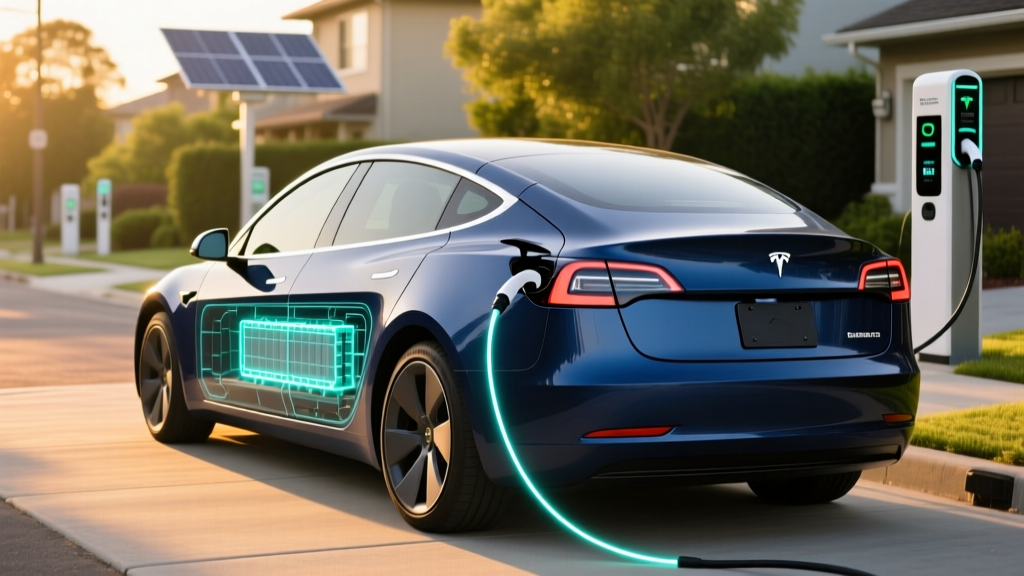
The 2026 Tesla Model 3 remains the most recognizable electric sedan on the road, and for good reason: a mature Supercharger network, industry-leading software, and efficiency numbers that still outpace most rivals. But "best" no longer means "only option." Hyundai's Ioniq 6, the BMW i4, and the refreshed Polestar 2 have all closed the gap in range, build quality, and charging speed. This review breaks down exactly what you get for the money — and where Tesla Autopilot actually stands in 2026.
Spec Table: 2026 Tesla Model 3 at a Glance
| Specification | Model 3 RWD (Base) | Model 3 Long Range AWD | Model 3 Performance |
|---|---|---|---|
| EPA Range | 272 miles | 341 miles | 315 miles |
| Battery (usable) | ~57.5 kWh (LFP) | ~75 kWh (NMC) | ~75 kWh (NMC) |
| Drivetrain | Rear-Wheel Drive | Dual-Motor AWD | Dual-Motor AWD |
| Horsepower | 271 hp | 346 hp | 510 hp |
| 0–60 mph | 5.8 sec | 4.2 sec | 2.9 sec |
| Max DC Fast Charge | 170 kW | 250 kW | 250 kW |
| 10–80% DCFC Time | ~28 min | ~25 min | ~25 min |
| Level 2 Home Charge | 11.5 kW (~37 mi/hr) | 11.5 kW (~44 mi/hr) | 11.5 kW (~44 mi/hr) |
| MPGe (combined) | 132 MPGe | 130 MPGe | 119 MPGe |
| Efficiency | 25 kWh/100 mi | 26 kWh/100 mi | 28 kWh/100 mi |
| Base MSRP | $38,990 | $45,990 | $53,990 |
| Battery Warranty | 8 yr / 100,000 mi | 8 yr / 120,000 mi | 8 yr / 120,000 mi |
Source: fueleconomy.gov, Tesla spec sheets. Prices reflect 2026 MSRP before destination fees.
Real-World Range: What the EPA Sticker Doesn't Tell You
Tesla's efficiency engineering is legitimately class-leading — the Model 3 squeezes more miles per kWh than almost any competitor. But physics still wins in winter. The LFP battery in the RWD model is more sensitive to cold-weather range loss than the NMC pack in the Long Range, and it lacks a heat pump in some older production batches (verify on your specific VIN). Preconditioning the battery via the Tesla app before departure mitigates some loss, but if you commute in Minnesota or Buffalo winters, budget for a 25–35% range reduction from the EPA figure.
For highway road trips, plan charging stops around the 200–220 mile mark (Long Range) to keep a comfortable buffer. The onboard navigation's trip planner is genuinely accurate — trust it over the range bar.
Charging Speed: Supercharger Network Advantage
| Charging Level | Power / Rate | Speed (Miles Added) | Notes |
|---|---|---|---|
| Level 1 (120V household) | ~1.4 kW | ~4–5 mi/hr | Emergency/top-up only |
| Level 2 (240V home, 48A) | 11.5 kW | ~37–44 mi/hr | Full charge in 7–9 hours |
| DC Fast Charge (V3 Supercharger) | Up to 250 kW (LR/Perf) Up to 170 kW (RWD) | ~170 mi in 15 min (LR) | Peak rate tapers above 55% SoC |
| Non-Tesla DCFC (CCS adapter) | Up to 250 kW | Varies by station | Requires Tesla CCS adapter (included since 2024) |
The Model 3's charging hardware is proven, but not class-leading in peak rate. The Hyundai Ioniq 6 and Porsche Taycan both accept higher peak DC rates. Where Tesla wins is the network: over 17,000 V3 and V4 Superchargers in North America with unmatched uptime and plug-and-charge simplicity. The 10–80% time of ~25 minutes (Long Range) is competitive, but note the charge curve: the Model 3 sustains near-peak rates only up to about 50–55% State of Charge, then tapers significantly. A 10–90% session takes closer to 40 minutes.
For home charging, a Wall Connector on a 60A circuit delivers the full 11.5 kW (48A continuous). Budget $500–$1,500 for professional installation depending on panel proximity and whether your home needs a 200A service upgrade. Most owners add 200–300 miles overnight, which covers all but the heaviest daily driving.
Tesla Autopilot in 2026: Capabilities, Limits, and Costs
Tesla offers three tiers of driver assistance on the 2026 Model 3:
- Basic Autopilot (included): Traffic-Aware Cruise Control and Autosteer (lane centering) on highways. Reliable for reducing fatigue on long trips, but limited to single-lane operation with no automatic lane changes.
- Enhanced Autopilot ($6,000 add-on): Adds Navigate on Autopilot (automatic highway on/off-ramp transitions), Auto Lane Change, Autopark, Summon, and Smart Summon (car navigates parking lots to you).
- Full Self-Driving (Supervised) ($8,000 add-on or $99/mo subscription): Adds city-street traffic light and stop sign recognition, automatic turns at intersections, and broader route-following capability. As of 2026, FSD (Supervised) operates on most US roads but remains a Level 2 system requiring constant driver oversight.
In practice, FSD (Supervised) handles many routine scenarios competently but still requires intervention for construction zones, complex unprotected left turns, and poorly marked roads. It is a convenience feature, not a replacement for an attentive driver. Competitors like GM's Super Cruise and Ford's BlueCruise offer hands-free operation on pre-mapped divided highways — a more limited operational domain but one where the driver experience is more relaxed because the system is more predictable.
For a detailed breakdown of how FSD compares to other Level 2 systems in safety data and real-world reliability, see NHTSA's automated vehicle safety resources.
Pricing, Trims, and Federal Tax Credit Eligibility
| Trim | Base MSRP | Destination | Est. After §30D Credit* | Eligible for §30D? |
|---|---|---|---|---|
| Model 3 RWD | $38,990 | $1,390 | ~$32,880 | Yes (if buyer meets income caps) |
| Model 3 Long Range AWD | $45,990 | $1,390 | ~$39,880 | Yes (MSRP under $55K sedan cap) |
| Model 3 Performance | $53,990 | $1,390 | ~$47,880 | Yes (MSRP under $55K sedan cap) |
*Estimates assume full $7,500 §30D credit. Actual eligibility depends on buyer income, battery critical-mineral sourcing, and MSRP caps. Verify at IRS.gov §30D.
- MSRP cap: Sedans must be ≤ $55,000 (all Model 3 trims qualify).
- Buyer income cap: AGI ≤ $150K single / $300K joint / $225K head of household.
- Battery sourcing: Critical minerals and battery components must meet phased-in domestic/free-trade-agreement sourcing thresholds (increases annually through 2029).
- Point-of-sale transfer: Since 2024, eligible buyers can transfer the credit to the dealer at purchase, reducing the purchase price upfront rather than waiting for tax filing.
- Consult a tax professional — individual eligibility varies and IRS rules are updated annually.
Interior, Cargo, Tech, and Daily Livability
The "Highland" refresh (introduced for the 2024 model year and carried forward) significantly improved cabin materials, added ventilated front seats, ambient lighting, a rear passenger touchscreen, and acoustic glass that noticeably reduces road noise. Build quality from the Fremont and Shanghai plants has improved, though panel-gap consistency still trails BMW and Mercedes benchmarks.
- Cargo volume: 23 cu ft (trunk) + 3.1 cu ft (frunk) = 26.1 cu ft total. Competitive with the BMW i4 (16.6 cu ft, no frunk) but less than the Hyundai Ioniq 6's 12.3 cu ft trunk (though Ioniq 6 has a more aerodynamic liftback shape).
- Rear legroom: 35.2 inches — adequate for adults on shorter trips but tighter than a Camry-class sedan. The sloping roofline cuts headroom for passengers over 6 feet.
- Infotainment: 15.4-inch center touchscreen running Tesla's proprietary OS. No Apple CarPlay or Android Auto — Tesla's native navigation, Spotify, and media apps are robust, but phone-projection holdouts will notice the omission.
- Notable drawback: Nearly all vehicle controls (mirror adjustment, glovebox, windshield wiper speed) are buried in touchscreen menus. The lack of physical stalks (turn signals are steering-wheel buttons in the refreshed model) requires a 1–2 week adaptation period.
Pros, Cons, and Who Should Buy
Pros
- Best-in-class Supercharger network access
- Outstanding efficiency (25 kWh/100 mi RWD)
- Strong over-the-air update cadence adds features post-purchase
- Competitive real-world range, especially Long Range AWD
- Excellent resale value relative to EV segment average
- FSD subscription option ($99/mo) lowers barrier to advanced assist
Cons
- Touchscreen-only controls frustrate some drivers
- No Apple CarPlay / Android Auto
- Rear seat space tight for tall passengers
- DC fast-charge peak rate trails Ioniq 6 and Taycan
- FSD (Supervised) still requires full driver attention — not autonomous
- Insurance premiums 20–40% higher than comparable gas sedans in many states
Best for: Tech-forward commuters and road-trippers who value charging infrastructure access above all else. The Long Range AWD is the sweet spot — 341 EPA miles, dual-motor traction for inclement weather, and full §30D eligibility.
Look elsewhere if: You prioritize rear-seat passenger comfort, prefer physical buttons, want hands-free highway driving on mapped routes (GM Super Cruise), or need maximum DC fast-charge speed for frequent 400+ mile trips.
2026 Tesla Model 3 FAQ
What is the real-world range of the 2026 Tesla Model 3?
The Long Range AWD is EPA-rated at 341 miles. In real-world mixed driving, expect 280–300 miles. Highway-only driving at 75 mph yields roughly 260–275 miles. In sub-freezing winter conditions, plan for 220–240 miles from a full charge. The base RWD model (272 EPA) delivers about 220–240 miles mixed and 180–195 miles in cold weather.
How fast does the Model 3 charge at home and on the road?
On a home Level 2 charger (240V, 48A), the Model 3 charges at 11.5 kW, adding roughly 37–44 miles of range per hour — a full overnight charge. On a V3 Supercharger, the Long Range and Performance models peak at 250 kW and charge from 10–80% in approximately 25 minutes. The RWD model peaks at 170 kW with a 10–80% time of about 28 minutes.
Does the 2026 Tesla Model 3 qualify for the federal EV tax credit?
All three trims fall under the $55,000 MSRP cap for sedans under IRS §30D. However, the buyer must also meet income caps ($150K single / $300K joint), and the vehicle's battery must satisfy critical-mineral and component sourcing requirements that tighten annually. The credit can be transferred at the point of sale to reduce your purchase price. Confirm eligibility at IRS.gov and with a tax professional.
Is Tesla Autopilot or FSD worth the cost?
Basic Autopilot (included) is excellent for highway cruise control and lane centering — sufficient for most buyers. The $6,000 Enhanced Autopilot or $8,000 FSD (Supervised) packages are harder to justify financially unless you frequently drive in heavy urban traffic or want the latest features. The $99/month FSD subscription is a lower-risk way to try it. Remember: all Tesla driver-assist features are SAE Level 2 and require your full attention at all times.
Is the 2026 Model 3 worth buying over competitors?
The Model 3 Long Range AWD remains the default recommendation for buyers who prioritize charging infrastructure, software, and efficiency. If you value hands-free highway driving on mapped roads, the BMW i4 with available Driving Assistant Professional or a GM vehicle with Super Cruise may suit you better. If maximum DC fast-charge speed matters for frequent road trips, the Hyundai Ioniq 6 charges faster at compatible stations. For rear-seat space and a traditional luxury cabin, the BMW i4 wins. The Model 3's combination of range, Supercharger access, and value-after-credit keeps it at the top of its segment — but it's no longer the only strong choice.