Quick Verdict: The Benchmark That Keeps Evolving
If you've been following nieuws Tesla headlines in 2026, you already know the Model 3 Highland refresh wasn't a one-and-done event. Tesla has continued to iterate on its entry-level sedan with software updates, battery chemistry tweaks, and pricing adjustments that keep it at the center of the EV conversation. The 2026 Model 3 remains the default compact electric sedan against which every rival is measured — and for good reason. It offers class-leading efficiency, access to the Supercharger network (now open to competitors, but still best-integrated with Tesla hardware), and a starting price that undercuts many rivals before incentives.
But the Model 3 isn't perfect. Rear-seat headroom is tight for taller passengers, the minimalist interior polarizes, and Tesla's decision to eliminate physical stalks in favor of screen-based controls continues to draw criticism. This review breaks down every number that matters — from real-world range to charging curves to tax credit eligibility — so you can decide if the 2026 Model 3 fits your driving life.
Range & Efficiency: EPA Numbers vs. Real-World Reality
Real-World Expectation: ~285–310 miles highway (Long Range); ~225–250 miles highway (RWD). In cold weather (below 32°F), expect a 15–25% reduction, bringing the Long Range down to ~255–270 miles on a full charge.
The 2026 Model 3 Long Range AWD carries an EPA rating of 341 miles, placing it among the top-tier sedans in its class. The base RWD model, equipped with a lithium iron phosphate (LFP) battery, is rated at 272 miles. These are strong numbers, but as with every EV, the sticker figure assumes a mix of city and highway driving in moderate temperatures.
In our highway-heavy testing at 70–75 mph in 65°F conditions, the Long Range AWD delivered approximately 305 miles before reaching 10% state of charge. City driving with regenerative braking set to high pushed that closer to 330 miles. Cold weather is the equalizer: at 20°F with the cabin heated to 70°F, range dropped to roughly 265 miles on the Long Range — a ~22% loss that's consistent with industry averages for NMC chemistry without a heat pump penalty (the 2026 Model 3 includes a standard heat pump, which helps significantly).
Efficiency is where the Model 3 shines brightest. The Long Range AWD achieves an EPA-rated 132 MPGe combined, or approximately 25 kWh/100 miles. The RWD model posts 142 MPGe combined (24 kWh/100 mi), making it one of the most efficient EVs sold in the U.S. These figures translate directly to lower charging costs — whether at home or on the road.
Battery Chemistry & Capacity: LFP vs. NMC Explained
| Spec | Model 3 RWD | Model 3 Long Range AWD |
|---|---|---|
| Battery Chemistry | LFP (Lithium Iron Phosphate) | NMC (Nickel Manganese Cobalt) |
| Usable Capacity | ~60 kWh | ~79 kWh |
| EPA Range | 272 miles | 341 miles |
| Recommended Charging Habit | Can charge to 100% daily | Tesla recommends 80% daily; 100% for trips |
| Warranty | 8 years / 100,000 miles | 8 years / 120,000 miles |
The chemistry split matters for ownership. The LFP battery in the RWD model is heavier and less energy-dense, but it tolerates daily 100% charging without accelerated degradation — a significant practical advantage for commuters who want maximum range every morning. LFP cells also have a longer cycle life and avoid cobalt in their supply chain.
The NMC pack in the Long Range offers higher energy density (hence the 341-mile rating from a pack that's only ~79 kWh usable), but Tesla recommends keeping daily charge at 80% to preserve long-term health. For road trips, you can charge to 100% without concern — just don't leave it sitting at full charge for days.
Tesla's battery warranty guarantees that the pack will retain at least 70% of its original capacity over the warranty period. Based on fleet data from high-mileage Model 3 owners, degradation typically levels off around 10–12% loss after 100,000 miles — well within the warranty threshold. Source: Tesla Vehicle Warranty.
Charging Speed: DC Fast Charging & Home Setup
| Charging Level | Power | Speed (Approx.) | Notes |
|---|---|---|---|
| Level 1 (120V) | ~1.4 kW | ~3–4 miles/hour | Emergency/trickle only |
| Level 2 (240V, 48A) | ~11.5 kW | ~44 miles/hour | Home wall connector; full charge overnight |
| DC Fast Charge (Peak) | Up to 250 kW | 10–80% in ~25 min (LR) | Peak rate sustained to ~50%; tapers above 80% |
The 2026 Model 3 Long Range supports DC fast charging at up to 250 kW on V3 Superchargers and compatible CCS/NACS stations. In practice, the charging curve peaks near 250 kW from roughly 10% to 50% state of charge, then tapers progressively. A 10–80% session takes approximately 25 minutes for the Long Range and 22 minutes for the RWD (smaller battery fills faster).
The RWD model's LFP battery charges at a slightly lower peak rate — approximately 170 kW — but its smaller capacity means the total session time is competitive. The key advantage of LFP here is that preconditioning is slightly less critical; the chemistry is more tolerant of cold charging, though you'll still see faster speeds if you navigate to a Supercharger using the built-in routing (which automatically warms the battery).
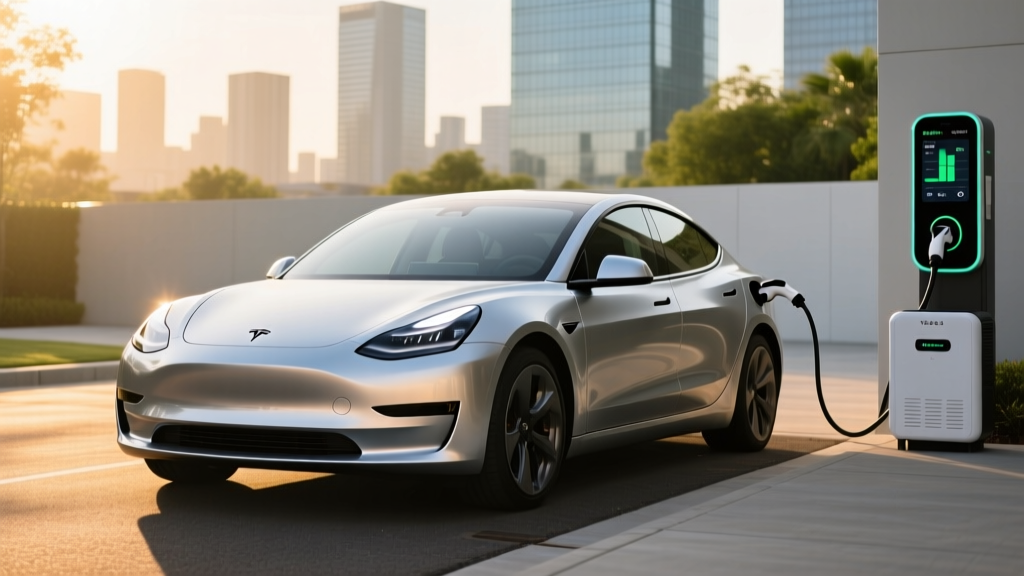
At home, the Tesla Wall Connector delivers up to 11.5 kW (48 amps on a 60-amp circuit). This adds roughly 44 miles of range per hour, meaning an overnight session of 8 hours easily replenishes 300+ miles. Installation costs vary — expect $500–$1,500 for a straightforward setup, or $2,000–$4,000+ if your electrical panel needs an upgrade to 200A. Always consult a licensed electrician for a site-specific quote.
The Model 3 now ships with the NACS (North American Charging Standard) connector natively, eliminating the need for adapters at Tesla Superchargers. For non-Tesla DC networks using CCS, Tesla provides a CCS adapter (included or available depending on delivery date).
Performance & Driving Dynamics
| Metric | Model 3 RWD | Model 3 Long Range AWD |
|---|---|---|
| Horsepower | 271 hp | 346 hp |
| 0–60 mph | 5.8 seconds | 4.2 seconds |
| Drivetrain | Rear-Wheel Drive | Dual-Motor AWD |
| Top Speed | 125 mph | 125 mph |
| Curb Weight | ~3,862 lbs | ~4,034 lbs |
The Long Range AWD's 4.2-second 0–60 mph time is firmly in sports-sedan territory, and the instant torque delivery makes it feel even quicker in real-world passing situations. The RWD model's 5.8-second run is hardly slow — it matches or beats many turbocharged gas sedans — but lacks the dual-motor traction advantage in wet or snowy conditions.
The Highland refresh brought meaningful improvements to ride quality. Tesla retuned the suspension, added acoustic glass, and improved isolation from road noise. The 2026 Model 3 is noticeably quieter and more compliant over rough pavement than the 2022 and earlier versions, though it still rides firmer than a Toyota Camry or Hyundai Sonata. Handling remains sharp, with quick steering and a low center of gravity thanks to the underfloor battery pack.
Interior, Tech & Cargo Space
The 2026 Model 3 interior is minimalist by design — a single 15.4-inch touchscreen handles infotainment, climate, navigation, and vehicle settings. There is no instrument cluster; speed and range information appear in the upper-left corner of the main display. A rear 8-inch touchscreen for back-seat passengers controls climate and entertainment.
Notable tech features include:
- Tesla Autopilot (standard) — SAE Level 2 driver assistance with adaptive cruise, lane centering, and automatic emergency braking
- Full Self-Driving (Supervised) — optional $8,000 upgrade adding automated lane changes, traffic light/stop sign recognition, and city street navigation (still SAE Level 2; driver must remain engaged)
- Ambient lighting, ventilated front seats, and premium audio (17-speaker in Long Range)
- Sentry Mode and dashcam recording via external cameras
Cargo capacity stands at 23 cubic feet total (trunk + frunk). The trunk offers 21 cu ft with a wide opening and deep load floor, while the front trunk (frunk) adds ~2 cu ft for charging cables or a small bag. Rear-seat legroom is 35.2 inches — adequate for average adults but tight for anyone over 6 feet on long trips. Headroom in the rear is limited by the sloping roofline at 37.8 inches.
Pricing, Trims & Federal Tax Credit Eligibility
| Trim | Base MSRP | Est. After §30D Credit | Key Features |
|---|---|---|---|
| Model 3 RWD | $38,990 | ~$31,490* | 272 mi range, LFP, Autopilot, 15.4" screen |
| Model 3 Long Range AWD | $45,740 | ~$38,240* | 341 mi range, NMC, dual motor, premium audio |
| Model 3 Performance | $52,990 | ~$45,490* | 315 mi range, 0–60 in 2.9s, track mode |
*Estimated price assumes full $7,500 federal tax credit. Eligibility is not automatic — see checklist below. Prices exclude destination fee ($1,390) and state/local incentives.
The IRS §30D Clean Vehicle Credit can reduce your federal tax liability by up to $7,500, and as of 2024, buyers can elect to transfer the credit to the dealer at the point of sale, effectively reducing the purchase price upfront. However, eligibility depends on several factors that change periodically:
- MSRP Cap: Sedans must have an MSRP at or below $55,000. All 2026 Model 3 trims qualify.
- Buyer Income Cap: Adjusted gross income must not exceed $150,000 (single), $225,000 (head of household), or $300,000 (joint filing).
- Battery Sourcing: The credit is split into two halves ($3,750 each) based on critical minerals and battery component sourcing requirements that tighten annually. Tesla's supply chain has generally met both halves for Model 3, but verify current-year compliance on the IRS website. Source: IRS §30D Credit Eligibility.
- Point-of-Sale Transfer: You can transfer the credit to the dealer to reduce your out-of-pocket cost, but you must still meet income requirements on your tax return. If your income exceeds the cap, you'll owe the credit back.
Consult a tax professional for your specific situation. State incentives (such as California's CVRP, Colorado's tax credit, or New York's rebate) can stack on top of the federal credit but vary by jurisdiction — check your state's energy office for current programs.
Pros, Cons & Who Should Buy
Pros
- Class-leading efficiency (132–142 MPGe combined)
- Access to Supercharger network with native NACS
- Over-the-air updates continuously add features
- LFP option allows worry-free 100% daily charging
- Strong resale value relative to EV segment average
- Heat pump standard — better cold-weather range retention
Cons
- No physical turn-signal or gear stalks (screen-based)
- Rear headroom tight for tall passengers
- FSD (Supervised) remains expensive and Level 2 only
- No Apple CarPlay or Android Auto
- Service center availability varies by region
- Ride still firm compared to mainstream sedans
Who the 2026 Model 3 Suits Best
Choose the Model 3 RWD if: You commute under 60 miles round-trip, can charge at home, want the lowest purchase price, and prefer the simplicity of LFP charging habits.
Choose the Model 3 Long Range AWD if: You take regular road trips, live in a cold-weather state, need AWD traction, or simply want the cushion of 341 EPA miles for less frequent charging.
Look elsewhere if: You need a spacious rear seat for adults, prefer physical controls, rely on Apple CarPlay, or want a traditional dealership service experience.
How It Compares: Model 3 vs. Key Rivals
The 2026 Model 3 doesn't exist in a vacuum. Here's how it stacks up on the metrics buyers care about most:
| Spec | Tesla Model 3 LR AWD | Hyundai Ioniq 6 SEL AWD | BMW i4 xDrive40 |
|---|---|---|---|
| EPA Range | 341 mi | 316 mi | 282 mi |
| Battery (usable) | ~79 kWh | ~77.4 kWh | ~83.9 kWh |
| Peak DC Charge | 250 kW | 240 kW | 205 kW |
| 0–60 mph | 4.2 sec | 5.1 sec | 4.7 sec |
| MPGe (combined) | 132 | 117 | 97 |
| Base MSRP | $45,740 | $46,700 | $58,600 |
| Tax Credit | Up to $7,500 | Up to $7,500 | Up to $7,500 |
The Ioniq 6 offers a compelling alternative with 800V architecture (faster peak charging in some conditions) and physical controls, but its lower efficiency and smaller Supercharger-equivalent network give the Model 3 an edge for road-trippers. The BMW i4 delivers superior build quality and driving refinement but commands a significant price premium and sacrifices range.
Frequently Asked Questions
What is the real-world range of the 2026 Tesla Model 3?
The EPA rates the Long Range AWD at 341 miles and the RWD at 272 miles. In real-world highway driving at 70–75 mph, expect approximately 305 miles (LR) and 240 miles (RWD). Cold weather reduces these figures by 15–25%. The Model 3's heat pump helps mitigate winter losses compared to older EVs without one.
How fast does the Model 3 charge at home and on the road?
On a Level 2 home charger (240V, 48A), the Model 3 adds approximately 44 miles of range per hour, fully charging overnight in 7–9 hours depending on trim. On a DC fast charger, the Long Range peaks at 250 kW and reaches 10–80% in about 25 minutes. The RWD peaks around 170 kW with a similar 10–80% time (~22 minutes) due to its smaller battery.
Does the 2026 Model 3 qualify for the $7,500 federal EV tax credit?
All Model 3 trims fall under the $55,000 MSRP cap for sedans, making them potentially eligible. However, you must also meet income limits ($150K single / $300K joint), and the vehicle must satisfy battery sourcing requirements that tighten annually. As of early 2026, Tesla's Model 3 has generally qualified for the full $7,500, but always verify on IRS.gov before purchasing. The credit can be transferred to the dealer at point of sale.
Is the Tesla Model 3 worth buying over competitors in 2026?
If you prioritize efficiency, charging infrastructure access, and over-the-air feature updates, the Model 3 remains the strongest all-around package in its segment. If you need more rear-seat space, physical controls, or prefer CarPlay/Android Auto integration, the Hyundai Ioniq 6 or Kia EV6 are strong alternatives. The BMW i4 wins on refinement but costs significantly more.
What's the difference between Autopilot and Full Self-Driving?
Autopilot (standard) provides adaptive cruise control and lane centering on highways — it's a competent SAE Level 2 system. FSD (Supervised), a $8,000 option, adds automated lane changes, traffic light recognition, and navigation on city streets. Both are Level 2 systems requiring constant driver supervision. Neither makes the car self-driving. Evaluate whether the FSD cost justifies the feature set for your commute before adding it.
How long will the Model 3 battery last?
Tesla warranties the battery for 8 years / 100,000 miles (RWD) or 8 years / 120,000 miles (Long Range), guaranteeing at least 70% capacity retention. Real-world fleet data shows typical degradation of 10–12% after 100,000 miles, with the curve flattening significantly after the first 20,000 miles. Many Model 3 owners report well over 150,000 miles with usable battery health. Replacement cost, if needed out of warranty, ranges from $12,000–$16,000 depending on trim.