Quick Verdict: Tesla's Powertrain Efficiency Still Sets the Benchmark
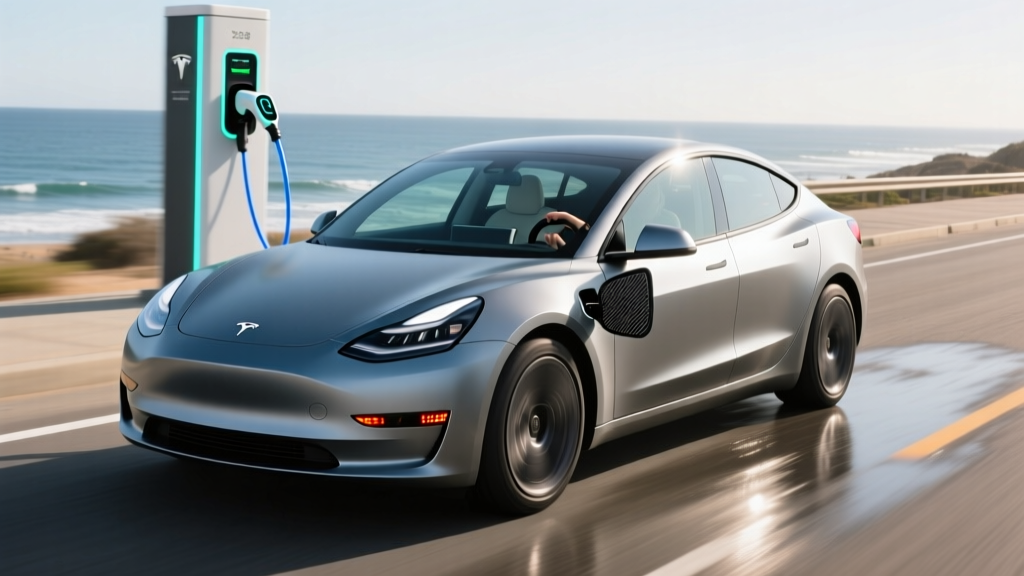
The 2026 Tesla Model 3 remains the efficiency king of the premium electric sedan segment. Whether you choose the Rear-Wheel Drive, Long Range, or Performance trim, the underlying Tesla powertrain delivers class-leading energy conversion — translating fewer kilowatt-hours into more miles than nearly every competitor. After spending time with the refreshed Model 3 lineup, the verdict is clear: Tesla's permanent magnet synchronous reluctance motor architecture and integrated thermal management continue to define what a well-engineered EV drivetrain should be.
This isn't just about straight-line speed. The Model 3's powertrain story in 2026 is about sustained efficiency at highway speeds, predictable charging curves at DC fast chargers, and a battery pack engineered for long-term degradation resistance. Below, we break down every critical number you need before putting down a deposit.
2026 Tesla Model 3 Powertrain Specifications
| Specification | RWD (Standard Range) | Long Range AWD | Performance |
|---|---|---|---|
| Drivetrain | Rear-Wheel Drive (single motor) | Dual-Motor AWD | Dual-Motor AWD |
| Horsepower | 271 hp | 346 hp | 430 hp (estimated) |
| Torque (lb-ft) | 317 | 389 | 471 |
| 0–60 mph | 5.8 sec | 4.2 sec | 2.9 sec |
| Battery (usable, kWh) | ~57.5 kWh (LFP) | ~75 kWh (NMC) | ~75 kWh (NMC) |
| EPA Range | 272 mi | 341 mi | 315 mi |
| MPGe (combined) | 132 MPGe | 130 MPGe | 120 MPGe |
| Efficiency (kWh/100 mi) | 25 | 26 | 28 |
| Top Speed | 125 mph | 125 mph | 163 mph |
| Base MSRP | $38,990 | $45,990 | $53,990 |
Sources: EPA Fuel Economy, Tesla.com specifications.
Real-World Range: What to Actually Expect
EPA Sticker: 272 mi (RWD) / 341 mi (Long Range) / 315 mi (Performance)
Real-World Highway (70–75 mph): Expect ~230–250 mi (RWD) / ~290–310 mi (Long Range)
Cold Weather (below 32°F): Subtract 20–30% — highway range drops to ~175–200 mi (RWD)
City / Stop-and-Go with Regen: Can meet or slightly exceed EPA estimates due to regenerative braking recovery
The Tesla Model 3's powertrain is remarkably efficient in mixed driving, but physics still applies. At sustained highway speeds above 70 mph, aerodynamic drag dominates and the Model 3's consumption rises to roughly 28–31 kWh/100 mi depending on trim and tire selection. The Long Range AWD is the sweet spot for road-trippers: its larger NMC pack provides a usable buffer that makes 250-mile highway stints between Supercharger stops realistic in temperate weather.
The RWD trim's LFP (lithium iron phosphate) battery deserves specific attention. LFP chemistry sacrifices some energy density — hence the smaller ~57.5 kWh pack — but gains cycle-life longevity and thermal stability. Tesla recommends charging LFP packs to 100% regularly, unlike NMC packs where daily charging to 80% is preferred. This means the RWD's 272-mile EPA figure is more practically usable day-to-day than the number alone suggests.
Charging Speed: DC Fast Charge and Home Level 2
Charging speed is where the Tesla powertrain's integrated thermal preconditioning pays dividends. When you navigate to a Supercharger, the car actively warms the battery pack to optimize the charge curve before you arrive — a feature that materially reduces time spent plugged in.
| Charging Method | RWD (LFP) | Long Range / Performance (NMC) |
|---|---|---|
| Max DC Fast-Charge Rate | 170 kW peak | 250 kW peak |
| 10–80% DC Fast Charge | ~28 min | ~25 min |
| Level 2 Home Charging (kW) | 11 kW (48A) | 11.5 kW (48A) |
| Level 2 Miles Added per Hour | ~37 mi/hr | ~40 mi/hr |
| Full Level 2 Charge (0–100%) | ~6.5 hr | ~8 hr |
| Connector | NACS (native) | NACS (native) |
The Long Range and Performance trims accept up to 250 kW at V3/V4 Superchargers, but that peak rate is sustained only briefly — typically between 10% and 30% State of Charge (SoC). Above 50%, the charge curve tapers significantly, dropping below 100 kW past 80%. This is normal behavior for NMC lithium-ion packs and is managed by the car's battery management system to protect long-term cell health.
For home charging, a Tesla Wall Connector on a 60-amp circuit delivers the full 48A/11.5 kW rate. Budget roughly $500–$1,200 for professional installation depending on your panel's proximity to the garage and whether a panel upgrade is needed. Overnight home charging remains the most cost-effective and convenient ownership pattern — at the national average of $0.16/kWh, a full Long Range charge costs approximately $12, versus $45–$60 for an equivalent gas fill-up.
Performance and Driving Dynamics
The Tesla Model 3's powertrain delivers instant torque with zero lag — a fundamental advantage of electric motors over internal combustion. Even the base RWD trim's 5.8-second 0–60 mph time outpaces most turbocharged gas sedans in its price range. The dual-motor AWD variants add a front induction motor for all-weather traction and torque vectoring.
The Performance trim's 2.9-second 0–60 time places it in supercar territory, and the updated adaptive damping system manages to translate that acceleration into composed handling on back roads. Tesla's regenerative braking remains strong — one-pedal driving is intuitive after a short adjustment period, and the system recovers meaningful energy in stop-and-go traffic.
One note for prospective buyers: Tesla no longer offers a dedicated "Standard Range Plus" trim. The current RWD model effectively replaces it, with the LFP battery providing slightly less range but improved longevity characteristics.
Battery Chemistry: LFP vs NMC in the Model 3 Lineup
| Characteristic | LFP (RWD Trim) | NMC (Long Range / Performance) |
|---|---|---|
| Energy Density | Lower — smaller pack for given range | Higher — more range per kg |
| Recommended Daily Charge | 100% (charge to full regularly) | 80% (charge to 100% only for trips) |
| Cycle Life | 3,000+ cycles (superior longevity) | 1,500–2,000 cycles |
| Cold-Weather Performance | Moderately reduced efficiency | Better low-temp energy delivery |
| Cobalt Content | Zero cobalt | Contains cobalt/nickel |
| Weight | Heavier per kWh | Lighter per kWh |
Choosing between LFP and NMC comes down to ownership pattern. If you primarily commute and can charge at home nightly, the LFP-equipped RWD is arguably the more durable long-term choice. If you regularly road-trip and need maximum range between stops, the NMC Long Range is the clear pick.
Pricing, Tax Credits, and Total Cost
| Trim | Base MSRP | Federal Tax Credit (§30D) | Effective Price (if eligible) |
|---|---|---|---|
| RWD | $38,990 | Up to $7,500 (point-of-sale) | ~$31,490 |
| Long Range AWD | $45,990 | Up to $7,500 (point-of-sale) | ~$38,490 |
| Performance | $53,990 | Up to $7,500 (point-of-sale) | ~$46,490 |
- MSRP Cap: Sedans must be ≤$55,000 MSRP (all Model 3 trims qualify)
- Buyer Income Cap: Modified AGI ≤$150,000 (single) / ≤$300,000 (joint)
- Battery Sourcing: Critical minerals and battery components must meet phased-in domestic/free-trade sourcing thresholds — check IRS.gov for current-year compliance lists
- Point-of-Sale Transfer: Eligible buyers can transfer the credit to the dealer for an upfront price reduction at purchase
- Assembly: Vehicle must undergo final assembly in North America (Model 3: Fremont, CA — qualifies)
Consult a tax professional before relying on credit eligibility. Rules change annually and vary by battery batch sourcing.
All three Model 3 trims fall under the $55,000 MSRP sedan cap, making them potentially eligible for the full $7,500 credit. However, the critical-mineral and battery-component sourcing requirements are the wildcard — Tesla has worked to localize its supply chain, but eligibility can shift depending on the specific battery batch your vehicle receives. Always verify your VIN's eligibility at the time of purchase using the IRS's qualified vehicle list.
Interior, Cargo, and Technology
The refreshed Model 3 interior is markedly more refined than pre-2024 versions, with ventilated front seats, ambient lighting, acoustic glass, and a rear-seat touchscreen. Tesla's minimalist approach means nearly all controls route through the 15.4-inch center display — no physical stalks for turn signals (steering-wheel buttons) or gear selection (touchscreen swipe).
- Front Legroom: 42.7 inches
- Rear Legroom: 35.2 inches
- Cargo Volume (trunk + frunk): 23 cu ft combined
- Frunk: 3.1 cu ft
The 23 cu ft of total cargo space is competitive with compact luxury sedans, though the sedan body style limits utility compared to hatchback rivals like the Hyundai Ioniq 6 or Tesla's own Model Y crossover. For families regularly hauling strollers or large gear, the Model Y's 76 cu ft with seats folded is the more practical choice.
Standout Tech:
- Autopilot standard (SAE Level 2 driver-assist — requires active driver supervision)
- Full Self-Driving (Supervised) available as $8,000 add-on or $99/mo subscription — still Level 2, not autonomous
- Over-the-air updates continuously add features
- Sentry Mode dashcam surveillance while parked
- Native NACS charging port — full access to Tesla Supercharger network (17,000+ stalls in North America)
Tesla Autopilot and FSD (Supervised) are SAE Level 2 driver-assistance systems. The driver must remain attentive, keep hands on the wheel, and be prepared to take over at any moment. These are not self-driving systems. Only Level 4 services like Waymo operate without a human driver in geofenced areas.
Warranty Coverage
| Coverage Area | Duration |
|---|---|
| Basic Vehicle Limited Warranty | 4 years / 50,000 miles |
| Battery & Drive Unit (RWD) | 8 years / 100,000 miles |
| Battery & Drive Unit (Long Range / Performance) | 8 years / 120,000 miles |
| Battery Capacity Retention Threshold | 70% minimum over warranty period |
Tesla guarantees that the battery will retain at least 70% of its original capacity during the warranty period. Real-world data from high-mileage Model 3 owners suggests NMC packs typically retain 85–90% capacity at 100,000 miles, while LFP packs may show even less degradation given their superior cycle life. A full battery replacement outside warranty currently ranges from $12,000 to $16,000 depending on pack size — a figure that continues to decline as cell costs drop.
Pros and Cons
Pros
- Class-leading energy efficiency (25–28 kWh/100 mi)
- Access to Tesla Supercharger network — the most reliable DC fast-charging infrastructure in North America
- LFP battery option with exceptional cycle life and 100% daily charge recommendation
- Strong performance across all trims (5.8 sec to 2.9 sec 0–60)
- Over-the-air updates keep the car current post-purchase
- All trims under $55K MSRP sedan cap for §30D tax credit
Cons
- No physical turn-signal stalk or gear selector — adaptation required
- Rear seat space (35.2" legroom) is tight for tall adults on long trips
- Sedan trunk limits cargo versatility vs hatchback competitors
- FSD (Supervised) costs $8,000 extra and remains Level 2 — not autonomous
- RWD LFP range (272 mi EPA) may be insufficient for frequent road-trippers
- Insurance premiums run 15–30% higher than comparable gas sedans
Who Should Buy the 2026 Tesla Model 3?
- Choose the RWD ($38,990) if: You commute under 60 miles daily, charge at home, want the lowest entry price, and value long-term battery durability over maximum range.
- Choose the Long Range AWD ($45,990) if: You take regular road trips, live in a cold climate, need AWD traction, and want 300+ miles of real-world range in temperate conditions.
- Choose the Performance ($53,990) if: You prioritize acceleration and handling dynamics, accept slightly lower range, and want the most engaging EV driving experience under $60K.
- Look elsewhere if: You need three rows of seating, maximum cargo volume, or physical controls — consider the Model Y, Hyundai Ioniq 5, or Kia EV6.
Frequently Asked Questions
What is the real-world range of the 2026 Tesla Model 3?
In mixed driving at moderate temperatures, expect roughly 240–260 miles from the Long Range AWD (vs. its 341-mile EPA rating) and 200–220 miles from the RWD (vs. 272 EPA). Highway driving at 75+ mph reduces these figures by 10–15%. Cold weather below freezing can cut range by 20–30% due to battery heating demands and cabin climate load.
How fast does the Model 3 charge at home and on the road?
On a Level 2 home charger (11.5 kW / 48A), the Long Range adds roughly 40 miles per hour of charging — a full overnight charge takes about 8 hours. At a V3/V4 Supercharger, the Long Range peaks at 250 kW and charges from 10–80% in approximately 25 minutes. The RWD trim peaks at 170 kW with a 10–80% time of roughly 28 minutes.
Does the 2026 Tesla Model 3 qualify for the federal EV tax credit?
All three trims fall below the $55,000 MSRP cap for sedans and are assembled in Fremont, CA. Eligibility for the full $7,500 credit depends on your income (≤$150K single / ≤$300K joint) and whether the specific battery in your vehicle meets the current-year critical-mineral and component sourcing thresholds. Check the IRS qualified vehicle list before purchasing, and consider consulting a tax professional.
Is the Model 3 worth buying vs the Hyundai Ioniq 6 or BMW i4?
The Model 3 Long Range wins on efficiency, Supercharger network access, and over-the-air software updates. The Ioniq 6 offers a more traditional interior with physical controls and competitive range (361 mi EPA on the SEL trim). The BMW i4 delivers a more premium cabin and conventional driving feel at a higher price point (~$52K starting). For pure value-per-mile-of-range and charging infrastructure reliability, the Model 3 still leads.
Is Tesla's Autopilot or FSD actually self-driving?
No. Both Autopilot (standard) and Full Self-Driving Supervised ($8,000 option) are SAE Level 2 driver-assist systems. You must keep your hands on the wheel and eyes on the road at all times. These systems can manage steering and speed on highways effectively, but they cannot handle all driving scenarios and are not autonomous.