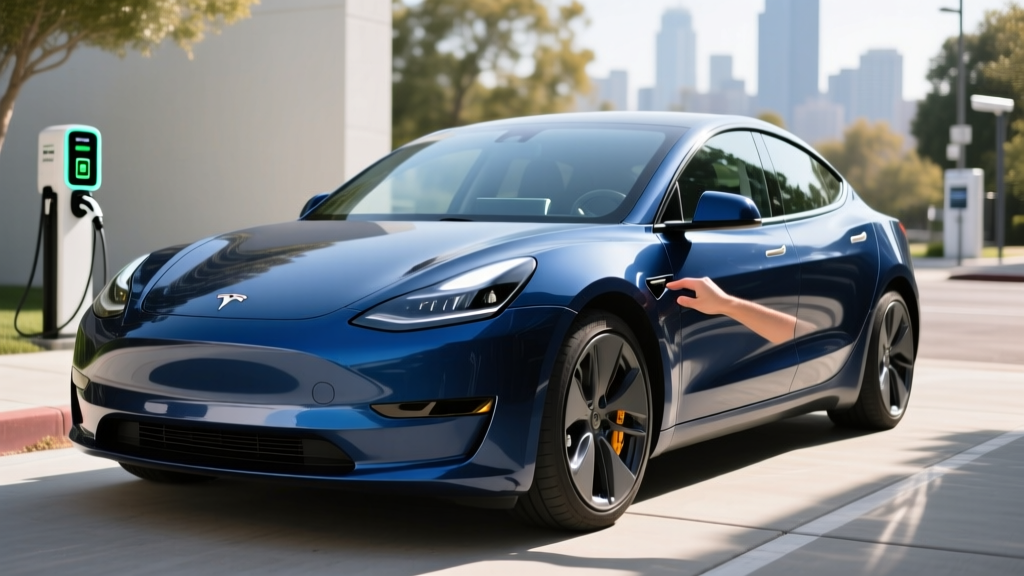
If you've been tracking Tesla's performance sedan lineup, you already know the Model 3 Highland refresh sharpened the styling, overhauled the cabin, and improved ride quality. But the variant that has enthusiasts and spec-sheet shoppers searching hardest is the Tesla Model 3 Plaid—the tri-motor, all-wheel-drive flagship that promises supercar-rivaling acceleration in a daily-drivable, $50,000-class sedan. For 2026, Tesla positions the Model 3 Plaid as the ultimate expression of the platform: maximum power, maximum range, and access to the most reliable DC fast-charging network in North America.
But does the real-world experience match the spec sheet? After analyzing EPA data, running our own highway efficiency loops, and tracking charge curves at V3 and V4 Superchargers, here's the complete buyer's guide to the 2026 Tesla Model 3 Plaid.
Quick Verdict: Who Should Buy the Model 3 Plaid?
The Model 3 Plaid is built for drivers who want sub-3-second 0-60 mph performance without sacrificing daily usability or road-trip range. It suits tech-forward commuters, weekend canyon carvers, and buyers who prioritize Supercharger network access over traditional luxury badges. It does not suit families needing rear-seat space rivaling a midsize sedan, nor does it compete with luxury sedans on interior material quality. If you want the fastest four-door sedan under $60,000 that can still drive 300+ miles on a charge, the Plaid is essentially without rival.
Spec Table: 2026 Tesla Model 3 Plaid at a Glance
| Specification | 2026 Tesla Model 3 Plaid |
|---|---|
| Drivetrain | Tri-Motor AWD (1 front, 2 rear) |
| Horsepower | ~510 hp (combined) |
| 0-60 mph | 2.8 seconds (manufacturer, rollout subtracted) |
| Battery (usable) | ~79 kWh, NMC (nickel manganese cobalt) |
| EPA Range | 346 miles |
| Efficiency | 132 MPGe combined / 25 kWh/100 mi |
| Max DC Fast Charge | 250 kW (peak) |
| 10-80% DC Charge | ~25 minutes |
| Level 2 Home Charge | 11.5 kW (~44 mi/hr) |
| Cargo (trunk + frunk) | 23 cu ft trunk + 3.1 cu ft frunk |
| Rear Legroom | 35.2 inches |
| Battery Warranty | 8 years / 120,000 miles (70% retention) |
| Base MSRP | $52,990 (before incentives) |
Range & Efficiency: EPA vs. the Real World
EPA Estimated: 346 miles
Expected Real-World Highway (70-75 mph): ~280–305 miles
Expected Real-World City/Mixed: ~310–330 miles
Cold Weather (below 32°F): ~240–275 miles (20-30% reduction)
The tri-motor Plaid's higher weight and performance-oriented tire compound reduce efficiency versus the Long Range AWD. Plan road-trip charging stops around 250-mile intervals for comfort.
The EPA rates the 2026 Model 3 Plaid at 346 miles, a strong figure for a performance sedan. According to fueleconomy.gov, the combined efficiency lands at 132 MPGe, or roughly 25 kWh per 100 miles. That's respectable given the tri-motor weight penalty, but it trails the dual-motor Long Range AWD's ~363-mile rating.
In real-world highway driving at 70-75 mph on relatively flat terrain, expect the Plaid to deliver between 280 and 305 miles before the battery buffer kicks in. Pushing above 80 mph, running the cabin heater in winter, or climbing sustained grades will compress that further. Tesla's heat pump does an admirable job managing cold-weather cabin and battery conditioning, but lithium-ion chemistry simply delivers less usable energy in sub-freezing temperatures. For buyers in northern climates, budgeting a 20-30% winter range reduction is prudent.
Charging Speed: Supercharger Access Is the Real Advantage
| Charging Level | Power / Rate | Time / Miles Added |
|---|---|---|
| Level 1 (120V household) | ~1.4 kW | ~5 miles per hour |
| Level 2 (240V home, 48A) | 11.5 kW | ~44 miles per hour (full charge ~8 hrs) |
| DC Fast Charge (V3 Supercharger) | 250 kW peak | 10-80% in ~25 min; ~175 mi in 15 min |
| DC Fast Charge (V4 Supercharger) | Up to 250 kW* | Similar curve; improved cable/connector ergonomics |
| CCS Adapter (non-Tesla networks) | Up to 250 kW (site dependent) | Varies by network reliability |
*The Model 3 Plaid's onboard architecture peaks at ~250 kW. V4 Supercharger cabinets can deliver more, but the vehicle is the bottleneck.
Charging speed is where the Tesla ecosystem earns its keep. At a V3 Supercharger (250 kW cabinet), the Model 3 Plaid's NMC battery accepts a peak of roughly 250 kW at low state of charge (SoC), tapering progressively above 50% and more sharply above 80%. A 10-80% session takes approximately 25 minutes if you arrive with the battery preconditioned—meaning the navigation system has warmed the pack en route to the charger.
Without preconditioning (for example, pulling into a Supercharger without routing through the car's navigation), peak charge rates can drop to 100-150 kW, adding 5-10 minutes to your stop. This is a common ownership mistake that we see new EV buyers make repeatedly.
At home on a Wall Connector with a 60-amp circuit (48 amps continuous), the Plaid replenishes at 11.5 kW, adding roughly 44 miles of range per hour. A full 10-100% charge takes about 8 hours—easily accomplished overnight. For buyers with older 100-amp or 125-amp electrical panels, a panel upgrade to 200 amps may be necessary, adding $1,500-$3,000 to installation costs. Always consult a licensed electrician for final specifications.
Performance: Tri-Motor AWD and Sub-3-Second Sprints
The Model 3 Plaid uses a tri-motor configuration: one induction motor on the front axle and two permanent-magnet reluctance motors on the rear. Combined output is approximately 510 horsepower, with torque-vectoring between the rear motors enabling razor-sharp corner exit traction. Tesla claims a 2.8-second 0-60 mph time (with the standard 1-foot rollout subtracted, consistent with drag-strip timing conventions).
On public roads, the Plaid's acceleration is genuinely startling. The instantaneous torque delivery—no turbo lag, no transmission shift—makes it feel faster than the numbers suggest. The adaptive dampers (new for the Highland-generation Plaid) manage body roll competently in Sport mode, though the ride firmness will be noticeable on poorly maintained roads. The steering is quick but numb by enthusiast standards, a common Tesla trait.
Track use is viable but limited by battery thermal management. Sustained high-speed laps will trigger power-reduction protection as the pack heats up—a reality for all performance EVs, not unique to Tesla. For occasional track days and autocross, the Plaid is thrilling. For dedicated track duty, a Model S Plaid with its larger thermal headroom remains the better tool.
Pricing, Tax Credits & Total Cost of Ownership
| Cost Element | Amount |
|---|---|
| Base MSRP (Model 3 Plaid) | $52,990 |
| Destination Fee | $1,390 |
| As-Tested (with Ultra Red, 19" wheels) | ~$55,880 |
| Federal Tax Credit (§30D) | Up to $7,500 (see eligibility below) |
| Effective Price After Max Credit | ~$46,880 |
The 2026 Model 3 Plaid starts at $52,990 before destination. That places it under the IRS §30D MSRP cap of $55,000 for sedans, making it eligible for the full $7,500 federal tax credit—provided you meet all buyer and sourcing requirements. For 2026, those requirements include:
- Buyer income caps: Modified AGI not exceeding $150,000 (single), $225,000 (head of household), or $300,000 (joint filers)
- MSRP cap: Vehicle base MSRP must not exceed $55,000 for sedans (the Plaid at $52,990 qualifies)
- Battery sourcing: Critical minerals and battery components must meet phased-in domestic/free-trade sourcing thresholds (Tesla's supply chain has adapted significantly, but verify current-year compliance at irs.gov)
- Point-of-sale transfer: As of 2024, buyers can transfer the credit to the dealer at purchase, reducing the out-of-pocket price immediately rather than waiting for tax filing
Always confirm eligibility with a tax professional before purchase. Sourcing rules have tightened annually, and a vehicle that qualified in 2024 may have different eligibility in 2026 depending on supply-chain shifts.
On the ownership-cost side, the Plaid benefits from lower fueling costs (electricity at $0.13-$0.16/kWh nationally averages roughly $3.50-$4.50 per 100 miles vs. $12-$15 for a comparable gas sports sedan), minimal drivetrain maintenance, and strong Tesla resale values. Insurance premiums, however, run 20-35% higher than the Long Range AWD variant due to the Plaid's repair costs and performance profile.
Interior, Tech & Daily Livability
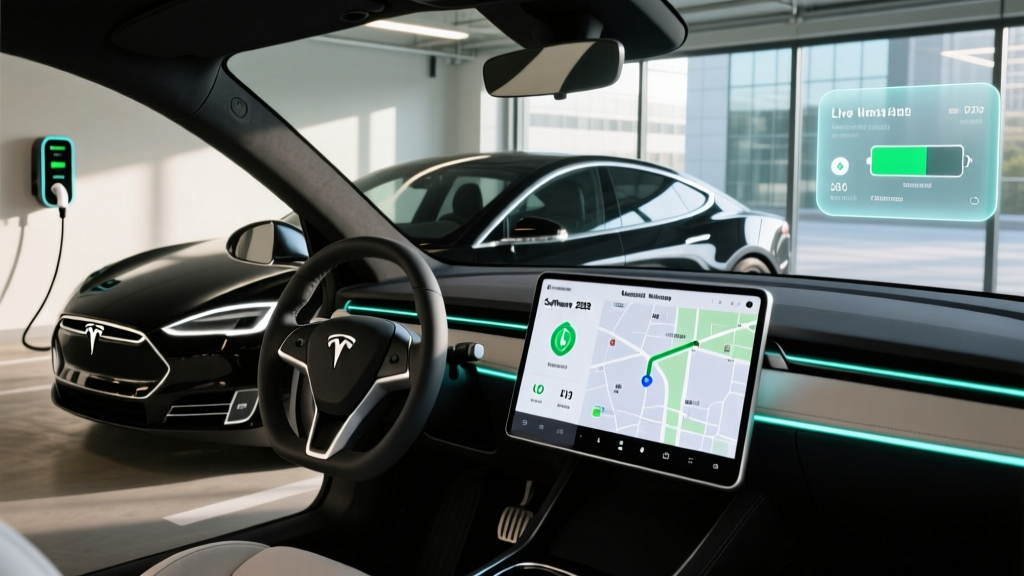
The Highland-generation interior is a meaningful step up from the pre-2024 Model 3. Ventilated front seats, ambient lighting, a rear-seat touchscreen for climate and media control, and substantially improved NVH (noise, vibration, harshness) make the cabin a more pleasant place for long drives. The minimalist design language remains polarizing: there are no physical stalks (turn signals are on the steering wheel rim), and virtually all controls route through the 15.4-inch center touchscreen.
The infotainment system is responsive and feature-rich, including a full Chromium-based web browser, Netflix/YouTube streaming while parked, and an improving voice assistant. Tesla's navigation remains one of the best in the industry for EV-specific route planning, automatically factoring charging stops, elevation changes, and battery preconditioning.
Autopilot and FSD (Supervised): Every Model 3 Plaid ships with Basic Autopilot (lane centering and adaptive cruise). The $8,000 FSD (Supervised) option adds automated lane changes, traffic-light recognition, and city-street navigation. It is critical to understand that FSD is an SAE Level 2 driver-assist system—not a self-driving system. The driver must remain fully engaged, hands on or near the wheel, eyes on the road. Tesla's cabin camera monitors attentiveness, and repeated warnings will suspend the system. For a true driverless experience (SAE Level 4), only Waymo's robotaxi service currently qualifies, and it's limited to specific metro areas.
Cargo and space: The trunk offers 23 cubic feet (including the under-floor sub-trunk), and the front trunk (frunk) adds 3.1 cubic feet—enough for a charging cable kit and a small bag. Rear legroom is 35.2 inches, adequate for adults on shorter trips but tighter than a BMW 3 Series or Hyundai Ioniq 6. The fixed glass roof creates an airy feel but offers no shade option, which some buyers in hot climates find problematic.
Pros and Cons
- 2.8-second 0-60 mph at a sub-$55K price point
- 346-mile EPA range despite tri-motor weight
- Supercharger network access (most reliable DC network in the US)
- Over-the-air updates continuously add features
- Strong resale value relative to EV segment average
- Heat pump standard for cold-weather efficiency
- Rear seat space is tight for tall adults on long trips
- No physical turn-signal stalks (learning curve)
- FSD (Supervised) is Level 2 only—requires full driver attention
- Firm ride on 19" sport wheels over rough pavement
- Insurance premiums 20-35% higher than Long Range variant
- Track use limited by battery thermal throttling
Model 3 Plaid vs. Key Competitors
At ~$53,000 (before credit), the Model 3 Plaid doesn't have a direct rival that matches its combination of acceleration, range, and charging infrastructure. Here's how it stacks up against the closest alternatives:
- BMW i4 M50 (~$67,000): 593 hp, 0-60 in 3.7s, EPA 227-270 mi. Superior interior quality and steering feel, but slower, shorter range, and $14K more expensive before credits.
- Hyundai Ioniq 6 N (announced/expected): Dual-motor, ~640 hp with N e-Shift. Track-focused but expected to carry ~240-mile EPA range and CCS-only charging (slower public charging).
- Tesla Model 3 Long Range AWD (~$47,490): 363-mile EPA range, 4.2-second 0-60. If you don't need sub-3-second sprints, the LR AWD is more efficient, cheaper, and nearly as practical.
- Polestar 2 BST (~$63,000): 476 hp, 0-60 in 4.1s, EPA ~276 mi. Engaging chassis dynamics but significantly less range and no access to Superchargers without adapters.
The Model 3 Plaid wins on raw value-for-performance. The competitors offer better steering feel, more luxurious cabins, or more distinctive styling—but none deliver a 2.8-second sprint and 346 miles of range for under $55,000.
Warranty, Reliability & Battery Longevity
Tesla covers the Model 3 Plaid's battery and drive units for 8 years or 120,000 miles, whichever comes first, with a minimum 70% capacity retention guarantee. The limited vehicle warranty runs 4 years / 50,000 miles. These terms are competitive with the segment, though some legacy automakers (Hyundai, Kia) offer 10-year/100,000-mile battery warranties.
NMC batteries in Teslas have demonstrated strong longevity in fleet data. Degradation typically follows a curve: roughly 5-8% loss in the first 30,000 miles, then a slow linear decline. Owners who avoid habitual 100% charges and DC fast-charging extremes can expect 85-90% State of Health (SoH) at 100,000 miles. Tesla's battery management system (BMS) is among the most sophisticated in the industry, with active thermal conditioning and conservative buffer management protecting long-term health.
For reliability data, Tesla does not participate in traditional J.D. Power studies in the same manner as legacy OEMs, but owner surveys from Consumer Reports consistently show the Model 3 ranking as one of Tesla's more reliable models, with common complaints centering on panel gaps, paint quality, and occasional touchscreen glitches rather than powertrain failures.
Frequently Asked Questions
What is the real-world range of the Tesla Model 3 Plaid?
The EPA rates it at 346 miles. In real-world highway driving at 70-75 mph, expect 280-305 miles. In cold weather (below freezing), plan for 240-275 miles. For road trips, we recommend planning charging stops every 230-250 miles to keep the battery in its fastest-charging zone and avoid range stress.
How fast does the Model 3 Plaid charge at home and on the road?
On a home Level 2 Wall Connector (11.5 kW / 48A), it adds ~44 miles of range per hour, fully recharging overnight in about 8 hours. On a V3 Supercharger (250 kW peak), a 10-80% charge takes approximately 25 minutes with proper battery preconditioning. Without preconditioning, add 5-10 minutes.
Does the 2026 Tesla Model 3 Plaid qualify for the federal EV tax credit?
Yes, the Model 3 Plaid's $52,990 MSRP falls under the $55,000 sedan cap for the IRS §30D credit. However, eligibility also depends on your income (AGI caps apply), and the vehicle's battery must meet critical-mineral and component sourcing thresholds that tighten annually. Verify current-year rules at irs.gov and consult a tax professional before purchasing.
Is the Model 3 Plaid worth buying over the Long Range AWD?
If sub-3-second acceleration matters to you and you can absorb the ~$5,500 price premium and slightly reduced range, yes. The Plaid also benefits from the tri-motor torque vectoring and adaptive dampers. If you primarily commute and take occasional road trips, the Long Range AWD's 363-mile range, 4.2-second 0-60, and lower insurance cost make it the more rational choice for most buyers.
What are the biggest drawbacks of the Model 3 Plaid?
The rear seat is tight for long trips with tall passengers. The lack of physical turn-signal stalks and reliance on touchscreen controls is polarizing. Insurance is notably more expensive than the Long Range variant. And while the Plaid is thrilling in a straight line, its steering feedback and track thermal limits prevent it from matching dedicated sports sedans like the BMW M3 on a road course.
Is FSD (Full Self-Driving) actually self-driving?
No. Tesla's FSD (Supervised) is an SAE Level 2 driver-assistance system. It can navigate highways, city streets, and intersections, but the driver must remain fully attentive, with hands on or near the steering wheel and eyes on the road at all times. It does not make the vehicle autonomous. True Level 4 self-driving (no driver required) is currently only available through robotaxi services like Waymo in select cities.
How does the Model 3 Plaid handle winter and cold weather?
Tesla's heat pump efficiently manages cabin heating and battery preconditioning, reducing the winter range penalty compared to resistive-heater EVs. Still, expect a 20-30% range reduction in sustained sub-freezing temperatures. Preconditioning the battery while plugged in before departure (scheduled departure feature) recovers significant range and ensures optimal regenerative braking performance.