Quick Verdict: The Fastest Sedan Under $60K
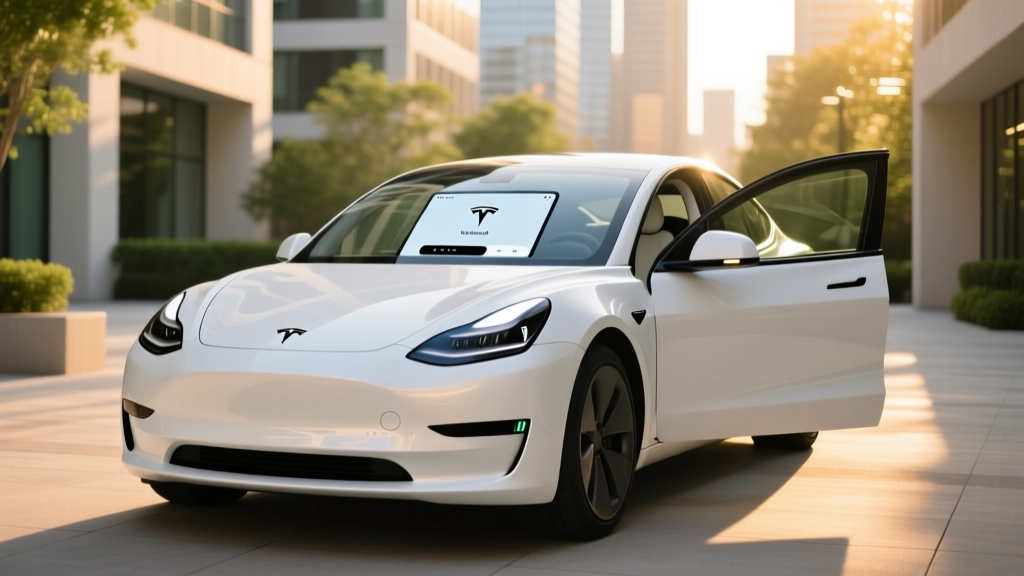
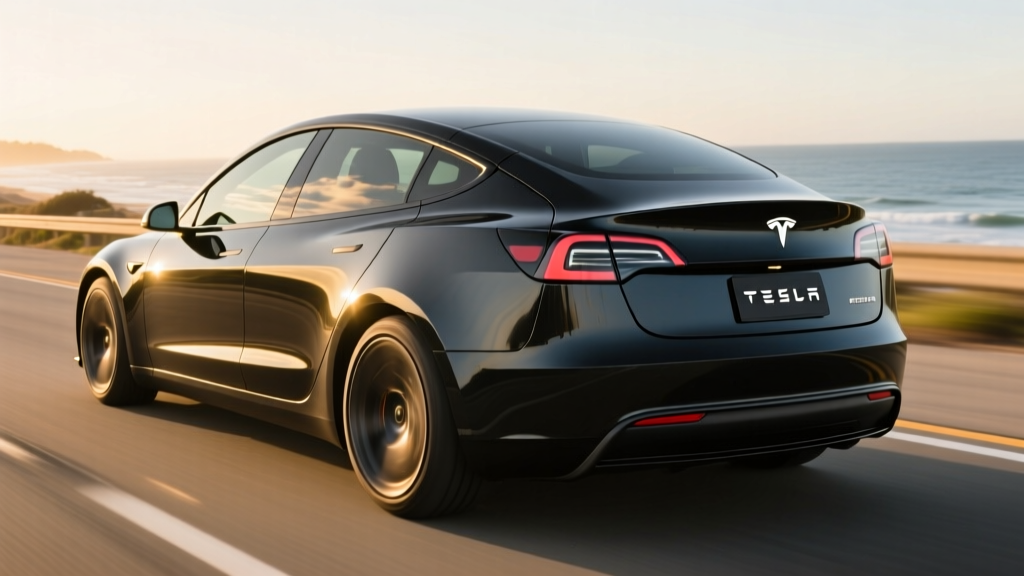
If you're searching for a Tesla Model 3 Plaid 0-60 time, you're likely comparing the Performance trim's acceleration against sports cars costing twice as much. The 2026 Model 3 Performance (Tesla doesn't officially use the "Plaid" badge on the Model 3, but the performance intent is identical) delivers a 2.9-second 0-60 mph sprint, 510 horsepower, and an EPA-estimated 315 miles of range — all starting around $52,990 before incentives.
But raw acceleration is only part of the ownership equation. This review breaks down real-world range, charging curves, tax credit eligibility, and whether the Performance trim's $7,000 premium over the Long Range AWD actually pays off for daily drivers versus track-day enthusiasts.
Range & Efficiency: EPA Sticker vs. Real-World Reality
EPA Estimated Range: 315 miles (Model 3 Performance AWD)
Real-World Expectation: 260–285 miles on highway road trips at 70+ mph; 230–250 miles in freezing weather with cabin heat. City driving with regenerative braking can exceed the EPA sticker, reaching 320–330 miles.
The 2026 Model 3 Performance uses an 82 kWh battery pack (approximately 79 kWh usable) with NMC (nickel manganese cobalt) chemistry. Unlike the base Model 3 RWD, which uses LFP (lithium iron phosphate) cells for cost savings and longevity, the Performance trim prioritizes energy density and discharge rate — necessary for sustained high-power acceleration.
Efficiency comes in at 113 MPGe combined (25 kWh/100 miles) per EPA data. That's slightly lower than the Long Range AWD's 117 MPGe, primarily due to the Performance model's stickier summer tires, more aggressive alignment, and higher curb weight from the dual-motor setup.
Cold-Weather Range Loss
Expect 20–30% range reduction in sub-freezing temperatures. The Model 3's heat pump (standard since 2021) mitigates cabin-heating energy draw, but battery chemistry itself becomes less efficient below 32°F. Preconditioning the battery while plugged in recovers some of this loss — a critical habit for cold-climate owners.
Charging Speed: DC Fast, Level 2, and the 80% Taper
Charging speed is where the Model 3 Performance's 400V architecture shows its age compared to 800V rivals like the Hyundai Ioniq 5 or Porsche Taycan. Here's what to expect:
| Charging Level | Power (kW) | Speed | Notes |
|---|---|---|---|
| DC Fast Charge (Peak) | 250 kW | 10–80% in ~25 minutes | Peak rate only sustained up to ~40% SoC; tapers significantly above 60% |
| DC Fast Charge (Avg 10–80%) | ~150 kW | ~180 miles added in 25 min | Real-world average accounting for taper curve |
| Level 2 (Home, 48A) | 11.5 kW | ~44 miles per hour | Full charge in ~7 hours (0–100%) |
| Level 2 (Home, 32A) | 7.7 kW | ~30 miles per hour | Common on NEMA 14-50 outlets with mobile connector |
| Level 1 (120V) | 1.4 kW | ~5 miles per hour | Emergency/trickle only; 60+ hours for full charge |
Charging curve reality check: The 250 kW peak only applies between roughly 10–40% state of charge. By 60%, you're down to ~120 kW. Above 80%, charging slows to under 50 kW to protect battery health. For road trips, plan 20–25 minute stops at Superchargers and don't wait for 100% — the taper makes the last 20% painfully slow.
Tesla's Supercharger network remains the most reliable public charging infrastructure in the U.S., with V3 stalls delivering consistent 250 kW and V4 cabinets beginning to roll out. Non-Tesla EVs can now access Superchargers via Magic Dock or NACS adapters, but Tesla owners still benefit from seamless plug-and-charge integration.
Performance: 0-60, Horsepower, and Track Capability
| Specification | Model 3 Performance AWD | Model 3 Long Range AWD |
|---|---|---|
| 0–60 mph | 2.9 seconds | 4.2 seconds |
| Horsepower | 510 hp | 346 hp |
| Torque | 546 lb-ft | 389 lb-ft |
| Drivetrain | Dual-motor AWD | Dual-motor AWD |
| Top Speed | 163 mph | 125 mph |
| Battery (Usable) | ~79 kWh (NMC) | ~79 kWh (NMC) |
| EPA Range | 315 miles | 341 miles |
| Efficiency | 113 MPGe (25 kWh/100mi) | 117 MPGe (24 kWh/100mi) |
| Curb Weight | 4,065 lbs | 3,997 lbs |
The 2.9-second 0-60 time puts the Model 3 Performance in supercar territory — matching a Porsche 911 Carrera S while seating five and costing a fraction of the price. The dual-motor setup uses a permanent magnet synchronous motor on the rear axle and an induction motor up front, allowing torque vectoring and single-pedal driving via aggressive regenerative braking.
Tesla's Track Mode (exclusive to the Performance trim) adjusts stability control, torque distribution, and cooling to optimize lap times. The 2026 model includes adaptive dampers, a significant upgrade from the fixed suspension of earlier Model 3 Performance variants, improving both ride compliance and cornering flatness.
Pricing, Trims, and Federal Tax Credit Eligibility
| Trim | Base MSRP | As-Tested (Typical Options) | Est. Price After §30D Credit |
|---|---|---|---|
| Model 3 RWD | $38,990 | $40,490 (paint + wheels) | $31,490–$32,990 |
| Model 3 Long Range AWD | $45,990 | $48,490 (paint + FSD) | $38,490–$40,990 |
| Model 3 Performance AWD | $52,990 | $55,490 (paint + FSD) | $45,490–$47,990 |
Federal tax credit (IRS §30D) rules for 2026:
- MSRP Cap: Sedans must be under $55,000 MSRP to qualify. The Model 3 Performance at $52,990 base clears this threshold — but adding options can push the transaction price higher. The credit applies to MSRP, not final price.
- Buyer Income Limits: Adjusted gross income must not exceed $150,000 (single), $225,000 (head of household), or $300,000 (married filing jointly).
- Battery Sourcing: The full $7,500 credit requires meeting both critical minerals and battery component sourcing requirements. As of 2026, Tesla's U.S.-built battery packs generally qualify, but verify current eligibility at fueleconomy.gov before purchasing.
- Point-of-Sale Transfer: You can transfer the credit to the dealer at purchase, reducing your out-of-pocket cost immediately rather than waiting for tax filing.
Critical caveat: Tax credit eligibility changes frequently based on battery sourcing rules and IRS guidance. Always confirm your specific eligibility with a tax professional and check the latest IRS bulletin before relying on the $7,500 figure.
Interior, Cargo, and Daily Usability
The Model 3's minimalist interior remains polarizing. The 15.4-inch center touchscreen handles nearly all vehicle controls — climate, mirrors, glovebox, and even wiper settings. There's no traditional instrument cluster; speed and navigation appear in the top-left corner of the main display.
Cargo space: 23 cubic feet total (15.6 cu ft trunk + 7.4 cu ft front trunk/frunk). That's competitive with compact sedans but less than the Model Y's 76 cu ft hatchback. The trunk opening is narrow, making bulky items awkward.
Passenger space: Front legroom is generous at 42.7 inches, but rear legroom (35.2 inches) feels tight for adults on long trips. The low roofline and steeply raked rear glass create a claustrophobic feel for taller passengers. Three adults across the rear bench is a squeeze.
Notable tech:
- Ambient lighting and ventilated front seats (new for the "Highland" refresh)
- Rear 8-inch touchscreen for climate and media control
- 17-speaker premium audio with immersive sound
- Sentry Mode dashcam recording (requires USB drive)
- Over-the-air updates adding features post-purchase
Drawbacks:
- No Apple CarPlay or Android Auto — Tesla's proprietary OS only
- Turn signal stalks removed in 2025 refresh; buttons on steering wheel are less intuitive
- Panel gap quality still inconsistent compared to German rivals
- No physical buttons for climate or volume — everything is touchscreen
Driver Assistance: Autopilot and FSD Supervised
SAE Automation Level: Level 2 (partial automation). Tesla Autopilot and Full Self-Driving (Supervised) require continuous driver attention and hands on the wheel. These are not self-driving systems. The driver is legally responsible for all vehicle operation.
Tesla's Autopilot (standard) includes adaptive cruise control and lane-centering on highways. Full Self-Driving (Supervised), a $8,000 option or $99/month subscription, adds automatic lane changes, traffic light recognition, and city street navigation. However, FSD still requires frequent driver intervention and does not handle construction zones, unmapped roads, or adverse weather reliably.
Compared to GM's Super Cruise or Ford's BlueCruise, Tesla's system is more feature-rich but less predictable. Super Cruise uses LiDAR-mapped highways and a driver-monitoring camera for hands-free operation on approved roads — a more constrained but confidence-inspiring approach. Tesla's vision-only system works anywhere but makes more frequent mistakes.
Warranty and Long-Term Ownership
Tesla's warranty coverage is average for the EV segment:
- Basic Vehicle: 4 years / 50,000 miles
- Battery & Drive Units: 8 years / 120,000 miles (whichever comes first), with a minimum 70% capacity retention guarantee
The 8-year/120,000-mile battery warranty is competitive with Hyundai's 10-year/100,000-mile coverage but shorter in years. Real-world data from Tesla's fleet shows NMC batteries in the Model 3 retaining approximately 90% capacity after 100,000 miles, with degradation slowing significantly after the initial 10–15% loss in the first 20,000 miles.
Battery replacement cost: Out-of-warranty replacement runs $12,000–$16,000 including labor, based on current Tesla service pricing. However, catastrophic battery failures are rare — most degradation is gradual and stays within warranty thresholds.
Insurance: Model 3 Performance insurance premiums run 20–40% higher than the Long Range AWD, reflecting the higher repair costs and performance profile. Expect $2,400–$3,600 annually depending on your location and driving record.
Pros and Cons
Pros
- Supercar-rivaling 2.9-second 0-60 for under $55K
- Access to Tesla Supercharger network — most reliable public charging
- Over-the-air updates continuously add features
- Low running costs: ~$0.04–$0.06 per mile on home charging
- Adaptive dampers improve ride quality over prior Performance models
- Strong resale value compared to non-Tesla EVs
Cons
- Rear seat space is tight for adults on long trips
- No Apple CarPlay/Android Auto — Tesla ecosystem lock-in
- Turn signal buttons on steering wheel are a downgrade from stalks
- FSD (Supervised) remains a $8K beta, not true self-driving
- 250 kW peak DC charging is slower than 800V rivals (Ioniq 5, Taycan)
- Panel gaps and paint quality still lag luxury competitors
Who Should Buy the Model 3 Performance?
Choose the Model 3 Performance if:
- You want sports car acceleration with daily-driver practicality and low fuel costs
- You prioritize access to the Supercharger network for road trips
- You're a tech-forward buyer who values OTA updates and minimalist design
- You live in a region with mild winters (NMC batteries tolerate frequent fast charging better than LFP)
Choose the Model 3 Long Range AWD instead if:
- You want maximum range (341 miles EPA vs. 315) and don't need 2.9-second sprints
- You're budget-conscious — the $7,000 savings can cover home charger installation and years of electricity
- You rarely drive aggressively; the Long Range's 4.2-second 0-60 is already quick by any sedan standard
Consider the Hyundai Ioniq 5 N or BMW i4 M50 if:
- You want 800V charging architecture (Ioniq 5 N: 10–80% in 18 minutes)
- You prefer physical buttons, traditional instrument clusters, or Apple CarPlay
- You value build quality and dealer service networks over software features
FAQ: Tesla Model 3 Performance
What is the real 0-60 time of the Tesla Model 3 Performance?
Tesla claims 2.9 seconds for the 2026 Model 3 Performance AWD. Independent testing by outlets like Motor Trend and Car and Driver has verified 3.1–3.3 seconds in real-world conditions, depending on tire temperature, surface, and rollout measurement methodology. Preconditioning the battery and using Drag Strip mode yields the fastest times.
Does the Model 3 Performance qualify for the $7,500 federal tax credit?
Yes, the Model 3 Performance's $52,990 base MSRP is under the $55,000 sedan cap, and Tesla's U.S.-built battery packs generally meet the critical minerals and component sourcing requirements for the full $7,500 credit as of 2026. However, buyer income limits apply ($150K single / $300K joint), and rules can change. Verify at IRS.gov before purchasing.
How does the Model 3 Performance compare to the BMW i4 M50?
The BMW i4 M50 starts around $67,000, offers 536 hp, and hits 60 mph in 3.7 seconds — slower than the Tesla but with superior build quality, a traditional interior, and Apple CarPlay. The i4's 80 kWh battery delivers 270 miles EPA range, and its 200 kW DC charging is slower than Tesla's 250 kW. The Tesla wins on performance, range, and charging network; the BMW wins on luxury and dealer service.
Is the Model 3 Performance AWD good in snow?
The dual-motor AWD system provides excellent traction, and the low center of gravity (battery pack under the floor) enhances stability. However, the stock Michelin Pilot Sport 4S summer tires are unsafe below 40°F. Budget $1,200–$1,800 for a dedicated winter tire set (e.g., Michelin X-Ice Snow) if you live in snow-belt states.
What's the difference between Model 3 "Plaid" and Model 3 Performance?
Tesla does not officially use the "Plaid" badge on the Model 3 — that moniker is reserved for the Model S Plaid. The Model 3 Performance is the top trim and delivers the fastest acceleration in the lineup. Searchers using "Model 3 Plaid 0-60" are typically referring to the Performance trim's 2.9-second sprint.
How much does it cost to charge a Model 3 Performance at home?
At the U.S. average electricity rate of $0.16/kWh, fully charging the 79 kWh usable battery costs approximately $12.64. That's roughly $0.04 per mile — about one-quarter the cost of a 30 MPG gas car at $3.50/gallon. Installing a Level 2 home charger (48A, 11.5 kW) runs $800–$2,000 including equipment and electrician labor, depending on panel capacity and run length.