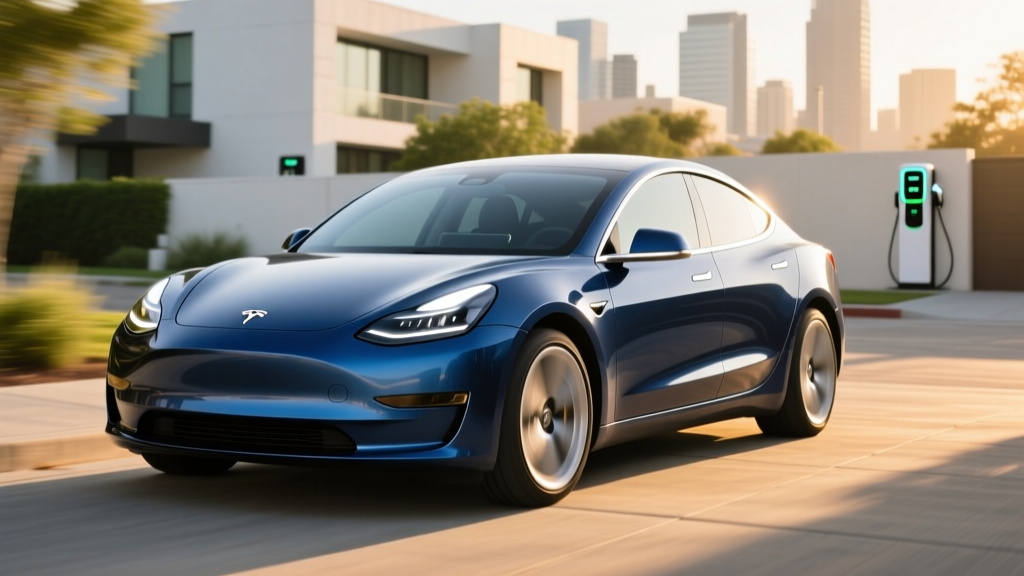
If you've been searching for Tesla Model 3 pictures to decide whether this sedan belongs in your driveway, you're not alone. The refreshed Model 3 (internally dubbed "Highland" and carried into the 2026 model year) is one of the most photographed EVs on the road — but glossy images only tell part of the story. Below, we go far beyond the gallery to deliver the exact range, charging, pricing, and ownership data you need to make an informed purchase.
2026 Tesla Model 3 at a Glance: Full Spec Sheet
| Specification | RWD (Standard Range) | Long Range RWD | Long Range AWD | Performance |
|---|---|---|---|---|
| EPA Range | 272 mi | 363 mi | 346 mi | 315 mi |
| Battery (usable) | ~60 kWh (LFP) | ~79 kWh (NMC) | ~79 kWh (NMC) | ~79 kWh (NMC) |
| Max DC Fast Charge | 170 kW | 250 kW | 250 kW | 250 kW |
| 10–80% DC Time | ~25 min | ~22 min | ~22 min | ~22 min |
| Level 2 Home Charge | 11.5 kW (~44 mi/hr) | 11.5 kW (~44 mi/hr) | 11.5 kW (~44 mi/hr) | 11.5 kW (~44 mi/hr) |
| 0–60 mph | 5.8 sec | 5.8 sec | 4.2 sec | 2.9 sec |
| Horsepower | 283 hp | 283 hp | 346 hp | 510 hp |
| Drivetrain | RWD | RWD | Dual-Motor AWD | Dual-Motor AWD |
| MPGe (combined) | 132 MPGe | 132 MPGe | 121 MPGe | 113 MPGe |
| Base MSRP | $38,990 | $42,490 | $47,490 | $52,990 |
Real-World Range: What the EPA Sticker Doesn't Show
The Model 3's efficiency is among the best in the EV segment. Its heat pump, thermal management system, and low drag coefficient (0.219 Cd) help it squeeze more miles per kWh than most rivals. According to EPA data at fueleconomy.gov, the Long Range AWD achieves 121 MPGe combined — roughly 25 kWh per 100 miles. The RWD variant is even thriftier at 132 MPGe.
For daily commuting under 60 miles round-trip, any trim will go 3–5 days between charges. Road trippers in the Long Range AWD can comfortably plan 220–250-mile legs between Supercharger stops, keeping a safety buffer.
Charging Speed: DC Fast Charging and Home Setup
| Charging Level | Power (kW) | Speed (mi/hr added) | Notes |
|---|---|---|---|
| Level 1 (120V outlet) | ~1.4 kW | ~4–5 mi/hr | Emergency/trickle only |
| Level 2 (240V, 48A) | 11.5 kW | ~44 mi/hr | Full charge overnight (~8–9 hrs) |
| DC Fast (V3 Supercharger) | Up to 250 kW | Up to 175 mi in 15 min | Peak rate; tapers above 60% SoC |
| DC Fast (CCS adapter/other networks) | Up to 250 kW | Varies | Requires NACS-to-CCS adapter on older chargers |
The Long Range and Performance trims peak at 250 kW on V3 Superchargers, pulling a 10–80% charge in roughly 22 minutes under ideal conditions. However, Tesla's charge curve tapers meaningfully after 60% State of Charge. Expect 60–80% to take nearly as long as 10–60% — a pattern common to most NMC batteries. The RWD's LFP pack peaks at 170 kW and charges slightly slower, taking about 25 minutes for 10–80%.
At home on a Level 2 Wall Connector (48 amps / 11.5 kW), any Model 3 adds roughly 44 miles of range per hour of charging. A full overnight session easily replenishes even the Long Range battery. Installation of a 240V/60A circuit typically runs $800–$2,000 depending on panel proximity and local permitting — budget for a licensed electrician and possible panel upgrade if your home has a 100A service.
Pricing, Trims, and Federal Tax Credit Eligibility
| Trim | Base MSRP | Est. After §30D Credit | Destination |
|---|---|---|---|
| RWD (Standard Range) | $38,990 | ~$31,490* | $1,390 |
| Long Range RWD | $42,490 | ~$34,990* | $1,390 |
| Long Range AWD | $47,490 | ~$39,990* | $1,390 |
| Performance | $52,990 | ~$45,490* | $1,390 |
*Estimated after the $7,500 federal §30D tax credit, transferred at point of sale. Eligibility depends on buyer income, battery sourcing, and MSRP caps. Verify current-year rules at IRS.gov.
Under current IRS §30D rules, the Model 3 qualifies for up to $7,500 in federal tax credit — now transferable to the dealer at point of sale, effectively reducing your purchase price on the spot. However, eligibility hinges on several requirements:
- MSRP cap: Sedans must be under $55,000. The RWD, Long Range, and Long Range AWD all clear this. The Performance trim at $52,990 also qualifies, but options can push it over the cap.
- Buyer income limits: Modified AGI must not exceed $150,000 (single), $225,000 (head of household), or $300,000 (joint filing).
- Battery sourcing & critical minerals: A percentage of battery components must be manufactured or assembled in North America, and critical minerals must be sourced from the U.S. or FTA partners. Tesla's supply chain has shifted substantially, but the exact credit split ($3,750 + $3,750) can vary by production batch. Confirm with your dealer at purchase.
Interior, Cargo, and Daily Livability
The refreshed Model 3 interior is noticeably more refined than pre-2024 versions. Tesla added ventilated front seats, acoustic glass all around, ambient lighting, and a rear 8-inch touchscreen for passengers. The minimalist cabin removes nearly all physical buttons — turn signals are on the steering wheel (a capacitive button, not a stalk), and gear selection is via the touchscreen or a roof console.
Dimensions that matter:
- Front legroom: 42.3 inches
- Rear legroom: 35.2 inches
- Trunk (rear): 23 cu ft
- Frunk (front trunk): 3.1 cu ft
- Total cargo: ~26 cu ft (rear seats up)
Rear seat space is adequate for adults on shorter trips but tighter than a Hyundai Ioniq 6 or BMW i4 for long highway rides. The trunk is deep and practical, swallowing two large suitcases plus a stroller. The frunk holds a charging cable bag and a small grocery run.
Tech, Driver Assistance, and What's Missing
The 15.4-inch center touchscreen runs Tesla's latest software, which is fast, responsive, and feature-dense. Navigation with real-time Supercharger routing remains best-in-class. Over-the-air updates continue to add features post-purchase — a Tesla hallmark.
Standard Autopilot includes adaptive cruise control and lane centering. FSD (Supervised) adds automatic lane changes, traffic light/stop sign recognition, and city-street navigation. Real-world performance varies — FSD handles many scenarios well but can make unexpected decisions in construction zones or unusual intersections. Treat it as a fatigue-reducing assist, not a replacement for attention.
Notable drawbacks: No Apple CarPlay or Android Auto. No physical instrument cluster. The turn-signal buttons on the wheel (replacing the traditional stalk) require a learning curve and frustrate some drivers in roundabouts. No heads-up display. And while the cabin is quieter post-refresh, road noise on coarse pavement is still perceptible.
Warranty and Long-Term Ownership
Tesla's warranty structure is straightforward:
- Basic vehicle: 4 years / 50,000 miles
- Battery & drive unit (RWD/LFP): 8 years / 100,000 miles
- Battery & drive unit (Long Range/Performance/NMC): 8 years / 120,000 miles
- Capacity retention threshold: 70% during warranty period
Tesla's LFP batteries (RWD trim) are known for exceptional cycle life — often exceeding 3,000 cycles with minimal degradation. Tesla recommends charging LFP packs to 100% regularly, unlike NMC, which benefits from an 80% daily charge limit for longevity. NMC packs in Long Range and Performance trims may degrade 8–12% over the first 100,000 miles, based on fleet data — well within the 70% warranty floor. A full battery replacement outside warranty currently runs approximately $12,000–$16,000 depending on pack size.
Pros, Cons, and Who Should Buy the Model 3
Pros
- Class-leading efficiency (132 MPGe combined on RWD)
- Supercharger network access — the most reliable DC charging ecosystem
- Over-the-air updates keep the car current
- Strong real-world range (300+ mi highway on Long Range)
- Low running costs: ~$0.04–$0.06/mi on home electricity
- Excellent safety ratings (NHTSA 5-star, IIHS Top Safety Pick+)
Cons
- No Apple CarPlay / Android Auto
- Turn-signal buttons (no stalk) are polarizing
- Rear seat is snug for tall adults on long trips
- FSD (Supervised) is expensive and still requires full driver attention
- Ride can be firm on broken pavement
- Insurance premiums run 15–25% higher than segment average
Best for: Tech-forward commuters, solo drivers or couples, and road-trippers who value Supercharger infrastructure. The Long Range AWD is the sweet spot for most buyers — 346 miles EPA, dual-motor traction in rain and snow, and a strong balance of price and range. The RWD at ~$31,490 after the federal credit is one of the most affordable premium EVs available, ideal for a second car or urban commuter with home charging.
Consider alternatives if: You need a spacious rear seat for teenagers or car seats (look at the Model Y or Hyundai Ioniq 5), you insist on CarPlay, or you drive in extreme cold where LFP range loss is more pronounced.
Frequently Asked Questions
What is the real-world range of the 2026 Tesla Model 3?
The Long Range RWD delivers an EPA-estimated 363 miles. Real-world highway driving yields ~300–320 miles in mild weather, and ~250–275 miles in cold conditions below freezing. The RWD (LFP) model typically delivers 230–245 highway miles in temperate weather.
How fast does the Model 3 charge at home and on the road?
On a Level 2 home charger (11.5 kW), the Model 3 adds ~44 miles per hour and fully charges overnight. On a V3 Supercharger (250 kW peak), Long Range and Performance trims go from 10–80% in about 22 minutes, though the charge rate tapers significantly above 60% SoC.
How much does the Model 3 cost after the federal tax credit?
The RWD starts at $38,990 and drops to approximately $31,490 after the $7,500 §30D credit (if eligible). The Long Range AWD comes in around $39,990 after credit. Eligibility requires meeting IRS income caps, MSRP caps, and battery sourcing rules — confirm at purchase.
Is the Model 3 worth buying vs. competitors like the Ioniq 6 or BMW i4?
The Model 3 wins on charging network access, software, and efficiency. The Hyundai Ioniq 6 offers more rear-seat room and 800V ultra-fast charging. The BMW i4 provides a more traditional luxury interior and CarPlay. For most buyers prioritizing total cost of ownership and road-trip convenience, the Model 3 Long Range AWD remains the benchmark.
Does the 2026 Tesla Model 3 qualify for the $7,500 federal EV tax credit?
Yes — all current Model 3 trims are eligible for up to $7,500 under IRS §30D, provided the buyer meets income limits ($150K single / $300K joint), the vehicle MSRP stays under $55,000, and battery sourcing requirements are met. The credit can be transferred at point of sale to reduce your purchase price directly. Always verify current rules at IRS.gov.