The Tesla Model 3 Performance (Highland refresh) isn't just a fast sedan — it's a benchmark that reshaped what a sub-$55,000 electric sports sedan can deliver. With dual-motor all-wheel drive, track-tuned suspension, and Tesla's latest 4680-adjacent battery architecture, this variant targets driving enthusiasts who refuse to choose between lap times and daily practicality. But beyond the headline 0-60 number, how does it stack up on range, charging speed, and real-world ownership costs? This review breaks down every spec that matters.
Model 3 Performance Top Speed and Acceleration
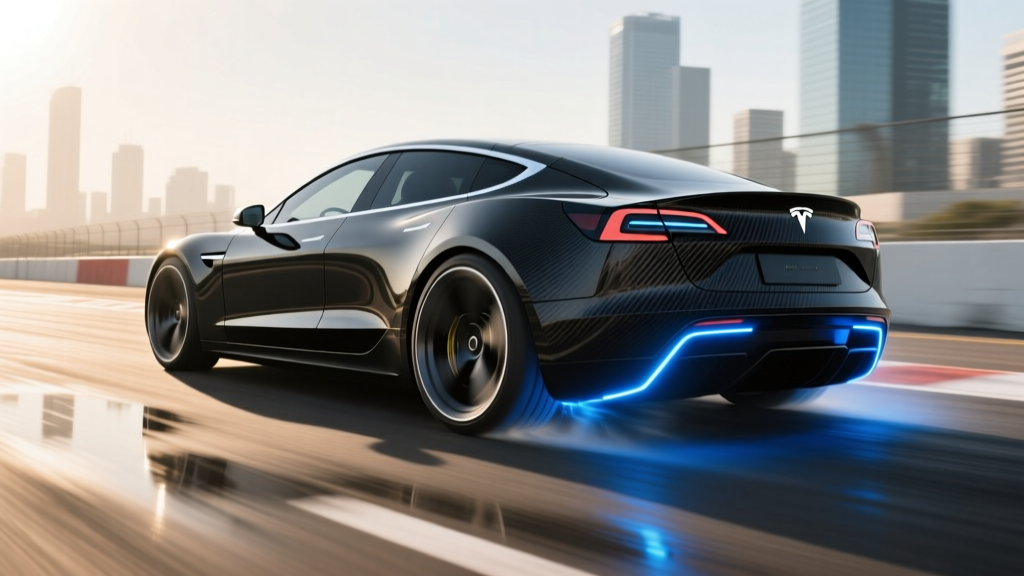
The Tesla Model 3 Performance top speed is electronically limited to 163 mph, a figure Tesla confirmed with the Highland-generation launch. That's up from the pre-refresh Performance model, and it positions this sedan squarely against the BMW i4 M50 (130 mph limited) and the Porsche Taycan (143 mph base, 161 mph 4S).
Acceleration remains the headline act: 0-60 mph in 2.9 seconds (with rollout subtracted), making it one of the quickest production sedans under $60,000. Peak output is rated at 510 horsepower and 546 lb-ft of torque from the dual-motor AWD powertrain. The rear motor is Tesla's permanent-magnet synchronous unit; the front uses an induction motor for efficiency and torque-vectoring capability.
On real roads, the instant torque delivery and sub-3.5-second real-world 0-60 sprints mean passing power is effectively limitless. The new adaptive dampers (a first for Model 3) keep the chassis composed under hard acceleration, and the revised steering ratio (13.7:1) makes the car feel more eager on canyon roads than any previous Model 3.
| Spec | Value |
|---|---|
| 0-60 mph | 2.9 seconds |
| Top Speed | 163 mph (electronically limited) |
| Horsepower | 510 hp |
| Torque | 546 lb-ft |
| Drivetrain | Dual-Motor AWD |
| EPA Range | 315 miles |
| Battery (usable) | ~75 kWh (NMC) |
| Efficiency | 121 MPGe combined / 28 kWh/100 mi |
| Max DC Fast Charge | 250 kW |
| 10-80% DC Charge | ~25 minutes |
| Level 2 Home Charge | 11.5 kW (~44 mi/hr) |
| Cargo Volume | 23 cu ft (rear trunk + frunk) |
| Base MSRP | $54,990 (before incentives) |
| Battery Warranty | 8 years / 120,000 miles |
Real-World Range vs. EPA Estimate
The EPA rates the Model 3 Performance at 315 miles of combined range on its ~75 kWh usable NMC battery pack. That's a strong number for a 510-hp performance sedan, but real-world conditions tell a more nuanced story.
Real-World Highway (70-80 mph, 70°F): ~265-280 miles
Cold-Weather Highway (30°F, heater on): ~220-240 miles
City/Commuting (moderate speeds, regen): ~295-315 miles
Note: Performance tires (Pirelli P Zero) and sport-tuned suspension slightly reduce efficiency vs. the Long Range AWD model.
According to fueleconomy.gov, the Model 3 Performance achieves 121 MPGe combined (28 kWh per 100 miles). That efficiency is among the best in its performance class — the BMW i4 M50 returns 97 MPGe by comparison.
For road trips, plan charging stops assuming 250-270 miles of usable range in fair weather. The Model 3's trip planner in navigation is generally accurate when preconditioning is active, routing you through Superchargers with realistic SoC targets.
Charging Speed: DC Fast, Level 2, and Supercharger Access
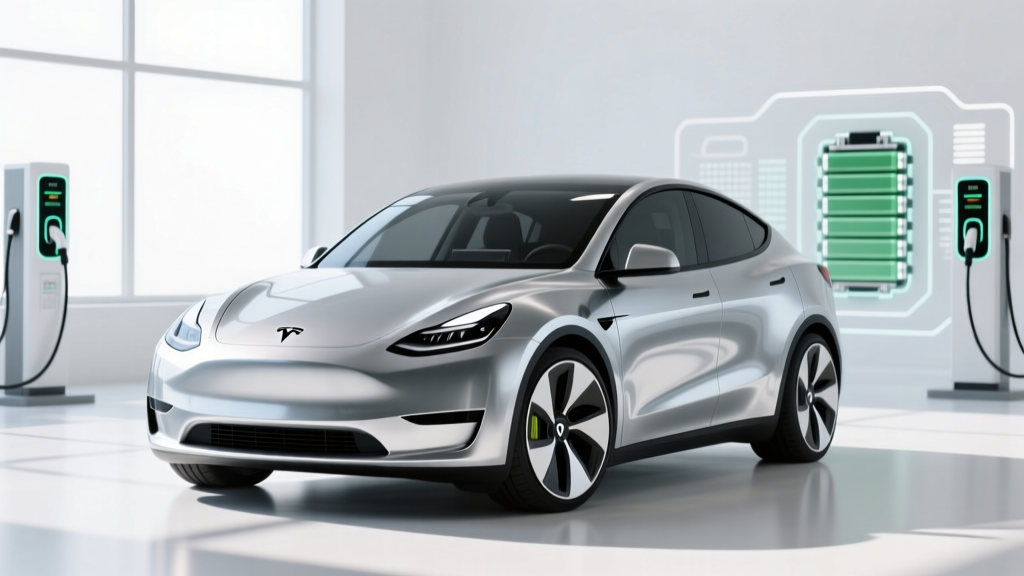
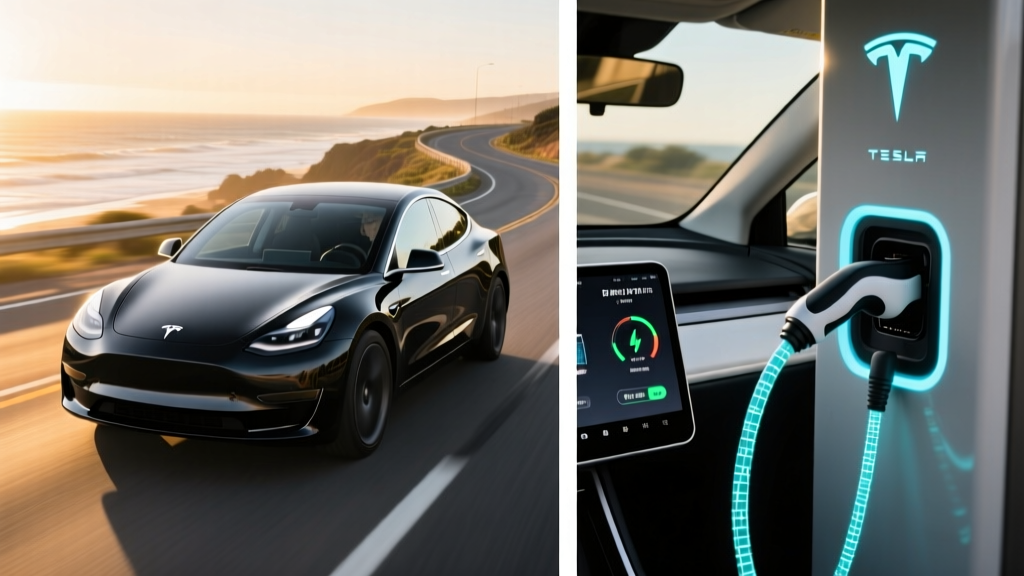
The Model 3 Performance supports a peak DC fast-charge rate of 250 kW on V3 Superchargers and compatible third-party CCS/NACS stations (Tesla's NACS connector is now the industry standard adopted by Ford, GM, Rivian, and others through 2025-2026).
| Charging Level | Power | Speed | Notes |
|---|---|---|---|
| Level 1 (120V) | ~1.4 kW | ~5 miles/hr | Emergency/trickle only |
| Level 2 (240V, 48A) | 11.5 kW | ~44 miles/hr | Full charge in ~7 hours |
| DC Fast (V3 Supercharger) | Peak 250 kW | 10-80% in ~25 min | Preconditioning required for peak rate |
| DC Fast (V4 Supercharger) | Peak 250 kW | 10-80% in ~25 min | Newer cable-cooled stalls |
| CCS Adapter (third-party) | Up to 250 kW | Varies by station | Requires NACS-to-CCS adapter or native CCS |
Understanding kW vs kWh: kW (kilowatts) measures charging power — how fast energy flows into the battery. kWh (kilowatt-hours) measures battery capacity — how much total energy it stores. Think of kW as the width of a hose and kWh as the size of the tank.
The charge curve on the Model 3 Performance peaks near 250 kW between 10-30% SoC, then tapers progressively. By 60% SoC, expect ~120-140 kW; above 80%, the rate drops below 50 kW to protect the battery. This is why Tesla and most EV makers quote 10-80% times — the final 20% can take as long as the first 70%.
Preconditioning matters. Navigate to a Supercharger using the car's built-in routing, and the battery thermal management system will warm or cool the pack to optimal temperature before you arrive. Skipping preconditioning (e.g., driving to a charger without nav routing) can cut peak charge rates by 30-50% in cold weather.
Pricing, Trims, and Federal Tax Credit Eligibility
The 2025/2026 Tesla Model 3 Performance carries a base MSRP of $54,990 (including destination). With common add-ons like Ultra Red paint ($2,500) and 20" Nova wheels, as-tested prices typically land between $56,000 and $59,000.
| Item | Cost |
|---|---|
| Base MSRP (Performance AWD) | $54,990 |
| Premium paint (Ultra Red / Deep Blue) | $2,000-$2,500 |
| FSD (Supervised) license | $8,000 (or $99/mo) |
| Typical as-tested price | $56,000-$63,000 |
| Federal §30D credit (if eligible) | Up to $7,500 (point-of-sale) |
| Effective price after max credit | From ~$47,490 |
Federal EV Tax Credit (IRS §30D): The Model 3 Performance may qualify for up to $7,500 under current IRS §30D rules, but eligibility is not automatic. Requirements include:
- MSRP cap: Sedans must be under $55,000 MSRP. The Model 3 Performance at $54,990 qualifies — but adding options that push the MSRP above $55,000 could disqualify it.
- Buyer income cap: Modified AGI must not exceed $150,000 (single), $225,000 (head of household), or $300,000 (joint).
- Battery sourcing: Critical minerals and battery components must meet phased-in domestic-content thresholds (increasing yearly through 2026-2027). Tesla has worked to source from compliant suppliers, but specific eligibility can change by production batch.
- Point-of-sale transfer: As of 2024+, buyers can transfer the credit to the dealer at purchase, reducing the upfront price rather than waiting for a tax refund.
Always verify current eligibility on the IRS website or with a tax professional before purchasing. Rules have shifted annually and Tesla's sourcing compliance status can update mid-year.
Interior, Cargo, and Technology
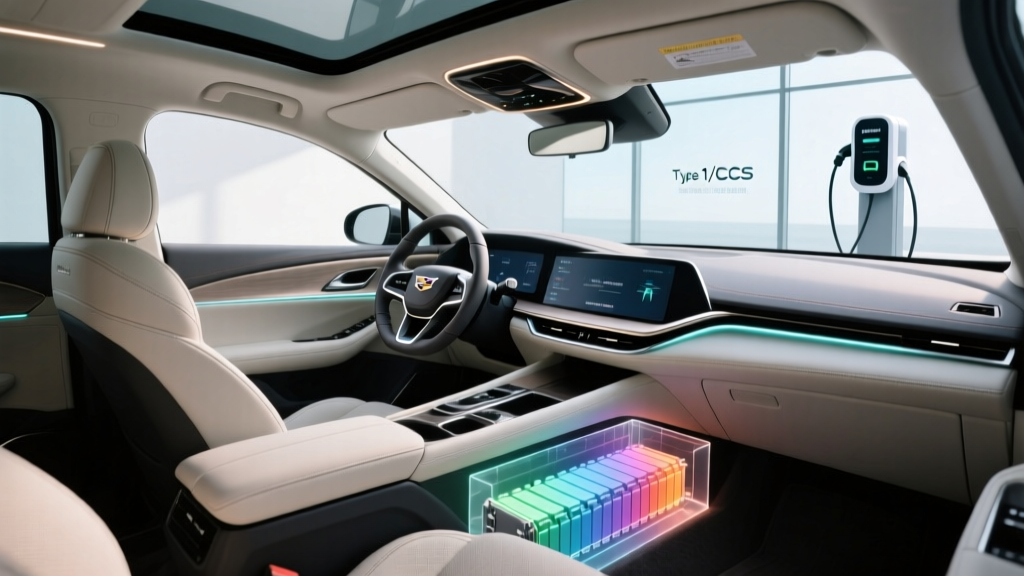
The Highland refresh brought meaningful interior improvements over the pre-2024 Model 3. Ventilated front seats, ambient lighting, rear-seat ventilation, and a rear touchscreen (8" for climate and media) close the gap with luxury competitors.
Dimensions and space:
- Rear trunk: 21 cu ft (including under-floor storage)
- Frunk (front trunk): 2 cu ft (cable storage / small bag)
- Total cargo: 23 cu ft
- Rear legroom: 35.2 inches
- Front headroom: 40.3 inches
The 15.4" center touchscreen runs Tesla's latest software with integrated navigation, streaming, and gaming. There's no Apple CarPlay or Android Auto — Tesla's ecosystem is the only option. The 17-speaker audio system is a genuine highlight, rivaling premium audio packages costing thousands extra from legacy brands.
Driver assistance: Basic Autopilot (adaptive cruise + lane centering) is standard. Tesla's Full Self-Driving (Supervised) remains an $8,000 option or $99/month subscription.
Both Autopilot and FSD (Supervised) are SAE Level 2 driver-assist systems. The driver must remain fully engaged, hands on or near the wheel, and eyes on the road at all times. These are NOT self-driving systems. Level 4 autonomous driving (no driver required) is currently limited to geofenced robotaxi services like Waymo in select cities.
Who Should Buy the Model 3 Performance?
This car suits a specific buyer profile: someone who wants sports-sedan acceleration, daily-drivable comfort, Supercharger road-trip capability, and a tech-forward cabin — all under $55,000 (before incentives).
- You want sub-3-second 0-60 performance without spending Porsche Taycan money
- You have access to home Level 2 charging and live near Supercharger corridors
- You value Tesla's software ecosystem, OTA updates, and Supercharger network reliability
- Track days and canyon carving are part of your driving routine
- You need more than 23 cu ft of cargo or frequently carry rear-seat adults on long trips
- You prefer physical buttons, Apple CarPlay, or a traditional dealership service experience
- You live in a charging desert with limited DC fast-charging infrastructure
- Towing is a priority (Model 3 is not rated for towing)
Model 3 Performance vs. Key Competitors
| Spec | Tesla Model 3 Perf. | BMW i4 M50 | Polestar 2 LR Dual Motor | Hyundai Ioniq 6 AWD LR |
|---|---|---|---|---|
| 0-60 mph | 2.9 sec | 3.7 sec | 4.1 sec (Perf. pack) | 5.1 sec |
| Top Speed | 163 mph | 130 mph | 127 mph | 115 mph |
| EPA Range | 315 mi | 227 mi | 276 mi | 316 mi |
| Max DC Charge | 250 kW | 205 kW | 205 kW | 235 kW |
| Base MSRP | $54,990 | $69,700 | $53,300 | $46,750 |
| Federal Credit | Up to $7,500 | Up to $7,500 | Up to $7,500 | Up to $7,500 |
The Model 3 Performance wins decisively on acceleration and top speed while remaining competitive on range and price. The BMW i4 M50 offers a more traditional luxury interior but costs $15,000 more with less range. The Ioniq 6 matches range at a lower price but can't touch the Tesla's performance envelope. The Polestar 2 is a compelling design-forward alternative but trails in every performance metric.
Biggest Pros and Cons
- 2.9-second 0-60 and 163 mph top speed at a sub-$55K price point
- 315-mile EPA range is exceptional for a 510-hp sedan
- Supercharger network remains the most reliable DC fast-charging ecosystem in North America
- Adaptive dampers and track mode transform it into a credible sports sedan
- OTA updates continuously add features post-purchase
- Strong battery warranty: 8 years / 120,000 miles (70% capacity retention minimum)
- No Apple CarPlay or Android Auto — Tesla-only infotainment
- Rear-seat space is tighter than rivals (35.2" legroom)
- Minimalist interior isn't for everyone; some miss physical controls
- FSD (Supervised) remains a Level 2 system despite its name and $8,000 price tag
- Insurance premiums tend to run 20-35% higher than comparable non-Tesla sedans
- Service center availability varies significantly by region
Warranty and Battery Longevity
Tesla covers the Model 3 Performance with:
- Basic vehicle warranty: 4 years / 50,000 miles
- Battery and drive unit warranty: 8 years / 120,000 miles (whichever comes first), with a guaranteed minimum of 70% capacity retention over that period
Tesla's NMC battery packs in the Model 3 have demonstrated strong longevity in real-world fleet data. Most owners report less than 10% degradation after 100,000 miles, with the steepest drop occurring in the first 10,000-20,000 miles before leveling off. Best practices — avoiding frequent 100% charges, minimizing DC fast-charging when Level 2 is available, and keeping SoC between 20-80% for daily use — further extend battery health.
According to NHTSA, the Model 3 carries a 5-Star Overall Safety Rating, and IIHS has named it a Top Safety Pick+ in recent model years.
Frequently Asked Questions
What is the Tesla Model 3 Performance top speed?
The Model 3 Performance top speed is 163 mph, electronically limited. This applies to the current Highland-generation model (2024-2026 model years).
What is the real-world range of the Model 3 Performance?
The EPA rates it at 315 miles combined. Real-world highway driving at 70-80 mph in moderate temperatures yields approximately 265-280 miles. In cold weather (below freezing), expect 220-240 miles. City driving with regenerative braking can match or slightly exceed the EPA figure.
How fast does the Model 3 Performance charge?
On a V3 or V4 Tesla Supercharger, it peaks at 250 kW and charges from 10-80% in approximately 25 minutes with proper battery preconditioning. On a home Level 2 charger (11.5 kW / 48A), it adds about 44 miles per hour, fully charging overnight in roughly 7 hours.
Does the Model 3 Performance qualify for the $7,500 federal tax credit?
It may qualify under IRS §30D, but eligibility depends on your income (under $150K single / $300K joint), the vehicle's MSRP staying under the $55,000 sedan cap, and battery-sourcing compliance at the time of manufacture. The credit can be applied at point of sale. Always verify on IRS.gov before purchasing.
Is the Model 3 Performance worth buying over the BMW i4 M50 or Polestar 2?
If raw performance and charging infrastructure are your priorities, yes — the Model 3 Performance delivers faster acceleration, higher top speed, more range, and a lower price than the i4 M50. The Polestar 2 offers Scandinavian design and Android Automotive but trails significantly in acceleration and DC charge speed. The Model 3's trade-offs are its minimalist interior and lack of CarPlay.
What are the biggest drawbacks of the Model 3 Performance?
The main compromises are rear-seat space (tighter than luxury rivals), no Apple CarPlay/Android Auto, higher-than-average insurance costs, and regional variability in Tesla service center access. The FSD package, despite its name, is a Level 2 driver-assist system — not autonomous driving.
Is the Model 3 Performance good for road trips?
Yes. With 315 miles of EPA range and access to Tesla's 6,000+ North American Supercharger stations, it's one of the most road-trip-capable EVs available. The onboard trip planner handles charging stops automatically, and 25-minute 10-80% charges keep downtime manageable on long drives.