Quick Verdict: Track-Capable Speed Meets Daily EV Practicality
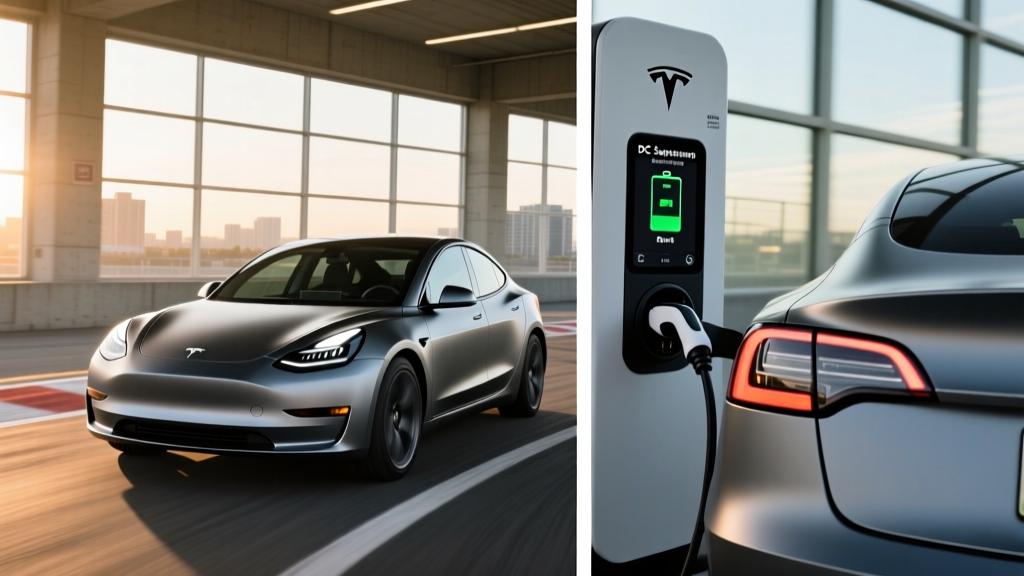
The 2026 Tesla Model 3 Performance remains the benchmark for buyers who want sports-sedan acceleration without paying sports-sedan prices. With a combined output of 510 horsepower, a 2.9-second 0-60 mph time, and an EPA-estimated 315 miles of range, it threads a needle that few EVs can match: genuine track-day capability paired with everyday commuter efficiency. The Highland refresh brought meaningful improvements to ride quality, cabin materials, and noise isolation, addressing the most common complaints from the previous generation. But the real story is how Tesla has managed to keep the Performance variant compelling against a growing field of electric sport sedans — from the Hyundai Ioniq 6 N to the BMW i4 M50 — while pricing it aggressively enough to undercut most of them.
This review breaks down every spec that matters to a real buyer: the exact horsepower figures, real-world range expectations beyond the EPA sticker, DC fast-charging behavior including the taper curve, and the current federal tax credit landscape under IRS §30D rules.
Model 3 Performance HP, Drivetrain & Acceleration Specs
The 2026 Model 3 Performance uses Tesla's latest dual-motor all-wheel-drive powertrain. The rear motor is a permanent-magnet synchronous unit, while the front uses an induction motor — a configuration that allows Tesla to fully disconnect the front motor during light-load cruising to reduce drag losses and improve efficiency.
| Specification | Value |
|---|---|
| Combined Horsepower | 510 hp |
| Combined Torque | 546 lb-ft |
| 0-60 mph | 2.9 seconds |
| Top Speed | 163 mph |
| Drivetrain | Dual-motor AWD |
| Battery (Usable) | ~79 kWh (NMC) |
| EPA Range | 315 miles |
| MPGe (Combined) | 121 MPGe |
| Efficiency | 28 kWh/100 mi |
| Curb Weight | ~4,065 lbs |
| Base MSRP | $54,990 (before incentives) |
The 510 hp figure represents combined peak output from both motors. In practice, the rear-biased torque delivery and the new adaptive damping system (standard on Performance trims) make the car feel more planted under hard acceleration than the previous generation, which could exhibit front-axle torque steer under full launch. Tesla's traction control calibration is among the best in the EV segment — it modulates power rather than aggressively cutting it, which translates to more consistent launches on varying surfaces.
Track Mode returns for 2026 with enhanced thermal management tuning. It preconditions the battery more aggressively before track sessions and allows adjustable front/rear torque distribution, giving drivers the ability to dial in oversteer or understeer bias. This is a genuine differentiator against competitors like the BMW i4 M50, which lacks comparable track-oriented software features.
EPA Range vs. Real-World Expectations
Real-World Highway (70-80 mph, moderate temps): ~255–275 miles
Real-World Cold Weather (below 32°F, mixed driving): ~210–240 miles
City/Commuter Driving (regenerative braking active): ~290–310 miles
The EPA's 315-mile estimate for the Model 3 Performance is achieved under mixed driving conditions at moderate temperatures. In real-world use, your results will vary based on speed, climate, and terrain. On highway road trips at sustained 75-80 mph speeds, expect to see roughly 255 to 275 miles before needing to charge — the Performance trim's stickier tires and sport-tuned suspension create slightly more rolling resistance than the Long Range variant.
Cold weather is the biggest range variable. Lithium-ion batteries lose efficiency in freezing temperatures, and cabin heating draws significant energy even with the Model 3's standard heat pump. In sub-freezing conditions, plan for 210 to 240 miles of usable range. Tesla's battery preconditioning — which warms the pack when you navigate to a Supercharger — mitigates this somewhat by ensuring the battery is in its optimal temperature window for both range and charging speed.
For city commuters using regenerative braking heavily, the Model 3 Performance can approach or even slightly exceed its EPA rating, since stop-and-go driving recaptures energy that would otherwise be lost to friction brakes. The 28 kWh/100 mi combined efficiency rating (per fueleconomy.gov) is among the best in the performance-EV segment.
Charging Speed: DC Fast Charge and Home Level 2
Charging speed is where the Model 3 Performance's engineering shows its maturity. Tesla's V4 Supercharger network and the car's thermal management system combine to deliver some of the fastest real-world charging sessions available in a sedan at this price point.
| Charging Level | Power / Rate | Speed | Notes |
|---|---|---|---|
| Level 1 (120V) | ~1.4 kW | ~4 mi/hr | Emergency/trickle only |
| Level 2 (240V, 48A) | 11.5 kW | ~44 mi/hr | Home Wall Connector; full charge ~8 hrs |
| DC Fast (250 kW V3 Supercharger) | Peak 250 kW | 10-80% in ~25 min | Sustained rate tapers above 55% SoC |
| DC Fast (V4 Supercharger) | Peak 250 kW | 10-80% in ~25 min | Same peak; newer cabinet design |
| CCS Adapter (third-party networks) | Up to 250 kW | Varies by station | Requires Tesla CCS adapter (included) |
The peak 250 kW DC fast-charge rate is achieved at low states of charge (typically 10-20% SoC) and sustained for a meaningful portion of the session. However, as with all EVs, the charge curve tapers significantly above approximately 55% SoC. By the time you reach 80%, the rate has dropped to roughly 60-80 kW, and charging from 80-100% can take as long as the 10-80% session itself. This is standard behavior for NMC lithium-ion packs and is managed by the battery management system to protect long-term cell health.
At home, Tesla's Wall Connector at 48 amps delivers 11.5 kW, adding roughly 44 miles of range per hour of charging. A full overnight session from 20% to 100% takes approximately 8 hours. For most owners, plugging in each evening and charging to 80-90% (configurable in the app) means you start every morning with 250+ miles of range — more than enough for any daily commute.
The included CCS adapter opens access to Electrify America, EVgo, and other third-party networks, though Tesla's Supercharger network remains the most reliable option for road trips. With the industry's shift to NACS as the standard connector, Tesla's native charging ecosystem is a significant long-term ownership advantage.
Pricing, Trim Levels & Federal Tax Credit Eligibility
| Trim | Base MSRP | Est. After §30D Credit | Destination |
|---|---|---|---|
| Model 3 RWD | $38,990 | ~$31,490* | $1,390 |
| Model 3 Long Range AWD | $45,990 | ~$38,490* | $1,390 |
| Model 3 Performance | $54,990 | ~$47,490* | $1,390 |
*Tax credit estimates assume full §30D eligibility. Actual credit depends on individual tax liability, income caps, and battery-sourcing compliance. Consult a tax professional.
The Model 3 Performance starts at $54,990 before destination fees, placing it under the IRS §30D MSRP cap of $55,000 for sedans. This is a critical threshold — vehicles priced above $55,000 (sedans) do not qualify for the federal tax credit, and Tesla has priced the Performance precisely to clear this bar. Adding options like Ultra Red paint ($2,500) or 20-inch wheels can push the total above the cap, so buyers should configure carefully if credit eligibility is a priority.
- MSRP Cap: Sedan must be ≤ $55,000 (Performance base MSRP qualifies; loaded configurations may not)
- Income Limits: Modified AGI ≤ $150,000 (single), $225,000 (head of household), $300,000 (joint)
- Battery Sourcing: Must meet critical minerals and battery component requirements per current-year IRS rules — Tesla's supply chain has been evolving, and compliance percentages change annually
- Point-of-Sale Transfer: Eligible buyers can transfer the credit to the dealer at purchase, reducing the upfront price rather than waiting for a tax refund
- Assembly: Must be assembled in North America (Model 3 is built in Fremont, CA and Austin, TX)
For the most current eligibility details, consult the IRS clean vehicle credits page or speak with a tax professional before purchasing. Battery-sourcing requirements tighten each year, and a vehicle that qualifies in one model year may face different thresholds the next.
Interior, Cargo Space & Technology
The Highland refresh transformed the Model 3 interior from minimalist-but-cheap to minimalist-but-premium. Ventilated front seats, ambient lighting, rear-seat touchscreen, and significantly improved sound insulation (acoustic glass all around) elevate the cabin experience. The 15.4-inch center touchscreen remains the primary interface for all vehicle controls — there are no physical buttons for climate, mirrors, or glovebox, which continues to polarize buyers.
Cargo capacity totals 23 cubic feet combined (15.3 cu ft trunk + 3.1 cu ft frunk), which is competitive with the BMW i4 but less than the Hyundai Ioniq 6's 27.4 cu ft total. Rear-seat legroom measures 35.2 inches — adequate for adults on shorter trips but tight for taller passengers on long drives. The sloping roofline cuts into rear headroom compared to crossover alternatives like the Model Y.
Tech highlights include:
- Autopilot (standard): SAE Level 2 driver assistance with adaptive cruise control and lane-centering. The driver must remain engaged at all times — this is not self-driving.
- Full Self-Driving (Supervised): Optional $8,000 upgrade adding automatic lane changes, traffic light/stop sign recognition, and Navigate on Autopilot. Still SAE Level 2 — requires continuous driver supervision.
- Infotainment: Netflix, YouTube, and gaming while parked; Bluetooth audio; no Apple CarPlay or Android Auto (Tesla's ecosystem only).
- Dashcam & Sentry Mode: Built-in camera recording with USB storage, providing security monitoring while parked.
- Over-the-air updates: Continuous feature additions and performance improvements delivered wirelessly.
Battery Chemistry, Warranty & Long-Term Ownership
The Model 3 Performance uses an NMC (nickel manganese cobalt) lithium-ion battery pack with approximately 79 kWh of usable capacity. NMC chemistry offers higher energy density than LFP (lithium iron phosphate), which is why it's used in the Performance and Long Range trims where maximizing range within the same physical pack size is the priority. The base RWD Model 3 uses LFP chemistry, which trades energy density for longer cycle life and the ability to charge to 100% daily without degradation concerns.
Tesla's battery and drive unit warranty covers 8 years or 120,000 miles (whichever comes first) with a minimum 70% capacity retention threshold. This is competitive with the industry standard, though some competitors like Hyundai offer 10-year/100,000-mile battery warranties. Tesla's real-world degradation data, aggregated from fleet telemetry, shows that Model 3 batteries typically retain approximately 85-90% capacity after 100,000 miles — well above the warranty threshold.
The basic vehicle warranty covers 4 years or 50,000 miles. Tesla does not offer a complimentary maintenance schedule, but EVs require minimal scheduled maintenance — no oil changes, no spark plugs, and regenerative braking significantly extends brake pad life. The primary ongoing costs are tire replacement (performance tires on the Performance trim wear faster and cost $250-$400 per corner), cabin air filter replacement, and washer fluid.
Pros, Cons & Who Should Buy
Pros
- 510 hp and 2.9s 0-60 mph at a $54,990 price point undercuts most competitors
- Supercharger network access remains the most reliable DC fast-charging ecosystem
- 315-mile EPA range is sufficient for most road trips with one charging stop
- Track Mode with adjustable torque bias is a genuine performance differentiator
- Highland interior upgrades address previous-generation quality complaints
- OTA updates continuously add features and improve performance
- Qualifies for §30D federal tax credit at base MSRP (subject to eligibility)
Cons
- No physical buttons or stalks — all controls through touchscreen (turn signals on steering wheel)
- Rear-seat headroom and legroom are tight for tall adults
- No Apple CarPlay or Android Auto support
- Insurance premiums run 20-40% higher than comparable gas sedans
- Performance tires wear quickly and are expensive to replace
- FSD (Supervised) at $8,000 remains a Level 2 system despite the name
- Options can push MSRP above the $55,000 §30D tax credit cap
Who Should Buy the Model 3 Performance?
Choose the Model 3 Performance if: You want sub-3-second acceleration, plan to use the Supercharger network for road trips, value over-the-air feature updates, and primarily drive solo or with one passenger. It's ideal for enthusiasts who want a daily-driver that can handle weekend track days.
Look elsewhere if: You regularly carry rear-seat passengers (consider the Model Y or Ioniq 5), prefer physical controls and Apple CarPlay (BMW i4), need maximum cargo space, or want a longer battery warranty (Hyundai/Kia). If you don't need 510 hp, the Model 3 Long Range AWD offers 363 miles of EPA range for $9,000 less.
Frequently Asked Questions
What is the real-world range of the Tesla Model 3 Performance?
The EPA rates it at 315 miles combined, but real-world highway driving at 75-80 mph typically yields 255-275 miles. In cold weather below freezing, expect 210-240 miles. City driving with heavy regenerative braking can approach or exceed the EPA estimate.
How fast does the Model 3 Performance charge?
On a 250 kW DC fast charger (Tesla V3/V4 Supercharger), it charges from 10-80% in approximately 25 minutes. The peak rate of 250 kW is sustained through roughly 55% SoC before tapering. At home on a Level 2 Wall Connector (11.5 kW), it adds about 44 miles per hour, with a full charge taking around 8 hours.
Does the Model 3 Performance qualify for the federal EV tax credit?
At its $54,990 base MSRP, the Model 3 Performance falls under the $55,000 sedan cap for the §30D credit. However, eligibility also depends on your income (AGI limits apply), battery-sourcing compliance (which changes annually), and North American assembly (which it meets). Adding expensive options can push the MSRP above the cap. Always verify current-year rules on irs.gov and consult a tax professional.
How much horsepower does the 2026 Model 3 Performance have?
The dual-motor AWD powertrain produces a combined 510 horsepower and 546 lb-ft of torque, enabling a 2.9-second 0-60 mph time and a 163 mph top speed.
Is the Model 3 Performance worth it vs. competitors?
Against the BMW i4 M50 (~$67,000, 536 hp, 270-mi range), the Model 3 Performance offers comparable performance for roughly $12,000 less, plus Supercharger access. The Hyundai Ioniq 6 N is a more track-focused alternative but carries a higher price and shorter range. If value-per-horsepower and charging infrastructure matter most, the Model 3 Performance remains the segment leader. If rear-seat comfort or physical controls are priorities, competitors may serve you better.
What is the battery warranty on the Model 3 Performance?
Tesla covers the battery and drive unit for 8 years or 120,000 miles (whichever comes first), guaranteeing a minimum of 70% capacity retention. The basic vehicle limited warranty covers 4 years or 50,000 miles.