Quick Verdict: The Benchmark Sports Sedan, Sharpened
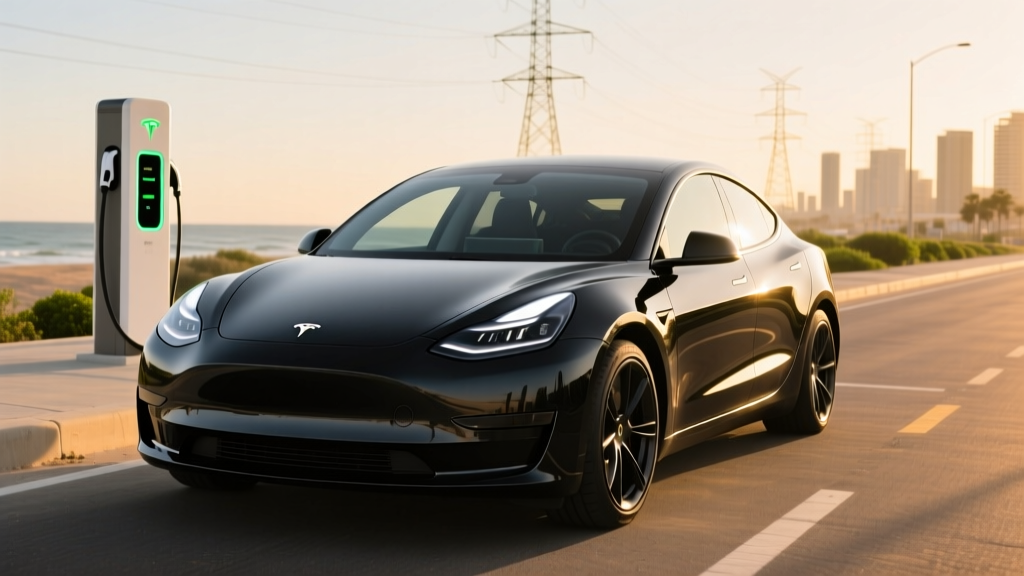
The 2026 Tesla Model 3 Performance remains the EV to beat in the sport-sedan segment. With 510 horsepower, a 2.9-second 0-60 mph sprint, and an EPA-estimated 315 miles of range, it threads the needle between daily-driver practicality and genuine track capability. The Highland refresh brought a quieter cabin, adaptive dampers, and a more refined interior — fixes that addressed the previous generation's biggest complaints. For buyers who prioritize driving dynamics without sacrificing range or charging infrastructure access, the Model 3 Performance still sets the bar.
But the competition has closed the gap. Hyundai's Ioniq 6 N, BMW's i4 M50, and even Tesla's own Long Range AWD trim force real purchase decisions. This review breaks down every number that matters — from sustained DC fast-charge curves to real-world cold-weather range loss — so you can decide if the Performance badge justifies its premium.
Tesla Model 3 Performance: Core Specs at a Glance
| Specification | 2026 Tesla Model 3 Performance |
|---|---|
| Drivetrain | Dual-Motor AWD |
| Horsepower | 510 hp (346 kW) |
| Torque | 546 lb-ft |
| 0-60 mph | 2.9 seconds |
| Top Speed | 163 mph |
| Battery (usable) | ~79 kWh (NMC lithium-ion) |
| EPA Range | 315 miles |
| EPA Efficiency | 113 MPGe / 30 kWh/100 mi |
| Max DC Fast Charge | 250 kW (peak) |
| 10-80% DC Charge Time | ~25 minutes |
| Level 2 Home Charging | 11.5 kW (~44 mi/hr) |
| Cargo Volume | 23 cu ft (rear trunk + frunk) |
| Curb Weight | ~4,065 lbs |
| Base MSRP | $54,990 (before incentives) |
| Battery/Drive Unit Warranty | 8 years / 120,000 miles |
Real-World Range: What the EPA Sticker Doesn't Tell You
Real-World Highway (70-75 mph, mild weather): ~260-280 miles
Real-World City/Mixed Commuting: ~290-310 miles
Cold Weather (below 32°F, highway): ~210-240 miles
The EPA's 315-mile figure assumes a mix of city and highway driving at moderate temperatures. In practice, the Model 3 Performance's efficiency varies significantly based on how and where you drive it.
At sustained highway speeds of 70-75 mph, aerodynamic drag dominates energy consumption. Expect to see roughly 260-280 miles before needing a charge stop in 65-75°F weather. Push the speed to 80+ mph or drive into headwinds and mountain passes, and that number drops further. The Performance trim's staggered 19-inch wheels and stickier tires add rolling resistance compared to the Long Range model, costing roughly 10-15 miles of real-world range.
Cold weather compounds the issue. Tesla's heat pump — standard on all current Model 3 variants — recovers waste heat from the drivetrain to warm the cabin, which helps. But battery chemistry itself becomes less efficient below freezing. On a 20°F winter morning with a 40-mile commute and cabin preheating, plan for roughly 210-240 miles of effective range. Preconditioning the battery while plugged in (a feature enabled through the Tesla app's scheduled departure setting) mitigates some of this loss and is critical if you rely on DC fast charging during winter road trips.
For context, fueleconomy.gov lists the Model 3 Performance at 113 MPGe combined, translating to roughly 30 kWh per 100 miles. That's among the most efficient performance sedans available — the BMW i4 M50 consumes closer to 35 kWh/100 mi in similar driving.
Charging Speed: DC Fast Charge Curve and Home Setup
Charging speed is where Tesla's Supercharger network advantage remains tangible, though the gap is narrowing as competitors gain access to NACS connectors and third-party networks expand.
| Charging Level | Power | Speed / Time | Best Use Case |
|---|---|---|---|
| Level 1 (120V household) | ~1.4 kW | ~4-5 mi/hr | Emergency / overnight trickle |
| Level 2 (240V home, 48A) | 11.5 kW | ~44 mi/hr | Daily home charging |
| DC Fast (Tesla Supercharger V3) | 250 kW peak | 10-80% in ~25 min | Road trips |
| DC Fast (150 kW public CCS/NACS) | ~150 kW sustained | 10-80% in ~35 min | Non-Tesla networks |
The charging curve matters more than peak kW. The Model 3 Performance peaks at 250 kW on a V3 Supercharger, but only at low states of charge (roughly 5-25% SoC). By 50% SoC, the rate tapers to approximately 150 kW. Above 80%, it drops further to protect battery health, which is why Tesla and most EV manufacturers quote 10-80% times rather than 0-100%. A full 10-80% session takes roughly 25 minutes under ideal conditions — battery preconditioned, moderate ambient temperature, and a V3 or V4 Supercharger stall not shared with another vehicle.
For home charging, the Model 3's onboard charger accepts up to 11.5 kW on a 240V/48A circuit (a 60-amp breaker is required). That translates to roughly 44 miles of range per hour of charging, meaning a depleted battery fully replenishes in about 8-9 hours overnight. Most owners who charge nightly at home never need to think about public charging except on road trips.
Home Level 2 installation typically costs $800-$2,000 total (charger hardware plus electrician labor and permits), though homes needing a panel upgrade to 200A service could see costs reach $3,000-$5,000. Always get a quote from a licensed electrician before purchasing equipment.
Performance and Driving Dynamics
The headline numbers tell part of the story: 510 horsepower and 546 lb-ft of torque from the dual-motor all-wheel-drive powertrain, launching the Model 3 Performance to 60 mph in 2.9 seconds. That puts it in supercar territory for acceleration — a Ferrari F8 Tributo hits 60 in roughly 2.9 seconds as well — at a fraction of the price.
But the Highland refresh's most meaningful upgrades are in chassis refinement. The 2026 Performance model features Tesla's adaptive damper system, which continuously adjusts suspension firmness based on road conditions and driving mode. In Track Mode, the dampers stiffen, torque distribution shifts rearward for more neutral handling, and stability control thresholds relax for controlled oversteer. In everyday Comfort mode, the ride quality is genuinely compliant over broken pavement — a stark improvement over the crashy, unforgiving suspension of the pre-2024 Model 3 Performance.
The steering remains quick and precise, though feedback through the wheel is muted compared to a Porsche Taycan or even a BMW i4 M50. Tesla's steer-by-wire system is not yet in the Model 3, so you still get a mechanical connection, but the weighting feels artificially consistent rather than naturally progressive.
Braking is a weak point relative to the car's acceleration capability. The regenerative braking system handles most deceleration in daily driving (one-pedal driving remains intuitive and effective), but the mechanical friction brakes lack the initial bite and fade resistance you'd want during repeated track sessions. For spirited canyon driving, they're adequate. For track days, they're the first component you'd want to upgrade.
Interior, Technology, and Daily Livability
The post-Highland Model 3 interior is a meaningful step up in materials and isolation. Acoustic glass on all windows reduces wind and road noise substantially. Ventilated front seats, ambient lighting, and a rear-seat touchscreen (8 inches, controlling climate and media for rear passengers) bring the cabin in line with its luxury-sedan pricing.
The 15.4-inch center touchscreen remains the command center for everything — navigation, media, climate, vehicle settings, and the optional Full Self-Driving (Supervised) software. There are no physical buttons for climate or volume; everything routes through the screen or steering-wheel scroll wheels. This minimalist approach polarizes buyers. If you prefer tactile controls for frequently used functions, spend time with the interface during a test drive before committing.
Cargo space totals 23 cubic feet between the rear trunk (21 cu ft) and the front trunk, or "frunk" (2 cu ft — enough for a charging cable bag or small backpack). Rear-seat legroom measures 35.2 inches, which is adequate for average-height adults but tight for anyone over 6'2" on longer trips. The rear center seat is best reserved for children due to the transmission tunnel hump and narrow cushion.
Pricing, Trims, and Federal Tax Credit Eligibility
| Detail | Amount |
|---|---|
| Base MSRP (Model 3 Performance AWD) | $54,990 |
| Destination Fee | $1,390 |
| FSD (Supervised) Option | +$8,000 |
| Ultra Red / Special Paint Colors | +$1,500 - $2,500 |
| As-Tested Price (w/ FSD, paint, 19" wheels) | ~$66,880 |
| Federal Tax Credit (§30D) — Potential | Up to $7,500 |
| Estimated Net Price After Credit | ~$47,490 (base, if eligible) |
The 2026 Model 3 Performance starts at $54,990 before destination. That places it above the IRS §30D MSRP cap for sedans, which is $55,000. This means the base Performance model with destination ($56,380) technically exceeds the cap, and may not qualify for the full $7,500 federal tax credit depending on how the final configured price is evaluated against the cap.
This is a critical nuance: Tesla has historically structured pricing so that certain trims land just under the cap before options and destination. For the 2026 model year, buyers should verify the exact MSRP of their configured vehicle against current IRS §30D guidelines before assuming credit eligibility.
Beyond the MSRP cap, federal tax credit eligibility also depends on:
- Buyer income limits: Modified AGI must not exceed $300,000 (married filing jointly), $225,000 (head of household), or $150,000 (single)
- Battery component sourcing: A percentage of battery components must be manufactured or assembled in North America (thresholds increase annually)
- Critical minerals: A percentage of critical minerals must be sourced from the US or a free-trade-agreement country
- Point-of-sale transfer: As of 2024, eligible buyers can transfer the credit to the dealer at purchase, reducing the out-of-pocket cost immediately rather than waiting for tax filing
The Model 3 Long Range AWD, starting at $47,490, sits comfortably under the sedan MSRP cap and is more likely to qualify for the full credit. If tax credit eligibility is a priority, the Long Range trim — with 363 miles of EPA range and a 4.2-second 0-60 — may be the smarter financial choice.
Pros and Cons
Pros
- 2.9-second 0-60 mph rivals supercars at a sedan price
- Adaptive dampers transform ride quality vs. prior generation
- Access to Tesla's Supercharger network — 6,000+ V3/V4 stalls in North America
- Class-leading efficiency (113 MPGe) for a performance AWD sedan
- Over-the-air updates continuously add features
- Strong resale value relative to most EV competitors
Cons
- MSRP may exceed $55K sedan cap, jeopardizing federal tax credit
- No physical buttons — all controls routed through touchscreen
- Rear seat space tight for tall adults on long trips
- Friction brakes lack track-day fade resistance
- FSD (Supervised) costs $8,000 and remains Level 2 — not autonomous
- Insurance premiums run 15-30% higher than segment average
How It Compares: Model 3 Performance vs. Key Rivals
The Model 3 Performance doesn't exist in a vacuum. Here's how it stacks up against the most relevant alternatives in the 2026 performance EV sedan space:
| Spec | Tesla Model 3 Performance | Hyundai Ioniq 6 N | BMW i4 M50 |
|---|---|---|---|
| Price (base MSRP) | $54,990 | ~$53,000 | ~$67,300 |
| Horsepower | 510 hp | 641 hp (N Grin Boost) | 536 hp |
| 0-60 mph | 2.9 sec | 3.2 sec | 3.7 sec |
| EPA Range | 315 mi | ~240 mi | ~270 mi |
| Max DC Charge | 250 kW | 350 kW (800V) | 205 kW |
| 10-80% DC Time | ~25 min | ~18 min | ~31 min |
| Charging Network | Tesla Supercharger (NACS) | NACS adapter / public | NACS adapter / public |
| Federal Tax Credit | Borderline (MSRP cap) | Likely eligible | Not eligible (MSRP cap) |
Which Should You Choose?
Choose the Tesla Model 3 Performance if: You value Supercharger network access, maximum range per dollar, Tesla's software ecosystem, and a proven track record of over-the-air improvements. It's the best all-around daily-driver performance EV.
Choose the Hyundai Ioniq 6 N if: You prioritize the most engaging track experience (simulated gear shifts, aggressive N-tuned chassis), 800V ultra-fast charging capability, and likely federal tax credit eligibility. Trade-off: significantly less range.
Choose the BMW i4 M50 if: You want traditional luxury build quality, physical controls, a premium dealer experience, and don't mind paying more for fewer miles of range and slower charging.
Frequently Asked Questions
What is the real-world range of the 2026 Tesla Model 3 Performance?
The EPA rates it at 315 miles. In real-world mixed driving at moderate temperatures, expect 270-290 miles. Sustained highway driving at 75+ mph drops that to roughly 260 miles, and cold weather (below freezing) can reduce effective range to 210-240 miles. The Performance trim's stickier tires and heavier curb weight cost it roughly 10-15 miles versus the Long Range AWD model.
How fast does the Model 3 Performance charge at home and on the road?
At home on a 240V Level 2 charger (48A), the Model 3 Performance accepts up to 11.5 kW, adding roughly 44 miles of range per hour. A full charge from near-empty takes about 8-9 hours overnight. On a Tesla V3 Supercharger, it peaks at 250 kW and charges from 10-80% in approximately 25 minutes, though the charge curve tapers significantly above 50% SoC — peak rate is only sustained briefly at low battery states.
Does the 2026 Model 3 Performance qualify for the $7,500 federal EV tax credit?
It's borderline. The IRS §30D credit caps sedan eligibility at an MSRP of $55,000. The Model 3 Performance's base MSRP of $54,990 sits just under, but the $1,390 destination charge pushes the total above the cap. Eligibility may depend on how the final configured price is evaluated. Buyers should check IRS.gov and consult a tax professional before assuming the credit applies. Additionally, buyer income limits and battery-sourcing requirements must be met.
Is the Tesla Model 3 Performance worth buying over the Long Range AWD?
It depends on your priorities. The Long Range AWD costs roughly $7,500 less, delivers 363 miles of EPA range (48 more miles), clears the tax credit MSRP cap more easily, and still hits 60 mph in 4.2 seconds — quick by any measure. The Performance adds adaptive dampers, Track Mode, stronger acceleration, and upgraded brakes. If you'll use Track Mode and value the suspension improvements, the premium is justified. If you're primarily commuting and road-tripping, the Long Range AWD is the better value.
What is the battery warranty on the Model 3 Performance?
Tesla covers the battery and drive units for 8 years or 120,000 miles, whichever comes first, with a minimum 70% capacity retention threshold. If the battery degrades below 70% of its original capacity within that period, Tesla will repair or replace it. The NMC chemistry in the Performance model has demonstrated strong longevity in fleet data, with most vehicles retaining 88-92% capacity at 100,000 miles based on aggregated owner reports.
How much horsepower does the 2026 Tesla Model 3 Performance have?
The 2026 Model 3 Performance produces 510 horsepower (346 kW) and 546 lb-ft of torque from its dual-motor all-wheel-drive system. The front motor contributes approximately 200 hp while the rear motor delivers roughly 310 hp, with torque vectoring managed by Tesla's traction control system. This output enables the 2.9-second 0-60 mph time and a top speed of 163 mph.
Sources: fueleconomy.gov (EPA range and efficiency data), IRS.gov (§30D clean vehicle credit rules), Tesla.com (manufacturer specifications). All pricing and specifications reflect 2026 model year data available at time of publication. Tax credit eligibility is subject to change — verify current rules before purchasing.