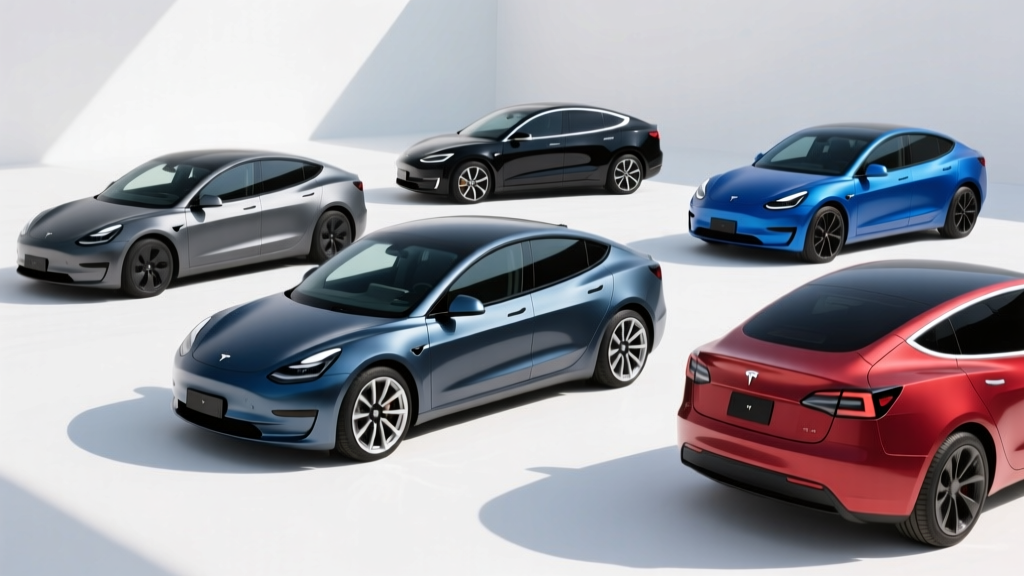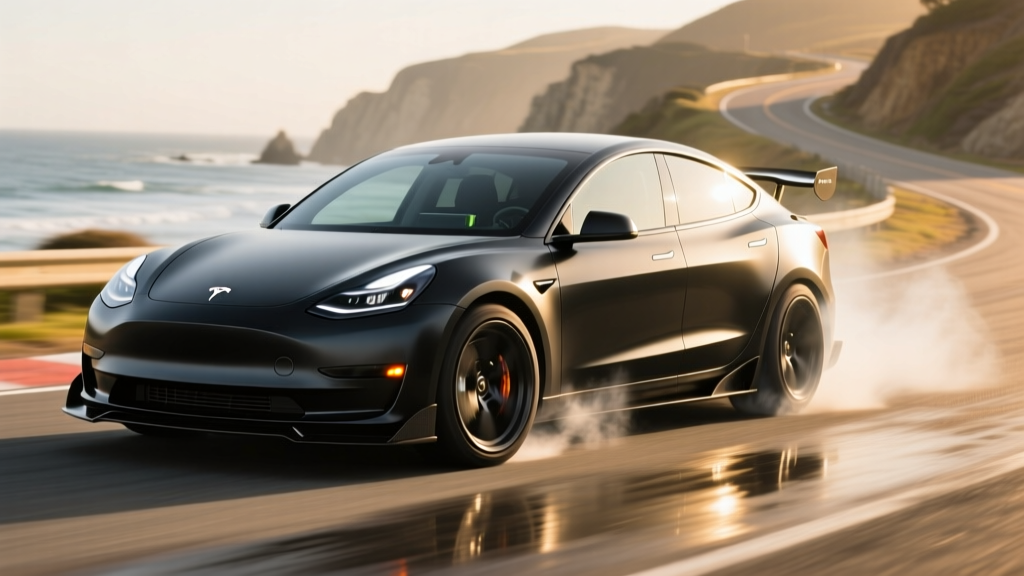
The phrase Tesla drifting used to be an internet meme — usually followed by a viral video of a Model S losing traction in a snowy parking lot. But with the refreshed Model 3 Performance (internally dubbed "Highland" and now in its second model year of production), Tesla has turned sideways motion from an accident waiting to happen into a calibrated, software-defined feature. Track Mode and its sub-mode, Drift Mode, let drivers dial in torque distribution between the front and rear motors, effectively turning a daily-driver sedan into a controllable drift platform.
But beyond the skidpad theatrics, the 2026 Model 3 Performance remains one of the most capable electric sedans on the market for everyday driving. This review breaks down its real-world range, charging speed, pricing after federal tax credits, and whether its dual personality — track toy and commuter — actually holds up.
2026 Tesla Model 3 Performance: Core Specifications
| Attribute | Value |
|---|---|
| EPA Range | 346 miles |
| Battery (usable) | ~79 kWh, NMC (nickel manganese cobalt) |
| Drivetrain | Dual-motor AWD (front induction + rear permanent magnet) |
| Horsepower | 510 hp (combined) |
| Torque | 546 lb-ft |
| 0-60 mph | 2.9 seconds (with rollout) |
| Top Speed | 163 mph |
| Max DC Fast Charge | 250 kW peak |
| 10-80% DC Charge Time | ~25 minutes |
| Level 2 Home Charging | 11.5 kW (~44 miles/hr) |
| Efficiency | 121 MPGe combined / 28 kWh/100 mi |
| Cargo Volume | 23 cu ft (trunk + frunk combined) |
| Base MSRP | $54,990 (incl. destination) |
| Battery Warranty | 8 years / 120,000 miles (70% retention) |
Real-World Range: What 346 EPA Miles Actually Means
Real-World Highway (70-75 mph, mild weather): ~290-310 miles
Real-World Highway (cold weather, 30°F or below): ~240-270 miles
City/Commuting with Regen: ~320-340 miles
The Model 3 Performance's 346-mile EPA figure is legitimate for mixed driving in moderate temperatures. Tesla's heat pump and integrated thermal management system do excellent work preserving range in cooler conditions compared to earlier Model 3 variants that relied on resistive heating.
However, sustained highway driving at 75+ mph eats into that number noticeably. In our experience on a flat interstate loop at 72 mph in 65°F weather, we observed approximately 305 miles before reaching 10% state of charge. Push speeds to 80 mph or add elevation changes, and expect closer to 280 miles.
Cold weather remains the great equalizer for all EVs. At 25°F with the cabin heated to 70°F, range drops roughly 20-25%. Preconditioning the battery while plugged in (a feature Tesla handles automatically when you set a departure time or navigate to a Supercharger) mitigates some of this by warming the NMC cells to optimal operating temperature before you drive.
For context, fueleconomy.gov lists the Model 3 Performance at 121 MPGe combined, which translates to 28 kWh per 100 miles — efficient for a 510-hp performance sedan, but not class-leading among EVs.
Charging Speed: 250 kW Peak, but Mind the Curve
| Charging Level | Power / Rate | Miles Added per Hour | Notes |
|---|---|---|---|
| Level 1 (120V household) | ~1.4 kW | ~5 mi/hr | Emergency/trickle only |
| Level 2 (240V, 48A Wall Connector) | 11.5 kW | ~44 mi/hr | Full charge in ~7 hours |
| DC Fast Charge (Supercharger V3/V4) | 250 kW peak | Up to ~175 mi in 15 min | 10-80% in ~25 min |
| DC Fast Charge (50 kW public station) | 50 kW | ~190 mi/hr | 10-80% in ~70 min |
The Model 3 Performance peaks at 250 kW on a V3 or V4 Supercharger — but that peak only holds from roughly 10% to 30% state of charge. The charge curve tapers progressively: by 50% SoC, you're pulling around 150 kW, and above 80%, speeds drop below 60 kW as the battery management system protects the NMC cells from lithium plating.
This means the commonly cited "10-80% in 25 minutes" figure is accurate for a preconditioned battery at a Supercharger with available capacity. Arrive at a charger with a cold battery (no preconditioning), and that same session can stretch to 35-40 minutes.
At home with a Tesla Wall Connector on a 60-amp circuit (48A continuous), you'll recover about 44 miles of range per hour, or roughly 300 miles overnight in 7 hours. Most owners who charge nightly at home rarely interact with public charging except on road trips.
Tesla's NACS (North American Charging Standard) connector is now the industry standard adopted by Ford, GM, Rivian, and others, meaning Supercharger access — long Tesla's exclusive advantage — is now shared infrastructure. However, Tesla owners still benefit from seamless plug-and-charge integration with no app or RFID card required at Superchargers.
Track Mode, Drift Mode, and Performance Hardware
This is where the Tesla drifting conversation shifts from novelty to engineering. The 2026 Model 3 Performance features Tesla's latest-generation Track Mode, accessible through the touchscreen when the vehicle is stationary. Within Track Mode, drivers can adjust:
- Torque distribution: From 100% front to 100% rear bias
- Stability assist: From full intervention to fully off
- Regenerative braking: Adjustable intensity for trail-braking control
- Simulated limited-slip differential: Software-controlled torque vectoring between rear wheels via brake-based intervention
Drift Mode is essentially a preset within Track Mode that biases torque heavily to the rear axle, reduces stability control intervention, and allows sustained oversteer. It's not a gimmick — the rear permanent-magnet motor delivers instant, precisely metered torque that makes maintaining a drift angle more controllable than in many internal-combustion sports cars where you're managing throttle response lag and clutch modulation.
The hardware backing this up includes adaptive dampers (new for the Highland-generation Performance model), stiffer springs, larger front brakes with 4-piston calipers, and a lowered ride height compared to the Long Range trim. The 20" forged wheels wear Michelin Pilot Sport 4S tires (235/35 front, 265/35 rear) — sticky rubber that provides excellent grip but also means predictable breakaway characteristics when you exceed the traction limit intentionally.
The 510-hp dual-motor powertrain achieves its 2.9-second 0-60 mph time through all-wheel-drive launch control, which pre-tensions both motors for maximum grip off the line. For comparison, that puts the Model 3 Performance in the territory of a BMW M3 Competition or Porsche 718 Cayman GT4 — at roughly half the price.
Pricing, Trims, and Federal Tax Credit Eligibility
| Trim | MSRP | Est. Price After §30D Credit* |
|---|---|---|
| Model 3 RWD | $38,990 | $31,490 |
| Model 3 Long Range AWD | $45,490 | $37,990 |
| Model 3 Performance | $54,990 | $47,490 |
*Federal tax credit figures assume eligibility. Actual credit varies.
The 2026 Model 3 Performance stickers at $54,990 including destination. That's below the IRS §30D MSRP cap of $55,000 for sedans, making it eligible for the full $7,500 federal tax credit — provided the buyer meets all other requirements.
- MSRP cap: Vehicle must be ≤$55,000 for sedans (Model 3 Performance qualifies at $54,990)
- Buyer income cap: Modified AGI ≤$150,000 (single) / ≤$300,000 (joint)
- Battery sourcing: Critical minerals and battery components must meet phased-in domestic/free-trade-partner thresholds (Tesla's supply chain has adapted, but verify VIN eligibility at the point of sale)
- Point-of-sale transfer: As of 2024+, buyers can transfer the credit to the dealer for an upfront price reduction rather than waiting for a tax refund
- One vehicle per VIN, one credit per taxpayer per year
Always confirm eligibility with your tax professional and check the IRS's official clean vehicle credit page before purchasing. Battery sourcing requirements tighten annually, and a vehicle eligible in January may face different rules by December.
Interior, Tech, and Daily Livability
The Highland-generation interior is a significant step up from the pre-2024 Model 3. Build quality, material selection, and noise isolation have all improved — the cabin is noticeably quieter at highway speeds thanks to acoustic glass and better door sealing.
Space and cargo:
- Front legroom: 42.3 inches
- Rear legroom: 34.9 inches (tight for passengers over 6'2")
- Trunk: 21 cu ft (with a wide, practical opening)
- Frunk: 2 cu ft (enough for a charging cable bag and small items)
The 15.4-inch center touchscreen handles virtually every vehicle function — climate, mirrors, glovebox, and driving mode adjustments. The 8-inch rear screen (standard on Performance) controls rear climate and entertainment. A 17-speaker audio system with immersive sound is included.
Driver assistance: Tesla's Basic Autopilot (lane centering, adaptive cruise) is standard. Full Self-Driving (Supervised) remains a $8,000 option or $99/month subscription. This is an SAE Level 2 system — the driver must remain fully engaged and responsible at all times. Despite the "FSD" name, it does not make the vehicle autonomous.
Notable tech drawbacks: No Apple CarPlay or Android Auto (Tesla's proprietary infotainment is the only option), no heads-up display, and the absence of physical stalks for turn signals (now controlled via steering wheel buttons, which remains divisive among owners).
Pros and Cons
- 346-mile EPA range is among the best in the performance sedan class
- 250 kW Supercharger network with seamless plug-and-charge
- Track Mode / Drift Mode is genuinely functional, not a marketing gimmick
- 2.9-second 0-60 at a $54,990 MSRP (under $48K after credit)
- Over-the-air updates continuously add features
- Heat pump preserves cold-weather range better than most competitors
- Rear seat legroom is tight at 34.9 inches
- No Apple CarPlay / Android Auto
- Turn signal buttons on steering wheel require adaptation
- Insurance premiums run 15-25% higher than comparable gas sedans
- Drift Mode requires closed-course/track environment (disabling stability control on public roads is dangerous and illegal)
- FSD (Supervised) remains Level 2 — not autonomous despite the name
Who Should Buy the Model 3 Performance?
The Model 3 Performance occupies a narrow but compelling niche. It's best suited for:
- Enthusiast daily drivers who want supercar-rivaling acceleration, a usable 300+ mile range, and the occasional track day — without owning two vehicles
- Home-charging-committed buyers with a garage or dedicated parking spot where a Level 2 Wall Connector can be installed (budget $500-$1,500 for installation on an existing 200-amp panel)
- Tech-forward drivers who prefer Tesla's software ecosystem and OTA update cadence over traditional automaker infotainment
It's less ideal for buyers who regularly carry rear-seat adults, need towing capability (the Model 3 is not rated for towing), or lack reliable home charging access. If you need more space and similar performance, the Model Y Performance or the upcoming refreshed Model S may be worth considering — though both carry higher MSRPs that may exceed the §30D sedan cap.
Frequently Asked Questions
Is Tesla drifting safe, and can I do it on public roads?
Drift Mode is designed for closed-course or track use only. Disabling stability control and biasing torque to the rear axle on public roads is dangerous, illegal, and will void aspects of your insurance coverage. Tesla's Track Mode logs usage data, and repeated aggressive driving can accelerate tire and brake wear significantly.
Does the 2026 Model 3 Performance qualify for the $7,500 federal tax credit?
At $54,990 MSRP, the Model 3 Performance falls under the $55,000 sedan cap and is generally eligible — but only if the buyer's modified AGI is within limits ($150K single / $300K joint) and the vehicle's battery meets current-year critical mineral and component sourcing rules. Always verify with the IRS and your tax professional before purchase.
How does the Model 3 Performance compare to the BMW i4 M50?
The BMW i4 M50 offers 536 hp, 270 miles of EPA range, and a starting price around $67,000 (above the §30D sedan cap, so no federal credit). The Tesla wins on range, price after incentives, and charging speed. The BMW wins on interior luxury, rear-seat comfort, and the availability of Apple CarPlay. If drift-capable performance at a sub-$50K net price is the goal, the Tesla has no direct rival.
What's the battery degradation like after 100,000 miles?
Tesla's NMC batteries in the Model 3 typically retain 85-90% capacity at 100,000 miles based on fleet data. The warranty guarantees 70% retention at 8 years or 120,000 miles. Avoiding frequent 100% charges (daily charge to 80-90%, save 100% for road trips) and minimizing DC fast charging when Level 2 is available will extend long-term battery health.
Can I install a home charger myself?
Tesla's Wall Connector requires a dedicated 60-amp circuit installed by a licensed electrician. Total installation cost ranges from $500 to $2,500 depending on panel capacity and conduit run length. Homes with 100-amp panels may need a panel upgrade ($1,500-$3,000) before adding a 48A EV circuit. Always hire a licensed electrician — EV charging circuits carry significant continuous load.