Quick Verdict: Still the Acceleration Benchmark Under $55K
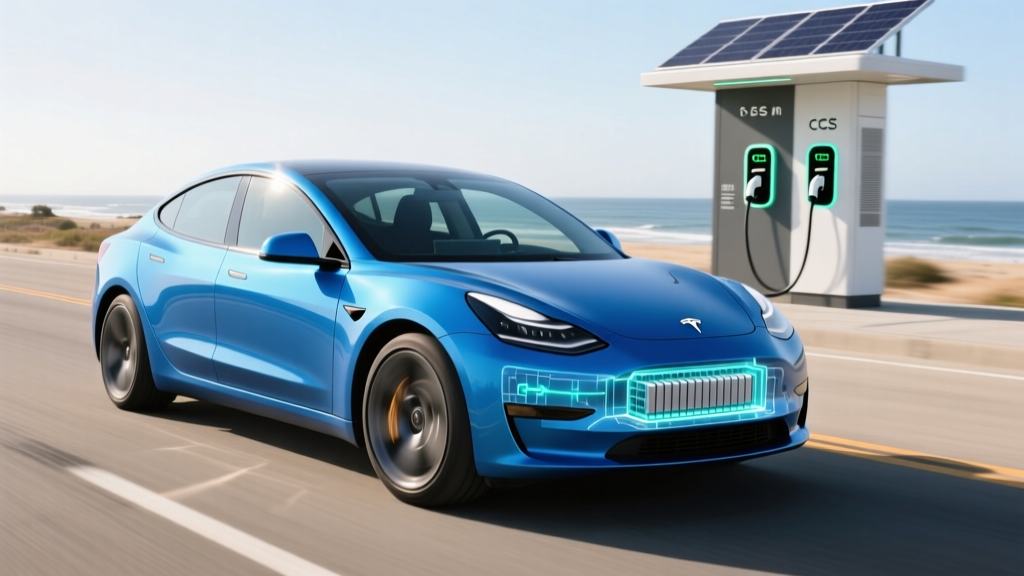
If you search for the acceleration of Tesla vehicles, the Model 3 Performance is where the conversation starts. The 2026 Tesla Model 3 Performance posts a manufacturer-claimed 0-60 mph time of 2.9 seconds — a figure that still embarrasses six-figure supercars. But straight-line speed is only part of the story. This is also a 346-mile EPA-rated daily driver with access to the largest DC fast-charging network in North America, a usable back seat, and a starting MSRP of $54,990 before incentives. The question isn't whether it's fast. It's whether the performance premium over the Long Range AWD ($47,490) makes sense for real-world buyers who spend 95% of their miles commuting, not drag-racing.
| Spec | Value |
|---|---|
| EPA Range | 346 miles |
| Battery (usable) | ~79 kWh, NMC (2170 cells) |
| Drivetrain | Dual-Motor AWD |
| Horsepower | 510 hp (combined) |
| 0-60 mph | 2.9 seconds |
| Top Speed | 163 mph |
| Peak DC Fast Charge | 250 kW (Supercharger V3/V4) |
| 10-80% DC Time | ~25 minutes |
| Level 2 Home Charge | 11.5 kW (~44 mi/hr) |
| EPA Efficiency | 113 MPGe combined / 30 kWh/100 mi |
| Cargo Volume | 23 cu ft (rear trunk + frunk) |
| Base MSRP | $54,990 (excl. destination) |
| Battery Warranty | 8 years / 120,000 miles (≥70% retention) |
Acceleration & Performance: The Numbers Behind the 2.9-Second Claim
The headline number is 2.9 seconds to 60 mph on a prepped surface with launch control engaged. Independent tests by outlets like Car and Driver and Motor Trend have consistently validated this figure within a tenth of a second on warm pavement. The dual-motor setup pairs a rear permanent-magnet synchronous motor with a front induction motor, delivering 510 hp and instantaneous torque with zero drivetrain lag.
What the spec sheet doesn't convey is the character of the acceleration. Unlike a turbocharged gas car that builds boost, the Model 3 Performance delivers maximum torque at 0 RPM. The result is a relentless, linear shove that doesn't taper until well past 80 mph. Quarter-mile times land around 11.0 seconds at 125 mph — firmly in sports-car territory.
The Performance trim adds several hardware upgrades over the Long Range AWD:
- Adaptive dampers with Track Mode tuning for reduced body roll
- High-performance brakes with larger front rotors for repeated hard stops
- 20-inch wheels with Pirelli P Zero summer tires (standard) or optional all-seasons
- Carbon-fiber interior trim and sport seats with enhanced bolstering
Track Mode allows drivers to adjust front/rear torque bias, stability control intervention, and regenerative braking intensity — features borrowed from the Model S Plaid playbook. In daily driving, the car defaults to a balanced AWD torque split that prioritizes traction and efficiency.
Range & Efficiency: What 346 EPA Miles Means in the Real World
Real-World Expectation: ~280-310 mi (highway 70-80 mph); ~250-270 mi (cold weather, below 32°F); ~330-340 mi (city/mixed, moderate temps)
Why the gap? The EPA test cycle includes generous city-regen assumptions. Sustained highway speeds above 70 mph increase aerodynamic drag exponentially, and cold temperatures reduce battery chemical efficiency while demanding cabin heat. The Model 3 Performance's 20-inch summer tires also add rolling resistance versus the Long Range's 19-inch all-seasons.
The 2026 Model 3 Performance uses a ~79 kWh usable NMC (nickel-manganese-cobalt) battery pack built with Tesla's 2170-format cells. NMC chemistry offers higher energy density than LFP (lithium iron phosphate), which is why the Performance and Long Range trims achieve 300+ mile ranges. The trade-off: NMC degrades slightly faster over time and is more sensitive to sustained 100% SoC storage. Tesla recommends daily charging to 80-90% for NMC packs and 100% only before long trips.
Efficiency lands at 113 MPGe combined (30 kWh per 100 miles) per fueleconomy.gov. That's competitive with the Hyundai Ioniq 6 (140 MPGe Long Range) but slightly behind due to the Performance's wider tires and more aggressive motor tuning. On a road trip, expect to consume roughly 33-36 kWh/100 mi at 75 mph — translating to about 220-240 miles between DC fast-charge stops if you charge to 80%.
Charging Speed: Supercharger Network Advantage
Charging speed is where Tesla still holds a structural advantage over legacy automakers. The Model 3 Performance supports peak DC fast charging at 250 kW on Tesla Supercharger V3 and V4 stations. A 10-80% session takes approximately 25 minutes under ideal conditions (battery preconditioned via navigation routing to a Supercharger).
| Level | Power | Speed (mi/hr) | Typical Use Case |
|---|---|---|---|
| Level 1 (120V) | ~1.4 kW | ~5 mi/hr | Emergency / overnight trickle |
| Level 2 (240V, 48A) | 11.5 kW | ~44 mi/hr | Home Wall Connector, full overnight fill |
| DC Fast (Supercharger V3) | Peak 250 kW | ~1,000+ mi/hr (peak) | Road trips; 10-80% in ~25 min |
| DC Fast (CCS adapter, 3rd-party) | Up to ~150-175 kW* | Variable | Electrify America, EVgo (with NACS-to-CCS adapter) |
*Peak CCS speeds vary by station and adapter. Tesla's native NACS port on Superchargers delivers the fastest, most reliable charging experience.
A critical detail many buyers overlook: the charge curve taper. The 250 kW peak is sustained only between roughly 10-40% SoC. From 40-60%, power drops to ~175 kW. From 60-80%, it falls to ~100 kW. Above 80%, charging slows dramatically to protect the battery — often below 50 kW. This is why Tesla and experienced owners recommend charging to 80% on road trips and moving on, rather than waiting for a full 100%.
At home, the Tesla Wall Connector delivers up to 11.5 kW on a 60-amp circuit (48A continuous), adding roughly 44 miles of range per hour of charging. An overnight 8-hour session on Level 2 replenishes ~350 miles — more than enough to start every day with a full battery. Installation costs for a 240V/60A circuit typically range from $500-$2,000 depending on panel proximity and local permitting, performed by a licensed electrician.
Pricing, Trims & Federal Tax Credit Eligibility
The 2026 Model 3 lineup has been streamlined into three main trims:
- Rear-Wheel Drive: $38,990 — 272 mi EPA, LFP battery, 0-60 in 5.8s
- Long Range AWD: $47,490 — 363 mi EPA, NMC battery, 0-60 in 4.2s
- Performance AWD: $54,990 — 346 mi EPA, NMC battery, 0-60 in 2.9s
| Line Item | Amount |
|---|---|
| Base MSRP | $54,990 |
| Destination Fee | $1,390 |
| As-Tested (Ultra Red paint, no other options) | $58,380 |
| Federal §30D Tax Credit (if eligible) | -$7,500 |
| Effective Price After Credit | ~$50,880 |
Federal tax credit eligibility is not automatic. Under current IRS §30D rules (irs.gov), buyers must satisfy all of the following:
- MSRP cap: Sedans must be at or below $55,000. The Model 3 Performance at $54,990 base clears this threshold, but adding options that push the sticker above $55,000 will disqualify the credit.
- Buyer income cap: Modified AGI ≤ $150,000 (single), ≤ $225,000 (head of household), ≤ $300,000 (joint).
- Battery sourcing: Critical minerals and battery components must meet escalating domestic/free-trade-partner sourcing percentages. Tesla's Fremont-built packs have progressively met these requirements, but final eligibility depends on the specific VIN's battery lot — confirm with Tesla at delivery.
- Point-of-sale transfer: As of 2024, buyers can transfer the credit to the dealer at purchase, reducing the out-of-pocket price immediately rather than waiting for a tax refund. This is available on the Model 3 if all other criteria are met.
Always verify current-year rules with a tax professional before purchasing. State incentives (California's CVRP, Colorado's $5,000 credit, etc.) may stack on top of the federal credit — check your state's energy office for details.
Interior, Tech & Driver Assistance
The Model 3's "Highland" refresh (introduced for the 2024 model year) significantly improved cabin refinement. Ventilated front seats, ambient lighting, acoustic glass, and rear-seat ventilation are now standard on the Performance trim. The 15.4-inch center touchscreen runs Tesla's proprietary OS with native Spotify, YouTube, Netflix (parked), and a built-in trip planner that accounts for elevation, temperature, and Supercharger availability.
Notable tech features:
- Autopilot (standard): Adaptive cruise control, lane centering, automatic emergency braking — SAE Level 2 driver assistance, requiring active driver supervision at all times.
- Full Self-Driving (Supervised) ($8,000 option or $99/month): Adds automatic lane changes, Navigate on Autopilot, traffic-light recognition, and parking summon. Still SAE Level 2 — not autonomous. The driver must remain fully engaged.
- Sentry Mode: 360-degree camera recording when parked, with motion-triggered alerts via the Tesla app.
- Over-the-air updates: Feature additions and performance improvements delivered wirelessly, often quarterly.
Cargo space measures 23 cubic feet combined (rear trunk + front trunk/frunk). Rear legroom is 35.3 inches — adequate for adults on shorter trips but tight for six-footers on long hauls. The cabin lacks physical buttons for climate and mirror adjustment (all screen-controlled), which remains a polarizing design choice. No Apple CarPlay or Android Auto — Tesla's ecosystem is closed.
Warranty & Ownership Costs
Tesla's warranty coverage is competitive but not class-leading:
- Basic vehicle: 4 years / 50,000 miles
- Battery & drive unit: 8 years / 120,000 miles (Performance/Long Range), with a guaranteed minimum 70% capacity retention over the warranty period
Historical battery degradation data from Tesla's fleet reports show NMC packs retaining approximately 88-90% capacity after 100,000 miles under typical use (daily charging to 80-90%, occasional 100% for trips). Replacement costs for a Model 3 battery pack outside warranty currently range from $12,000-$16,000 at Tesla service centers, though this figure is expected to decline as cell costs fall.
Insurance premiums for the Model 3 Performance are notably higher than the Long Range AWD — expect $2,400-$3,600 annually depending on your driving record, state, and insurer. Tesla offers its own insurance product in many states that uses real-time driving data (Safety Score) to adjust premiums, which can benefit cautious drivers.
Maintenance costs are minimal: no oil changes, no spark plugs, no transmission fluid. Cabin air filter replacement (~$50 DIY, ~$120 at service) every 2 years and tire rotation every 6,000-8,000 miles are the primary scheduled items. Brake pads last 80,000+ miles thanks to regenerative braking handling most deceleration.
Pros & Cons
Pros
- 2.9-second 0-60 mph at a $55K price point — unmatched price-to-performance ratio
- 346-mile EPA range covers most road-trip segments with a single charge stop
- Supercharger network: 50,000+ global stalls, highest uptime and reliability in the industry
- Over-the-air updates continuously add features and refine performance
- Low operating cost: ~$0.04-$0.06/mile on home electricity vs. $0.12-$0.16/mile for a comparable gas sports sedan
- Minimal scheduled maintenance
Cons
- No Apple CarPlay / Android Auto — closed ecosystem
- All climate/mirror controls are screen-only — distracting while driving
- Rear-seat legroom is tight for tall adults on long trips
- Insurance premiums 20-35% higher than Long Range trim
- FSD (Supervised) remains Level 2 at $8,000 — expensive for what it delivers
- Build-quality variance: panel gaps and paint imperfections still reported at Fremont
- 20-inch summer tires reduce cold-weather and wet traction vs. all-seasons
Who Should Buy the Model 3 Performance?
Choose the Model 3 Performance if: You want sports-car acceleration in a practical daily driver, you value Supercharger access for road trips, you can charge at home, and you want to stay under the $55K federal credit MSRP cap. It's ideal for enthusiasts who commute solo or with one passenger and take 2-4 road trips per year.
Choose the Long Range AWD instead if: You prioritize maximum range (363 mi EPA), lower insurance costs, and saving $7,500 on the purchase price. The 4.2-second 0-60 is still genuinely quick, and the extra 17 miles of range adds up on road trips.
Look at competitors if: You need Apple CarPlay (Hyundai Ioniq 6, BMW i4), you want a traditional dealership service experience, or you prefer physical buttons and a more conventional interior layout (Polestar 2, BMW i4 M50).
Frequently Asked Questions
What is the real-world range of the Tesla Model 3 Performance?
The EPA rates it at 346 miles. In real-world highway driving at 70-80 mph in moderate temperatures, expect 280-310 miles. In cold weather (below 32°F), range drops to approximately 250-270 miles due to battery chemistry inefficiency and cabin heating demand. City driving with frequent regenerative braking can approach or slightly exceed the EPA figure.
How fast does the Model 3 Performance charge at home and on the road?
On a Tesla Supercharger (V3/V4), it peaks at 250 kW, achieving a 10-80% charge in approximately 25 minutes with a preconditioned battery. At home on a Level 2 Wall Connector (11.5 kW / 48A), it adds about 44 miles of range per hour, fully replenishing the battery in roughly 8 hours. Charging above 80% slows significantly — plan road-trip stops around 80% for optimal time efficiency.
Does the 2026 Model 3 Performance qualify for the $7,500 federal EV tax credit?
It can, but eligibility is conditional. The base MSRP of $54,990 is under the $55,000 sedan cap. However, the buyer must meet income limits (≤$150K single / ≤$300K joint), and the specific vehicle's battery must meet IRS critical-mineral and component sourcing requirements for the current tax year. Confirm eligibility by VIN with Tesla and consult a tax professional before purchase. Rules are subject to legislative change.
Is the Model 3 Performance worth buying over the Long Range AWD?
The Performance costs $7,500 more and sacrifices 17 miles of EPA range. You gain 1.3 seconds of 0-60 time, adaptive dampers, high-performance brakes, 20-inch wheels, and sport seats. If you'll use Track Mode, enjoy spirited canyon driving, or simply want the fastest sedan under $60K, the premium is justified. For pure commuting and road-trip efficiency, the Long Range AWD is the more rational choice.
How does the Model 3 Performance compare to the BMW i4 M50 and Polestar 2?
The BMW i4 M50 ($67,795) is heavier, more luxurious, and offers Apple CarPlay, but its 0-60 time (3.7s) and EPA range (270 mi) trail the Tesla. The Polestar 2 ($63,000 Long Range Dual Motor) delivers 408 hp and 276 miles EPA with a more conventional interior. Neither has access to the Supercharger network natively, though both now support NACS adapters for Supercharger access at reduced speeds. The Model 3 Performance wins on acceleration, range, and charging infrastructure — the BMW and Polestar win on interior materials and dealer service familiarity.
What is the battery warranty, and how long will the battery last?
Tesla covers the Model 3 Performance battery for 8 years or 120,000 miles, whichever comes first, with a guaranteed minimum 70% capacity retention. Real-world fleet data suggests NMC packs retain approximately 88-90% capacity at 100,000 miles under typical ownership (daily 80-90% charge limit). To maximize longevity, avoid frequent 100% charges, minimize DC fast charging when Level 2 is available, and use the vehicle's scheduled departure preconditioning feature.