Quick Verdict: The Performance Sedan Benchmark Keeps Evolving
The 2025 Tesla Model 3 Performance (officially the "Performance" trim of the refreshed "Highland" generation) remains one of the most compelling packages in the EV market: supercar-level acceleration, a refined ride over the pre-2024 generation, and access to the most reliable DC fast-charging network in North America. But with a starting MSRP around $52,990, tightening federal tax credit eligibility, and serious competitors like the Hyundai Ioniq 6 and BMW i4 M50, buyers need exact numbers — not hype — before signing.
This review covers the 2025 Model 3 Performance with real-world range expectations, charging-curve reality, §30D credit eligibility, and who should actually buy it in 2025-2026.
Range, Efficiency, and Real-World Expectations
The EPA rates the 2025 Model 3 Performance at 315 miles of combined range on its 75 kWh (usable) battery pack. Efficiency lands at approximately 121 MPGe combined, or about 28 kWh per 100 miles — excellent for a dual-motor performance sedan producing 510 horsepower.
| Condition | Estimated Range | Notes |
|---|---|---|
| EPA Combined | 315 mi | Sticker figure, mixed driving |
| Highway (70-75 mph) | ~265–280 mi | Aerodynamic drag dominates at speed |
| City / Stop-and-Go | ~310–330 mi | Regen braking recovers energy |
| Cold Weather (20–35°F) | ~220–250 mi | Battery heating + cabin HVAC draw; LFP not used here |
| Mountain / High Elevation | ~240–270 mi | Climbing consumes heavily; regen helps on descent |
The Model 3 Performance uses an NMC (nickel manganese cobalt) chemistry pack — higher energy density than LFP but more sensitive to cold-weather range loss. Preconditioning via the Tesla app or navigation-routed Supercharger warmup is essential for winter efficiency.
Compared to the Long Range RWD trim (EPA 363 mi), the Performance sacrifices roughly 48 miles for wider tires, track mode, and sport suspension. For most daily commutes under 80 miles round-trip, this is a non-issue. For road trips, it means one additional 15-minute Supercharger stop on a 600-mile drive.
Charging: DC Fast, Level 2, and the Charge Curve Reality
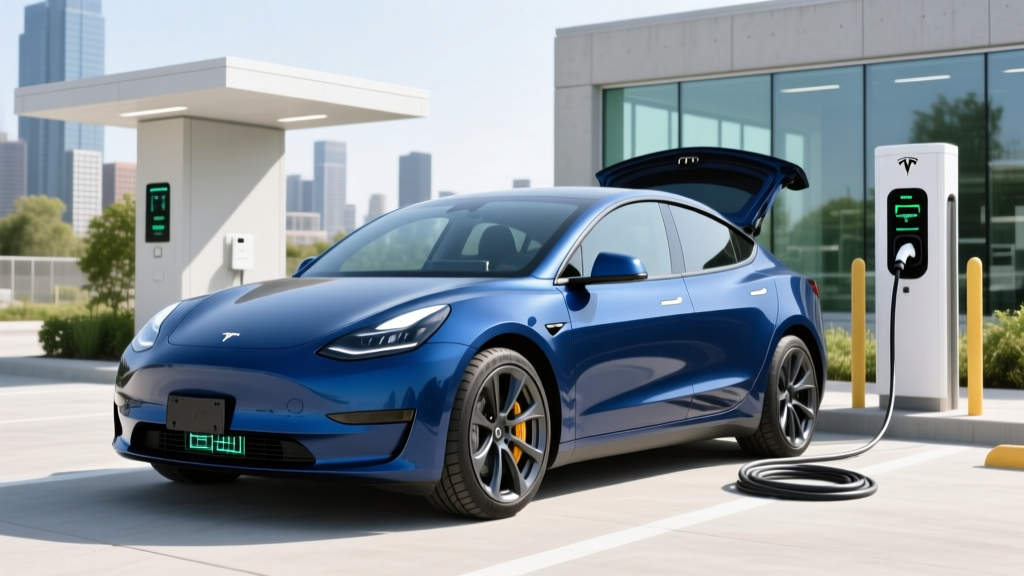
Tesla rates the 2025 Model 3 Performance at a peak 250 kW on V3 Superchargers (CCS-compatible via the native NACS connector). The critical metric, however, is sustained charge rate — peak kW is only held briefly before the battery management system tapers current to protect cell health.
| Level | Power / Voltage | Speed | Notes |
|---|---|---|---|
| Level 1 (120V outlet) | ~1.4 kW | ~3–4 mi/hr | Emergency/trickle only |
| Level 2 (240V, 48A) | ~11.5 kW | ~37–40 mi/hr | Home Wall Connector; full charge ~8 hrs |
| DC Fast (V3 Supercharger) | Peak 250 kW | 10–80% in ~25 min | Tapers significantly above 80% |
| DC Fast (CCS adapter) | Up to ~150–200 kW | 10–80% in ~30–35 min | Electrify America, EVgo — adapter included with newer models |
Charge curve reality: The Model 3 Performance holds roughly 200+ kW from 10–40% SoC, then tapers to ~120 kW by 60%, and drops below 50 kW past 85%. This is why Tesla and experienced owners recommend charging to 80% on road trips — the final 20% can take as long as the first 70%. Preconditioning the battery (automatic when a Supercharger is set as your navigation destination) is non-negotiable for achieving peak charge rates.
At home on a Level 2 Tesla Wall Connector (up to 48 amps / 11.5 kW), expect a full overnight charge in roughly 8 hours. Most owners charge between 20–80% daily, which takes about 4–5 hours — more than adequate for daily use.
Performance: 2.9 Seconds and Then Some
| 0–60 mph | 2.9 seconds (with rollout subtracted) |
| Horsepower | 510 hp (dual motor) |
| Torque | 546 lb-ft |
| Drivetrain | AWD (dual motor) |
| Top Speed | 163 mph |
| Battery (usable) | ~75 kWh, NMC chemistry |
| EPA Range | 315 miles |
| Efficiency | 121 MPGe / 28 kWh/100 mi |
| Curb Weight | ~4,065 lbs |
| Cargo (trunk + frunk) | 21.0 cu ft trunk + 3.1 cu ft frunk |
| Rear Legroom | 35.2 in |
| Base MSRP | $52,990 (excl. destination) |
| Battery Warranty | 8 years / 120,000 miles (70% capacity retention) |
The Performance trim adds adaptive dampers, a track mode with adjustable torque distribution and regen, upgraded brakes, 20-inch wheels, and sport seats with enhanced bolstering. The ride quality is a significant improvement over the 2023 and earlier Model 3 Performance — the Highland refresh brought new suspension bushings, acoustic glass, and a stiffer body structure that makes it genuinely livable as a daily driver, not just a stoplight drag racer.
Pricing, Trims, and Federal Tax Credit Eligibility
The 2025 Model 3 Performance starts at $52,990 (plus a $1,390 destination fee). Adding Ultra Red or Midnight Silver Metallic paint ($2,000), the $1,000 premium interior, or FSD (Supervised) at $8,000 pushes an as-tested price to roughly $62,000–$65,000.
| Item | Amount |
|---|---|
| Base MSRP | $52,990 |
| Destination Fee | $1,390 |
| Common Add-Ons (paint + FSD) | $10,000 |
| Typical As-Tested | ~$64,380 |
| Federal §30D Credit (if eligible) | Up to $7,500 |
| Effective Price (with full credit) | ~$45,490–$56,880 |
§30D Tax Credit Rules (2025): The Model 3 Performance qualifies for the full $7,500 federal tax credit only if all of the following are met:
- MSRP Cap: Vehicle MSRP must not exceed $55,000 for sedans. The base Performance at $52,990 clears this, but adding options that push the sticker above $55,000 will disqualify the credit. Confirm the final window-sticker price with the dealer.
- Buyer Income Cap: Modified AGI must not exceed $150,000 (single), $225,000 (head of household), or $300,000 (joint). See IRS §30D guidelines.
- Battery Sourcing: Critical minerals and battery components must meet escalating domestic-content thresholds. Tesla has largely localized Model 3 battery supply (Panasonic cells from Nevada), but always verify current-year compliance at fueleconomy.gov.
- Point-of-Sale Transfer: As of 2024, the credit can be transferred to the dealer at purchase, reducing the purchase price directly rather than waiting for a tax refund.
Note: Tax credit rules change frequently. Always verify eligibility with a tax professional and the IRS before purchase.
Tech, Driver Assistance, and Interior
The Highland refresh brought a 15.4-inch center touchscreen (slightly larger than the prior 15-inch), ventilated front seats, ambient lighting, rear passenger touchscreen, and significantly improved cabin noise isolation. The minimalist interior remains polarizing — no physical stalks (turn signals are on the steering wheel), no instrument cluster — but the build quality gap between Tesla and legacy luxury brands has narrowed considerably.
Autopilot & FSD (Supervised): Standard Autopilot includes traffic-aware cruise control and lane centering. FSD (Supervised) adds automatic lane changes, navigation-based on/off-ramp handling, and traffic-light recognition for $8,000 (or $99/month subscription).
Both Autopilot and FSD (Supervised) are SAE Level 2 driver-assistance systems. The driver must remain fully engaged, hands on or near the wheel, and eyes on the road at all times. These are not self-driving systems. Only Level 4 services like Waymo operate without a human driver in geofenced areas.
Notable tech highlights include Sentry Mode (parked-camera security), Dog Mode, Dashcam, over-the-air updates that add features post-purchase, and the Tesla app ecosystem for preconditioning, Summon, and remote monitoring.
Pros, Cons, and Who Should Buy
- 2.9-second 0–60 with usable daily comfort
- Supercharger network reliability (17,000+ V3 stalls in North America)
- 315-mile EPA range sufficient for most road trips
- Over-the-air updates add features continuously
- Strong resale value relative to most EVs
- 8-year/120,000-mile battery warranty
- MSRP cap risk — options above $55,000 void the §30D credit
- No Apple CarPlay / Android Auto
- Turn signals on steering wheel take adaptation
- Insurance premiums 15–30% higher than comparable sedans
- 20-inch wheels reduce range vs. 18/19-inch options
- Rear seat space tight for taller passengers (35.2 in legroom)
Who this EV suits best:
- Performance commuters who want sports-car acceleration with a 315-mile daily buffer and home charging.
- Tech-forward buyers comfortable with a screen-centric interface and OTA-driven ownership.
- Couples or small families (1–2 children) who don't need crossover-level cargo space.
- Road-trip capable: V3 Supercharger density makes 500+ mile trips practical with one 20-minute stop.
Consider alternatives if: You need more than 35 inches of rear legroom (look at the Model S or Hyundai Ioniq 6), you require Apple CarPlay (BMW i4), or your budget demands the full $7,500 credit with options flexibility (the base Long Range RWD at ~$42,490 is easier to keep under the MSRP cap).
Competitor Comparison
| Spec | Tesla Model 3 Perf. | Hyundai Ioniq 6 Limited | BMW i4 M50 |
|---|---|---|---|
| EPA Range | 315 mi | 316 mi | 270 mi |
| 0–60 mph | 2.9 sec | 5.1 sec | 3.7 sec |
| Horsepower | 510 hp | 320 hp | 536 hp |
| Peak DC Charge | 250 kW | 235 kW | 205 kW |
| 10–80% Time | ~25 min | ~18 min (800V) | ~31 min |
| Base MSRP | $52,990 | ~$52,600 | ~$70,700 |
| Charging Network | Tesla Supercharger | CCS (EA, EVgo) | CCS (EA, EVgo) |
The Ioniq 6's 800V architecture charges 10–80% faster (~18 min), but its acceleration and tech ecosystem don't match Tesla's. The BMW i4 M50 is more powerful but costs $17,000 more and lacks Supercharger access. For pure value-to-performance ratio, the Model 3 Performance still leads.
Frequently Asked Questions
What is the real-world range of the 2025 Model 3 Performance?
Expect 265–280 miles at sustained highway speeds (70–75 mph) in moderate temperatures, and 220–250 miles in freezing conditions. The 315-mile EPA figure assumes mixed driving at moderate speeds.
How fast does it charge at home and on the road?
On a Level 2 home charger (11.5 kW), expect ~37–40 miles of range per hour, or a full charge overnight in ~8 hours. On a V3 Supercharger, 10–80% takes roughly 25 minutes with a preconditioned battery.
Does the 2025 Model 3 Performance qualify for the $7,500 federal tax credit?
It can — but only if the final MSRP (including options and destination) stays at or below $55,000, the buyer's income is within §30D caps, and battery-sourcing requirements are met. Verify at fueleconomy.gov and with your tax advisor before purchasing.
Is the Model 3 Performance worth it over the Long Range?
If you value 2.9-second acceleration, adaptive dampers, and track mode, yes. If you prioritize maximum range (363 mi) and a lower price (~$42,490), the Long Range RWD is the smarter financial choice — and it's easier to keep under the §30D MSRP cap.
What's the battery warranty?
Tesla covers the battery and drive unit for 8 years or 120,000 miles, whichever comes first, with a guaranteed minimum 70% capacity retention. Real-world data from Tesla's Impact Report shows average degradation of ~12% at 200,000 miles for Model 3/Y packs.
Is FSD (Supervised) worth $8,000?
For most buyers, no. Standard Autopilot handles highway cruising well. FSD (Supervised) remains a Level 2 system requiring constant driver attention — it does not make the car autonomous. The $99/month subscription is a lower-risk way to try it on road trips.
Sources: fueleconomy.gov, Tesla Model 3 specs, IRS §30D, NHTSA.