Quick Verdict: The 2022 Model 3 Performance at a Glance
The 2022 Tesla Model 3 Performance remains one of the sharpest performance sedans on the road — electric or otherwise. With a 3.1-second 0-60 mph time, dual-motor all-wheel drive, and access to the Supercharger network, it delivers supercar acceleration wrapped in a practical four-door package. For buyers shopping the used EV market in 2026 or evaluating whether a leftover 2022 model still holds up against the refreshed Highland generation, the answer is a qualified yes — provided you understand the real-world range trade-offs, the NMC battery care requirements, and the current federal tax credit landscape for used EVs.
This review breaks down every number that matters: EPA range versus what you'll actually see on the highway in January, the charging curve at a 250 kW Supercharger, battery chemistry and degradation expectations, cargo dimensions, and total ownership cost. If you're cross-shopping against the BMW i4 M50, Polestar 2, or the newer Model 3 Performance (Highland), the data below will make the decision straightforward.
| Spec | Value |
|---|---|
| EPA Range | 315 miles |
| Battery (usable) | ~75 kWh (82 kWh gross), NMC |
| Drivetrain | Dual-motor AWD |
| Horsepower | 480 hp (combined) |
| 0-60 mph | 3.1 seconds |
| Top Speed | 162 mph |
| Max DC Fast Charge | 250 kW (peak) |
| 10-80% DC Charge Time | ~27 minutes |
| Level 2 Home Charge Rate | 11.5 kW (~44 mi/hr) |
| MPGe (combined) | 125 MPGe |
| Efficiency | 27 kWh/100 mi |
| Cargo Volume | 23 cu ft (rear trunk + frunk) |
| Rear Legroom | 35.2 inches |
| Battery Warranty | 8 years / 120,000 miles (70% retention) |
| Original Base MSRP | $56,990 (before incentives) |
Range & Efficiency: EPA Sticker vs. Real-World Miles
Real-World Expectation: 260–290 miles in mixed driving; 230–250 miles sustained highway at 75+ mph; 200–225 miles in freezing temperatures with cabin heat.
The 2022 Model 3 Performance carries an EPA-estimated 315 miles of range, placing it among the longest-range performance sedans available that year. According to fueleconomy.gov, the combined efficiency rating is 125 MPGe (27 kWh per 100 miles), which is remarkably efficient for a 480-hp dual-motor vehicle.
But EPA testing uses a specific drive-cycle formula that doesn't fully account for sustained highway speeds, cold climates, or aggressive driving. In real-world conditions — the kind that actually matter for road-trip planning and daily commuting — expect the following:
- City/suburban mixed driving (65°F): 280–300 miles is achievable, thanks to regenerative braking recapturing energy in stop-and-go traffic.
- Highway cruising at 70-80 mph (65°F): Aerodynamic drag dominates at speed. Expect 240–265 miles before needing to charge.
- Cold weather (below 32°F): Battery internal resistance increases and cabin heating draws significant energy. Range drops to roughly 200–230 miles. The 2022 Model 3 uses a resistance heater, not a heat pump (which Tesla introduced in the Model Y and later the refreshed Highland Model 3). This is a meaningful efficiency gap in winter climates.
- Performance driving: Repeated hard acceleration and high speeds will compress range to well under 200 miles. The Performance trim's 20-inch Überturbine wheels and stickier tires also carry a rolling-resistance penalty versus the Long Range trim's 18- or 19-inch aero wheels.
For context, a 300-mile road trip in summer conditions requires one brief Supercharger stop. The same trip in January across the upper Midwest may require two stops. Plan accordingly.
Battery Chemistry, Capacity, and Long-Term Degradation
The 2022 Model 3 Performance uses an NMC (nickel manganese cobalt) lithium-ion battery pack with approximately 82 kWh gross capacity and roughly 75 kWh usable. Tesla maintains a top and bottom buffer to protect the cells — you never truly charge to 100% or discharge to 0% at the cell level, even when the display reads those numbers.
NMC chemistry offers higher energy density than LFP (lithium iron phosphate), which is why the Performance and Long Range trims use it. The trade-off: NMC cells degrade faster when routinely held at 100% state of charge or exposed to extreme heat. Tesla recommends daily charging to 80–90% for NMC packs and saving 100% for road trips where you need maximum range.
Degradation data: Based on fleet data aggregated by sources like Teslanomics and Recurrent Auto, the average Model 3 NMC pack retains approximately 90–93% of original capacity after 50,000 miles and 85–90% after 100,000 miles. The degradation curve is steepest in the first 20,000–30,000 miles and then flattens considerably.
Warranty coverage: Tesla covers the 2022 Model 3 Performance battery and drive unit for 8 years or 120,000 miles, whichever comes first, with a minimum 70% capacity retention guarantee. If the pack drops below 70% State of Health (SoH) within that window, Tesla will repair or replace it. In practice, very few owners hit this threshold under normal use.
Battery replacement cost (out of warranty): A full Model 3 battery replacement currently runs between $12,000 and $16,000 at Tesla service centers, though third-party EV repair shops are beginning to offer module-level repairs for significantly less. This is a worst-case scenario cost that most owners will never face.
Charging Speed: Supercharger, Level 2, and the Charge Curve
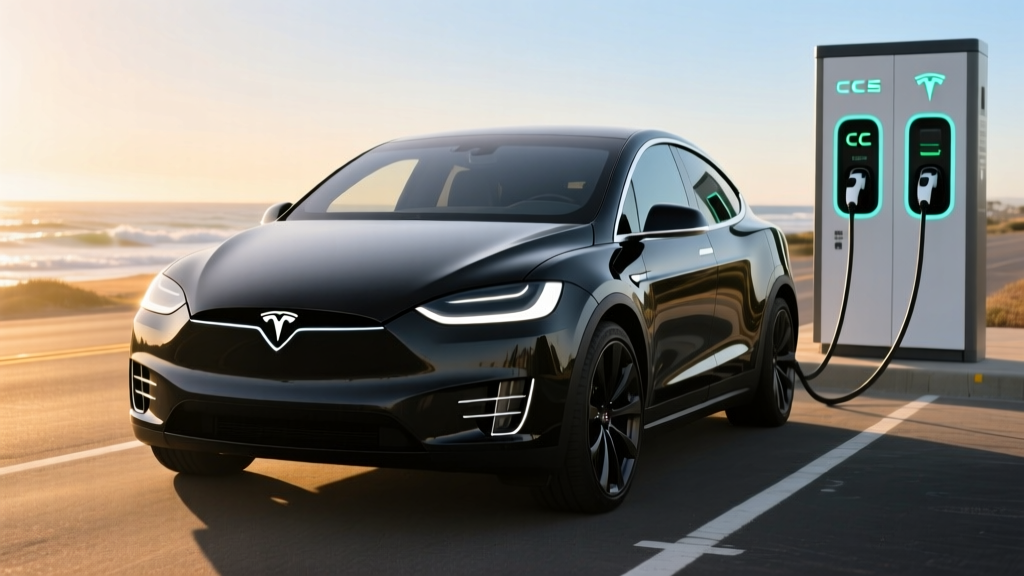
Charging speed is where the 2022 Model 3 Performance shines — particularly on Tesla's Supercharger network. The vehicle supports a peak DC fast-charge rate of 250 kW at V3 Superchargers, which is among the fastest in its class for the model year.
| Charging Level | Power (kW) | Speed (miles of range per hour) | Notes |
|---|---|---|---|
| Level 1 (120V household) | ~1.4 kW | ~5 mi/hr | Emergency/trickle only |
| Level 2 (240V, 48A Wall Connector) | 11.5 kW | ~44 mi/hr | Full overnight charge in ~7-8 hrs |
| Level 2 (240V, 32A mobile connector) | 7.7 kW | ~30 mi/hr | Standard NEMA 14-50 outlet |
| DC Fast (V3 Supercharger) | 250 kW peak | Up to ~1,000 mi/hr (peak) | 10-80% in ~27 min |
| DC Fast (CCS adapter, non-Tesla) | Up to 150-250 kW | Varies by station | Requires Tesla CCS adapter |
Understanding the charge curve: The 250 kW peak rate is not sustained across the entire charging session. Like all EVs, the Model 3 Performance charges fastest between roughly 10–40% state of charge (SoC). Above 50%, the rate tapers progressively to protect the NMC cells. By 80%, you're charging at roughly 40–60 kW. This is why the industry-standard metric is 10-80% time (~27 minutes) rather than a full 0-100% charge.
Preconditioning matters: Navigate to a Supercharger using the car's built-in navigation, and the battery thermal management system will automatically precondition the pack to optimal temperature before arrival. This can shave 5–10 minutes off your charging session, especially in cold weather. If you drive to a charger without preconditioning (for example, using a third-party app), expect slower initial charge rates.
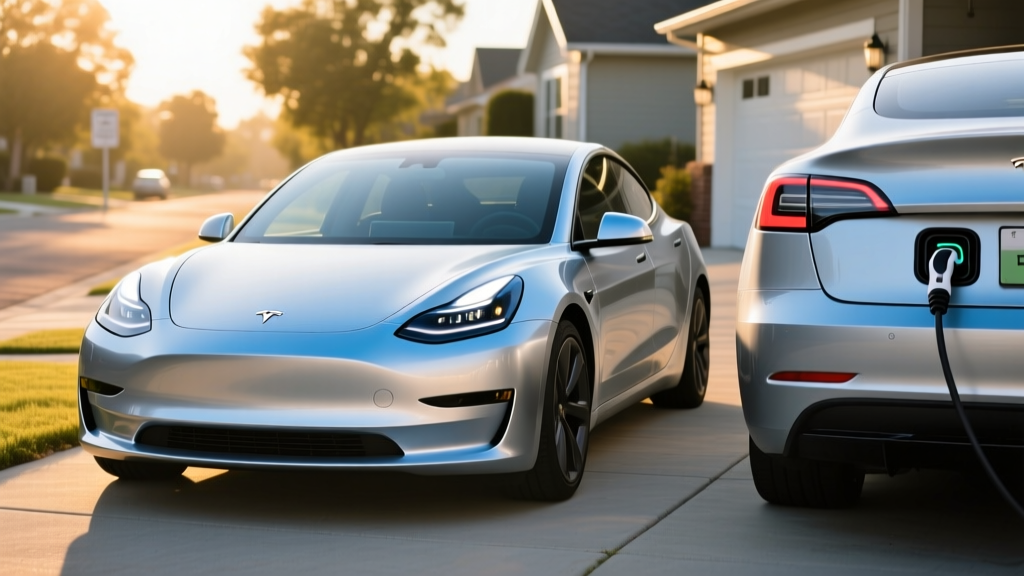
Home charging setup: For the best Level 2 experience, install a Tesla Wall Connector on a 60-amp circuit, which delivers the full 48 amps (11.5 kW) the Model 3's onboard charger can accept. A typical home installation runs $800–$2,000 including the $475 Wall Connector unit, electrician labor, and permits — though a panel upgrade to 200A service can add $1,500–$3,000 if your home's electrical panel is older. Consult a licensed electrician for your specific situation.
Performance, Driving Dynamics, and Powertrain
The numbers tell the story: 480 horsepower, 487 lb-ft of torque, and a manufacturer-claimed 0-60 mph time of 3.1 seconds. Independent testing by outlets like Motor Trend and Car and Driver has validated figures in the 3.1–3.3 second range depending on surface conditions and rollout methodology. This puts the 2022 Model 3 Performance in the territory of a Porsche 911 Carrera S or BMW M3 Competition for straight-line acceleration — at a fraction of the price.
The dual-motor all-wheel-drive system provides instant torque vectoring, with the rear motor delivering the majority of thrust and the front motor managing traction and stability. The result is confident launches even on wet pavement and precise corner-exit power delivery.
Track Mode: The 2022 Performance trim includes Track Mode, which allows adjustable torque distribution between front and rear motors, adjustable regenerative braking strength, and enhanced cooling for sustained track use. It's a genuine differentiator versus competitors that offer a sport mode in name only.
Ride quality trade-off: The Performance trim rides on a lowered, stiffer suspension with 20-inch Überturbine wheels wrapped in Michelin Pilot Sport 4S tires. The result is sharp handling but a noticeably firmer ride than the Long Range trim. Potholes, expansion joints, and rough pavement transmit more impact into the cabin. If daily comfort is a priority and you don't need the 3.1-second sprint, the Long Range is the smoother companion.
Interior, Tech, and Driver-Assistance Systems
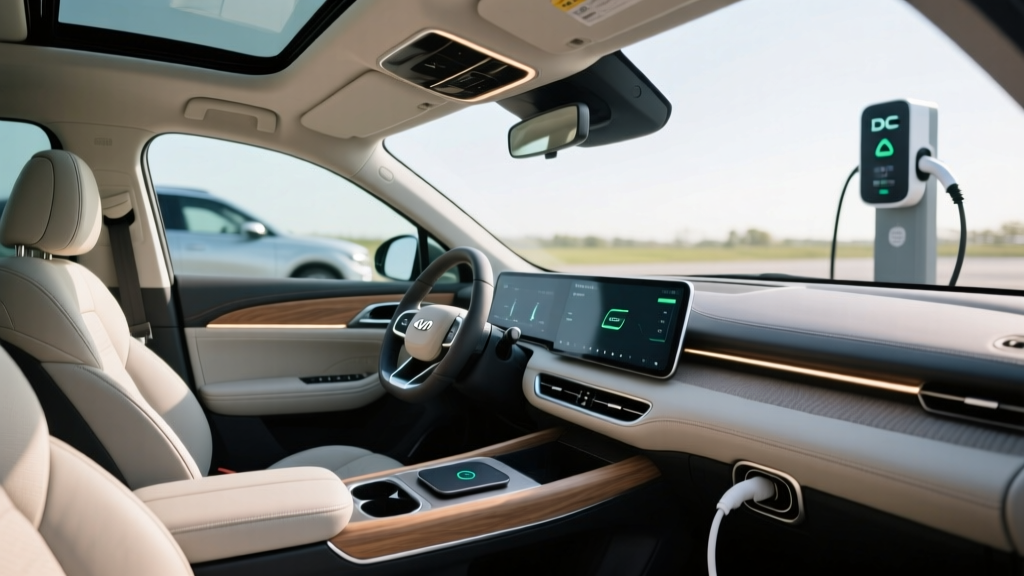
The 2022 Model 3 interior follows Tesla's minimalist philosophy: a single 15-inch center touchscreen handles all infotainment, climate controls, vehicle settings, and navigation. There is no traditional instrument cluster — speed and range information appear in the upper-left corner of the center display. This design is polarizing; some drivers find it liberating, others find it distracting.
Notable tech features:
- Over-the-air (OTA) software updates that add features and refine performance over time
- Tesla app with remote climate control, charging monitoring, Sentry Mode camera access, and vehicle location
- Sentry Mode (dashcam-style recording when parked, with motion-triggered alerts)
- Dashcam (four-camera recording with USB storage)
- 14-speaker premium audio system with immersive sound
- Heated front and rear seats, heated steering wheel
- Glass roof with UV and infrared coating
Driver assistance — Autopilot and FSD:
Tesla Autopilot and Full Self-Driving (Supervised) are not self-driving systems. The driver must remain attentive, keep hands on the wheel, and be prepared to take over at any moment. Only Level 4 systems like Waymo's driverless robotaxi service operate without a human driver.
The 2022 Model 3 comes standard with Tesla's Basic Autopilot (traffic-aware cruise control and autosteer within a single lane). The optional Full Self-Driving (Supervised) package — which cost $12,000 as a one-time purchase or $199/month in 2022 — adds automatic lane changes, Navigate on Autopilot (highway on-ramp to off-ramp), autosteer on city streets, and Smart Summon. As of 2026, FSD Supervised remains a Level 2 system requiring continuous driver oversight. It is capable and increasingly smooth, but it makes errors — missed turns, phantom braking, and misread construction zones — that demand an engaged driver behind the wheel.
Notable drawbacks:
- No heads-up display
- No Apple CarPlay or Android Auto (Tesla's proprietary system only)
- Rear visibility is compromised by the sloping roofline and thick C-pillars
- The 2022 model year predates the Highland refresh, so it lacks the ventilated front seats, ambient lighting, rear passenger touchscreen, and improved sound insulation of the 2024+ models
- No ultrasonic parking sensors in later 2022 production (Tesla transitioned to Tesla Vision camera-only parking assist, which is less reliable at detecting low obstacles)
Cargo Space and Practicality
The 2022 Model 3 offers 23 cubic feet of total cargo volume — 19.8 cu ft in the rear trunk and 3.1 cu ft in the front trunk (frunk). The rear seats fold in a 60/40 split, enabling longer items like skis or flat-pack furniture. The trunk opening is a conventional sedan lid, not a hatchback, which limits the height of items you can load compared to the Model Y or a liftback competitor like the BMW i4.
Passenger space: Front legroom is generous at 42.7 inches. Rear legroom measures 35.2 inches — adequate for adults on shorter trips but tight for six-foot passengers on long rides. The sloping roofline cuts into rear headroom, and the rear center seat is best reserved for a child or short trip due to the raised floor and limited shoulder room.
For families with young children, two rear-facing car seats fit but consume most of the rear cabin width. For regular family duty with older kids or frequent rear-seat passengers, the Model Y's hatchback and taller roofline are more practical.
Pricing, Tax Credits, and Total Cost of Ownership
The 2022 Tesla Model 3 Performance originally carried an MSRP of approximately $56,990, including destination. With optional FSD, the as-tested price could exceed $68,000. In the 2026 used-EV market, well-maintained examples with 20,000–40,000 miles typically sell for $28,000–$36,000 depending on condition, mileage, and regional demand.
| Scenario | Approximate Price |
|---|---|
| Original 2022 MSRP (new) | $56,990 |
| 2026 Used Market (20k–40k miles) | $28,000 – $36,000 |
| Used EV Tax Credit (§25E, if eligible) | Up to $4,000 (30% of sale price, max $4,000) |
| Effective Price After Max Credit | As low as ~$24,000 |
Federal tax credit — used EV rules (IRS §25E): Since the 2022 Model 3 Performance is now a used vehicle, the relevant federal incentive is the Used Clean Vehicle Credit (§25E), not the new-vehicle §30D credit. Key rules for 2026:
- Credit amount: 30% of the sale price, up to a maximum of $4,000
- Vehicle price cap: The sale price must be $25,000 or less to qualify
- Buyer income cap: Modified adjusted gross income must not exceed $75,000 (single), $112,500 (head of household), or $150,000 (joint filing)
- Vehicle requirements: Must be at least 2 model years old, purchased from a licensed dealer, and have a battery capacity of at least 7 kWh
- Point-of-sale transfer: The credit can be transferred to the dealer at the point of sale, reducing the purchase price directly rather than waiting for a tax refund
- One-time use: Each buyer can claim this credit once every three years
The $25,000 sale-price cap is the critical constraint. A 2022 Model 3 Performance listed at $24,500 from a qualifying dealer could net a $4,000 credit for an income-eligible buyer, bringing the effective cost to $20,500. But many examples sell above $25,000, which disqualifies them entirely. Check the IRS §25E page for current-year eligibility rules and consult a tax professional for your specific situation.
New-vehicle §30D credit context (for comparison): If you were purchasing a new Model 3 Performance in 2026, the §30D credit would apply — but eligibility depends on MSRP caps ($55,000 for sedans), buyer income limits, and battery component/critical mineral sourcing requirements that change annually. The new Model 3 Performance (Highland) starts above the $55,000 sedan cap, which typically disqualifies it from the $7,500 new-vehicle credit. Always verify current rules on irs.gov.
Ownership Costs: Insurance, Maintenance, and Energy
Insurance: The Model 3 Performance carries higher insurance premiums than the Long Range or RWD trims due to its power output and repair costs. Expect annual premiums of $2,200–$3,500 depending on your state, driving record, and age. Tesla's own insurance product (available in select states) uses real-time driving data and can be competitive for safe drivers.
Maintenance: EVs eliminate oil changes, spark plugs, and transmission fluid. The Model 3's main recurring costs are tire rotation ($50–$80 every 6,250 miles), cabin air filter replacement ($50–$100 every 2 years), brake fluid check, and windshield washer fluid. Regenerative braking extends pad and rotor life significantly — many owners exceed 80,000 miles on original brake pads. Total annual maintenance averages $200–$400, a fraction of a comparable BMW M3.
Energy cost: At the national average residential electricity rate of ~$0.16/kWh (EIA, 2025 data), fully charging the 75 kWh usable battery costs roughly $12. At 27 kWh/100 miles, the cost per mile is approximately $0.043. Compare this to a BMW M3 achieving 19 MPG combined at $3.50/gallon: $0.184 per mile. Over 15,000 annual miles, that's a fuel savings of roughly $2,115 per year with the Tesla.
Supercharger costs vary by location but average $0.28–$0.36/kWh nationally, making road-trip charging more expensive than home charging but still cheaper than premium gasoline.
Pros, Cons, and Who This EV Suits Best
Pros
- 3.1-second 0-60 mph — supercar acceleration at a sedan price
- 315-mile EPA range covers most commutes and road trips with one stop
- 250 kW peak DC fast charging with Supercharger network reliability
- OTA updates continuously improve the vehicle
- Minimal maintenance costs versus ICE performance sedans
- Excellent safety ratings (IIHS Top Safety Pick+, 5-star NHTSA)
- Strong regenerative braking enables one-pedal driving
- Sentry Mode and dashcam provide built-in security
Cons
- Firm ride quality on 20-inch wheels — noticeable on rough roads
- No Apple CarPlay/Android Auto
- Pre-Highland interior lacks ventilated seats and rear touchscreen
- No heat pump — significant winter range loss in cold climates
- Tesla Vision camera-only parking assist less reliable than ultrasonic sensors
- Rear seat headroom and legroom tight for tall adults
- Sedan trunk opening limits cargo versatility vs. hatchback competitors
- FSD remains Level 2 and requires constant driver supervision despite the name
Who Should Buy the 2022 Model 3 Performance?
- Choose it if: You want thrilling acceleration, access to the most reliable DC fast-charging network, minimal maintenance, and a tech-forward daily driver — and you mostly drive in moderate climates or can accept winter range loss.
- Skip it if: You regularly carry rear-seat passengers, need hatchback cargo flexibility, live in an extreme-cold climate where the lack of a heat pump matters daily, or prefer Apple CarPlay integration and a traditional instrument cluster.
- Consider the Long Range instead if: You prioritize ride comfort and maximum range over 0-60 times. The LR is 0.7 seconds slower to 60 but rides more compliantly and achieves 358 miles EPA.
- Consider the 2024+ Highland Performance if: You want the updated interior (ventilated seats, ambient lighting, rear screen, improved NVH) and a heat pump for better winter efficiency, and are willing to pay a premium.
Frequently Asked Questions
What is the real-world range of the 2022 Tesla Model 3 Performance?
The EPA rates it at 315 miles, but real-world range depends heavily on conditions. Expect 260–290 miles in mixed driving at moderate temperatures, 230–250 miles on sustained highway trips at 75+ mph, and 200–225 miles in freezing weather. The lack of a heat pump makes winter efficiency notably worse than the refreshed Highland model.
How fast does the 2022 Model 3 Performance charge?
On a V3 Supercharger, it peaks at 250 kW and charges from 10–80% in approximately 27 minutes. At home on a Level 2 Tesla Wall Connector (48A/11.5 kW), a full charge takes roughly 7–8 hours and adds about 44 miles of range per hour of charging. On a standard NEMA 14-50 outlet at 32A, expect about 30 miles per hour.
Does the 2022 Model 3 Performance qualify for a federal tax credit?
As a used vehicle in 2026, it may qualify for the IRS §25E Used Clean Vehicle Credit — up to $4,000 (30% of the sale price). However, the sale price must be $25,000 or less, the buyer must meet income caps ($75K single / $150K joint), and the car must be purchased from a licensed dealer. Many used examples exceed the $25,000 cap, which disqualifies them. It does not qualify for the §30D new-vehicle credit. Always verify on irs.gov and consult a tax professional.
Is the 2022 Model 3 Performance worth buying vs. competitors?
Against the BMW i4 M50 (530 hp, 270-mile range, ~$67K new), the Tesla wins on range, charging speed, and Supercharger access but loses on interior luxury and build quality. Against the Polestar 2 Dual Motor (476 hp, 249-mile range), the Model 3 offers significantly more range and faster charging. Against the newer 2024+ Model 3 Performance (Highland), the 2022 model is less refined inside and lacks a heat pump, but costs substantially less on the used market. For pure value-to-performance ratio in 2026, a well-priced used 2022 Performance is difficult to beat.
What battery chemistry does the 2022 Model 3 Performance use?
It uses an NMC (nickel manganese cobalt) lithium-ion battery pack with approximately 82 kWh gross / 75 kWh usable capacity. NMC offers higher energy density than LFP but requires more careful charging habits — Tesla recommends daily charging to 80–90% rather than 100% to maximize long-term battery health.
What is the battery warranty?
Tesla covers the battery and drive unit for 8 years or 120,000 miles (whichever comes first), with a guaranteed minimum 70% capacity retention. If the pack degrades below 70% SoH within that period, Tesla will repair or replace it at no cost.
Is Tesla Autopilot or FSD self-driving?
No. Both Autopilot and Full Self-Driving (Supervised) are SAE Level 2 driver-assistance systems. The driver must remain fully attentive, keep hands on the steering wheel, and be prepared to take over at any time. These systems assist with steering, acceleration, and braking within their operational limits but do not replace the driver. Only Level 4 robotaxi services like Waymo operate without a human driver, and those are geofenced to specific service areas.