The Paint Problem: Why Tesla Model 3 Buyers Still Search for Defects
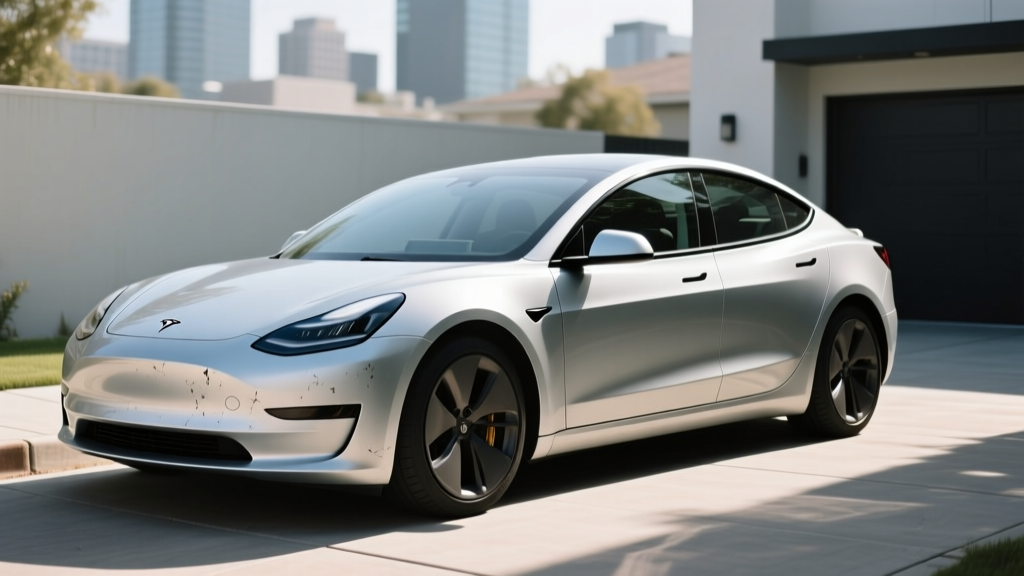
Search forums, Reddit threads, or Tesla owner groups and one complaint surfaces consistently: Tesla Model 3 paint defects. From orange-peel texture to dust nibs, clear-coat inconsistencies, and panel misalignment, paint and exterior finish quality have dogged the Model 3 since its 2017 launch. But as Tesla's Fremont and Shanghai factories have refined their processes — and as the 2024 'Highland' refresh brought updated assembly lines — does the 2026 Tesla Model 3 still suffer from the same cosmetic shortcomings?
This review examines the paint-quality track record alongside the full ownership picture: EPA range, charging speed, battery chemistry, pricing after federal tax credits, and how the Model 3 stacks up against rivals that have invested heavily in factory paint-shop precision.
Paint Quality: What the Data and Owners Report
Tesla's paint shop has historically been a weak link. The Fremont factory's paint facility, originally converted from a GM-Toyota joint-venture plant, operated with older spray-booth technology compared to BMW's or Toyota's purpose-built lines. Common owner-reported issues include:
- Orange peel: A bumpy, dimpled clear-coat texture visible under direct light, especially on roof and trunk lid panels.
- Dust nibs: Small particles trapped beneath the clear coat during application, creating raised bumps.
- Paint thickness inconsistency: Gauge readings varying by 20-40 microns across adjacent panels, indicating uneven robotic spray passes.
- Clear-coat drips or runs: Visible primarily along lower rocker panels and wheel-arch edges.
- Panel gap variation: Not strictly a paint issue, but often flagged alongside cosmetic concerns — door and trunk gaps measuring 4-6mm on one side and 2-3mm on the other.
For the 2024 Highland refresh (carried into 2026), Tesla upgraded paint-shop robotics and added additional quality-control inspection stations. Owner forums suggest measurable improvement — but isolated reports of dust nibs and minor orange peel still surface, particularly on Solid Black and Ultra Red multi-coat finishes, which are more susceptible to application variability.
Practical advice: Inspect any Model 3 at delivery in bright, direct sunlight or with a dedicated LED inspection light. Bring a paint-thickness gauge if possible. Tesla's delivery centers typically allow you to note cosmetic defects before signing, and the company will address documented issues under warranty or at delivery.
2026 Tesla Model 3: Full Spec Breakdown
| Specification | Model 3 RWD | Model 3 Long Range AWD |
|---|---|---|
| EPA Estimated Range | 272 miles | 341 miles |
| Battery Capacity (usable) | ~57.5 kWh (LFP) | ~75 kWh (NMC) |
| Battery Chemistry | Lithium Iron Phosphate (LFP) | Nickel Manganese Cobalt (NMC) |
| Drivetrain | Rear-Wheel Drive (single motor) | Dual-Motor All-Wheel Drive |
| Horsepower | 271 hp | 346 hp |
| 0-60 mph | 5.8 seconds | 4.2 seconds |
| Top Speed | 125 mph | 125 mph |
| EPA Efficiency | 132 MPGe (25 kWh/100mi) | 132 MPGe (25 kWh/100mi) |
| Max DC Fast Charge | 170 kW peak | 250 kW peak |
| 10-80% DC Charge Time | ~25 minutes | ~18 minutes |
| Level 2 Home Charging | 11.5 kW (~44 mi/hr) | 11.5 kW (~44 mi/hr) |
| Cargo Volume | 23 cu ft (trunk + frunk combined) | |
| Rear Legroom | 35.3 inches | |
| Battery Warranty | 8 yr / 100,000 mi | 8 yr / 120,000 mi |
| Base MSRP (2026) | $38,990 | $45,990 |
Sources: fueleconomy.gov, Tesla official specifications.
Real-World Range: What the EPA Sticker Doesn't Tell You
EPA Estimate: 341 miles (Long Range AWD)
Real-World Highway (70-75 mph): Expect 280-305 miles in mild weather. At sustained highway speeds, aerodynamic drag reduces efficiency by 12-18% versus the EPA combined cycle.
Cold-Weather Impact (below 32°F): Range drops 20-30% due to battery resistance and cabin-heating load. A 341-mile EPA Model 3 may deliver 240-270 miles in freezing conditions without preconditioning.
LFP Note (RWD): LFP batteries tolerate regular 100% charging better than NMC, which helps daily usability — but cold-weather range loss is slightly more pronounced with LFP chemistry due to higher internal resistance at low temperatures.
The Model 3 Long Range's 341-mile EPA figure is among the best in its class, but EPA testing uses a combined city/highway cycle with moderate speeds. If your commute is predominantly highway at 75+ mph, plan for roughly 85% of the sticker range. Tesla's trip planner and in-car energy app provide reasonably accurate real-time range projections once you've driven enough to calibrate the system to your habits.
Charging Speed: DC Fast, Home Level 2, and the Curve
Charging speed is where the Model 3's Supercharger network advantage remains tangible — but the numbers require nuance.
| Charging Level | Power (kW) | Miles Added per Hour | Notes |
|---|---|---|---|
| Level 1 (120V household) | ~1.4 kW | ~5 mi/hr | Emergency/trickle only |
| Level 2 (240V, 48A Wall Connector) | 11.5 kW | ~44 mi/hr | Full overnight charge in ~7-8 hours |
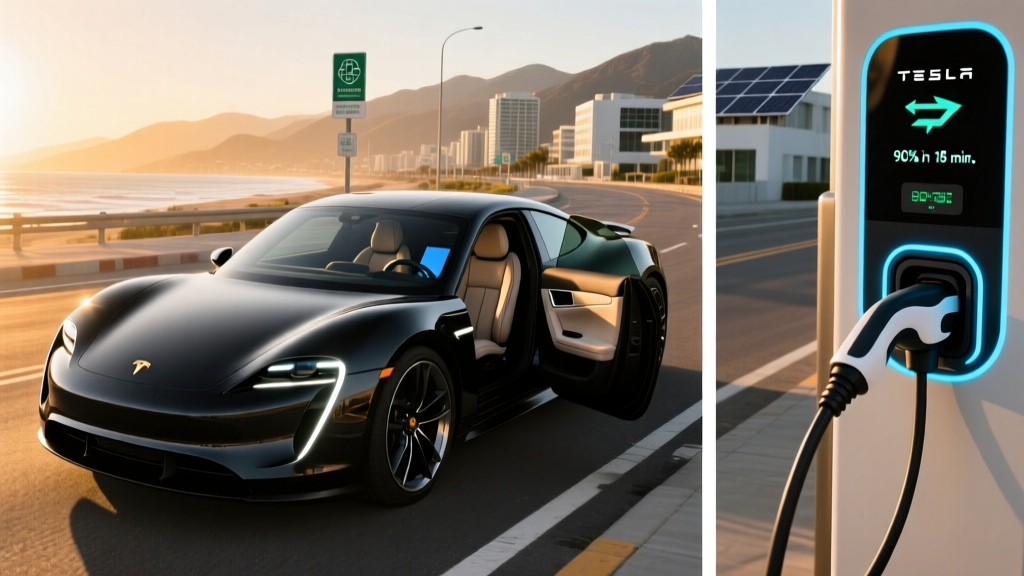
| DC Fast (V3 Supercharger, Long Range) | 250 kW peak | Up to 175 mi in 15 min | Peak rate sustained to ~50% SoC, then tapers |
| DC Fast (V3 Supercharger, RWD LFP) | 170 kW peak | Up to 130 mi in 15 min | Lower peak due to LFP charge acceptance |
Understanding the charge curve: The "250 kW peak" figure applies only at low state-of-charge (typically 10-30%). Above 50% SoC, the rate tapers significantly — by 80% you may see only 40-60 kW. This is why the 10-80% time (~18 minutes for Long Range) is a more useful metric than peak kW alone. For road-trip planning, Tesla's navigation automatically preconditions the battery when you route to a Supercharger, warming it to optimal temperature for faster charge acceptance — a critical feature in cold weather.
Pricing, Tax Credits, and the Bottom Line
For 2026, the Tesla Model 3 remains eligible for the federal §30D EV tax credit, but eligibility depends on your income, the vehicle's MSRP, and battery-component/critical-mineral sourcing requirements that tighten annually under the Inflation Reduction Act.
| Trim | Base MSRP | Est. Destination | Federal Credit (§30D) | Effective Price (if eligible) |
|---|---|---|---|---|
| Model 3 RWD | $38,990 | $1,390 | Up to $7,500 | ~$32,880 |
| Model 3 Long Range AWD | $45,990 | $1,390 | Up to $7,500 | ~$39,880 |
| Model 3 Performance | $52,990 | $1,390 | Up to $7,500 | ~$46,880 |
Key §30D caveats (verify at IRS.gov):
- Income caps: Modified AGI ≤ $150,000 (single), $225,000 (head of household), $300,000 (married filing jointly).
- MSRP cap: Sedans must be ≤ $55,000 MSRP (all Model 3 trims currently qualify).
- Battery sourcing: Increasing percentages of critical minerals and battery components must be sourced from the US or FTA partners. The credit splits into two halves ($3,750 each) — some vehicles may qualify for only $3,750 if they meet one requirement but not the other.
- Point-of-sale transfer: As of 2024+, you can transfer the credit to the dealer at purchase, reducing your out-of-pocket cost immediately rather than waiting for tax filing.
Competitor Comparison: Model 3 vs. the Field
The Model 3 competes against the Hyundai Ioniq 6, BMW i4, Polestar 2, and the refreshed Chevrolet Bolt EUV (on price). Here's how the key numbers compare:
| Model | EPA Range | 10-80% DC Charge | Base MSRP | Connector |
|---|---|---|---|---|
| Tesla Model 3 LR AWD | 341 mi | ~18 min (250 kW) | $45,990 | NACS (native) |
| Hyundai Ioniq 6 SE LR | 361 mi | ~18 min (350 kW) | $42,750 | CCS1 |
| BMW i4 eDrive40 | 307 mi | ~31 min (205 kW) | $52,200 | CCS1 |
| Polestar 2 LR SM | 320 mi | ~28 min (205 kW) | $49,900 | CCS1 (NACS adapter avail.) |
The Ioniq 6 offers slightly more EPA range and faster peak charging (on 350 kW Electrify America stations), but Tesla's Supercharger network — now open to other brands via adapters — still delivers the most reliable plug-and-charge experience in the US. The BMW i4 wins on interior materials and paint consistency; its factory in Munich operates paint shops that consistently outperform Tesla's on finish quality.
Pros, Cons, and Who Should Buy
- Class-leading efficiency (132 MPGe combined)
- Extensive Supercharger network access
- Over-the-air updates continuously add features
- LFP battery (RWD) supports daily 100% charging without degradation concern
- Strong safety ratings (NHTSA 5-star, IIHS Top Safety Pick+)
- Minimalist interior with responsive 15.4" touchscreen
- Paint quality, while improved, still lags legacy automakers
- No traditional instrument cluster — all info on center screen
- Rear visibility limited; relies heavily on cameras
- Ride quality firm on 19" sport wheels
- Turn-signal stalks removed in Highland refresh (steering-wheel buttons)
- Service center wait times can be lengthy in some metro areas
Choose the Model 3 if: You prioritize efficiency, Supercharger convenience, and tech-forward features, and you're willing to inspect carefully at delivery for cosmetic issues.
Look elsewhere if: Paint and build-quality perfection are top priorities (consider the BMW i4 or Polestar 2), or you prefer a traditional instrument cluster and physical controls.
Best use case: Daily commuter with home Level 2 charging who takes 2-4 road trips per year. The Long Range AWD handles cross-country travel comfortably with 20-minute Supercharger stops every ~250 miles.
Frequently Asked Questions
Does the 2026 Tesla Model 3 still have paint defects?
Reports of significant paint defects have decreased since the 2024 Highland refresh and associated factory upgrades, but isolated issues (dust nibs, minor orange peel) still surface — particularly on multi-coat colors like Ultra Red and Solid Black. Always inspect thoroughly at delivery under bright light.
What is the real-world range of the Tesla Model 3 Long Range?
EPA rates it at 341 miles. In real-world highway driving at 70-75 mph in mild weather, expect 280-305 miles. In freezing temperatures, range may drop to 240-270 miles without preconditioning.
How fast does the Model 3 charge at home?
With a Tesla Wall Connector on a 60A circuit (48A continuous), the Model 3 charges at 11.5 kW, adding approximately 44 miles of range per hour. A full charge from 10% takes roughly 7-8 hours overnight.
Does the Tesla Model 3 qualify for the $7,500 federal tax credit?
All 2026 Model 3 trims fall under the $55,000 sedan MSRP cap. Eligibility depends on your income (≤$150K single / ≤$300K joint) and whether the battery meets 2026 critical-mineral and component sourcing thresholds. Verify current eligibility at IRS.gov before purchase, as sourcing rules tighten annually.
Is the Model 3 worth buying over the Hyundai Ioniq 6?
The Ioniq 6 offers more EPA range (361 vs. 341 miles) and faster peak charging (350 kW). The Model 3 wins on Supercharger reliability, software ecosystem, and lower starting price for the Long Range AWD. If paint quality matters most, the Ioniq 6's Ulsan factory delivers more consistent finishes.
What warranty covers Tesla Model 3 paint defects?
Tesla's New Vehicle Limited Warranty covers paint defects for 4 years or 50,000 miles, whichever comes first. Cosmetic issues documented at delivery are typically addressed immediately. The battery and drive unit carry separate coverage: 8 years/100,000 miles (RWD) or 8 years/120,000 miles (Long Range/Performance), with a minimum 70% capacity retention threshold.