Quick Verdict: Does Tesla Have One-Pedal Driving?
Yes — Tesla offers one-pedal driving across its entire 2026 lineup, including the Model 3, Model Y, Model S, Model X, and Cybertruck. The feature relies on aggressive regenerative braking that captures kinetic energy when you lift off the accelerator, slowing the car substantially without touching the brake pedal. However, Tesla removed the user-adjustable regen setting in 2020, meaning you cannot dial the intensity up or down as you can in a Hyundai Ioniq 5 or Ford Mustang Mach-E. You get one fixed, strong regen profile — and for most drivers, it's enough to handle 90% of daily deceleration.
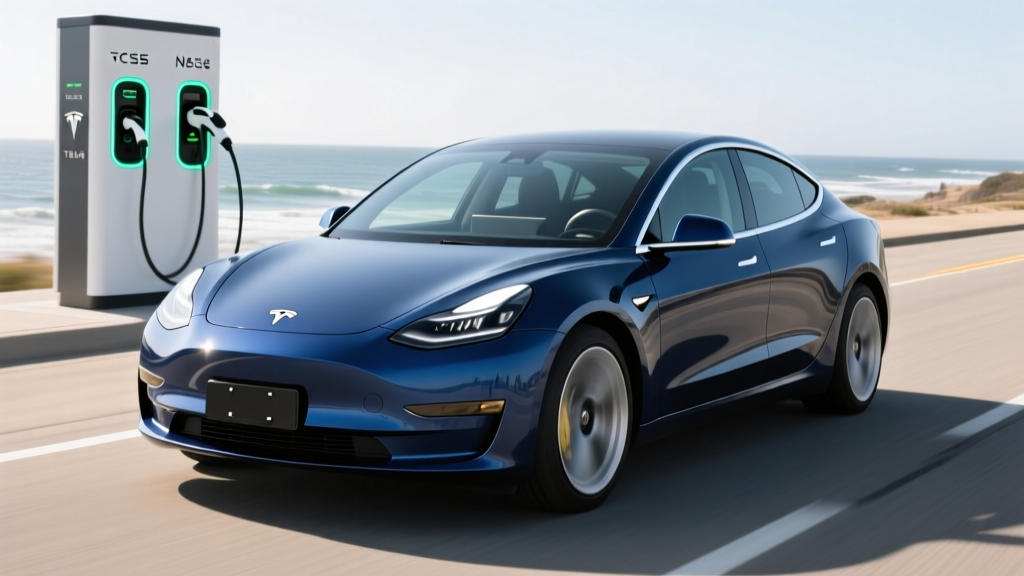
But one-pedal driving is just one piece of the ownership puzzle. Below, we break down the 2026 Tesla Model 3 — the brand's highest-volume sedan — covering its EPA range, charging speeds, battery chemistry, real-world efficiency, pricing, and federal tax credit eligibility so you can decide if it's the right EV for you.
2026 Tesla Model 3: Full Spec Breakdown
| Spec | Model 3 RWD | Model 3 Long Range AWD | Model 3 Performance |
|---|---|---|---|
| EPA Range | 272 mi | 363 mi | 315 mi |
| Battery (usable) | ~57.5 kWh (LFP) | ~79 kWh (NMC) | ~79 kWh (NMC) |
| Drivetrain | RWD, single motor | AWD, dual motor | AWD, dual motor |
| Horsepower | 271 hp | 346 hp | 510 hp |
| 0–60 mph | 5.8 sec | 4.2 sec | 2.9 sec |
| Peak DC Fast Charge | 170 kW | 250 kW | 250 kW |
| 10–80% DCFC Time | ~25 min | ~22 min | ~22 min |
| Level 2 Home Charge | 11.5 kW (~44 mi/hr) | 11.5 kW (~44 mi/hr) | 11.5 kW (~44 mi/hr) |
| MPGe (combined) | 132 MPGe | 134 MPGe | 118 MPGe |
| kWh / 100 mi | 25 | 25 | 28 |
| Base MSRP | $38,990 | $47,740 | $54,990 |
| Battery Warranty | 8 yr / 100,000 mi | 8 yr / 120,000 mi | 8 yr / 120,000 mi |
Sources: EPA fueleconomy.gov, Tesla.com 2026 specifications.
Real-World Range: What the EPA Sticker Doesn't Tell You
EPA estimate: 363 miles (Long Range AWD)
Real-world highway (70 mph, mild weather): ~300–320 miles
Real-world highway (30°F / cold weather): ~240–270 miles
City / stop-and-go with regen: ~340–360 miles
The EPA combined cycle blends city and highway driving, and Tesla's regenerative braking system excels in city conditions where frequent deceleration recaptures energy. On a pure highway run at 70+ mph, aerodynamic drag dominates and efficiency drops — expect roughly 12–18% below the EPA sticker in mild weather. In cold weather (below 35°F), the battery's internal resistance increases, the heat pump draws energy, and range can fall 25–30% from the EPA figure.
The RWD model's LFP (lithium iron phosphate) battery tolerates regular 100% charging, which partially offsets its smaller pack. Tesla recommends charging LFP packs to 100% at least once per week for accurate state-of-charge calibration. The Long Range and Performance trims use NMC (nickel manganese cobalt) chemistry, which has higher energy density but Tesla recommends daily charging to 80–90% to preserve longevity — reserving 100% for road trips.
Charging Speed: DC Fast, Level 2, and the Supercharger Advantage
Tesla's Supercharger network remains one of the most reliable DC fast-charging ecosystems in North America, with over 6,500 stalls in the U.S. alone as of early 2026. Here's how the Model 3 charges across each level:
| Charging Level | Power | Speed (mi/hr added) | Notes |
|---|---|---|---|
| Level 1 (120V outlet) | ~1.4 kW | ~4–5 mi/hr | Emergency / trickle only |
| Level 2 (240V, 48A Wall Connector) | 11.5 kW | ~44 mi/hr | Full overnight charge in 7–9 hrs |
| DC Fast (Supercharger V3/V4) | Up to 250 kW | Up to 175 mi in 15 min | 10–80% in ~22 min (LR/Perf) |
| DC Fast (CCS adapter, non-Tesla) | Up to 250 kW | Varies by station | Adapter included since 2024 |
Charging curve reality: The 250 kW peak on Long Range and Performance models is sustained only between roughly 10–35% state of charge. From 35–60%, power tapers to ~150 kW, and above 80% it drops sharply to under 50 kW to protect the battery. If you're road-tripping, plan to charge from 10–80% and skip the slow top-off unless you need the final miles.
The RWD model tops out at 170 kW on DC fast charging — still fast enough for most road trips, but you'll spend 3–5 extra minutes at each stop compared to the Long Range.
Since 2024, all new Teslas ship with the North American Charging Standard (NACS) port natively, eliminating the need for an adapter at Superchargers. A CCS adapter is included in the glovebox for use with Electrify America, EVgo, and other non-Tesla networks.
One-Pedal Driving in Practice: How Tesla's Regen Compares
Tesla's regenerative braking system is among the strongest in the EV market. When you lift off the accelerator, the electric motor reverses direction, converting kinetic energy back into electricity and feeding it to the battery. In the Model 3, this deceleration force is strong enough to bring the car to a complete stop in most city-driving scenarios without touching the brake pedal.
What makes Tesla's approach different:
- No adjustable regen: Unlike Hyundai, Kia, Ford, and BMW — which let you select from multiple regen levels or use paddle shifters to modulate braking — Tesla offers a single, fixed regen profile. You either adapt to it or you don't.
- Creep vs. Hold mode: In the vehicle settings, you can choose "Hold" mode (the car comes to a full stop and holds itself without the brake pedal — true one-pedal driving) or "Creep" mode (the car inches forward at low speed like a conventional automatic transmission). Most one-pedal fans prefer Hold.
- Friction brake blending: At very low speeds or when you do press the brake pedal, the Model 3 blends regenerative and friction braking seamlessly. The physical brakes are primarily used for emergency stops and the final 1–2 mph of deceleration.
Real-world impression: On a 45-mile mixed commute with stoplights and highway on-ramps, I used the brake pedal fewer than 10 times. The regen is predictable and progressive. The main drawback is that on a cold battery (below 50°F), regen is temporarily limited until the pack warms up — meaning your first few miles will feel like the car won't slow down as aggressively. Tesla shows a dotted line on the energy display to indicate limited regen.
Pricing, Trims, and Federal Tax Credit Eligibility
The 2026 Model 3 lineup starts at $38,990 for the RWD base trim and climbs to $54,990 for the Performance variant. Here's how the federal EV tax credit applies:
| Trim | MSRP | Est. Credit (§30D) | Effective Price |
|---|---|---|---|
| Model 3 RWD | $38,990 | Up to $7,500* | From ~$31,490 |
| Model 3 Long Range AWD | $47,740 | Up to $7,500* | From ~$40,240 |
| Model 3 Performance | $54,990 | Up to $7,500* | From ~$47,490 |
*Eligibility for the full $7,500 IRS §30D credit depends on multiple factors:
- Buyer income cap: Modified AGI must not exceed $150,000 (single), $225,000 (head of household), or $300,000 (joint).
- MSRP cap: Sedans must be under $55,000 — all Model 3 trims qualify.
- Battery sourcing: The credit splits into two halves — $3,750 for critical-mineral sourcing and $3,750 for battery-component manufacturing. As of 2026, Tesla sources an increasing share of materials domestically and from FTA partners, but the exact credit amount varies. Verify the current qualification on the IRS clean vehicle credit page before purchasing.
- Point-of-sale transfer: Since 2024, you can transfer the credit to the dealer at purchase, reducing your out-of-pocket cost immediately rather than waiting for tax filing.
Interior, Cargo, Tech, and Daily Livability
The Model 3's minimalist interior remains polarizing. There's no instrument cluster — all information lives on the 15.4-inch center touchscreen. Climate controls, mirror adjustments, and even glovebox release are screen-based. Most owners adapt within a week, but it demands a mindset shift from traditional vehicles.
Dimensions and space:
- Front legroom: 42.2 inches
- Rear legroom: 35.3 inches
- Cargo (trunk): 21.0 cu ft
- Frunk (front trunk): 3.1 cu ft
- Total cargo: 24.1 cu ft
Rear-seat space is adequate for adults under 6 feet on shorter trips but tighter than a Hyundai Ioniq 6 or BMW i4 on longer drives. The panoramic glass roof creates an airy cabin but contributes to noticeable heat gain in summer — an aftermarket sunshade is a common owner accessory.
Tech highlights:
- Tesla's infotainment remains the fastest, most responsive system in the EV segment — Netflix, YouTube, and gaming while charging.
- Autopilot (standard): SAE Level 2 driver assistance with adaptive cruise and lane centering. Requires hands-on-wheel supervision at all times.
- Full Self-Driving (Supervised): $8,000 option or $99/month — adds automatic lane changes, navigation-guided on/off-ramp handling, and traffic-light recognition. Still Level 2; the driver must remain fully attentive.
- Over-the-air updates continue to add features post-purchase — recent updates improved Regen Hold behavior and added tire-pressure trend monitoring.
Pros, Cons, and Who the Model 3 Is For
- Strong, predictable one-pedal regen driving
- Class-leading Supercharger network access
- Best-in-class infotainment and OTA updates
- Low energy consumption (25 kWh/100mi)
- Qualifies for full §30D credit (subject to sourcing)
- LFP battery on RWD allows 100% daily charging
- No adjustable regen intensity
- Rear seat tighter than rivals
- All screen-based controls have a learning curve
- RWD regen limited when battery is cold
- No Apple CarPlay / Android Auto
- FSD subscription cost adds up over time
Who Should Buy the 2026 Model 3?
Daily commuters and tech-forward buyers will find the Model 3 hard to beat. The one-pedal driving experience, Supercharger reliability, and low running costs make it ideal for someone who drives 30–80 miles daily and has access to home Level 2 charging. The RWD trim at ~$31,500 after the tax credit is one of the most affordable premium EVs available.
Families needing rear-seat space should cross-shop the Model Y, Hyundai Ioniq 5, or Kia EV6 — all offer more rear legroom and easier car-seat installation.
Road-trippers will appreciate the Long Range AWD's 363-mile EPA range and Tesla's route-planning that automatically preconditions the battery before Supercharger stops — a feature that most competitors still lack and that meaningfully improves real-world charging speed.
Frequently Asked Questions
Does Tesla have one-pedal driving on every model?
Yes. Every 2026 Tesla — Model 3, Model Y, Model S, Model X, and Cybertruck — supports one-pedal driving through its regenerative braking system set to "Hold" mode. The car will decelerate to a complete stop when you release the accelerator.
Can I turn off one-pedal driving or reduce regen strength?
You cannot adjust the regen strength, but you can switch from "Hold" mode to "Creep" or "Roll" mode in the driving settings. Creep mimics a traditional automatic transmission, and Roll lets the car coast freely when you lift off the accelerator. The deceleration force when your foot is on the pedal remains fixed regardless of mode.
What is the real-world range of the Tesla Model 3?
The EPA rates the Long Range AWD at 363 miles. In real-world highway driving at 70 mph in mild weather, expect 300–320 miles. In cold weather (below 35°F), plan for 240–270 miles. City driving with frequent regen recapture can match or slightly exceed the EPA number.
How fast does the Model 3 charge at home and on the road?
On a 240V Level 2 home charger (Tesla Wall Connector at 48A), the Model 3 adds roughly 44 miles of range per hour, reaching a full charge overnight. On a V3/V4 Supercharger, the Long Range and Performance models peak at 250 kW, going from 10–80% in approximately 22 minutes. The RWD model peaks at 170 kW with a 10–80% time of about 25 minutes.
Does the 2026 Model 3 qualify for the $7,500 federal EV tax credit?
All Model 3 trims fall under the $55,000 MSRP cap for sedans. Eligibility for the full $7,500 depends on your income (under $150K single / $300K joint), and the battery must meet critical-mineral and component-sourcing requirements. Check the IRS §30D page and confirm with your tax professional before purchase. The credit can be transferred to the dealer at point of sale.
Is the Model 3 worth buying over the Hyundai Ioniq 6 or BMW i4?
The Model 3 wins on charging infrastructure (Supercharger network), infotainment responsiveness, energy efficiency, and price after tax credits. The Ioniq 6 offers more rear-seat room, adjustable regen, and an 800V architecture for faster peak charging. The BMW i4 provides a more traditional luxury interior and Apple CarPlay but costs significantly more and has shorter range. If one-pedal driving and Supercharger access are priorities, the Model 3 remains the default choice.