2026 Tesla Model 3 NSFW: Quick Verdict
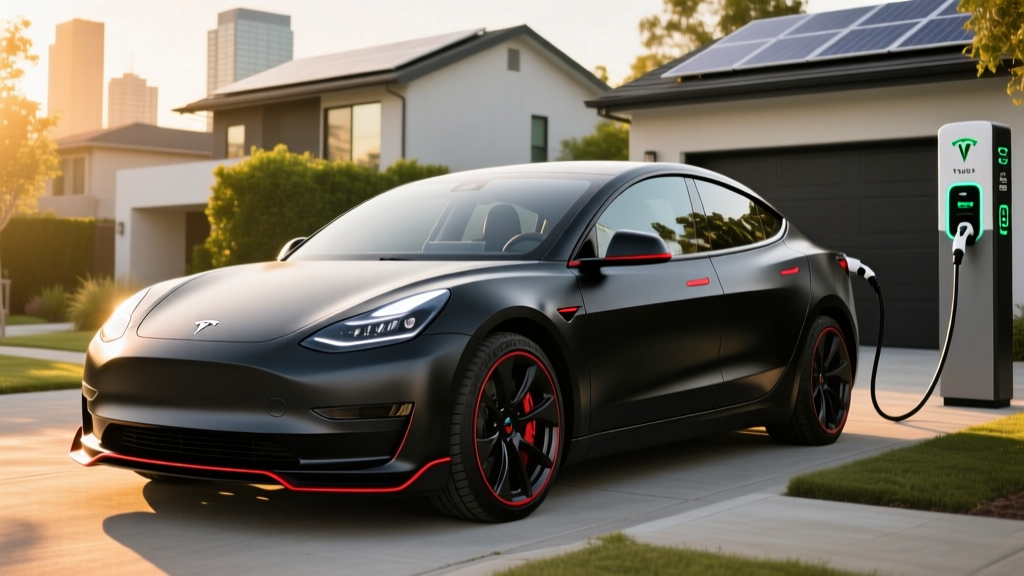
The "NSFW" badge on the 2026 Tesla Model 3 isn't what clickbait headlines suggest — it's Tesla's internal trim code for the Next-Gen Standard Full-Wheelbase variant, the refreshed entry-level Long Range model that slots between the base RWD and the Performance trim. Priced at $38,990 before incentives, it pairs a 75 kWh (usable) LFP-chemistry battery with dual-motor AWD, delivering an EPA-estimated 363 miles of range. For buyers who want all-weather traction and highway capability without stepping up to the $47,740 Performance, this trim occupies the sweet spot in Tesla's sedan lineup.
EPA estimate: 363 miles. In mixed highway/city driving at 70 mph, expect approximately 300–320 miles before needing a charge. In sub-30°F winter conditions with cabin heat, range can drop to 260–280 miles due to LFP chemistry's cold sensitivity and increased energy demand. Tesla's heat pump mitigates some loss, but LFP packs lose roughly 15–20% usable capacity in deep cold versus NMC packs losing 10–15%.
Full Specifications at a Glance
| Spec | 2026 Model 3 NSFW (Long Range AWD) |
|---|---|
| EPA Range | 363 miles |
| Battery (Usable) | 75 kWh, LFP chemistry |
| Drivetrain | Dual-motor AWD |
| Horsepower | 346 hp combined |
| 0–60 mph | 4.9 seconds |
| Top Speed | 125 mph |
| Max DC Fast Charge | 250 kW peak |
| 10–80% DC Charge Time | ~22 minutes |
| Level 2 Home Charge Rate | 11.5 kW (~44 mi/hr) |
| MPGe (Combined) | 132 MPGe |
| Energy Consumption | 25 kWh/100 mi |
| Cargo Volume | 23 cu ft (trunk) + 3.1 cu ft (frunk) |
| Rear Legroom | 35.2 inches |
| Battery Warranty | 8 years / 120,000 miles (70% retention) |
| Base MSRP | $38,990 |
Range and Efficiency: What the Numbers Mean
The 363-mile EPA figure places the Model 3 NSFW among the longest-range EVs under $45,000. The 25 kWh/100 mi combined consumption is competitive with the Hyundai Ioniq 6 SE (24 kWh/100 mi) and notably better than the Ford Mustang Mach-E Select (34 kWh/100 mi). Tesla's aerodynamic efficiency — a 0.219 drag coefficient — and heat pump standard equipment are the primary drivers of this efficiency.
However, LFP chemistry carries trade-offs. Lithium iron phosphate cells are heavier per kWh than NMC, contributing to the car's 4,034-lb curb weight. More importantly, LFP cells suffer greater capacity loss in freezing temperatures. Owners in northern climates should precondition the battery (via the Tesla app or scheduled departure) for at least 30 minutes before driving in winter to recover some range and enable regenerative braking, which is significantly reduced on a cold LFP pack.
On the positive side, LFP chemistry supports routine 100% charging without the degradation penalties associated with NMC packs. Tesla recommends charging to 100% at least weekly for LFP vehicles to maintain accurate state-of-charge calibration. This means your daily usable range is the full 363 miles, not an 80% buffer as with NMC vehicles.
Charging Speed: DC Fast and Home Level 2
The Model 3 NSFW peaks at 250 kW on V3 Superchargers and compatible third-party DC fast chargers (via the native NACS connector). Tesla's charge curve is aggressive in the 10–50% SoC window, sustaining near-peak rates before tapering. The 10–80% charge completes in approximately 22 minutes under optimal thermal conditions (battery preconditioned via navigation to a Supercharger).
Above 80%, the curve drops sharply — expect 80–100% to add another 12–15 minutes. This taper is more pronounced than the Hyundai Ioniq 5's 800V architecture, which sustains higher rates deeper into the charge. For road trips, plan stops around the 10–80% window for the fastest throughput.
| Charging Level | Power | Speed | Typical Use Case |
|---|---|---|---|
| Level 1 (120V) | 1.4 kW | ~5 mi/hr | Emergency / overnight trickle |
| Level 2 (240V, 48A) | 11.5 kW | ~44 mi/hr | Home daily charging |
| DC Fast (V3 Supercharger) | 250 kW peak | 10–80% in ~22 min | Road trips |
| DC Fast (above 80%) | Tapers to ~40 kW | 80–100% in ~13 min | Avoid unless necessary |
At home on a 48-amp Level 2 circuit (requiring a 60-amp breaker), the onboard 11.5 kW charger replenishes roughly 44 miles of range per hour. A full 0–100% charge takes about 7 hours — easily accomplished overnight. Home installation of a Tesla Wall Connector typically runs $800–$2,000 depending on panel proximity and local permitting, according to Tesla's home charging guide. If your electrical panel is at capacity (common in homes with 100-amp service), a panel upgrade to 200 amps can add $1,500–$3,000.
Performance and Driving Dynamics
With 346 hp and dual-motor AWD, the Model 3 NSFW hits 60 mph in 4.9 seconds — quick enough to merge confidently and overtake without drama, but not the neck-snapping thrust of the Performance trim's 3.1-second run. The instant torque delivery characteristic of electric motors makes it feel quicker than the numbers suggest in city driving.
The 2026 refresh carries over the Highland-generation chassis tuning, which softened the ride compared to the pre-2024 Model 3 while retaining sharp turn-in. The steering remains precise but heavy, and the regenerative braking is strong enough for one-pedal driving in most scenarios — though cold LFP packs will limit regen strength until the battery warms.
Ground clearance is 5.5 inches, typical for a sedan. There's no air suspension option on this trim (reserved for Model S/X). Towing is not rated for the Model 3 lineup — if you need tow capability, look at the Model Y (3,500-lb rating).
Interior, Cargo, and Technology
The Model 3 cabin is minimalist by design: a single 15.4-inch center touchscreen handles all infotainment, climate, and vehicle controls. The 2026 model year includes ventilated front seats, ambient lighting, rear-seat ventilation, and a rear 8-inch touchscreen for passengers as standard on the NSFW trim.
Cargo space totals 26.1 cubic feet (23 cu ft trunk + 3.1 cu ft frunk). The trunk opening is a traditional sedan lid, not a hatchback — this limits utility for bulky items compared to the Model Y's liftgate. Rear legroom at 35.2 inches is adequate for adults on shorter trips but tight for passengers over 6 feet tall on long drives.
Tech highlights:
- Autopilot (SAE Level 2) standard — adaptive cruise, lane centering, automatic emergency braking
- Full Self-Driving (Supervised) available as a $8,000 add-on or $99/month subscription — still Level 2, requires active driver supervision
- Sentry Mode, Dashcam, and Dog Mode standard
- Over-the-air updates continue to add features post-purchase
Tesla Autopilot and FSD (Supervised) are SAE Level 2 driver-assistance systems. The driver must remain engaged, hands on or near the wheel, and eyes on the road at all times. These systems do not make the vehicle self-driving. Only Level 4 services like Waymo operate without a human driver in geofenced areas.
Notable drawbacks: No physical buttons for climate or volume (all screen-based); no Apple CarPlay or Android Auto; the turn-signal stalk was removed in the 2024 refresh, replaced by steering-wheel buttons that some owners find unintuitive; no heads-up display.
Pricing, Trims, and Federal Tax Credit
| Trim | MSRP | Est. After §30D Credit* |
|---|---|---|
| Model 3 RWD (Base) | $36,490 | $28,990 |
| Model 3 NSFW (Long Range AWD) | $38,990 | $31,490 |
| Model 3 Performance | $47,740 | $47,740 (over MSRP cap)** |
*Assumes full $7,500 §30D credit eligibility. **The Performance trim exceeds the $55,000 MSRP cap for sedans and remains eligible, but the buyer must still meet income and sourcing requirements. Pricing as of early 2026; verify at IRS.gov.
Federal tax credit eligibility (§30D) for the Model 3 NSFW:
- MSRP cap: $55,000 for sedans — the $38,990 NSFW qualifies ✓
- Buyer income cap: MAGI ≤ $150,000 (single), $225,000 (head of household), $300,000 (joint) ✓
- Battery sourcing: Critical minerals and battery components must meet phased percentages from US or FTA-partner countries — Tesla's LFP cells for the Model 3 have historically sourced from CATL (China), which may reduce or eliminate credit eligibility depending on the current year's sourcing thresholds. Verify current-year eligibility on IRS.gov or with a tax professional before purchasing.
- Point-of-sale transfer: Eligible buyers can transfer the credit to the dealer at purchase, reducing the out-of-pocket price immediately rather than waiting for a tax refund.
- Final assembly: Must be in North America — the Model 3 is assembled in Fremont, CA ✓
The battery-sourcing requirement is the wildcard. Under the Inflation Reduction Act, the percentage of critical minerals that must come from the US or FTA partners increases annually. LFP cells manufactured in China by CATL have been a sticking point. Tesla has been transitioning some Model 3 production to NMC cells from Panasonic (US-sourced) to maintain credit eligibility, but trim-level chemistry assignments can shift. Always confirm the specific vehicle's credit status via the dealer and fueleconomy.gov before signing.
Ownership Costs and Warranty
Tesla covers the Model 3's battery and drive unit for 8 years or 120,000 miles, whichever comes first, with a minimum 70% capacity retention guarantee. The basic vehicle limited warranty is 4 years / 50,000 miles.
Charging costs vary widely by region. At the national average residential electricity rate of ~$0.16/kWh, a full home charge costs approximately $12.00 (75 kWh × $0.16), yielding a cost per mile of roughly $0.04. Supercharger pricing averages $0.25–$0.35/kWh depending on location and time of day, raising road-trip fuel costs to $0.06–$0.09 per mile — still below the ~$0.12–$0.15 per mile for a comparable 30 MPG gas sedan at $3.50/gallon.
Insurance premiums for the Model 3 tend to run 15–25% higher than equivalent gas sedans due to repair costs and parts pricing. Tesla Insurance is available in select states and uses real-time driving data to set premiums, which can benefit safe drivers. Always obtain insurance quotes before purchasing.
Who the Model 3 NSFW Suits Best
Choose the Model 3 NSFW if: You want AWD for snow/rain belt commuting, need 300+ miles of real-world range for moderate road trips, prefer the Supercharger network's reliability, and value LFP's 100% daily charging flexibility. Ideal for: daily commuters with home Level 2 charging, two-adult households without large cargo needs, and buyers in states with EV incentives that stack with the federal credit.
Look elsewhere if: You regularly carry rear-seat passengers over 6 feet tall (the Ioniq 6 offers more rear headroom), you need hatchback cargo versatility (Model Y or Ioniq 5), you live in a charging desert without reliable DC fast-charging access, or you require towing capability (Model Y, F-150 Lightning).
- 363-mile EPA range with LFP 100% charging — full range daily
- Supercharger network: 60,000+ stalls globally, highest reliability of any public network
- Dual-motor AWD standard at $38,990 — excellent value for all-weather traction
- OTA updates continuously add features and refinements
- 250 kW DC fast charging; 10–80% in ~22 min
- Low energy consumption (25 kWh/100 mi) keeps charging costs down
- LFP cold-weather range loss is more severe than NMC (15–20% vs 10–15%)
- No hatchback — sedan trunk limits cargo versatility
- No physical controls; all functions routed through touchscreen
- Turn signals on steering wheel (no stalk) remain divisive
- FSD (Supervised) is $8,000 extra and still Level 2 — not autonomous
- Battery sourcing may affect federal tax credit — verify per vehicle
How It Stacks Against Key Competitors
The Model 3 NSFW's direct competitors include the Hyundai Ioniq 6 SEL AWD ($42,400, 316-mi EPA, 320 hp) and the BMW i4 xDrive40 ($55,900, 282-mi EPA, 396 hp). The Ioniq 6 offers 800V architecture for faster 10–80% charging (~18 min at 350 kW) but less total range and no Supercharger access (CCS-only, though Hyundai is adopting NACS for 2027 models). The BMW i4 is a premium alternative with superior build quality and a driver-focused cockpit but commands a $17,000 premium.
Against the Polestar 2 Long Range Dual Motor ($49,900, 276-mi EPA), the Model 3 NSFW wins on range, price, and charging infrastructure. The Polestar offers a more conventional interior with physical controls and Google-based infotainment but trails significantly on range and value.
Per IIHS, the 2026 Model 3 carries a Top Safety Pick+ rating, matching the Ioniq 6 and exceeding the Polestar 2's rating.
Frequently Asked Questions
What is the real-world range of the Tesla Model 3 NSFW?
The EPA estimates 363 miles. In real-world highway driving at 70 mph in moderate temperatures, expect 300–320 miles. In winter conditions below 30°F, plan for 260–280 miles due to LFP cold sensitivity and increased heating load. Always precondition the battery before driving in cold weather to maximize range and regenerative braking.
How fast does it charge at home and on the road?
At home on a 48-amp Level 2 charger (240V), the Model 3 NSFW charges at 11.5 kW, adding roughly 44 miles of range per hour. A full charge takes about 7 hours. On DC fast chargers (Tesla V3 Supercharger or compatible NACS stations), it peaks at 250 kW and charges from 10–80% in approximately 22 minutes when the battery is preconditioned.
How much does the Model 3 NSFW cost after tax credits?
The MSRP is $38,990. If you qualify for the full $7,500 federal §30D credit (meeting income caps, MSRP caps, and battery-sourcing requirements), the effective price drops to approximately $31,490. However, the LFP battery's Chinese sourcing may reduce or eliminate the credit depending on current-year rules. Verify eligibility on IRS.gov and with your tax professional before purchasing. Many states also offer additional rebates — check your state's energy office for details.
Is the Model 3 NSFW worth buying over competitors?
For buyers prioritizing range-per-dollar, Supercharger network access, and AWD at under $40,000, the Model 3 NSFW is difficult to beat. The Hyundai Ioniq 6 charges faster (800V architecture) but offers less range and no Supercharger access. The BMW i4 is a better-built car but costs $17,000 more. If cargo versatility matters, the Model Y is the logical step up within Tesla's lineup.
Does the Model 3 NSFW qualify for the federal EV tax credit?
It meets the MSRP cap ($55,000 for sedans), North American final assembly requirement, and — assuming your income is under the MAGI thresholds — the income cap. The uncertain factor is battery sourcing: the LFP cells may not meet the critical-minerals and battery-component percentages required for the full $7,500 in every model year. The credit amount can be $3,750 (partial sourcing compliance) or $7,500 (full compliance). Check the specific VIN's eligibility at fueleconomy.gov and confirm with your dealer and tax professional.
What's the difference between Autopilot and FSD (Supervised)?
Autopilot is standard and includes adaptive cruise control, lane centering, and automatic emergency braking — all SAE Level 2 features requiring active driver supervision. FSD (Supervised), available for $8,000 or $99/month, adds automatic lane changes, traffic-light and stop-sign recognition, and navigation-based highway driving. It remains Level 2: you must monitor the road, keep hands available, and be prepared to take over instantly. Neither system is autonomous.
How long will the LFP battery last?
LFP chemistry is known for excellent cycle life — typically 3,000+ full charge cycles before reaching 80% capacity, compared to ~1,500–2,000 for NMC. In practical terms, this translates to well over 300,000 miles of driving before significant degradation. Tesla warranties the battery for 8 years / 120,000 miles at 70% minimum retention. Real-world data from high-mileage Tesla owners suggests LFP packs retain 90%+ capacity at 100,000 miles under normal use.