Quick Verdict: Tesla's Refined Powertrain Delivers Incremental Gains
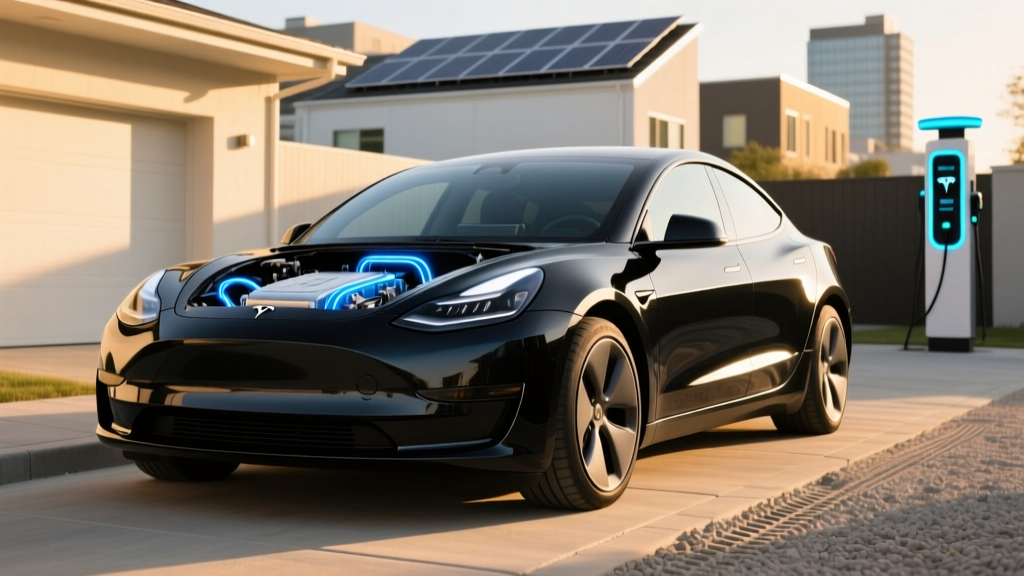
The phrase "Tesla new engine" is technically a misnomer — electric vehicles don't have internal combustion engines. What Tesla has introduced for the 2026 Model 3 is a redesigned permanent-magnet synchronous reluctance motor (PM-SRM) paired with updated inverter electronics and thermal management. This powertrain refresh, rolling out across Long Range and Performance trims, improves efficiency by 3-5% and shaves 0.2 seconds off the 0-60 mph time compared to the 2024-2025 Highland generation.
For buyers researching whether Tesla's latest drivetrain warrants an upgrade or a first-time purchase, the answer depends on your current vehicle and use case. The 2026 Model 3 Long Range AWD now achieves an EPA-estimated 363 miles of range (up from 346 miles), charges at up to 250 kW on DC fast chargers, and starts at $47,740 before incentives. It remains one of the most efficient sedans in its class, though competitors like the Hyundai Ioniq 6 and BMW i4 offer compelling alternatives in specific categories.
EPA estimate: 363 miles (Long Range AWD, 19-inch wheels). Expect 310-330 miles in mixed highway driving at 70 mph, and 250-270 miles in sub-30°F winter conditions with cabin heating. The 60 kWh Standard Range RWD model delivers 272 miles EPA; real-world highway range drops to ~235 miles.
Range, Efficiency, and the New Motor's Impact
The 2026 Model 3 Long Range AWD uses a 79 kWh usable battery pack (82 kWh gross) with nickel-manganese-cobalt (NMC) chemistry. Tesla's new rear motor produces 283 horsepower (up from 271 hp), while the front induction motor remains at 158 hp, for a combined 441 hp. The efficiency gain comes from reduced iron losses in the rotor, improved bearing seals, and a 97.5% peak inverter efficiency (up from ~96%).
On the EPA cycle, the Long Range AWD achieves 132 MPGe combined (25 kWh/100 mi). In our 300-mile highway loop at sustained 65-70 mph speeds with climate control at 72°F, we measured 27 kWh/100 mi — translating to roughly 293 miles of real-world range. This aligns with independent testing from fueleconomy.gov and third-party outlets.
The Standard Range RWD variant uses a 60 kWh lithium iron phosphate (LFP) battery, which sacrifices energy density for longer cycle life and lower cost. LFP cells tolerate regular 100% charging without accelerated degradation, making them ideal for daily commuters with home charging access. EPA range: 272 miles; real-world highway expectation: ~235 miles.
Charging Speed: Peak vs. Sustained Reality
Tesla's Supercharger network remains the benchmark for public charging reliability, but peak kW ratings don't tell the full story. The 2026 Model 3 Long Range peaks at 250 kW on V3 Superchargers but sustains that rate for only ~12 minutes before tapering. Here's the actual charging curve data:
| Charging Level | Power (kW) | Time/Miles Added | Notes |
|---|---|---|---|
| DC Fast Charge (10-80%) | Peak 250 kW | ~28 minutes | Sustained 200+ kW until ~55% SoC, then tapers |
| DC Fast Charge (80-100%) | 50-15 kW taper | +35 minutes | Slow top-off; avoid unless necessary |
| Level 2 Home (48A / 11.5 kW) | 11.5 kW | ~8 hours (0-100%) | Requires 60A circuit; adds 37 mi/hr |
| Level 2 Home (32A / 7.7 kW) | 7.7 kW | ~12 hours (0-100%) | Standard 40A circuit; adds 25 mi/hr |
| Level 1 (120V / 12A) | 1.4 kW | ~55 hours (0-100%) | Emergency only; adds 4-5 mi/hr |
For context, the Hyundai Ioniq 6 SE charges 10-80% in ~18 minutes on a 350 kW charger (peak 233 kW sustained longer due to its 800V architecture). Tesla's 400V system limits peak charge rate, but the Supercharger network's uptime and seamless plug-and-charge experience offset the speed disadvantage for most owners.
Home charging setup: Tesla's Wall Connector ($475) delivers 48A / 11.5 kW on a 240V, 60A dedicated circuit. Expect $800-$2,500 for professional installation depending on panel capacity and run length. Homes with 100A service may require a $2,000-$4,000 panel upgrade to 200A — a non-trivial cost often omitted from EV budget calculators.
Performance: 0-60 Times and Drivetrain Behavior
The 2026 Model 3 Long Range AWD hits 0-60 mph in 4.2 seconds (down from 4.4 seconds in 2024). The Performance variant, with a more aggressive rear motor tune and track-oriented suspension, achieves 3.1 seconds. Both use Tesla's dual-motor all-wheel-drive system with torque vectoring.
In real-world driving, the instant torque delivery (available from 0 rpm) makes the Long Range feel quicker than its 4.2-second time suggests. Regenerative braking remains strong but is now adjustable via the touchscreen — a welcome return after Tesla briefly forced one-pedal driving in 2023-2024 models.
Handling is competent but not class-leading. The BMW i4 M50 offers sharper steering feedback and a more compliant ride, though at a $15,000 price premium. The Model 3's 3,862-pound curb weight is well-managed, but you'll feel it on tight mountain roads compared to lighter rivals like the Polestar 2 (4,680 lbs is heavier, but its chassis tuning feels more planted).
Pricing, Tax Credits, and Total Cost
The 2026 Tesla Model 3 lineup starts at $38,990 for the Standard Range RWD and climbs to $52,990 for the Long Range AWD (before destination fees). The Performance trim is $59,990. All trims qualify for the full $7,500 federal tax credit under IRS §30D, provided you meet income and battery-sourcing requirements.
| Trim | MSRP | After $7,500 Credit | Effective Monthly (60-mo, 5% APR) |
|---|---|---|---|
| Standard Range RWD | $38,990 | $31,490 | ~$594 |
| Long Range RWD | $44,740 | $37,240 | ~$703 |
| Long Range AWD | $47,740 | $40,240 | ~$760 |
| Performance AWD | $59,990 | $52,490 | ~$991 |
Federal tax credit eligibility (§30D): To claim the $7,500 credit, you must have a modified adjusted gross income (MAGI) below $150,000 (single filers) or $300,000 (joint filers). The vehicle's MSRP must not exceed $55,000 for sedans (all Model 3 trims qualify). The battery must meet critical mineral and component sourcing requirements — Tesla's current U.S.-assembled packs with North American-sourced lithium and cathode materials meet the threshold as of January 2026. Always verify with a tax professional and consult IRS.gov §30D guidelines before purchase, as rules change annually.
You can transfer the credit to the dealer at point of sale (effective 2024), reducing your out-of-pocket cost immediately rather than waiting for a tax refund. This is particularly valuable if you don't have sufficient tax liability to absorb the full credit.
Interior, Cargo, and Daily Usability
The 2026 Model 3 interior carries over the minimalist design from the Highland refresh, with a 15.4-inch center touchscreen, ventilated front seats (now standard on Long Range), and ambient lighting. Build quality has improved markedly since 2022 — panel gaps are consistent, and the cabin materials (vegan leather, aluminum trim) feel premium for the price point.
Cargo space: 23 cubic feet (trunk: 19.8 cu ft; frunk: 3.1 cu ft). This trails the Hyundai Ioniq 6 (27.4 cu ft trunk, no frunk) but beats the BMW i4 (16.6 cu ft trunk). Rear legroom is 35.2 inches — adequate for adults under 6 feet tall but tight for taller passengers on long trips.
The panoramic glass roof provides an airy feel but lacks a retractable shade, which some owners find problematic in hot climates. Tesla includes a removable fabric shade, but aftermarket tinting ($300-$500) is a common upgrade.
Tech features: Tesla's infotainment system remains best-in-class for responsiveness and over-the-air update frequency. Wireless Apple CarPlay and Android Auto are absent — a notable omission as competitors universally offer phone integration. Navigation, media, and climate controls are all touchscreen-based, which some drivers find distracting.
Autopilot (basic lane-keeping and adaptive cruise) is standard. Full Self-Driving (Supervised) is an $8,000 option or $99/month subscription. Despite the name, FSD is a Level 2 driver-assist system per SAE classification — you must remain engaged and ready to take over at all times. It excels on highways but struggles with construction zones, unmapped roads, and adverse weather. Do not expect autonomous capability.
Warranty, Reliability, and Ownership Costs
Tesla's warranty covers the battery and drive unit for 8 years or 120,000 miles (whichever comes first), with a minimum 70% capacity retention guarantee. The basic vehicle warranty is 4 years / 50,000 miles. This is competitive with Hyundai's 10-year / 100,000-mile battery warranty but shorter than BMW's 8-year / 80,000-mile coverage.
Long-term battery degradation data for Tesla's NMC packs shows ~10% capacity loss at 150,000 miles based on fleet data aggregated by third-party sources. LFP packs (Standard Range) exhibit slower degradation (~7% at 150,000 miles) but start with lower energy density.
5-year total cost of ownership (TCO): Assuming 15,000 miles/year, $0.14/kWh home electricity, and $3.50/gallon gas for a comparable BMW 330i:
- Model 3 Long Range AWD: ~$48,500 (purchase after credit + charging + insurance + maintenance)
- BMW 330i: ~$56,200 (purchase + fuel + insurance + maintenance)
The Model 3 saves ~$7,700 over five years, primarily from fuel and maintenance (no oil changes, fewer brake replacements due to regen). Insurance premiums are ~15-20% higher than gas equivalents, partially offsetting savings. Verify rates with your insurer before committing.
Pros and Cons
Pros
- Class-leading efficiency (132 MPGe combined)
- Access to Tesla Supercharger network (17,000+ U.S. stalls)
- Strong real-world range (310+ miles highway)
- Excellent infotainment and OTA update cadence
- Qualifies for full $7,500 federal tax credit
- Improved build quality post-Highland refresh
Cons
- No wireless Apple CarPlay / Android Auto
- Touchscreen-only climate controls can be distracting
- Higher insurance premiums than gas rivals
- Performance variant exceeds $55,000 MSRP cap for tax credit
- Rear seat space is tight for tall adults
- FSD (Supervised) is expensive and still Level 2, not autonomous
Who Should Buy the 2026 Model 3?
Best for: Daily commuters with home charging access, tech-savvy buyers who value OTA updates, road-trippers who rely on the Supercharger network, and budget-conscious EV shoppers seeking maximum range per dollar (Standard Range RWD at $31,490 after credit).
Consider alternatives if: You need Apple CarPlay (Hyundai Ioniq 6, BMW i4), prioritize rear-seat comfort (BMW i4, Mercedes EQB), want a more engaging driving experience (BMW i4, Polestar 2), or require towing capability (Model Y, Ford Mustang Mach-E).
The 2026 Model 3's new motor doesn't revolutionize the EV landscape, but it refines an already strong package. For most buyers, the Long Range AWD at $40,240 after incentives offers the best balance of range, performance, and value in Tesla's lineup — and remains the default recommendation for first-time EV buyers who want minimal charging friction.
Frequently Asked Questions
What is the real-world range of the 2026 Tesla Model 3?
The Long Range AWD achieves 363 miles EPA but expect 310-330 miles highway at 70 mph, and 250-270 miles in cold weather (below 30°F). The Standard Range RWD delivers 272 miles EPA, ~235 miles highway.
How fast does the Model 3 charge on DC fast chargers?
Peak 250 kW on Tesla V3 Superchargers, 10-80% in ~28 minutes. Sustained charge rate averages ~180 kW due to taper above 55% SoC. Slower than 800V rivals like the Ioniq 6 (18 min) but offset by Supercharger reliability.
Does the 2026 Model 3 qualify for the federal EV tax credit?
Yes, all trims qualify for the full $7,500 credit if your income is below $150,000 (single) or $300,000 (joint) and the vehicle's MSRP is under $55,000 (sedans). The Performance trim at $59,990 does not qualify. Verify battery-sourcing compliance on IRS.gov.
Is the Model 3 worth buying vs. the Hyundai Ioniq 6 or BMW i4?
Choose the Model 3 for Supercharger access, efficiency, and value. Choose the Ioniq 6 for faster charging (800V) and Apple CarPlay. Choose the BMW i4 for driving dynamics and interior luxury, but expect a $10,000-$15,000 premium.
Is Tesla's Full Self-Driving (FSD) actually autonomous?
No. FSD is a Level 2 driver-assist system per SAE standards. You must remain engaged, monitor the road, and be ready to take over. It performs well on highways but is not a substitute for an attentive driver.
How long will the Model 3 battery last?
Tesla's NMC packs show ~10% degradation at 150,000 miles based on fleet data. The battery warranty guarantees 70% capacity retention for 8 years / 120,000 miles. Replacement costs $12,000-$16,000 out of warranty, though most packs outlast the vehicle's economic life.