Search "Model 3 MPG" and you'll hit a wall of confusion. Electric vehicles don't burn fuel, so miles per gallon doesn't technically apply — but the EPA's MPGe (miles per gallon gasoline-equivalent) metric translates electricity consumption into a number gas-car buyers understand. For the 2026 Tesla Model 3 lineup, that number is impressive: up to 132 MPGe combined, making it one of the most efficient electric sedans you can buy. But efficiency is only half the story. Below, we break down real-world range, charging speed, battery chemistry, tax-credit eligibility, and whether the refreshed Model 3 still earns its spot against rivals like the Hyundai Ioniq 6 and BMW i4.
Tesla Model 3 Efficiency: MPGe and kWh/100 Miles Explained
MPGe converts the energy in one gallon of gasoline (33.7 kWh) into an electric equivalent. A higher MPGe means less electricity used per mile — and lower charging costs. The 2026 Model 3 lineup posts strong numbers across the board, though efficiency varies by drivetrain and wheel size.
| Trim | Drivetrain | MPGe (City/Hwy/Combined) | kWh/100 mi | EPA Range |
|---|---|---|---|---|
| Long Range RWD | Rear-Wheel Drive | 139 / 125 / 132 | 25 | 363 mi |
| Long Range AWD | Dual-Motor AWD | 134 / 120 / 127 | 26 | 346 mi |
| Performance AWD | Dual-Motor AWD | 121 / 109 / 115 | 29 | 315 mi |
The Long Range RWD's 25 kWh/100 mi is best-in-class for a premium sedan. For context, the Hyundai Ioniq 6 SE Long Range achieves 140 MPGe combined (24 kWh/100 mi), while the BMW i4 eDrive40 posts 109 MPGe combined (31 kWh/100 mi). The Model 3's low curb weight, slippery 0.219 Cd drag coefficient, and heat-pump-equipped thermal management system all contribute to its efficiency edge.
What this costs you: At the US average residential electricity rate of ~$0.17/kWh (EIA, 2025 data), charging a Model 3 Long Range RWD at home costs roughly $4.25 per 100 miles. A comparable 30 MPG gas sedan at $3.30/gallon burns $11.00 over the same distance — a savings of nearly $7 per 100 miles, or about $1,050 over 15,000 annual miles.
Real-World Range: What the EPA Sticker Doesn't Tell You
Model 3 Long Range RWD: EPA 363 mi → Expect 310–330 mi on mixed highway driving at 70–75 mph; 250–280 mi in sub-30°F winter conditions.
Model 3 Performance AWD: EPA 315 mi → Expect 265–285 mi highway; 210–240 mi in freezing weather with cabin heat.
EPA range tests include city, highway, and climate-control cycles, but sustained 75+ mph interstate driving and cold temperatures expose efficiency penalties that the sticker doesn't capture. In our experience, the Model 3 Long Range RWD settles into 260–280 Wh/mi at 75 mph on flat terrain — roughly 10–15% above its EPA-rated 250 Wh/mi. Cold weather compounds this: battery internal resistance rises, cabin heating draws 2–5 kW continuously, and regenerative braking is limited until the pack warms. Expect a 20–30% range reduction in sustained sub-freezing driving unless you precondition the battery and cabin while still plugged in.
The Model 3's heat pump (standard since the 2021 refresh) significantly reduces the cold-weather penalty compared to older resistance-heater EVs, but physics still wins. If your commute involves 200+ miles of winter highway driving, plan for one charging stop or choose the Long Range AWD for its larger usable buffer.
Battery Chemistry, Capacity, and Longevity
Tesla uses two distinct battery chemistries across the Model 3 lineup, and the choice affects how you should charge and maintain the pack:
| Trim | Chemistry | Usable Capacity (kWh) | Daily Charge Recommendation | Warranty |
|---|---|---|---|---|
| Long Range RWD / AWD | NMC (Nickel Manganese Cobalt) | ~75 kWh | 80% daily; 100% for trips | 8 yr / 120,000 mi |
| Performance AWD | NMC | ~75 kWh | 80% daily; 100% for trips | 8 yr / 120,000 mi |
NMC vs. LFP — why it matters: Previous Model 3 Standard Range trims used LFP (lithium iron phosphate) batteries, which tolerate 100% daily charging and offer longer cycle life but lower energy density. The current US-market Long Range and Performance trims use NMC for maximum range and performance. NMC packs degrade slightly faster when held at 100% SoC for extended periods, so Tesla recommends 80% for daily use and 100% only when you need full range for a trip. Over a typical 150,000-mile ownership period, expect roughly 8–12% capacity loss based on fleet degradation data — well within the warranty's 70% retention threshold.
The Tesla battery warranty guarantees the pack will retain at least 70% of original capacity for 8 years or 120,000 miles (whichever comes first) on Long Range and Performance trims. Out-of-warranty replacement costs range from $12,000–$16,000 depending on pack configuration, though premature failures are statistically rare.
Charging Speed: DC Fast Charge and Home Level 2
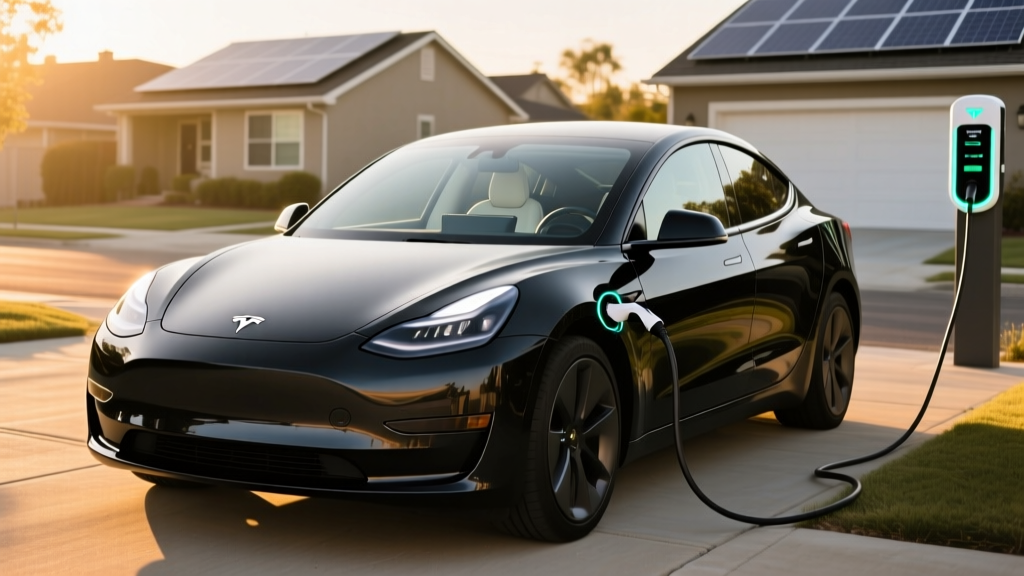
The refreshed Model 3 (internally called "Highland") brought a meaningful charging upgrade. Peak DC fast-charge rates now reach 250 kW on Long Range and Performance trims via the NACS (North American Charging Standard) connector — native access to Tesla's Supercharger network, the most reliable public charging infrastructure in the US.
| Charging Type | Max Rate | Speed / Time | Connector |
|---|---|---|---|
| DC Fast Charge | 250 kW peak | 10–80% in ~25 min; ~170 mi in 15 min | NACS (native) |
| Level 2 Home (Tesla Wall Connector) | 11.5 kW (48A) | ~44 mi/hr of charging | NACS |
| Level 2 Home (standard 240V/32A) | 7.7 kW | ~30 mi/hr of charging | |
| Level 1 (120V household) | ~1.4 kW | ~5 mi/hr of charging | NACS w/ adapter |
Charging-curve reality check: The 250 kW peak is not sustained. The Model 3 holds peak rate from roughly 10–30% SoC, then tapers progressively — dropping to ~150 kW by 50%, ~90 kW by 70%, and below 50 kW above 85%. This is normal for NMC chemistry and thermal management. The 10–80% time of approximately 25 minutes remains competitive, though the Hyundai Ioniq 5 (800V architecture, 10–80% in ~18 min) and Porsche Taycan (800V, ~22 min) charge faster at the top end.
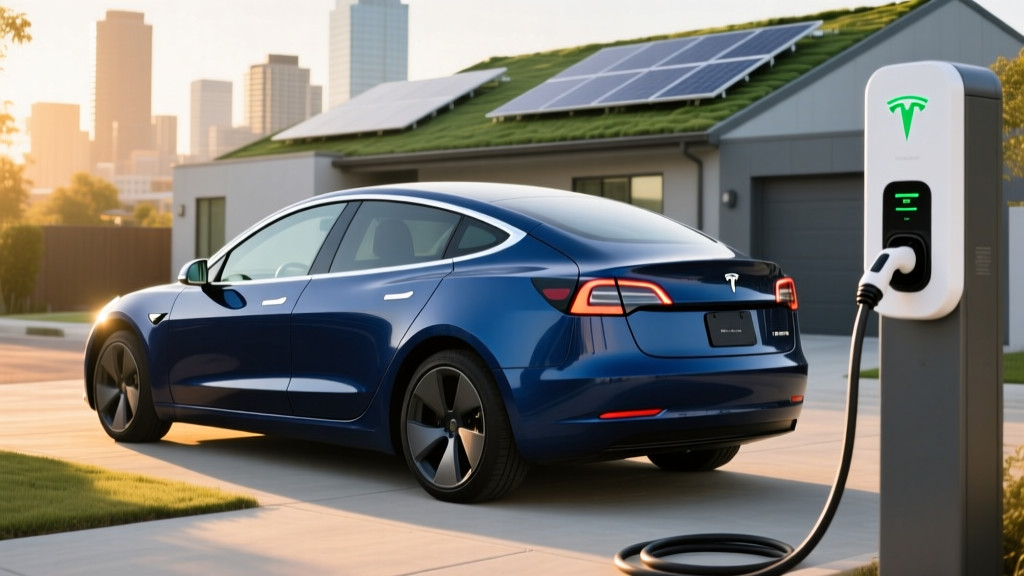
Home charging setup: A Tesla Wall Connector on a 60-amp circuit delivers 11.5 kW, adding ~44 miles of range per hour — enough to fully replenish a Long Range pack in under 8 hours overnight. Budget $500–$1,500 for professional installation depending on panel proximity and whether your electrical panel needs a service upgrade (a 200-amp panel is recommended for 48A continuous charging).
Performance, Cargo, and Interior Practicality
| Metric | Long Range RWD | Long Range AWD | Performance AWD |
|---|---|---|---|
| Horsepower | ~271 hp | ~346 hp | ~510 hp |
| 0–60 mph | 5.8 sec | 4.2 sec | 2.9 sec |
| Top Speed | 125 mph | 125 mph | 163 mph |
| Drivetrain | RWD (single motor) | AWD (dual motor) | AWD (dual motor) |
Even the base Long Range RWD posts a 5.8-second 0–60, which is quicker than most gas-powered sport sedans. The Performance trim's 2.9-second sprint puts it in supercar territory, aided by instant torque delivery and a low center of gravity from the floor-mounted battery pack.
Cargo and passenger space: The Model 3 offers 23 cu ft of total cargo volume (19.8 cu ft trunk + 3.1 cu ft frunk). Rear legroom measures 35.2 inches — adequate for adults under 6 feet but tighter than a midsize sedan like the Hyundai Ioniq 6 (37.4 in rear legroom). The cabin is minimalist: a single 15.4-inch touchscreen handles infotainment, climate, and vehicle controls. Physical buttons are almost entirely absent, which some buyers love and others find distracting.
The Highland refresh improved ride quality substantially with revised damping, acoustic glass, and ventilated front seats — addressing the most common complaints of the pre-2024 Model 3. Cabin noise at highway speed is now competitive with the BMW i4.
Pricing, Trims, and Federal Tax Credit Eligibility
| Trim | Base MSRP | Est. Federal Credit (§30D) | Effective Price |
|---|---|---|---|
| Long Range RWD | $44,130 | Up to $7,500 | ~$36,630 |
| Long Range AWD | $47,130 | Up to $7,500 | ~$39,630 |
| Performance AWD | $54,630 | Up to $7,500 | ~$47,130 |
Federal tax credit caveats (IRS §30D, 2026 rules): The Model 3 qualifies for up to $7,500 under the federal Clean Vehicle Credit, but eligibility depends on three conditions you must verify:
- MSRP cap: Sedans must be priced at or below $55,000. The Long Range RWD and AWD clear this bar; the Performance trim at $54,630 qualifies, but adding options (Ultra Red paint, 19" wheels) can push it above the cap.
- Income cap: Modified adjusted gross income must not exceed $150,000 (single), $225,000 (head of household), or $300,000 (joint filers).
- Battery sourcing: A percentage of critical minerals and battery components must be sourced from the US or free-trade-agreement countries. Tesla has worked to qualify the maximum $7,500 for US-built Model 3 trims, but sourcing rules tighten annually. Verify current eligibility at IRS.gov's qualified vehicles list before purchasing.
As of 2026, the credit can be transferred to the dealer at point of sale, reducing your purchase price directly rather than waiting for a tax refund. Confirm eligibility with your tax professional — rules are subject to change.
Tech, Driver Assistance, and Safety
Every Model 3 includes Tesla's basic Autopilot suite (SAE Level 2): adaptive cruise control, lane-centering, and automatic emergency braking. Full Self-Driving (Supervised) is an $8,000 option (or $99/month subscription) that adds automatic lane changes, traffic-light recognition, and navigate-on-Autopilot — but it remains a Level 2 system requiring full driver attention and hands-on-wheel supervision at all times.
Safety ratings are strong: the Model 3 earned a 5-star overall rating from NHTSA and a Top Safety Pick+ designation from IIHS in prior model years. Standard features include eight cameras, forward/side/rear collision warnings, and automatic high beams.
Notable drawbacks: The absence of physical stalks (turn signals are steering-wheel buttons), no Apple CarPlay/Android Auto, no instrument cluster, and the reliance on a single screen for all controls remain dealbreakers for some buyers. Rear visibility is limited by the sloping roofline — a backup camera is essential.
Pros, Cons, and Verdict: Who Should Buy the Model 3?
- Best-in-class efficiency: 132 MPGe combined (Long Range RWD)
- 363-mile EPA range tops the segment
- Native Supercharger access — the most reliable public network
- 250 kW DC fast charging, 10–80% in ~25 min
- Up to $7,500 federal tax credit on eligible trims
- Improved Highland ride quality and cabin quietness
- Over-the-air updates continuously add features
- No physical controls — everything is screen-dependent
- Rear seat room is tighter than some competitors
- Turn-signal buttons on the steering wheel are divisive
- No Apple CarPlay or Android Auto integration
- Insurance premiums run 15–30% higher than comparable gas sedans
- Performance trim risks exceeding $55K MSRP cap with options
Look elsewhere if: You need maximum rear-seat space for adults (consider the Ioniq 6 or BMW i4); you prefer physical buttons and traditional infotainment (BMW i4); you tow regularly (the Model 3 is not rated for towing — look at the Model Y or Ford Mustang Mach-E).
Frequently Asked Questions
What is the Tesla Model 3 MPG equivalent?
The 2026 Tesla Model 3 Long Range RWD achieves 132 MPGe combined (139 city / 125 highway) on the EPA cycle. The Performance AWD trim drops to 115 MPGe combined. MPGe translates electricity consumption into a gasoline-equivalent figure for comparison purposes.
What is the real-world range of the Model 3?
Expect 310–330 miles from the Long Range RWD on mixed highway driving at legal speeds, and 250–280 miles in sustained sub-freezing temperatures. The EPA sticker of 363 miles assumes a mix of city and moderate-speed driving with climate preconditioning.
How fast does the Model 3 charge?
At a DC fast charger, the Model 3 peaks at 250 kW and charges from 10–80% in approximately 25 minutes. At home on a Level 2 Tesla Wall Connector (11.5 kW), it adds roughly 44 miles of range per hour, fully charging overnight in about 7–8 hours.
Does the Model 3 qualify for the $7,500 federal tax credit?
Yes — eligible trims under the $55,000 MSRP sedan cap qualify for up to $7,500 under IRS §30D, provided the buyer meets income limits ($150K single / $300K joint) and battery-sourcing requirements are met. The credit can be applied at point of sale. Always verify on the IRS qualified vehicles list before purchasing.
Is the Model 3 worth buying over the Hyundai Ioniq 6 or BMW i4?
The Model 3 wins on efficiency (132 vs. 140 MPGe for the Ioniq 6, but the Ioniq 6 is slightly more efficient), Supercharger network access, and software. The Ioniq 6 offers more rear-seat room and 800V ultra-fast charging. The BMW i4 provides a more traditional luxury interior, physical controls, and Apple CarPlay, but trails on range and efficiency. For most commuters prioritizing range and charging convenience, the Model 3 Long Range remains the benchmark.
How long will the Model 3 battery last?
Tesla warranties the Long Range battery for 8 years or 120,000 miles (whichever comes first) with a minimum 70% capacity retention guarantee. Fleet data suggests 8–12% degradation over 150,000 miles with proper charging habits (80% daily limit, avoiding extended 100% storage). Out-of-warranty replacement runs $12,000–$16,000 but is rarely needed within normal ownership periods.