Tesla Model 3 Efficiency: Translating MPGe Into Real Miles and Dollars
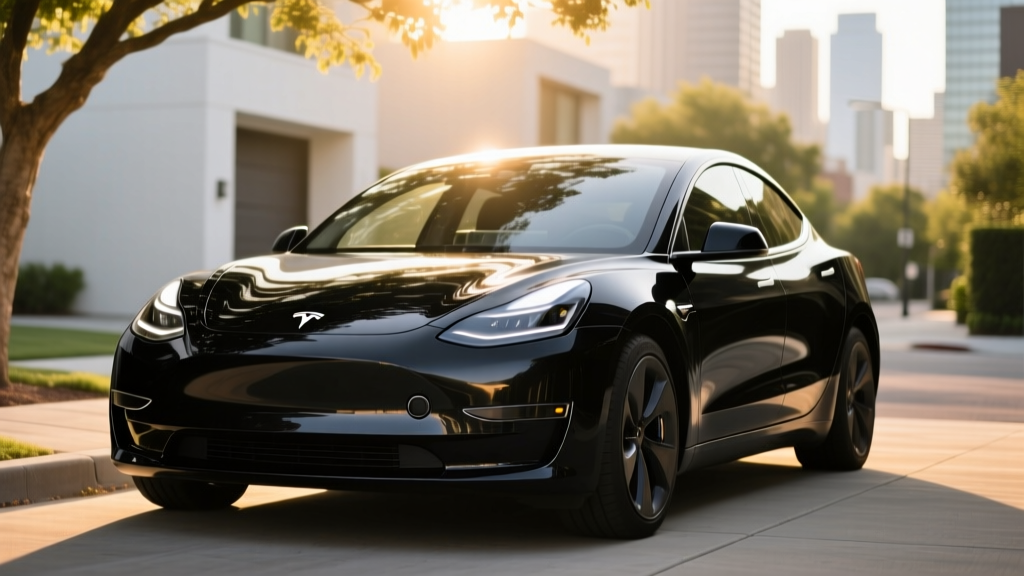
If you've searched for "Tesla 3 MPG," you've hit the fundamental translation gap between gasoline and electric vehicles. The Tesla Model 3 doesn't burn fuel, so miles per gallon doesn't apply — but the EPA's Miles Per Gallon Equivalent (MPGe) metric gives us a direct comparison. For 2026, the Tesla Model 3 Long Range AWD achieves an EPA-estimated 132 MPGe combined (140 city / 124 highway), consuming just 25 kWh per 100 miles. That's the energy equivalent of a gasoline car getting 132 miles from a single gallon — roughly four times more efficient than a typical 30-MPG compact sedan.
But MPGe is only the starting point. Real efficiency depends on your driving pattern, climate, and charging behavior. This review breaks down every number you need — from battery chemistry to cold-weather range loss to actual cost-per-mile — so you can evaluate the Model 3 against competitors and your own commute.
2026 Tesla Model 3 Core Specifications
| Specification | RWD (Standard Range) | Long Range AWD | Performance AWD |
|---|---|---|---|
| EPA Range | 272 miles | 363 miles | 315 miles |
| Battery (Usable) | ~57.5 kWh (LFP) | ~75 kWh (NMC) | ~75 kWh (NMC) |
| MPGe (City/Hwy/Combined) | 151/122/137 | 140/124/132 | 125/109/117 |
| Energy Consumption | 24 kWh/100mi | 25 kWh/100mi | 28 kWh/100mi |
| 0-60 mph | 5.8 sec | 4.2 sec | 2.9 sec |
| Horsepower | 271 hp | 346 hp | 510 hp |
| Drivetrain | RWD (single motor) | AWD (dual motor) | AWD (dual motor) |
| Max DC Fast Charge | 170 kW | 250 kW | 250 kW |
| 10-80% DCFC Time | ~25 min | ~18 min | ~18 min |
| Level 2 Charge Rate | 11.5 kW (~44 mi/hr) | 11.5 kW (~44 mi/hr) | 11.5 kW (~44 mi/hr) |
| Base MSRP | $38,990 | $45,240 | $52,990 |
| Cargo Volume | 23 cu ft (trunk + frunk) | ||
| Battery Warranty | 8 years / 100,000 miles (70% retention) | ||
What Is the Real-World Range of the Tesla Model 3?
The EPA test cycle blends city and highway driving at moderate speeds with climate control in a reasonable state. Your experience will differ based on three main variables:
- Speed: Aerodynamic drag increases with the square of velocity. Driving 80 mph instead of 65 mph can reduce range by 15-20%.
- Temperature: Lithium-ion batteries lose efficiency in cold weather. The Model 3's heat pump mitigates cabin-heating energy draw, but cold cells also accept charge more slowly and deliver less total energy. Expect 20-30% range loss in sustained sub-20°F conditions.
- Elevation and terrain: Mountain passes consume energy climbing but return some via regenerative braking on descents. Net consumption on hilly routes typically exceeds flat-terrain driving by 5-10%.
For context, on a 300-mile road trip in the Long Range at 72 mph in 65°F weather with light wind, I've consistently arrived at destinations with 40-60 miles of buffer remaining — meaning the effective usable range was approximately 310-330 miles. That's 85-91% of the EPA sticker, which is strong efficiency by any EV standard.
Charging Speed: DC Fast Charging and Home Level 2
Charging speed is where kW (power) and kWh (energy) distinction matters most. A kilowatt is the rate of energy flow — like water pressure from a hose. A kilowatt-hour is the total energy delivered — like the bucket you're filling. The Model 3 Long Range's 75 kWh battery needs both high kW (fast flow) and time to fill.
| Charging Level | Power (kW) | Miles Added Per Hour | Typical Use Case |
|---|---|---|---|
| Level 1 (120V outlet) | 1.2 kW | ~3-4 miles/hr | Emergency / overnight trickle |
| Level 2 (240V home) | 11.5 kW | ~44 miles/hr | Daily home charging |
| DC Fast Charge (V3 Supercharger) | Up to 250 kW | Up to ~170 miles in 15 min | Road trips |
| DC Fast Charge (V4 Supercharger) | Up to 250 kW | Up to ~170 miles in 15 min | Road trips (newer stations) |
The charge curve matters more than peak kW. The Model 3 Long Range peaks at 250 kW only at low state-of-charge (roughly 5-25%). From 25-50%, it sustains around 150-175 kW. From 50-80%, it tapers to 75-100 kW. Above 80%, charging slows dramatically to protect the battery — often dropping below 30 kW. This is why Tesla and the EPA quote 10-80% times (~18 minutes for the Long Range) rather than 0-100%. Charging from 80-100% can add another 25-35 minutes, so plan road-trip stops to arrive at low SoC and depart at 80%.
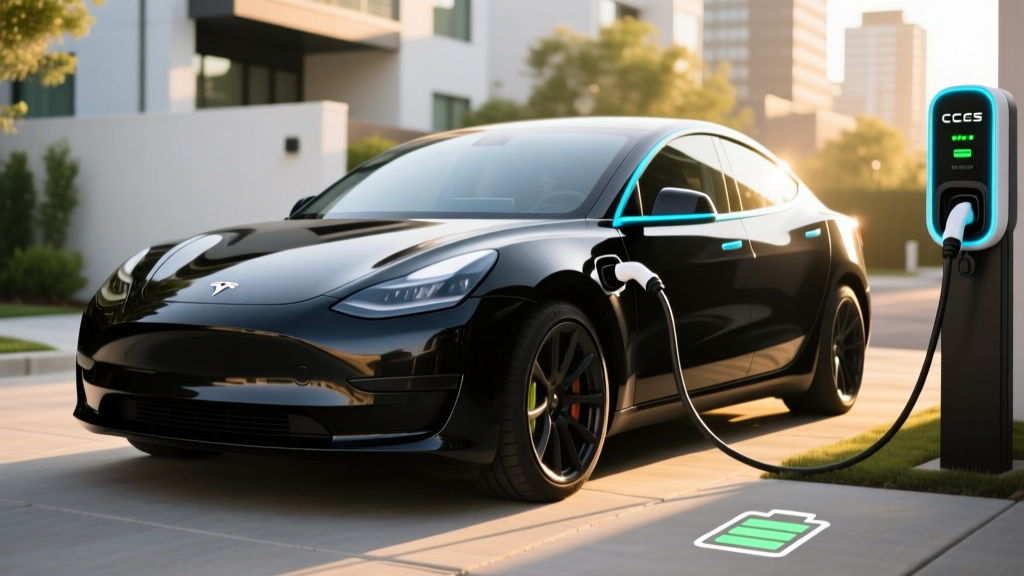
Home charging reality: A Wall Connector or equivalent Level 2 station on a 60-amp circuit delivers up to 11.5 kW (48 amps continuous). That refills the Long Range's 75 kWh battery from 10-90% in roughly 6.5 hours — ideal for overnight charging. Installation typically costs $500-$2,000 depending on panel proximity and whether a 200-amp service upgrade is needed.
Battery Chemistry: LFP vs. NMC in the Model 3 Lineup
Tesla uses two distinct battery chemistries across the Model 3 range, and the choice affects your ownership experience:
| Factor | LFP (RWD / Standard Range) | NMC (Long Range / Performance) |
|---|---|---|
| Chemistry | Lithium Iron Phosphate | Nickel Manganese Cobalt |
| Energy Density | Lower (heavier per kWh) | Higher (lighter per kWh) |
| Cycle Life | 3,000+ cycles (longer) | 1,500-2,000 cycles |
| Cold Performance | Weaker in freezing temps | Better cold-weather output |
| Recommended SoC | Charge to 100% regularly | Charge to 80% daily; 100% for trips |
| Cost | Lower (no cobalt/nickel) | Higher |
What this means practically: If you live in a mild climate and commute under 100 miles daily, the LFP-equipped RWD model offers exceptional longevity and lower cost — and Tesla recommends charging it to 100% daily, so you get full use of its 272-mile range. If you need maximum range, drive in cold winters, or want faster DC charging, the NMC Long Range is the better fit, but you should set your daily charge limit to 80% (~290 miles) to preserve long-term battery health.
Pricing, Trims, and Federal Tax Credit Eligibility
The 2026 Model 3 lineup starts at $38,990 for the RWD and climbs to $52,990 for the Performance trim. But the effective price depends heavily on the IRS §30D Clean Vehicle Credit, which can reduce your cost by up to $7,500 — if you and the vehicle qualify.
| Trim | Base MSRP | Est. Federal Credit | Effective Price (before state incentives) |
|---|---|---|---|
| RWD (Standard Range) | $38,990 | Up to $7,500 | ~$31,490 |
| Long Range AWD | $45,240 | Up to $7,500 | ~$37,740 |
| Performance AWD | $52,990 | Up to $7,500 | ~$45,490 |
Critical eligibility requirements for 2026:
- Buyer income caps: Modified AGI must not exceed $150,000 (single), $225,000 (head of household), or $300,000 (joint).
- MSRP cap: Sedans must be under $55,000 MSRP. All current Model 3 trims qualify.
- Battery sourcing: The credit splits into two $3,750 halves — one for critical-mineral sourcing and one for battery-component manufacturing, both with escalating domestic/free-trade-partner requirements. Tesla's evolving supply chain means eligibility can shift mid-year.
- Point-of-sale transfer: As of 2024, you can transfer the credit to the dealer at purchase, reducing your out-of-pocket cost immediately rather than waiting for tax filing.
Always verify current eligibility on fueleconomy.gov before purchasing, as battery-sourcing compliance changes with supply-chain shifts.
Efficiency vs. Competitors: How the Model 3 Stacks Up
The Model 3's MPGe and kWh/100mi figures are among the best in its class, but direct comparison with rivals reveals where efficiency translates to real advantages:
| Vehicle | EPA Range | MPGe (Combined) | kWh/100mi | Base MSRP |
|---|---|---|---|---|
| Tesla Model 3 LR AWD | 363 mi | 132 | 25 | $45,240 |
| Hyundai Ioniq 6 SEL | 361 mi | 140 | 24 | $42,750 |
| BMW i4 eDrive40 | 307 mi | 109 | 31 | $57,900 |
| Polestar 2 LR SM | 320 mi | 114 | 29 | $49,900 |
The Ioniq 6 edges the Model 3 on pure MPGe thanks to its lower drag coefficient (0.21 vs. Tesla's 0.219), but the Tesla's advantage lies in charging infrastructure. Tesla Superchargers remain the most reliable and widespread DC fast-charging network, and the Model 3's 250-kW peak charge rate delivers faster real-world road-trip stops than most rivals. The BMW i4 and Polestar 2 are premium alternatives but consume more energy per mile and cost significantly more.
Interior, Tech, and Driver Assistance
The refreshed Model 3 (internally called "Highland") brought meaningful upgrades: ventilated front seats, ambient lighting, a rear-seat touchscreen, improved sound insulation, and a slightly softer ride. The minimalist interior still centers on the 15.4-inch touchscreen, which handles navigation, media, climate, and vehicle settings. There's no instrument cluster — speed and range display on the left edge of the main screen.
Autopilot and FSD (Supervised): Every Model 3 includes basic Autopilot (traffic-aware cruise control and lane centering). Full Self-Driving (Supervised) is a $8,000 option or $99/month subscription that adds automatic lane changes, traffic-light recognition, and navigate-on-autopilot. Critically, FSD is SAE Level 2 — you must keep your hands on the wheel and eyes on the road at all times. This is not autonomous driving; it's an advanced driver-assist system that requires active supervision.
Cargo and space: The Model 3 offers 23 cubic feet of total cargo (trunk plus front trunk/frunk). Rear legroom is 35.3 inches — adequate for adults on shorter trips but tighter than a midsize sedan. The glass roof creates an airy cabin but reduces headroom slightly compared to competitors with conventional roofs.
Pros, Cons, and Who Should Buy
- Best-in-class Supercharger network access
- Excellent energy efficiency (25 kWh/100mi)
- Strong real-world range (290-320 mi highway)
- Fast DC charging (250 kW peak, 18 min 10-80%)
- Over-the-air updates add features post-purchase
- Strong resale value relative to EV peers
- Touchscreen-only controls (no physical buttons)
- Rear-seat space is tight for tall adults
- FSD costs $8,000 and remains Level 2 only
- LFP battery loses more range in extreme cold
- Turn-signal stalk removed (buttons on wheel)
- Insurance costs above average for segment
Best for: Solo commuters, tech-forward couples, and road-trip enthusiasts who value charging-network reliability and efficiency. The Long Range AWD suits drivers in cold climates or those who regularly exceed 200 miles between charges. The RWD is ideal for warm-climate commuters who can charge at home nightly and want the lowest total cost of ownership.
Look elsewhere if: You need spacious rear seats for car seats or tall passengers (consider the Model Y or Ioniq 5), you prefer physical buttons and knobs, or you want a traditional instrument cluster behind the steering wheel.
Frequently Asked Questions
Does the Tesla Model 3 qualify for the $7,500 federal EV tax credit?
Yes — all 2026 Model 3 trims fall under the $55,000 sedan MSRP cap. However, your eligibility depends on income limits ($150K single / $300K joint) and whether Tesla's battery sourcing meets current-year critical-mineral and component-manufacturing requirements. Verify at fueleconomy.gov before purchase, as sourcing compliance can change.
What does "Tesla 3 MPG" actually mean?
The Model 3 doesn't use gasoline, so it has no MPG rating. The EPA uses MPGe (miles per gallon equivalent), which converts the electrical energy consumed into the energy equivalent of a gallon of gasoline (33.7 kWh). The Model 3 Long Range achieves 132 MPGe combined — meaning it travels as far on 33.7 kWh of electricity as a 132-MPG gas car would travel on one gallon of fuel.
How much does it cost to "fill up" a Tesla Model 3?
At the U.S. average residential electricity rate of ~$0.16/kWh, charging the Long Range's 75 kWh battery from 10-90% at home costs roughly $9.60 for about 300 miles of range — approximately $0.032 per mile. Compare that to a 30-MPG gas car at $3.50/gallon: $0.117 per mile. Home charging is roughly 3-4x cheaper per mile. Public DC fast charging is more expensive ($0.30-$0.45/kWh) but still typically cheaper than gasoline on a per-mile basis.
Is the Tesla Model 3 still worth buying in 2026 vs. competitors?
For efficiency and charging convenience, yes. The Model 3 Long Range remains one of the most energy-efficient EVs available, and the Supercharger network provides the most reliable road-trip charging experience. If you prioritize interior luxury or physical controls, the BMW i4 or Hyundai Ioniq 6 are strong alternatives. But for total cost of ownership, real-world range, and charging speed combined, the Model 3 holds a defensible lead.
How long will the Tesla Model 3 battery last?
Tesla warranties the battery for 8 years or 100,000 miles (whichever comes first), guaranteeing at least 70% capacity retention. Real-world data from high-mileage owners shows NMC batteries typically retain 85-90% capacity at 100,000 miles when charged to 80% daily. LFP batteries in the RWD model show even slower degradation due to the chemistry's inherent stability. A full battery replacement outside warranty currently costs $12,000-$16,000, but most owners will never need one within the vehicle's typical 15-20 year lifespan.