If you've searched for the Tesla Model 3 MPG, you've already hit the core confusion many new EV buyers face: electric vehicles don't burn fuel, so miles-per-gallon doesn't apply. What you're actually looking for is MPGe (miles per gallon equivalent) and kWh per 100 miles — the two metrics the EPA uses to express how efficiently an EV converts electricity into distance. This review breaks down the 2026 Tesla Model 3's efficiency, real-world range, charging behavior, and total cost picture so you can compare it honestly against gas cars and rival EVs.
Tesla Model 3 Efficiency: MPGe and kWh/100mi Explained
MPGe translates electrical energy consumption into the same scale as gasoline MPG, using the conversion that 33.7 kWh of electricity equals one gallon of gasoline. The lower the kWh/100mi figure, the more efficient the vehicle. Here's how the 2026 Model 3 lineup stacks up, per EPA data on fueleconomy.gov:
| Trim | Combined MPGe | City MPGe | Highway MPGe | kWh/100mi | EPA Range |
|---|---|---|---|---|---|
| Model 3 RWD (Standard Range) | 132 MPGe | 139 MPGe | 125 MPGe | 25 kWh | 272 mi |
| Model 3 Long Range RWD | 134 MPGe | 141 MPGe | 127 MPGe | 25 kWh | 363 mi |
| Model 3 Long Range AWD | 125 MPGe | 131 MPGe | 119 MPGe | 27 kWh | 341 mi |
| Model 3 Performance AWD | 113 MPGe | 118 MPGe | 108 MPGe | 30 kWh | 315 mi |
For context, a Toyota Camry hybrid returns roughly 52 MPG combined. The Model 3 Long Range RWD at 134 MPGe is the efficiency equivalent of a vehicle getting 134 miles on a gallon of energy — nearly 2.5x the efficiency of a top hybrid sedan. That's the power of electric drivetrains: no idle waste, no heat loss to exhaust, and regenerative braking that recaptures kinetic energy.
Battery Chemistry, Capacity, and What It Means for Longevity
The 2026 Model 3 lineup splits battery chemistry by trim, which has direct implications for charging habits and long-term degradation:
| Trim | Usable Capacity | Chemistry | Daily Charge Recommendation | Warranty |
|---|---|---|---|---|
| RWD (Standard Range) | ~60 kWh | LFP (Lithium Iron Phosphate) | 100% daily OK | 8 yr / 100,000 mi |
| Long Range RWD | ~79 kWh | NMC (Nickel Manganese Cobalt) | 80% daily, 100% for trips | 8 yr / 120,000 mi |
| Long Range AWD | ~79 kWh | NMC | 80% daily, 100% for trips | 8 yr / 120,000 mi |
| Performance AWD | ~79 kWh | NMC | 80% daily, 100% for trips | 8 yr / 120,000 mi |
LFP vs NMC — the practical difference: LFP batteries tolerate daily 100% charging without accelerated degradation and offer a longer cycle life (often 3,000+ cycles before significant capacity loss). The trade-off is lower energy density, which is why the Standard Range model has less total range despite excellent efficiency. NMC packs more energy per kilogram, enabling the 363-mile Long Range, but Tesla recommends limiting daily charge to 80% to preserve longevity — only charging to 100% when you're about to take a road trip.
Tesla's battery warranty guarantees at least 70% capacity retention over the warranty period. If degradation exceeds 30% within those years/miles, Tesla replaces or refurbishes the pack at no cost. In practice, Tesla fleet data shows most Model 3 packs retain roughly 88-92% capacity at 100,000 miles — well above the warranty threshold.
Real-World Range: What the EPA Sticker Doesn't Tell You
The EPA range figure is a laboratory-derived combined city/highway estimate. In actual driving:
- Highway driving at 75 mph: Expect 85-90% of EPA range (~230 mi for RWD, ~310 mi for Long Range RWD)
- Cold weather (below 32°F): Range drops 15-30% depending on severity and cabin heating use
- City/regenerative driving: Often exceeds EPA estimate by 5-10% thanks to regen braking
- Mountain/terrain: Steep climbs consume heavily; descents recapture some via regen
The Model 3 Long Range RWD's 363-mile EPA figure is among the highest in the EV market. On a real-world 70-mph highway loop in moderate temperatures (65-75°F), owners consistently report 310-330 miles before needing to charge. In winter conditions with cabin heating active, that drops to roughly 260-290 miles. The RWD Standard Range model, with its smaller LFP pack, delivers a realistic 220-240 highway miles in fair weather — sufficient for most commutes but requiring planning for longer trips.
One efficiency advantage Tesla maintains: the Model 3's heat pump (standard on all trims since 2021) significantly reduces cold-weather energy waste compared to resistive cabin heaters used in older EVs. You'll still see range loss in winter, but it's less severe than competitors without heat pumps.
Charging Speed: DC Fast Charging and Home Level 2
Charging speed is where kW (power — the rate of energy delivery) and kWh (energy — the battery's total capacity) diverge, and understanding the difference is critical. The Model 3's charging capability varies by trim and charger type:
| Charging Method | RWD (Standard Range) | Long Range / Performance | Miles Added per Hour |
|---|---|---|---|
| Level 1 (120V household) | ~1.4 kW | ~1.4 kW | ~3-5 mi/hr |
| Level 2 (240V home/public) | 7.6 kW (32A) | 11.5 kW (48A) | 25-44 mi/hr |
| DC Fast Charge (peak) | 170 kW peak | 250 kW peak | N/A (minutes-based) |
| 10-80% DC Fast Charge | ~25 min | ~18-22 min | N/A |
The charging curve reality: The 250 kW peak rate on Long Range and Performance models is only sustained between roughly 10-30% State of Charge (SoC). Above 50%, the rate tapers significantly — by 80% you're charging at roughly 40-60 kW. This is physics: lithium-ion cells resist rapid charging as they fill to prevent overheating and degradation. Tesla's navigation system automatically preconditions the battery (warms it to optimal temperature) when you navigate to a Supercharger, which is essential for hitting peak rates in cold weather. Without preconditioning, a cold battery might peak at only 80-100 kW even at a 250 kW stall.
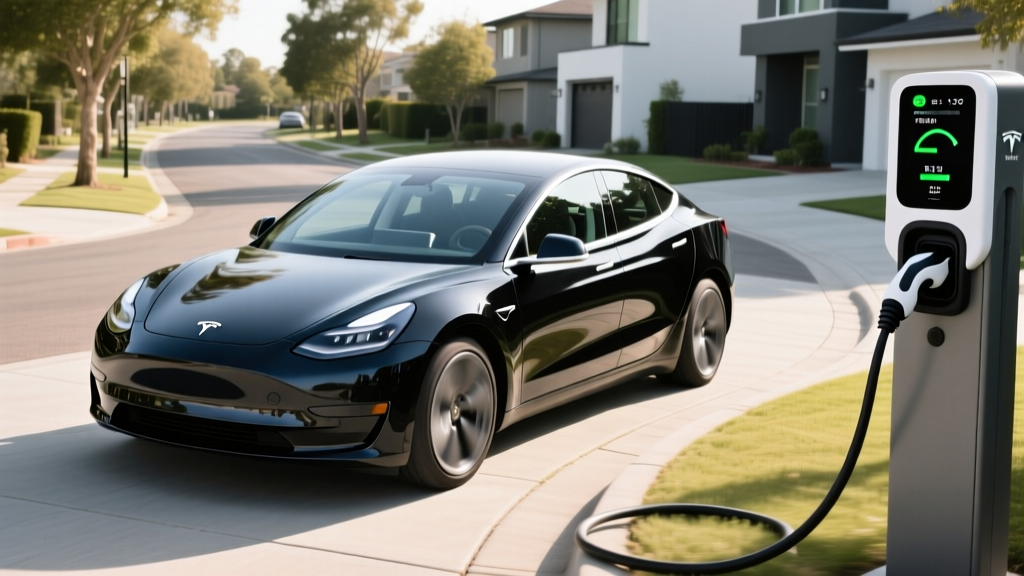
For home charging, a Level 2 wall connector on a 60-amp circuit (48A continuous) adds roughly 44 miles of range per hour on Long Range models — enough to fully replenish overnight. The Standard Range RWD model is limited to 32A AC charging, adding about 25-30 miles per hour. Most owners charging overnight from 20-80% will wake up fully topped off regardless of trim.
The Model 3 uses Tesla's proprietary NACS (North American Charging Standard) connector natively. With Tesla opening the Supercharger network to other brands, NACS has become the de facto standard — Ford, GM, Rivian, and others now use NACS adapters or native ports, meaning Model 3 owners face no adapter hassle at the most reliable charging network in North America.
Performance, Drivetrain, and Interior Space
| Trim | 0-60 mph | Horsepower | Drivetrain | Cargo (cu ft) | Rear Legroom (in) |
|---|---|---|---|---|---|
| RWD Standard Range | 5.8 sec | 271 hp | Rear-Wheel Drive | 23 cu ft (trunk + frunk) | 35.2 in |
| Long Range RWD | 5.8 sec | 271 hp | Rear-Wheel Drive | 23 cu ft | 35.2 in |
| Long Range AWD | 4.2 sec | 346 hp | Dual Motor AWD | 23 cu ft | 35.2 in |
| Performance AWD | 2.9 sec | 510 hp | Dual Motor AWD | 23 cu ft | 35.2 in |
The Model 3's 23 cubic feet of total cargo space (roughly 19.8 cu ft trunk plus 3.1 cu ft frunk) is competitive with compact sedans like the Honda Accord but less than hatchback EVs like the Hyundai Ioniq 5 (27 cu ft behind rear seats). Rear legroom at 35.2 inches is adequate for adults under 6 feet but tighter than a midsize sedan. If you regularly carry rear-seat passengers over 6 feet tall, a test sit is warranted.
The 2026 Model 3 continues with the refreshed "Highland" interior introduced for 2024: ventilated front seats, ambient lighting, rear-seat touchscreen for climate/entertainment, and significantly improved cabin insulation over pre-2024 models. The minimalist interior still means no physical stalks (turn signals are steering-wheel buttons) and no instrument cluster — all data displays on the 15.4-inch center touchscreen.
Pricing, Tax Credit Eligibility, and Total Cost
| Trim | Base MSRP | §30D Credit Eligible? | Effective Price (with credit) |
|---|---|---|---|
| RWD Standard Range | $38,990 | Yes — up to $7,500 | ~$31,490* |
| Long Range RWD | $42,990 | Yes — up to $7,500 | ~$35,490* |
| Long Range AWD | $47,490 | Yes — up to $7,500 | ~$39,990* |
| Performance AWD | $54,990 | Yes — up to $7,500 | ~$47,490* |
*Effective price assumes full §30D credit eligibility. Destination fee ($1,390) and options not included.
Federal IRS §30D tax credit eligibility for the Model 3 requires meeting several conditions simultaneously:
- MSRP cap: Sedans must be under $55,000 — the RWD, Long Range RWD, Long Range AWD qualify; Performance AWD at $54,990 base also qualifies, but adding premium paint or FSD can push it above the cap
- Buyer income cap: Modified AGI must not exceed $150,000 (single), $225,000 (head of household), or $300,000 (married filing jointly)
- Battery sourcing: Critical minerals and battery components must meet phased-in domestic/free-trade-partner thresholds — Tesla's US-built batteries currently satisfy these requirements for the full $7,500
- Point-of-sale transfer: Since 2024, you can transfer the credit to the dealer at purchase, receiving it as an immediate price reduction rather than waiting for tax filing
Because tax credit rules evolve and individual tax situations vary, we recommend confirming your eligibility with a tax professional and checking the latest fueleconomy.gov tax credit listings before purchasing.
Driver Assistance, Tech, and Ownership Considerations
Tesla Autopilot and Full Self-Driving (Supervised) are SAE Level 2 driver-assistance systems. The driver must remain attentive, keep hands on the wheel, and be prepared to take over at any moment. These are not self-driving systems. Only Level 4 services like Waymo operate without a human driver in defined areas.
The Model 3 ships with Tesla's basic Autopilot (traffic-aware cruise control and lane centering). The optional Full Self-Driving (Supervised) package adds automatic lane changes, navigate-on-autopilot for highway interchanges, traffic light/stop sign recognition, and Smart Summon. As of 2026, FSD remains a supervised system — impressive for reducing highway fatigue but legally and technically requiring your engagement.
Other tech highlights: over-the-air updates continuously add features, the Tesla app provides detailed energy tracking and remote preconditioning, and the 15.4-inch touchscreen handles navigation, media, and vehicle controls with minimal latency. The absence of Apple CarPlay and Android Auto remains a polarizing omission — Tesla's native infotainment is capable but closed to phone mirroring.
- Class-leading efficiency (134 MPGe LR RWD)
- Supercharger network access — best public charging reliability
- Up to 363-mile EPA range (Long Range RWD)
- LFP battery on RWD allows daily 100% charging
- Strong resale value and OTA feature updates
- Heat pump standard for cold-weather efficiency
- No physical turn signal stalks — steering wheel buttons only
- No Apple CarPlay / Android Auto
- Rear legroom tight for tall passengers (35.2 in)
- FSD (Supervised) is expensive and still Level 2
- RWD Standard Range: 170 kW peak DC charging is slower than rivals
- Minimalist interior not for everyone
Who Should Buy the 2026 Tesla Model 3?
Choose the Model 3 if: You want the most efficient, longest-range EV sedan under $45,000; you have access to home Level 2 charging; you value Supercharger network reliability for road trips; and you're comfortable with Tesla's touchscreen-centric interface. The Long Range RWD at ~$35,490 after the federal credit is arguably the best value-per-mile-of-range EV on the market.
Consider alternatives if: You need hatchback cargo versatility (look at the Hyundai Ioniq 5 or Kia EV6); you want physical controls and CarPlay (BMW i4, Polestar 2); or you need more rear-seat space for tall passengers (Hyundai Ioniq 6 offers 37.0 inches of rear legroom).
Frequently Asked Questions
What is the Tesla Model 3 MPG equivalent?
The 2026 Tesla Model 3 achieves between 113 and 134 MPGe combined depending on trim. The Long Range RWD is the most efficient at 134 MPGe combined (141 city / 127 highway), consuming just 25 kWh per 100 miles. Since EVs don't use gasoline, MPGe is the EPA's way of expressing efficiency on a familiar scale.
What is the real-world range of the Tesla Model 3?
The EPA-rated range spans 272 miles (RWD Standard Range) to 363 miles (Long Range RWD). Real-world highway driving at 70-75 mph in moderate temperatures yields roughly 85-90% of the EPA figure — about 310-330 miles for the Long Range RWD. In cold weather below freezing, expect 15-30% reduction depending on conditions.
How fast does the Model 3 charge at home and on the road?
At home on a 240V Level 2 charger, Long Range and Performance models charge at up to 11.5 kW (44 miles of range per hour), while the Standard Range RWD charges at 7.6 kW (25-30 miles/hr). On DC fast chargers, Long Range/Performance models peak at 250 kW and charge 10-80% in roughly 18-22 minutes. The Standard Range RWD peaks at 170 kW with a 10-80% time of about 25 minutes.
Does the 2026 Tesla Model 3 qualify for the $7,500 federal tax credit?
Yes — all Model 3 trims currently qualify for the full $7,500 federal §30D tax credit, provided the buyer meets income limits ($150K single / $300K joint) and the vehicle MSRP stays under the $55,000 sedan cap. The credit can be transferred at point of sale for an immediate price reduction. Always verify current eligibility on irs.gov and consult a tax professional.
Is the Tesla Model 3 worth buying over competitors?
The Model 3 remains the efficiency and range leader among electric sedans in its price class. Its Supercharger network access, OTA updates, and strong resale value are significant ownership advantages. However, if you prioritize cargo versatility, physical controls, or phone-mirroring infotainment, rivals like the Hyundai Ioniq 6, BMW i4, or Polestar 2 may suit you better. For pure efficiency-per-dollar with reliable public charging, the Model 3 Long Range RWD is hard to beat.