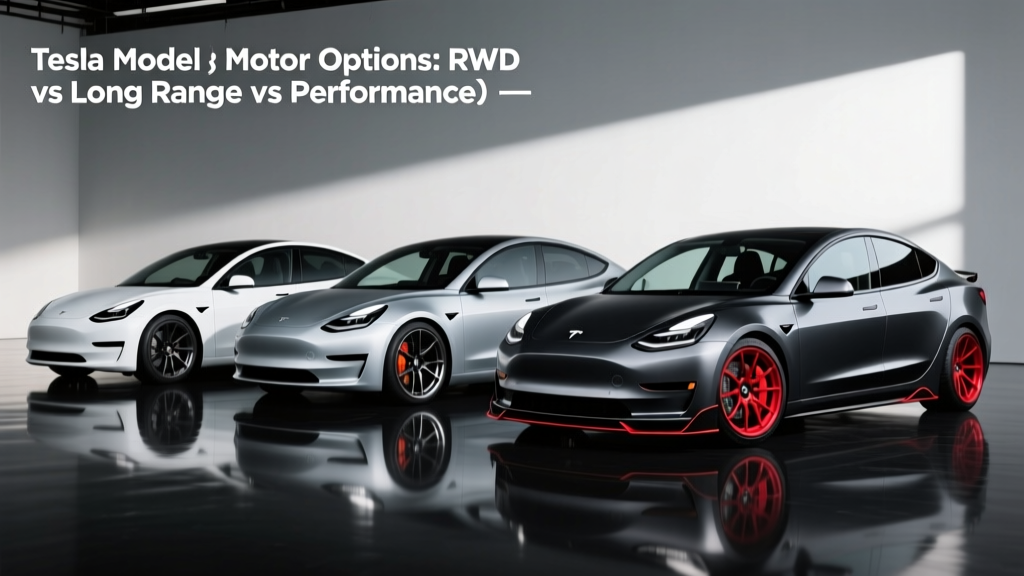
The Tesla Model 3 remains the benchmark compact electric sedan, and the Tesla 3 motor lineup gives buyers three distinct flavors for 2026: a value-oriented rear-wheel-drive (RWD) model, a Long Range all-wheel-drive (AWD) variant, and a track-capable Performance trim. Each uses a different motor and battery configuration, which fundamentally changes range, acceleration, and pricing. This review breaks down the real numbers behind each powertrain so you can match the right motor to your driving needs.
2026 Tesla Model 3 Motor Lineup at a Glance
Tesla simplified the Model 3 roster after the Highland refresh. The three current trims differ primarily in motor count, battery chemistry, and tuning. Here is the full spec matrix.
| Spec | RWD (Standard) | Long Range AWD | Performance AWD |
|---|---|---|---|
| EPA Range | 341 mi | 363 mi | 315 mi |
| Battery (usable, est.) | ~57.5 kWh (LFP) | ~75 kWh (NMC) | ~75 kWh (NMC) |
| Motor Config | Single rear motor | Dual motor (induction front + PMSR rear) | Dual motor (tuned higher output) |
| Horsepower | ~283 hp | ~384 hp | ~510 hp |
| 0–60 mph | 5.8 s | 4.2 s | 2.9 s |
| Drivetrain | RWD | AWD | AWD |
| Top Speed | 125 mph | 125 mph | 163 mph |
| Peak DC Fast Charge | ~170 kW | ~250 kW | ~250 kW |
| 10–80% DCFC Time | ~25 min | ~27 min | ~27 min |
| Level 2 Home Rate | 11.5 kW (~44 mi/hr) | 11.5 kW (~44 mi/hr) | 11.5 kW (~44 mi/hr) |
| MPGe (combined) | 132 MPGe | 125 MPGe | 118 MPGe |
| Base MSRP | $38,990 | $44,990 | $52,990 |
Sources: fueleconomy.gov, Tesla.com. Real-world results vary with temperature, terrain, and speed.
Real-World Range: What the EPA Numbers Don't Show
EPA Sticker: 363 miles
Real-World Expectation: ~290–310 miles at sustained 75 mph highway driving; ~240–260 miles in sub-30°F winter conditions with cabin heating.
Tesla's efficiency engineering is class-leading, but physics still applies. The RWD's lighter curb weight and LFP battery give it surprisingly competitive real-world range despite a smaller pack, often returning 300+ miles on a mixed commute in mild weather. The Long Range AWD's 363-mile EPA figure is achievable in city and suburban driving with regenerative braking doing heavy lifting — but at 80 mph on a flat interstate in July, expect roughly 80–85% of sticker. Cold weather is the bigger equalizer: below freezing, any EV loses 20–30% of range due to battery resistance and cabin heating. The Model 3's standard heat pump mitigates this better than most competitors, but it doesn't eliminate the penalty.
The Performance trim's 315-mile EPA rating reflects its stickier tires, sportier tuning, and heavier dual-motor setup. Owners who drive it like a performance car should budget 220–250 miles of practical range between charges on spirited road trips.
Charging Speed: kW, Minutes, and the Curve That Matters
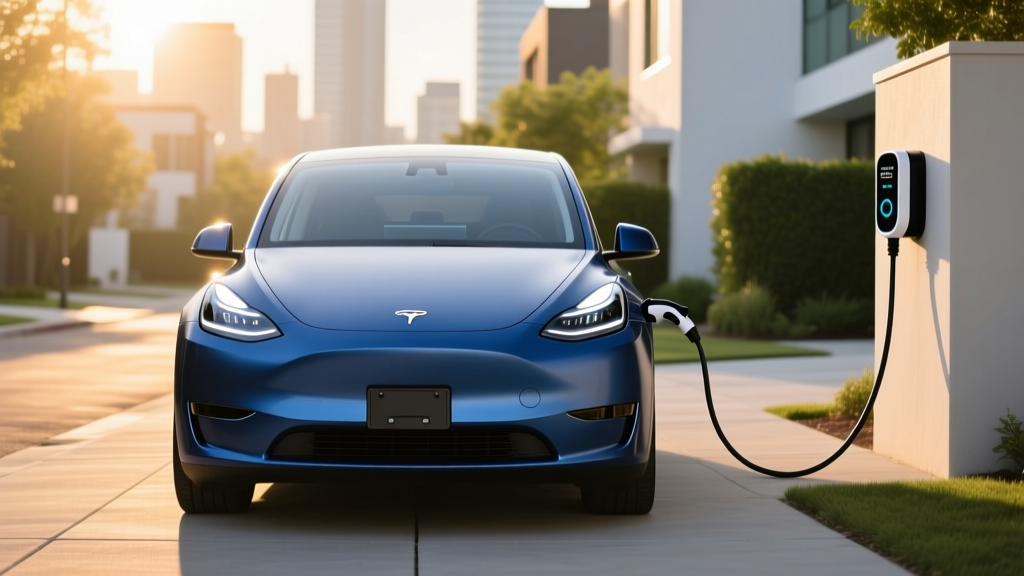
The Model 3 charges on Tesla's native NACS connector, which is now the de facto North American standard. Here's what each trim delivers at the plug.
| Charging Level | Power | Approx. Miles Added per Hour | Notes |
|---|---|---|---|
| Level 1 (120V household) | ~1.4 kW | ~5 mi/hr | Emergency/top-up only |
| Level 2 (240V home, 48A) | 11.5 kW | ~44 mi/hr | Full overnight recharge (~8–9 hrs from 10%) |
| DC Fast (RWD peak) | ~170 kW | ~140 mi in 15 min | LFP pack charges fast to 100% regularly |
| DC Fast (LR/Perf peak) | ~250 kW | ~200 mi in 15 min | Peak rate sustained to ~50% SoC, then tapers |
A critical nuance for Model 3 buyers: kW is the charge rate (power), kWh is the battery capacity (energy). The 250 kW peak on Long Range and Performance trims is not sustained across the entire session. The charge curve is strong from 10–50% state of charge, then progressively tapers to protect the NMC cells. Expect a 10–80% session at a V3 Supercharger to take roughly 27 minutes in ideal thermal conditions. The RWD's LFP battery is less power-dense but has a key advantage: Tesla recommends regular 100% charging for LFP chemistry, which helps with cell balancing and means you can use the full pack more often without degradation anxiety.
Motor and Performance: What Each Drivetrain Feels Like
The single rear motor in the RWD Model 3 uses a permanent-magnet synchronous reluctance (PMSR) design — efficient, torque-dense, and plenty quick for daily driving. The 5.8-second 0–60 time beats most turbocharged gas sedans in this price range, and instant torque delivery makes highway merging effortless.
Long Range AWD adds a front induction motor, which provides all-wheel-drive traction in rain and snow while also enabling slight efficiency gains under light-load cruising (the front motor can freewheel when not needed). The 4.2-second 0–60 puts it in sports-car territory, and the dual-motor torque vectoring improves corner exit stability.
The Performance trim turns the dual-motor output up significantly. With 510 hp and a 2.9-second 0–60, it competes with BMW M3 and Mercedes-AMG C63 territory — at a fraction of the price. The 2026 Performance also includes track mode, adaptive dampers, higher-output brakes, and a top speed of 163 mph. It's a legitimate sports sedan that happens to be electric.
Pricing, Tax Credits, and What You'll Actually Pay
| Trim | Base MSRP | Federal Credit (§30D) | Effective Price (if eligible) |
|---|---|---|---|
| RWD | $38,990 | Up to $7,500 | ~$31,490 |
| Long Range AWD | $44,990 | Up to $7,500 | ~$37,490 |
| Performance AWD | $52,990 | Up to $7,500 | ~$45,490 |
The IRS §30D federal tax credit can reduce your effective cost by up to $7,500 — but eligibility is not automatic. Key requirements for 2026:
- MSRP Cap: Sedans must be under $55,000. All Model 3 trims qualify.
- Buyer Income Cap: AGI ≤ $150,000 (single) / $300,000 (married filing jointly).
- Battery Sourcing: Critical minerals and battery components must meet escalating domestic-sourcing thresholds. Verify current-year compliance on Tesla's site or IRS guidance.
- Point-of-Sale Transfer: You can transfer the credit to the dealer at purchase for an immediate price reduction, rather than waiting for a tax refund.
Always confirm eligibility with a tax professional before assuming the full $7,500. State and local incentives (California, Colorado, etc.) may stack on top.
Interior, Tech, and Daily Livability
The post-Highland Model 3 interior is materially better than pre-2024 versions — ventilated front seats, ambient lighting, acoustic glass, rear touchscreen, and improved ride quality. The minimalist cabin centers on a 15.4-inch touchscreen handling everything from navigation to glovebox release.
Cargo and Space:
- Trunk: 23 cu ft (plus rear frunk: ~3 cu ft)
- Front headroom: 40.3 in / Rear headroom: 37.8 in
- Front legroom: 42.7 in / Rear legroom: 35.2 in
Rear legroom is the Model 3's perennial weakness compared to the Hyundai Ioniq 6 or BMW i4. It's adequate for adults on moderate trips but tight for tall passengers on long hauls. The glass roof creates an airy feel but reduces headroom margin.
Tech Highlights:
- Tesla Autopilot (SAE Level 2) standard; FSD (Supervised) available as a $8,000 option or $99/mo subscription
- Native NACS charging — widest fast-charging network access in the U.S.
- Over-the-air updates continuously add features
- Sentry Mode dashcam, dog mode, and theater mode
Warranty and Long-Term Ownership
Tesla's warranty coverage for the Model 3:
- Basic Vehicle: 4 years / 50,000 miles
- Battery & Drive Unit (RWD): 8 years / 100,000 miles (min 70% retention)
- Battery & Drive Unit (Long Range & Performance): 8 years / 120,000 miles (min 70% retention)
The 70% capacity retention threshold is industry-standard. In practice, Tesla's battery management and thermal systems have shown degradation curves that typically plateau around 90% state of health after 100,000 miles for NMC packs, with LFP packs showing even slower fade. Out-of-warranty battery replacement for a Model 3 currently ranges from $12,000 to $16,000 depending on pack size — a figure to factor into 10-year ownership projections.
Pros and Cons: The Honest Summary
- Class-leading efficiency (132 MPGe RWD)
- Access to Tesla Supercharger network — the most reliable DCFC infrastructure
- Strong real-world range across all trims (290+ mi practical for LR)
- Performance trim delivers supercar acceleration at sedan pricing
- LFP RWD allows routine 100% charging with low degradation risk
- Low total cost of ownership vs. gas equivalents
- Rear seat legroom is tight vs. competitors (35.2 in)
- No physical buttons — all controls via touchscreen
- FSD remains Level 2 despite the "Full Self-Driving" name
- Insurance premiums run 15–25% above segment average
- Ride quality improved but still firm on rough pavement
- No Apple CarPlay or Android Auto integration
Who Should Buy Which Tesla 3 Motor?
Choose the Long Range AWD if: You take regular road trips, live in a cold/snowy climate where AWD and the larger NMC pack matter, and want the best range-per-dollar balance.
Choose the Performance if: Driving dynamics are a priority, you want sub-3-second acceleration, and you accept the 50-mile range trade-off for track capability and adaptive suspension.
Frequently Asked Questions
What is the real-world range of the Tesla Model 3?
The Long Range AWD delivers approximately 290–310 miles at highway speeds in mild weather and 240–260 miles in sub-freezing conditions. The RWD achieves around 280–300 miles in mixed driving thanks to its lighter weight and LFP efficiency.
How fast does the Model 3 charge at home and on the road?
At home on a Level 2 (240V/48A) charger, all trims add about 44 miles of range per hour, fully recharging overnight. On DC fast chargers, Long Range and Performance peak at 250 kW (10–80% in ~27 minutes), while the RWD peaks at ~170 kW (10–80% in ~25 minutes).
Does the Tesla Model 3 qualify for the federal EV tax credit?
All three trims fall under the $55,000 MSRP cap for sedans. Buyers must meet income thresholds (≤$150K single / ≤$300K joint) and the vehicle must meet 2026 battery-sourcing requirements. Confirm current eligibility via IRS §30D guidance.
Is the Model 3 worth buying over the Hyundai Ioniq 6 or BMW i4?
The Model 3 wins on charging network access (Superchargers), software ecosystem, and efficiency. The Ioniq 6 offers more rear-seat room and an 800V architecture for faster peak charging. The BMW i4 provides a more traditional luxury interior. For most buyers, the Supercharger network and proven reliability give Tesla the edge.
What's the biggest drawback of the Model 3?
Rear-seat space is the most common complaint — at 35.2 inches of legroom, it's tighter than mid-size competitors. The touchscreen-only interface also frustrates some drivers who prefer physical controls for climate and volume.
How long will the Tesla Model 3 battery last?
Tesla warranties the battery for 8 years / 100,000–120,000 miles with a minimum 70% capacity retention. Real-world data suggests most Model 3 packs retain 88–92% capacity at 100,000 miles, with degradation slowing significantly after the initial break-in period.