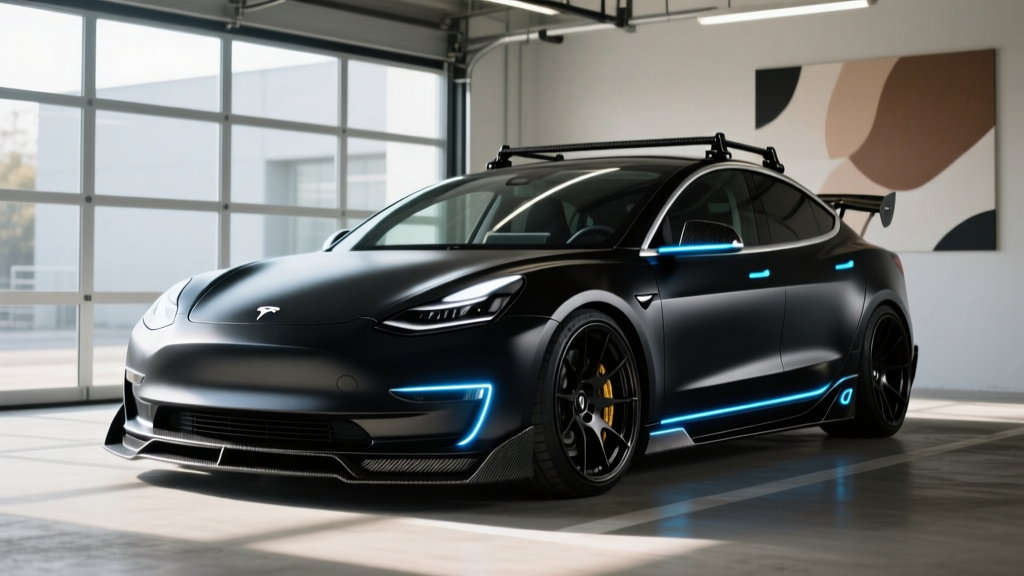
The Tesla Model 3 Highland refresh brought a quieter cabin, ventilated seats, and ambient lighting, but many owners still crave personalization. Whether you want to sharpen the handling, protect the interior, or squeeze out extra range, the aftermarket ecosystem for the Model 3 has matured significantly. This guide covers the most impactful Tesla Model 3 mods available in 2026, alongside a complete spec profile so you can make informed upgrade decisions without compromising your warranty or efficiency.
Tesla Model 3 Specs at a Glance (2026 Model Year)
| Specification | RWD (Base) | Long Range AWD | Performance |
|---|---|---|---|
| EPA Range | 363 mi | 363 mi | 330 mi |
| Battery (usable) | ~60 kWh (LFP) | ~82 kWh (NMC) | ~82 kWh (NMC) |
| Drivetrain | RWD, single motor | AWD, dual motor | AWD, dual motor |
| Horsepower | 271 hp | 346 hp | 510 hp |
| 0–60 mph | 5.8 sec | 4.2 sec | 2.9 sec |
| Max DC Fast Charge | 170 kW | 250 kW | 250 kW |
| 10–80% DC Time | ~25 min | ~18 min | ~18 min |
| Level 2 Charge Rate | 11.5 kW (~44 mi/hr) | 11.5 kW (~44 mi/hr) | 11.5 kW (~44 mi/hr) |
| MPGe (combined) | 132 MPGe | 125 MPGe | 118 MPGe |
| Efficiency | 25 kWh/100 mi | 26 kWh/100 mi | 28 kWh/100 mi |
| Cargo (trunk + frunk) | 23 cu ft total | 23 cu ft total | 23 cu ft total |
| Rear Legroom | 35.2 in | 35.2 in | 35.2 in |
| Battery Warranty | 8 yr / 100,000 mi | 8 yr / 120,000 mi | 8 yr / 120,000 mi |
| Base MSRP | $44,130 | $49,130 | $56,130 |
Top Tesla Model 3 Mods: Performance Upgrades
The Model 3's performance envelope is already impressive from the factory, but targeted mods can refine handling, braking, and acceleration delivery without triggering software locks that Tesla has been known to apply.
Suspension and Handling Mods
The Highland generation improved ride quality substantially over the pre-2024 Model 3, but enthusiasts often seek firmer body control. Aftermarket coilover kits from brands like Mountain Pass Performance and Unplugged Performance offer adjustable ride height and damping. Expect to spend $1,800–$3,200 for a quality set. Sway bar upgrades ($400–$700) reduce body roll in corners without sacrificing daily comfort. These bolt-on mods do not interface with Tesla's software, so warranty risk is minimal on the powertrain side.
Wheel and Tire Upgrades
Swapping to lighter forged wheels (such as 19" or 20" options from TSW, Vossen, or TSportline) reduces unsprung mass and can sharpen turn-in response. However, larger or wider wheels typically reduce range by 3–7% due to increased rolling resistance and weight. If range preservation matters, stick with 18" or 19" wheels and pair them with high-efficiency tires like the Michelin Pilot Sport EV or Hankook iON evo, which are specifically formulated for low rolling resistance on EVs.
Brake Upgrades
Regenerative braking handles most deceleration in daily driving, but Performance trim owners who track their Model 3 benefit from high-temperature brake pads (like EBC Yellowstuff or Carbotech) and stainless steel brake lines. Full big-brake kits from Unplugged Performance ($3,500–$5,000) address fade during repeated hard stops.
Interior and Comfort Mods for the Model 3
The minimalist Highland interior is cleaner than ever, which means fewer surfaces to modify — but the aftermarket has found the gaps.
Screen and Console Accessories
The 15.4-inch center touchscreen dominates the cabin, but owners frequently add tempered glass screen protectors ($20–$40) to prevent fingerprints and micro-scratches. Center console organizers from brands like Jowua or Spigen add dedicated slots for phones, cards, and sunglasses — filling the void left by the removed ultrasonic sensor cutouts and simplified console design.
Sound Deadening and Acoustic Mods
While the Highland Model 3 added acoustic glass and improved insulation, road noise from the rear wheel arches remains noticeable above 65 mph. Peel-and-stick sound-deadening kits (Dynamat or Kilmat, $150–$300 for materials) applied to rear fender wells and the trunk floor can reduce cabin noise by 2–4 dB based on third-party testing. This is a DIY-friendly mod if you're comfortable removing interior trim panels.
Seat and Upholstery Upgrades
The Model 3 Highland comes with ventilated front seats — a significant improvement. For those wanting a premium feel, custom leather or Alcantara seat covers from Seat Covers USA or Katzkin ($800–$1,500 installed) upgrade the synthetic leather. Steering wheel wraps in Alcantara or carbon fiber ($100–$350) add tactile variety to the flat-bottom wheel.
Exterior and Protection Mods
Paint Protection Film (PPF) and Ceramic Coating
Tesla's paint quality has improved, but the Model 3's low nose and broad front bumper remain chip-prone. A full-front PPF application (XPEL Ultimate Plus or SunTek) runs $1,200–$2,000 and is arguably the single most cost-effective exterior mod for preserving resale value. Full-body PPF costs $4,500–$6,500. Ceramic coatings ($800–$1,500) offer hydrophobic protection without the physical barrier of PPF.
Aero and Styling Add-Ons
Carbon fiber spoiler lips, mirror caps, and diffuser overlays from vendors like EVolution or CMST are popular cosmetic mods. A rear diffuser or front lip spoiler may marginally affect drag coefficient — but any claimed range gains from aftermarket aero are negligible (typically under 1%). Choose these for aesthetics, not efficiency.
Mud Flaps and Rocker Guards
The Model 3's low rocker panels and tight wheel arch gaps make them susceptible to rock chips and road salt. Custom-fit mud flaps ($60–$120 per axle) and rocker panel PPF strips are inexpensive mods that pay for themselves in avoided paint repair.
Charging and Range-Oriented Mods
Most Tesla Model 3 mods focus on appearance or handling, but charging convenience upgrades deliver daily value.
| Charging Level | Power | Miles Added Per Hour | Typical Use Case |
|---|---|---|---|
| Level 1 (120V) | ~1.4 kW | ~4–5 mi/hr | Emergency / trickle |
| Level 2 (240V, 48A) | 11.5 kW | ~44 mi/hr | Home daily charging |
| DC Fast Charge | 170–250 kW | Up to ~1,000 mi/hr (peak) | Road trips, rapid top-ups |
Home Charging Upgrades
Tesla's Wall Connector ($420) remains the best Level 2 option for Model 3 owners, delivering up to 11.5 kW on a 60-amp circuit (48A continuous). Professional installation with a panel upgrade (if needed) typically runs $800–$2,500 total, depending on your home's electrical capacity. A NEMA 14-50 outlet installation ($300–$800) provides flexibility to use the Mobile Connector as a backup.
Charging Accessories
Aftermarket J1772 adapters ($100–$150) let you use non-Tesla Level 2 public chargers — useful as networks like ChargePoint and EVgo still predominantly offer J1772 connectors. Cable organizers and wall-mount holsters ($30–$80) keep your garage tidy. For road-trippers, a CCS adapter (if not included with your model year) unlocks Electrify America and other CCS networks alongside the Tesla Supercharger network, which now supports NACS-equipped non-Tesla vehicles at select locations.
Pricing, Tax Credits, and Total Cost
| Trim | Base MSRP | Est. Federal Credit (§30D) | Effective Price* |
|---|---|---|---|
| RWD | $44,130 | Up to $7,500 | ~$36,630 |
| Long Range AWD | $49,130 | Up to $7,500 | ~$41,630 |
| Performance | $56,130 | Up to $7,500 | ~$48,630 |
*Effective price assumes full §30D eligibility. Per IRS guidelines, the federal EV tax credit is subject to buyer income caps ($150K single / $300K joint MAGI), vehicle MSRP caps ($55,000 for sedans — the Performance trim may exceed this depending on options), and critical mineral / battery component sourcing requirements that change annually. The credit can now be transferred at point of sale to reduce your purchase price directly. Always verify current-year eligibility with your tax professional and the IRS before committing.
Budget-Friendly Mods vs. Premium Mods
A practical mod budget for most owners falls between $500 and $3,000. Screen protectors, console organizers, mud flaps, and a ceramic coating can all be accomplished under $800. Suspension coilovers, forged wheels with EV-specific tires, and full-front PPF push the total to $5,000–$8,000. Prioritize mods that protect the vehicle (PPF, mud flaps) before aesthetic ones if resale value matters to you.
Who the Tesla Model 3 Suits Best
The Model 3 remains the benchmark compact EV sedan. The RWD trim with its LFP battery is ideal for budget-conscious commuters who can charge at home daily — LFP chemistry tolerates frequent 100% charging without degradation concerns, making it perfect for predictable daily loops under 60 miles. The Long Range AWD is the road-trip choice, offering genuine 300+ mile real-world range and access to the Supercharger network. The Performance trim targets driving enthusiasts willing to trade 30–40 miles of range for supercar-rivaling acceleration.
For families needing rear-seat space for teens or bulky car seats, the Model Y's taller roofline and 30+ cu ft of cargo space may serve better. The Model 3's sloping roofline limits rear headroom and trunk opening width compared to hatchback competitors like the Hyundai Ioniq 6 or BMW i4.
Pros
- Best-in-class Supercharger network access
- Highland cabin is genuinely quiet and refined
- LFP battery on RWD allows daily 100% charging
- Class-leading efficiency (25–28 kWh/100 mi)
- Strong resale value and mature aftermarket
- Over-the-air updates continuously add features
Cons
- Turn-signal buttons on steering wheel (no stalk) frustrate some drivers
- Rear visibility and trunk opening remain narrow
- No Apple CarPlay or Android Auto
- FSD (Supervised) is Level 2 — not self-driving, despite the name
- Insurance premiums run 15–30% higher than comparable sedans
- Performance trim may exceed $55K MSRP cap for §30D credit
Frequently Asked Questions
What is the real-world range of the Tesla Model 3?
The EPA rates the Long Range AWD at 363 miles, but expect 290–320 miles on highway trips at 70–75 mph and 240–260 miles in freezing temperatures. The RWD (363 mi EPA, ~60 kWh LFP pack) delivers similar real-world figures due to its smaller battery offset by better efficiency. Per fueleconomy.gov, the RWD achieves 132 MPGe combined.
How fast does the Model 3 charge at home and on DC fast chargers?
At home on a Level 2 Wall Connector (11.5 kW / 48A), the Model 3 gains approximately 44 miles of range per hour — a full overnight session easily replenishes any daily commute. On DC fast chargers, the Long Range and Performance trims peak at 250 kW and charge from 10–80% in roughly 18 minutes. The RWD peaks at 170 kW and takes about 25 minutes for the same 10–80% session. Note that charge speed tapers significantly above 80% SoC — plan your stops to 80% for optimal road-trip efficiency.
Does the Tesla Model 3 qualify for the federal EV tax credit?
Yes, but with caveats. Under IRS §30D, the credit is up to $7,500 and is subject to buyer income limits ($150,000 single / $300,000 joint modified AGI), an MSRP cap of $55,000 for sedans, and battery component / critical mineral sourcing requirements that tighten each year. The RWD and Long Range trims typically qualify for the full credit for eligible buyers. The Performance trim's MSRP may exceed the sedan cap once destination and options are added. The credit can be applied at point of sale. Always confirm eligibility at irs.gov and consult a tax professional.
Will Tesla Model 3 mods void my warranty?
Bolt-on mods that don't interface with the vehicle's software or high-voltage system (wheels, tires, suspension, PPF, interior accessories) generally do not void the powertrain or battery warranty. However, any modification that alters the electrical system, battery management, or powertrain software can give Tesla grounds to deny a warranty claim under the Magnuson-Moss Warranty Act's "caused the failure" standard. Avoid software tunes or battery modifications unless you're willing to accept warranty risk.
Is the Tesla Model 3 worth buying vs. competitors in 2026?
The Model 3 competes against the Hyundai Ioniq 6 (361 mi EPA, lower starting price), BMW i4 (more premium interior, less range), and the Chevrolet Equinox EV (more affordable, less performance). The Model 3's advantages remain its Supercharger network access, efficiency, and the mature mod ecosystem. If you prioritize cabin luxury over performance, the BMW i4 or even the refreshed Polestar 2 may appeal more. If budget is paramount, the Equinox EV or Ioniq 6 undercut the Model 3 on price. For the total package of range, charging infrastructure, and aftermarket support, the Model 3 still leads.
What are the best first mods for a new Model 3 owner?
Prioritize protection and daily convenience: a tempered glass screen protector ($25), center console organizer ($40–$60), front mud flaps ($60–$80), and a full-front PPF application ($1,200–$2,000). These mods preserve the vehicle's condition and improve usability without affecting warranty, range, or performance. Upgrade wheels and suspension only after you've lived with the stock setup for a few thousand miles and identified specific handling characteristics you want to change.