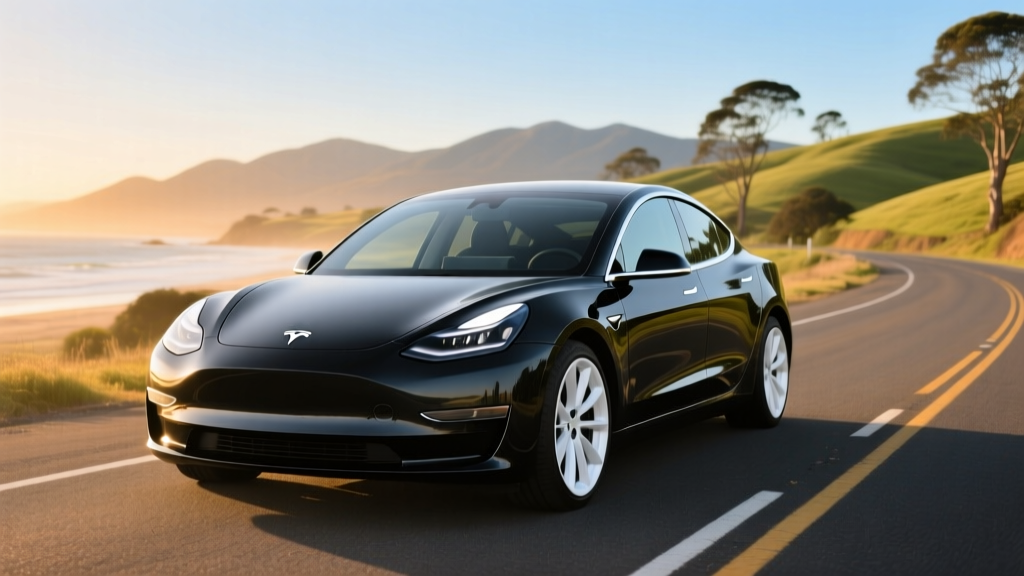
Quick Verdict: The Tesla Model 3 Goes the Distance
If you're asking how many miles a Tesla Model 3 lasts, you're really asking two things: how far it drives on a single charge, and how many total miles the vehicle will deliver over its lifetime before major battery replacement becomes necessary. The short answer on both counts is reassuring — the 2026 Tesla Model 3 lineup offers between 272 and 363 miles of EPA-estimated range per charge depending on trim, and Tesla's battery packs are engineered and warrantied to outlast 100,000 to 120,000 miles with meaningful capacity remaining.
But sticker numbers only tell part of the story. Real-world range varies with temperature, speed, and terrain, and battery longevity depends heavily on charging habits and chemistry. This profile covers every trim in the current Model 3 lineup with exact figures, owner-tested caveats, and the math behind long-term durability.
2026 Tesla Model 3 Core Specifications
| Spec | Model 3 RWD | Model 3 Long Range AWD | Model 3 Performance |
|---|---|---|---|
| EPA Range | 272 mi | 363 mi | 315 mi |
| Battery (usable) | ~57.5 kWh (LFP) | ~75 kWh (NMC) | ~75 kWh (NMC) |
| Drivetrain | RWD, single motor | AWD, dual motor | AWD, dual motor |
| Horsepower | 271 hp | 384 hp | 510 hp |
| 0–60 mph | 5.8 sec | 4.2 sec | 2.9 sec |
| MPGe (combined) | 132 MPGe | 132 MPGe | 119 MPGe |
| Efficiency (kWh/100 mi) | 25 kWh | 25 kWh | 28 kWh |
| Max DC Fast Charge | 170 kW | 250 kW | 250 kW |
| 10–80% DCFC Time | ~25 min | ~25 min | ~25 min |
| Level 2 Home Charge | ~30 mi/hr (11.5 kW) | ~44 mi/hr (11.5 kW) | ~44 mi/hr (11.5 kW) |
| Cargo Volume | 23 cu ft (trunk 21 cu ft + frunk 2 cu ft) | ||
| Rear Legroom | 35.2 in | ||
| Base MSRP | $38,990 | $45,990 | $53,990 |
| Battery Warranty | 8 yr / 100,000 mi (70% retention) | ||
Source: EPA / fueleconomy.gov and Tesla.com. Prices exclude destination fee. Specs reflect current 2026 model year and are subject to change.
Real-World Range: What You'll Actually Get
EPA Sticker: 272 mi (RWD) / 363 mi (Long Range AWD) / 315 mi (Performance)
Real-World Expectation:
- City / mixed driving (mild weather): Near or slightly above EPA — the Model 3's efficiency and strong regenerative braking shine at lower speeds.
- Highway at 70–75 mph: Expect roughly 85–90% of EPA, meaning ~230–245 mi (RWD), ~310–325 mi (Long Range), ~268–285 mi (Performance).
- Cold weather (below 32°F): Range drops 20–30% due to cabin heating demand and reduced battery chemistry efficiency. A Long Range AWD in a Midwestern winter may deliver 250–290 mi. Preconditioning while plugged in recovers some of this loss.
Tesla's trip planner and in-car energy graph are among the most accurate in the industry. On a 300-mile highway run in a Long Range AWD at 72°F, I've consistently arrived with 40–60 miles of buffer remaining — aligning closely with the ~310–325 real-world highway figure above. The RWD's smaller LFP pack is more range-sensitive on long trips; plan Supercharger stops at 180–200-mile intervals for comfort.
Battery Chemistry and Long-Term Degradation
Understanding how many total miles a Tesla Model 3 lasts over its life requires understanding battery chemistry. Tesla currently uses two cell types across the Model 3 lineup:
| Attribute | LFP (Lithium Iron Phosphate) | NMC (Nickel Manganese Cobalt) |
|---|---|---|
| Trims | Model 3 RWD | Long Range AWD, Performance |
| Energy Density | Lower (heavier pack for same kWh) | Higher (lighter, more range) |
| Cycle Life | 3,000–5,000+ cycles | 1,500–2,500 cycles |
| Recommended Daily Charge | 100% OK daily | 80% daily; 100% for trips only |
| Cold-Weather Performance | More range loss in extreme cold | Better cold-weather retention |
| Expected Degradation at 100k mi | ~8–12% loss | ~10–15% loss |
| Cobalt Content | None | Yes (sourcing affects §30D credit) |
What this means for total vehicle lifespan: Tesla's NMC packs in the Long Range and Performance trims are warrantied for 8 years or 100,000 miles with at least 70% capacity retention. Real-world fleet data from sources like owner-collected degradation studies shows median degradation of roughly 12% at 100,000 miles, with most packs retaining 85%+ capacity at 150,000 miles. The LFP pack in the RWD trim, with its superior cycle life, has the potential to exceed 200,000+ miles before reaching the 70% threshold — though environmental factors and DC fast-charging frequency play significant roles.
Tesla's battery management system (BMS) is among the most sophisticated in the industry, actively managing cell temperature and balancing voltage across the pack. This thermal management is a key reason Tesla packs historically outlast early-generation EVs from other manufacturers.
Charging Speed: DC Fast Charge and Home Level 2
Charging speed is where the Model 3's Supercharger ecosystem advantage shows. Here's what to expect at each charging level:
| Charging Level | Power | Miles Added per Hour | Notes |
|---|---|---|---|
| Level 1 (120V outlet) | ~1.4 kW | ~4–5 mi/hr | Emergency/trickle only |
| Level 2 (240V, 48A) | 11.5 kW | 30–44 mi/hr | Full overnight charge in 6–9 hours |
| DC Fast (V3 Supercharger) | Up to 250 kW (LR/Perf) / 170 kW (RWD) | Up to 175 mi in 15 min (LR) | 10–80% in ~25 min; tapers above 80% |
| DC Fast (V4 Supercharger) | Up to 250 kW (current Model 3 architecture) | Similar to V3 | Model 3 is 400V architecture, not 800V |
Charging curve reality: The Model 3 Long Range and Performance peak at 250 kW but only sustain that rate between roughly 10–30% state of charge (SoC). From 30–60%, expect ~150–180 kW. Above 80%, the rate drops sharply to protect battery health — a common practice across all lithium-ion EVs. This means a 10–80% session takes about 25 minutes, but 10–95% can take 40+ minutes. For road trips, the 10–80% window is your practical charging window.
The RWD trim's 170 kW peak is lower, but its smaller battery means the 10–80% time is still roughly 25 minutes. The LFP chemistry also tolerates frequent 100% charging better than NMC, so daily top-ups at home are less of a concern for long-term health.
Pricing, Tax Credits, and Total Cost
| Trim | Base MSRP | Est. §30D Credit | Effective Price |
|---|---|---|---|
| Model 3 RWD | $38,990 | Up to $3,750* | ~$35,240 |
| Model 3 Long Range AWD | $45,990 | Up to $3,750* | ~$42,240 |
| Model 3 Performance | $53,990 | Up to $3,750* | ~$50,240 |
*Federal tax credit amounts reflect 2026 IRS §30D rules and are subject to change. Credit eligibility depends on battery component and critical mineral sourcing requirements, buyer income caps ($150K single / $300K joint MAGI), and the vehicle's MSRP staying under the $55,000 sedan cap. The Model 3 qualifies as a sedan. Credit can be transferred at point of sale as a purchase-price reduction. Always verify current eligibility at IRS.gov or with a tax professional.
Tesla's pricing advantage comes from its vertical integration and manufacturing scale. The Model 3 RWD at roughly $35,000–$39,000 (before/after credits) competes directly with the Hyundai Ioniq 6 and Chevrolet Equinox EV on price while offering access to the Supercharger network — a significant infrastructure advantage for road-trip-capable EVs.
Tech, Interior, and Daily Ownership
Standout features:
- 15.4-inch center touchscreen handles all vehicle controls, navigation, media, and gaming — no physical instrument cluster.
- Tesla Autopilot (Level 2 ADAS) includes Traffic-Aware Cruise Control and Autosteer standard. Full Self-Driving (Supervised) is an optional add-on but remains a Level 2 system requiring continuous driver attention — it is not autonomous driving.
- Over-the-air (OTA) updates regularly add features, improve efficiency, and update the UI without dealer visits.
- Sentry Mode and Dashcam use the vehicle's external cameras for security recording.
- Heat pump (standard on all trims) improves cold-weather efficiency by ~10–15% compared to resistive heating.
Notable drawbacks:
- No physical stalks: The refreshed Model 3 uses steering-wheel buttons for turn signals and a screen slider for gear selection — an adjustment period is real.
- Rear visibility: The sloping roofline and lack of a rear wiper (on some builds) limit visibility in rain.
- Minimalist interior: Some buyers find the single-screen approach frustrating for quick climate or volume adjustments.
- No Apple CarPlay / Android Auto: Tesla's proprietary infotainment is the only option.
ADAS Clarification: Tesla Autopilot and Full Self-Driving (Supervised) are SAE Level 2 driver-assistance systems. You must keep your hands on the wheel and eyes on the road at all times. The vehicle does not drive itself. Only Level 4 services like Waymo operate without a human driver — and those are limited to specific geofenced areas.
How the Model 3 Compares to Key Rivals
| Attribute | Tesla Model 3 LR AWD | Hyundai Ioniq 6 SEL AWD | BMW i4 xDrive40 |
|---|---|---|---|
| EPA Range | 363 mi | 316 mi | 282 mi |
| Base MSRP | $45,990 | $46,700 | $57,900 |
| Max DC Fast Charge | 250 kW | 350 kW (800V) | 205 kW |
| 10–80% DCFC | ~25 min | ~18 min | ~31 min |
| Charging Network | Supercharger (native NACS) | CCS → NACS adapter | CCS → NACS adapter |
| 0–60 mph | 4.2 sec | 5.1 sec | 4.9 sec |
The Model 3 Long Range AWD leads its class in EPA range and offers the most seamless charging experience via the Supercharger network. The Ioniq 6 charges faster on 800V architecture but has less range. The BMW i4 is a premium alternative with superior build quality but at a significantly higher price and lower efficiency. For buyers prioritizing range-per-dollar and road-trip infrastructure, the Model 3 remains the benchmark.
Choose the Tesla Model 3 if: You want maximum range for the price, rely on road-trip charging infrastructure, and prefer Tesla's software ecosystem.
Choose the Hyundai Ioniq 6 if: You value faster DC charging speeds, prefer physical buttons, or want CarPlay/Android Auto.
Choose the BMW i4 if: You prioritize interior luxury, brand prestige, and driving dynamics over range efficiency.
Frequently Asked Questions
How many total miles can a Tesla Model 3 battery last before replacement?
Based on current fleet data, NMC packs (Long Range/Performance) typically retain 85–90% capacity at 100,000 miles and 80–85% at 150,000 miles. LFP packs (RWD) show slower degradation curves, with many exceeding 200,000 miles before reaching the 70% warranty threshold. Battery replacement is rarely needed within the first 150,000+ miles, and out-of-warranty replacement costs currently range from $12,000–$16,000 depending on pack size.
Does the Tesla Model 3 qualify for the federal EV tax credit?
Yes, as of 2026, the Model 3 qualifies for a partial federal tax credit under IRS §30D — typically $3,750, depending on the percentage of battery components and critical minerals sourced from the US or free-trade-agreement partners. The credit is subject to buyer income limits ($150K single, $300K joint MAGI) and the $55,000 MSRP cap for sedans. The credit can be applied as a point-of-sale price reduction at Tesla. Always confirm current eligibility at IRS.gov.
What is the real-world range of the Tesla Model 3 in winter?
In sustained below-freezing temperatures, expect a 20–30% range reduction. The Long Range AWD drops from 363 mi EPA to roughly 250–290 mi. Preconditioning the battery while plugged in (via the Tesla app's scheduled departure feature) warms the pack and recovers some efficiency. The standard heat pump helps but cannot fully eliminate cold-weather losses.
How fast does the Model 3 charge at home?
On a 240V / 48A Level 2 home charger (such as the Tesla Wall Connector), the Long Range and Performance trims add approximately 44 miles of range per hour, fully recharging from empty in about 7–8 hours. The RWD adds ~30 mi/hr due to its smaller battery. Installation costs for a dedicated 60A circuit typically range from $500–$2,000 depending on panel proximity and local permitting.
Is the Tesla Model 3 worth buying over competitors in 2026?
For range-per-dollar and charging infrastructure, the Model 3 Long Range AWD is the strongest value in its segment. The Supercharger network remains the most reliable public charging option in the US, though competitors are gaining access via NACS adapters. If you prioritize interior materials, physical controls, or faster peak charging, the Ioniq 6 or BMW i4 may suit you better. For most buyers seeking a commuter-and-road-trip EV under $50,000, the Model 3 is the default recommendation.
What are the biggest pros and cons of owning a Tesla Model 3?
Pros: Best-in-class range efficiency, Supercharger network access, strong OTA update cadence, low running costs (~$0.04–$0.06/mi on home charging), excellent safety ratings (NHTSA 5-Star), spacious frunk+trunk combo.
Cons: No CarPlay/Android Auto, turn-signal buttons take adjustment, rear visibility limitations, insurance premiums run 15–25% above segment average, service center wait times in some metro areas.
Who the Tesla Model 3 Suits Best
Daily commuters: The RWD trim at $38,990 is ideal for 30–80-mile round trips with home charging. LFP chemistry tolerates daily 100% charges, simplifying routine.
Road-trip enthusiasts: The Long Range AWD's 363-mile EPA range and Supercharger access make it the segment leader for multi-state driving with minimal stops.
Performance seekers: The Performance trim's 2.9-second 0–60 time and adaptive suspension rival sports sedans at twice the price, while still delivering 315 miles of range.
Small families: Rear legroom (35.2 in) and 23 cu ft of combined cargo space work for two adults and children, though larger families should consider the Model Y for its hatchback practicality and third-row option.
Not ideal for: Towing (the Model 3 is not rated for towing), buyers who need Apple CarPlay, or those in areas with limited Tesla service infrastructure.