The Tesla Model 3 remains the benchmark compact electric sedan, but the question every buyer asks is simple: how many Model 3 miles can you actually drive before the battery runs dry? The EPA sticker is just the starting point. Highway speeds, winter temperatures, and battery chemistry all reshape what you'll see on the dash. This review dissects the 2026 Tesla Model 3 lineup — Long Range RWD, Long Range AWD, and Performance — with exact range figures, charging curves, efficiency data, and ownership economics so you know precisely what you're buying.
2026 Tesla Model 3: Range, Battery, and Efficiency at a Glance
| Spec | Long Range RWD | Long Range AWD | Performance AWD |
|---|---|---|---|
| EPA Range | 363 mi | 341 mi | 315 mi |
| Battery (usable) | ~75 kWh (NMC) | ~75 kWh (NMC) | ~75 kWh (NMC) |
| Efficiency (MPGe) | 132 MPGe | 124 MPGe | 116 MPGe |
| kWh / 100 mi | 25 | 27 | 29 |
| 0–60 mph | 4.9 sec | 4.2 sec | 2.9 sec |
| Horsepower | ~271 hp | ~346 hp | ~510 hp |
| Drivetrain | RWD (single motor) | AWD (dual motor) | AWD (dual motor) |
| Max DC Fast Charge | ~250 kW | ~250 kW | ~250 kW |
| 10–80% DC Time | ~25 min | ~25 min | ~25 min |
| Level 2 Home Charge | ~11.5 kW (44 mi/hr) | ~11.5 kW (44 mi/hr) | ~11.5 kW (44 mi/hr) |
| Base MSRP | $44,130 | $47,130 | $52,630 |
| Battery Warranty | 8 yr / 120,000 mi | 8 yr / 120,000 mi | 8 yr / 120,000 mi |
How Many Model 3 Miles Will You Actually Get?
The phrase "Model 3 miles" means different things depending on how and where you drive. Tesla's 2026 Long Range models use a nickel-manganese-cobalt (NMC) lithium-ion pack with approximately 75 kWh of usable capacity. NMC chemistry offers high energy density — critical for hitting that 363-mile EPA mark in a relatively compact sedan — but it is more sensitive to extreme temperatures than LFP (lithium iron phosphate) packs found in some Standard Range variants sold in prior years.
Highway Driving
At sustained 70–75 mph on the interstate, aerodynamic drag dominates energy consumption. The Long Range RWD typically delivers 310–330 real-world miles in 60–80°F conditions. The AWD model, carrying extra weight and mechanical drag from the front motor, drops to roughly 290–310 miles. The Performance trim, with its stickier tires and sportier tuning, usually nets 260–285 miles on the highway.
Cold-Weather Impact
Below freezing, the Model 3's heat pump helps — Tesla has used a heat pump since the 2021 refresh, which is significantly more efficient than resistive heating. Even so, cold batteries accept less charge and deliver less energy. Expect a 20–30% range reduction in sustained sub-30°F weather. That 363-mile Long Range RWD becomes roughly 250–290 miles in a Minnesota January. Preconditioning the battery while plugged in (a feature Tesla's app and navigation system support) mitigates some of this loss by warming the pack before you depart.
City and Commuter Driving
Stop-and-go traffic plays to the Model 3's strengths. Regenerative braking recaptures energy that a gas car would waste as heat, and lower average speeds reduce aerodynamic drag. Many owners report exceeding the EPA estimate in purely urban driving, particularly in temperate climates. If your commute is 40 miles round-trip in mixed conditions, you'll charge every 7–8 days on the Long Range RWD.
Charging Speed: DC Fast Charge and Home Level 2
Range only matters if you can replenish it efficiently. The 2026 Model 3 supports up to 250 kW on DC fast chargers via the NACS (North American Charging Standard) connector — the connector Tesla pioneered and that most major automakers have now adopted.
| Charging Level | Power (kW) | Miles Added per Hour | Typical Use Case |
|---|---|---|---|
| Level 1 (120V household) | ~1.4 kW | ~5 mi/hr | Emergency / overnight trickle |
| Level 2 (240V home Wall Connector) | ~11.5 kW | ~44 mi/hr | Daily home charging |
| DC Fast Charge (Supercharger V3/V4) | Up to 250 kW | Up to ~1,000 mi/hr (peak) | Road trips, rapid top-ups |
The Charging Curve Matters
Tesla's 250 kW peak rate is just that — a peak. The battery management system throttles charge speed as the state of charge (SoC) rises to protect cell longevity. From 10% to roughly 50%, the Model 3 Long Range pulls close to its peak rate. Between 50–80%, the rate tapers to approximately 100–150 kW. Above 80%, it drops further to roughly 40–60 kW. This is why Tesla (and every other automaker) quotes 10–80% charge times: the last 20% takes almost as long as the first 70%.
At a V3 Supercharger (250 kW), expect a 10–80% charge in roughly 25 minutes under ideal thermal conditions. Preconditioning — which the car initiates automatically when you navigate to a Supercharger — is essential for hitting these numbers. Arrive at a charger with a cold battery and your peak rate may be limited to 100–150 kW until the pack warms.
Home Charging Setup
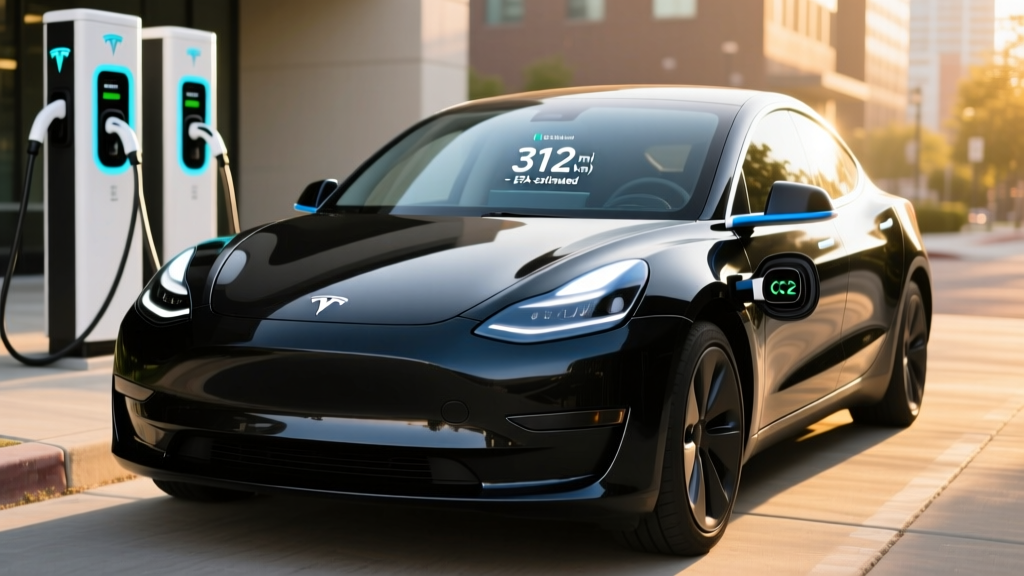
Tesla's Wall Connector, installed on a 60-amp circuit (48-amp continuous draw), delivers up to 11.5 kW — roughly 44 miles of range per hour of charging. An overnight charge from 20% to 80% takes about 4–5 hours, which is more than adequate for daily use. Installation costs vary widely: expect $500–$1,500 if your electrical panel has capacity, or $2,000–$4,000+ if a panel upgrade to 200 amps is needed. Always get a quote from a licensed electrician before purchasing equipment.
Pricing, Trims, and Federal Tax Credit Eligibility
The 2026 Model 3 lineup starts at $44,130 for the Long Range RWD and tops out at $52,630 for the Performance variant (destination fee included). Here's how pricing breaks down with the federal EV tax credit factored in:
| Trim | Base MSRP | Est. §30D Credit | Effective Price |
|---|---|---|---|
| Long Range RWD | $44,130 | Up to $7,500 | ~$36,630 |
| Long Range AWD | $47,130 | Up to $7,500 | ~$39,630 |
| Performance AWD | $52,630 | Up to $7,500 | ~$45,130 |
- MSRP Cap: Sedans must be under $55,000 MSRP. All 2026 Model 3 trims qualify.
- Income Limits: Modified AGI must not exceed $150,000 (single), $225,000 (head of household), or $300,000 (joint). Check IRS guidelines for current-year rules.
- Battery Sourcing: The full $7,500 requires meeting both critical-mineral and battery-component sourcing thresholds, which tighten annually. Tesla's US-built batteries have historically met these requirements, but verify the specific VIN eligibility at the point of sale.
- Point-of-Sale Transfer: Since 2024, buyers can transfer the credit to the dealer at purchase, reducing the upfront cost rather than waiting for a tax refund.
Tax rules change frequently. Consult a tax professional and verify on irs.gov before finalizing your purchase.
Interior Space, Tech, and Driver Assistance
Cargo and Passenger Dimensions
The 2026 Model 3 offers 23.1 cubic feet of trunk space (including the rear sub-trunk) and a small front trunk (frunk) suitable for a charging cable bag or groceries. Rear legroom measures 35.2 inches — adequate for adults on shorter trips but tighter than a midsize sedan like the Hyundai Ioniq 6 (37.8 inches rear legroom). Front legroom is generous at 42.7 inches.
Infotainment and Controls
Tesla's minimalist interior centers on a 15.4-inch touchscreen that controls virtually every vehicle function — climate, mirrors, glovebox, and driving settings. There is no traditional instrument cluster; speed and range information lives in the upper-left corner of the main display. The system is responsive and feature-rich (streaming, gaming, navigation with real-time Supercharger routing), but the lack of physical buttons for climate and volume draws consistent criticism from first-time EV buyers accustomed to tactile controls.
Autopilot and FSD (Supervised)
Every Model 3 includes Tesla's basic Autopilot — traffic-aware cruise control and lane-centering on highways. The optional Full Self-Driving (Supervised) package ($8,000 or $99/month as of 2026) adds automatic lane changes, navigation-guided on/off-ramp transitions, traffic-light recognition, and a city-streets mode.
How the Model 3 Stacks Up Against Key Competitors
The compact electric sedan segment has grown competitive. Here's how the Model 3 Long Range AWD compares to its closest rivals on the metrics that matter:
| Spec | Tesla Model 3 LR AWD | Hyundai Ioniq 6 SE LR | BMW i4 eDrive40 |
|---|---|---|---|
| EPA Range | 341 mi | 361 mi | 301 mi |
| Battery (usable) | ~75 kWh | 77.4 kWh | 81.5 kWh |
| Max DC Charge | 250 kW | 240 kW | 205 kW |
| 10–80% Time | ~25 min | ~18 min | ~31 min |
| 0–60 mph | 4.2 sec | 5.1 sec | 5.5 sec |
| Base MSRP | $47,130 | $42,715 | $57,900 |
| Charging Network | Supercharger (NACS) | CCS → NACS adapter | CCS → NACS adapter |
The Ioniq 6 offers slightly more EPA range and a faster 10–80% charge time thanks to its 800-volt architecture, and it starts roughly $4,400 lower. However, the Model 3 retains a decisive advantage in charging infrastructure: Tesla's Supercharger network remains the most reliable and widespread DC fast-charging network in the US, with over 25,000 stalls nationally. Hyundai and BMW owners can now access Superchargers using NACS adapters, but the plug-and-charge seamlessness of a native Tesla connector still matters on road trips.
The BMW i4 delivers a more premium interior and traditional driving dynamics, but at a significant price premium and with lower range and slower charging.
Ownership Costs and Warranty
Tesla covers the Model 3's battery and drive unit for 8 years or 120,000 miles (whichever comes first), with a capacity retention threshold of 70% during that period. The basic vehicle warranty is 4 years / 50,000 miles. These terms are competitive with the segment — Hyundai offers a more generous 10-year / 100,000-mile battery warranty, while BMW matches Tesla at 8 years / 100,000 miles.
Real-world battery degradation data from Tesla fleet analytics shows that Model 3 NMC packs typically retain approximately 88–92% of original capacity after 100,000 miles. The degradation curve is steepest in the first 20,000 miles (roughly 3–5% loss) and then flattens significantly. Following Tesla's recommended charging practices — daily charge limit of 80–90% for NMC, avoiding prolonged storage at 100% or below 10% — helps maximize longevity.
Insurance costs are a real consideration. The Model 3 typically carries premiums 20–35% higher than a comparably priced gas sedan due to repair costs and Tesla's aluminum-intensive structure. Get quotes from multiple insurers before purchasing.
Pros, Cons, and Who Should Buy the Model 3
- Best-in-class Supercharger network access (native NACS)
- Excellent efficiency — 25 kWh/100 mi on Long Range RWD
- Strong performance across all trims (2.9 sec 0–60 on Performance)
- Over-the-air updates continuously add features
- Class-leading real-world range in mixed driving
- Minimalist interior with premium materials in the Highland refresh
- No physical buttons — all controls via touchscreen
- Rear seat legroom is tight for taller adults
- FSD (Supervised) is expensive and still requires full driver attention
- No heads-up display or traditional instrument cluster
- Insurance premiums higher than segment average
- No Apple CarPlay or Android Auto
- Choose the Model 3 Long Range RWD if: You want maximum range, commute under 80 miles daily, and live in a mild climate. It's the efficiency sweet spot at ~$36,600 after the federal credit.
- Choose the Long Range AWD if: You need all-weather traction for snow or rain, take regular road trips, and want dual-motor performance without paying the Performance premium.
- Choose the Performance if: Acceleration and track capability matter to you, and you accept the 46-mile range penalty and higher price for 2.9-second sprints.
- Look at the Hyundai Ioniq 6 instead if: You prioritize 800V ultra-fast charging, want a more conventional interior with physical controls, or need more rear-seat room.
Frequently Asked Questions
What is the real-world range of the Tesla Model 3?
The EPA rates the 2026 Model 3 Long Range RWD at 363 miles. In real-world highway driving at 70 mph and moderate temperatures, expect 310–330 miles. In freezing weather, plan for 240–280 miles. City driving with regenerative braking can approach or slightly exceed the EPA estimate.
How fast does the Model 3 charge at home and on the road?
On a Level 2 home charger (Tesla Wall Connector at 11.5 kW), the Model 3 adds roughly 44 miles of range per hour — a full overnight charge is more than enough for daily needs. On a 250 kW Supercharger, a 10–80% charge takes about 25 minutes with a preconditioned battery. Charging slows significantly above 80% to protect battery health.
How much does the Model 3 cost after federal tax credits?
The 2026 Long Range RWD starts at $44,130 and may qualify for up to $7,500 under the IRS §30D federal credit, bringing the effective price to approximately $36,630. Eligibility depends on your income (under $150K single / $300K joint), the vehicle's MSRP (under $55K for sedans — all trims qualify), and battery-sourcing requirements. Verify your specific eligibility on irs.gov and with a tax professional.
Does the Tesla Model 3 qualify for the federal EV tax credit?
As of 2026, all Model 3 trims fall under the $55,000 MSRP cap for sedans, and Tesla's US-manufactured battery packs have historically met the critical-mineral and component-sourcing thresholds. However, these sourcing rules tighten each year. Confirm eligibility for your specific VIN at the point of sale, as the credit can now be transferred to the dealer to reduce your purchase price directly.
Is the Model 3 worth buying vs. the Hyundai Ioniq 6 or BMW i4?
The Model 3 wins on Supercharger network access, software ecosystem, and performance-per-dollar. The Ioniq 6 offers slightly more range, faster 800V charging, and a lower starting price — making it a strong alternative if you mostly charge at home or use non-Tesla DC networks. The BMW i4 delivers a more traditional luxury experience but at a steep premium with less range. For most buyers who road-trip at least a few times per year, the Model 3's native Supercharger integration remains the deciding factor.
What is the difference between kW and kWh on the Model 3?
kWh (kilowatt-hours) measures energy capacity — the Model 3 Long Range holds about 75 kWh in its battery, analogous to the gallons in a gas tank. kW (kilowatts) measures power — the rate at which energy flows, analogous to how fast a gas pump fills your tank. A 250 kW Supercharger delivers energy faster than an 11.5 kW home charger, but both fill the same 75 kWh battery.
How long will the Model 3 battery last?
Tesla warranties the battery for 8 years or 120,000 miles with a 70% capacity retention guarantee. Fleet data indicates most Model 3 NMC packs retain 88–92% capacity at 100,000 miles. With proper charging habits (daily limit of 80–90%, avoiding extreme SoC states), the battery should outlast the typical ownership period. Full battery replacement, if ever needed outside warranty, costs approximately $12,000–$16,000 including labor.
Sources: EPA Fuel Economy – Tesla Model 3, IRS §30D Clean Vehicle Credits, Tesla Model 3 Specifications