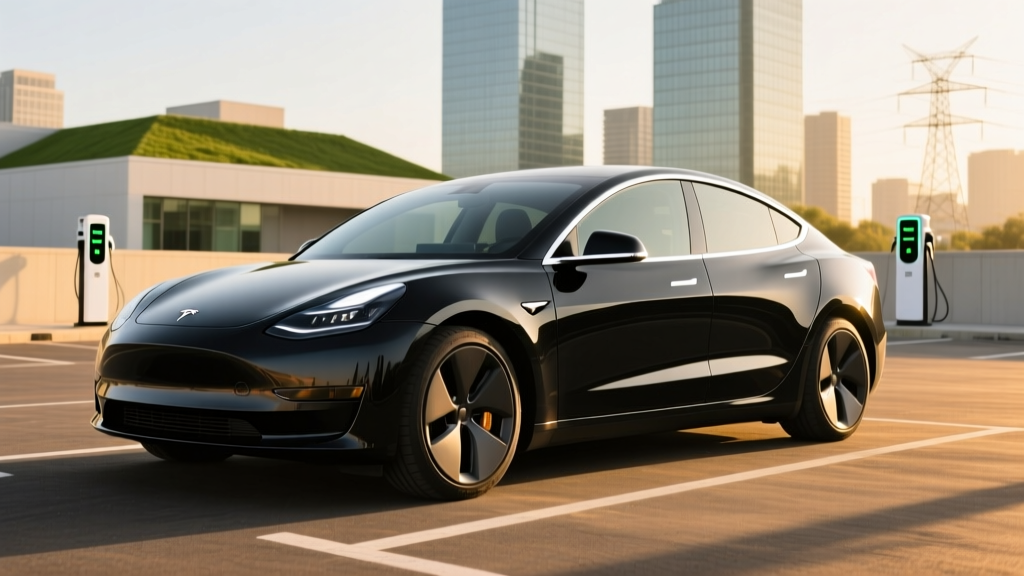
Quick Verdict: The Tesla Model 3 Still Sets the EV Efficiency Bar
If you're researching Tesla Model 3 miles — how far it actually goes on a charge, how quickly it recovers range, and how much that range costs — you've landed on the right deep-dive. The refreshed Model 3 (internally dubbed "Highland") entered its second full model year for 2026 with minor pricing adjustments but the same class-leading efficiency that has made it the default EV benchmark since 2017.
Here's the headline: the Long Range AWD variant earns an EPA-estimated 363 miles of range, while the base Rear-Wheel Drive delivers 272 miles. But EPA stickers only tell part of the story. In this review, we'll reconcile those numbers with real-world highway, cold-weather, and city driving, break down the charging curve at DC fast chargers and on home Level 2, and run the ownership math including the federal §30D tax credit.
| Spec | Rear-Wheel Drive | Long Range AWD | Performance AWD |
|---|---|---|---|
| EPA Range | 272 mi | 363 mi | 315 mi |
| Battery (usable) | ~57.5 kWh (LFP) | ~75 kWh (NMC) | ~75 kWh (NMC) |
| Drivetrain | RWD, single motor | Dual-motor AWD | Dual-motor AWD |
| Horsepower | 271 hp | 346 hp | ~510 hp |
| 0–60 mph | 5.8 sec | 4.2 sec | 2.9 sec |
| Peak DC Charge Rate | 170 kW | 250 kW | 250 kW |
| 10–80% DC Time | ~25 min | ~22 min | ~22 min |
| Level 2 Rate | 11.5 kW (~44 mi/hr) | 11.5 kW (~44 mi/hr) | 11.5 kW (~44 mi/hr) |
| MPGe (combined) | 132 MPGe | 125 MPGe | 113 MPGe |
| kWh/100 mi | 25 | 27 | 30 |
| Base MSRP | $38,990 | $45,740 | $52,990 |
| Battery Warranty | 8 yr / 100,000 mi | 8 yr / 120,000 mi | 8 yr / 120,000 mi |
Real-World Tesla Model 3 Miles: What the EPA Sticker Doesn't Tell You
EPA 363 mi (Long Range AWD) — Expect roughly 300–320 mi on the highway at 70–75 mph, and 230–260 mi in sub-30°F winter conditions without preconditioning. City/regenerative driving can exceed the EPA sticker, occasionally reaching 370+ mi in mild weather.
The EPA's test cycle blends low-speed urban and moderate-speed highway segments, which tends to favor EVs with strong regenerative braking. That's good news for commuters in stop-and-go traffic, but less reflective of cross-country road trips where sustained 75 mph speeds and HVAC load eat into range.
Based on aggregated owner data and independent testing from sources like fueleconomy.gov, here's what you can realistically expect from the Long Range AWD:
- City / suburban (mild weather): 340–380 mi — regen recovers energy at every stop
- Highway (70–75 mph, 65–80°F): 300–320 mi — aero drag dominates at speed
- Highway (75+ mph, 90°F+ with A/C): 280–300 mi
- Cold weather (20–30°F, mixed driving, no preconditioning): 230–260 mi — roughly 30% loss
- Cold weather with preconditioning and seat heaters: 270–290 mi — mitigates some loss
The Rear-Wheel Drive trim, with its smaller LFP battery, follows a similar pattern at roughly 75% of the Long Range numbers: expect ~200–215 highway miles in mild weather and ~150–170 in deep cold. For many commuters doing sub-80-mile round trips, that's still more than sufficient — and you can charge the LFP pack to 100% daily without degradation concerns.
Battery Chemistry: LFP vs. NMC and What It Means for Your Miles
Tesla uses two distinct battery chemistries across the Model 3 lineup, and this choice directly affects how you should charge, how the car behaves in cold weather, and long-term degradation.
| Factor | LFP (RWD) | NMC (Long Range / Performance) |
|---|---|---|
| Usable Capacity | ~57.5 kWh | ~75 kWh |
| Daily Charge Recommendation | 100% (charge fully at least weekly) | 80% daily, 100% for trips |
| Cold-Weather Performance | Greater range loss (~35%) | Better cold tolerance (~25–30% loss) |
| Cycle Life / Longevity | Superior — 3,000+ cycles | Good — ~1,500–2,000 cycles |
| Energy Density | Lower (heavier pack for same kWh) | Higher (more range per pound) |
| Cost | Lower (no cobalt/nickel) | Higher |
The LFP (lithium iron phosphate) pack in the RWD model sacrifices some energy density and cold-weather punch, but gains exceptional cycle life. Tesla explicitly recommends charging LFP packs to 100% regularly — in fact, the BMS needs full charges to calibrate accurately. If you're a daily commuter with home charging and rarely drive more than 150 miles in a day, the RWD's LFP pack is arguably the more durable long-term choice.
The NMC (nickel manganese cobalt) packs in the Long Range and Performance variants deliver more range per kilogram and handle cold better, but Tesla recommends keeping daily charge at 80% to preserve longevity. You'll only charge to 100% when you need the full 363 miles for a road trip.
Charging Speed: DC Fast Charging and Home Level 2 Breakdown
Range is only half the equation. How quickly the Model 3 recovers those miles — at a DC fast charger on a road trip, or at home overnight — determines whether it fits your lifestyle.
| Charging Level | Power / Connector | Miles Added per Hour | Notes |
|---|---|---|---|
| Level 1 (120V) | ~1.4 kW / NACS or J1772 adapter | ~3–5 mi/hr | Emergency/trickle only; ~60+ hrs for full charge |
| Level 2 (240V home) | 11.5 kW / NACS (48A circuit) | ~44 mi/hr | Full charge overnight in 6–9 hrs depending on trim |
| DC Fast (V3 Supercharger) | Up to 250 kW / NACS | Up to ~175 mi in 15 min | Peak rate; tapers above ~50% SoC |
| DC Fast (V4 Supercharger) | Up to 250 kW (Model 3 limited) | Same as V3 for now | V4 hardware supports higher rates for future vehicles |
Understanding the DC Fast-Charging Curve
Tesla advertises "up to 250 kW" for the Long Range and Performance trims, but that's a peak rate — not a sustained one. The actual charging curve looks roughly like this on a V3 Supercharger:
- 10–30% SoC: Ramps quickly to ~250 kW peak
- 30–50% SoC: Sustains ~200–230 kW
- 50–70% SoC: Tapers to ~120–150 kW
- 70–80% SoC: Further taper to ~80–100 kW
- 80–100% SoC: Drops sharply to ~30–50 kW (avoid charging this high on road trips unless necessary)
The practical result: a 10–80% session takes roughly 22 minutes for the Long Range, adding about 250 miles of range. That's competitive with the Hyundai Ioniq 6 and slightly behind the Porsche Taycan's 800V architecture, but the Tesla Supercharger network's reliability and density remain a significant real-world advantage.
Preconditioning matters. If you navigate to a Supercharger using the car's built-in navigation, the Model 3 will automatically warm the battery to optimal charging temperature before you arrive. In cold weather, this can cut your 10–80% time by 5–10 minutes versus arriving with a cold battery. Always route through the nav for the best charging speeds.
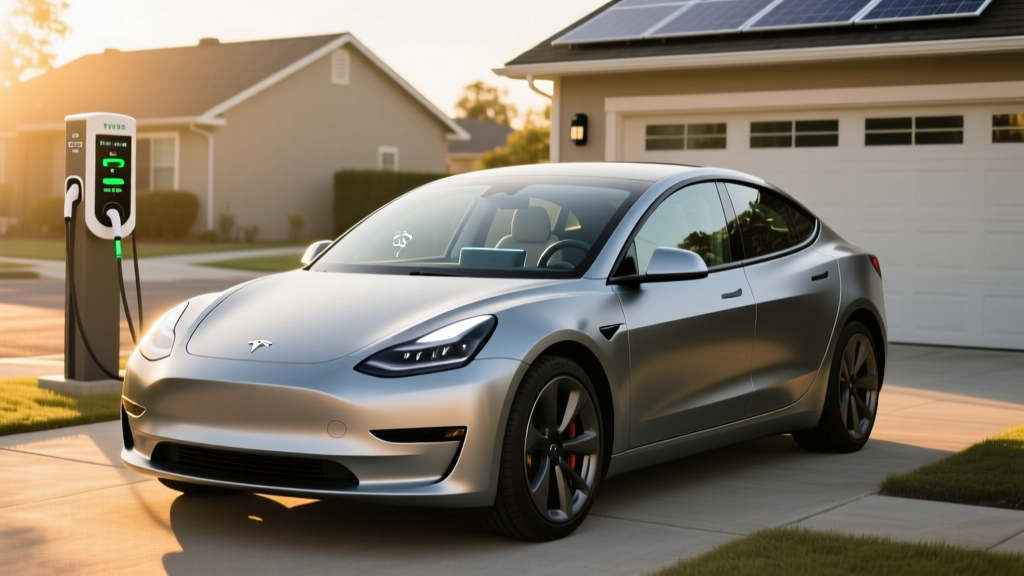
For home Level 2 charging, a Wall Connector on a 60-amp circuit (48A continuous) delivers 11.5 kW, adding roughly 44 miles of range per hour. A full charge from 10% takes about 6 hours for the RWD and 8 hours for the Long Range — easily completed overnight. Installation costs for a Level 2 home setup typically run $500–$2,000 depending on your electrical panel's proximity to the garage; if you need a panel upgrade from 100A to 200A, add $1,500–$3,000.
Performance and Driving Dynamics
The 2026 Model 3 Highland refresh brought meaningful improvements to ride quality and cabin noise. The previous generation's firm, crashy suspension has been replaced with frequency-selective dampers and additional sound deadening. It's still a sporty sedan, but it no longer punishes you on broken pavement.
Performance figures by trim:
- RWD: 271 hp, 5.8-sec 0–60 — brisk and more than adequate for merging and passing
- Long Range AWD: 346 hp, 4.2-sec 0–60 — genuinely quick, dual-motor traction in all conditions
- Performance AWD: ~510 hp, 2.9-sec 0–60 — sports-car territory, with Track Mode and adaptive dampers
All trims feature one-pedal driving via aggressive regenerative braking (adjustable in settings), and the low center of gravity from the under-floor battery pack gives the Model 3 cornering poise that most EVs in this price range can't match. The steer-by-wire system introduced on the Highland model provides precise, if somewhat numb, feedback.
Pricing, Trims, and Federal Tax Credit Eligibility
| Trim | Base MSRP | Destination | Est. §30D Credit | Effective Price |
|---|---|---|---|---|
| Rear-Wheel Drive | $38,990 | $1,390 | Up to $7,500* | ~$32,880 |
| Long Range AWD | $45,740 | $1,390 | Up to $7,500* | ~$39,630 |
| Performance AWD | $52,990 | $1,390 | Up to $7,500* | ~$46,880 |
*Credit amount depends on battery-sourcing compliance, buyer income, and point-of-sale transfer election. Verify current eligibility at IRS.gov §30D.
The federal §30D clean vehicle credit offers up to $7,500, split into two halves: $3,750 for meeting critical-minerals sourcing requirements and $3,750 for battery-component manufacturing requirements. As of 2026, Tesla's US-built battery packs and increasingly domestic mineral sourcing have generally qualified the Model 3 for the full credit — but these rules tighten annually.
- MSRP cap: Sedans must be ≤ $55,000 — all Model 3 trims qualify
- Buyer income cap (MAGI): $150,000 single / $225,000 head of household / $300,000 joint
- Final assembly: Must be in North America — Tesla Fremont ✓
- Battery sourcing: Critical minerals and component requirements phase up yearly; check fueleconomy.gov for current Model 3 status
- Point-of-sale transfer: You can elect to transfer the credit to Tesla at purchase, reducing your out-of-pocket cost immediately (rather than waiting for tax filing)
- Leasing: Lease credits go to the lessor (Tesla); they may or may not pass savings through — compare lease vs. buy math carefully
Interior, Cargo, and Technology
The Highland interior is a significant step up in perceived quality. Soft-touch materials replace the hard plastics of the pre-2024 Model 3, and the 15.4-inch center touchscreen remains the command center for everything — climate, navigation, media, and vehicle settings. There is no instrument cluster; speed and range info appears in the upper-left corner of the main display.
Cargo and passenger space:
- Rear cargo (trunk): 21.0 cu ft
- Front trunk (frunk): 3.1 cu ft
- Total cargo: 24.1 cu ft
- Rear legroom: 35.2 inches
- Front headroom: 40.3 inches
- Seating: 5 passengers
The rear seat is adequate for adults on shorter trips but tighter than a Hyundai Ioniq 6 or BMW i4 for long hauls. The trunk, however, is generous for the segment, and the frunk adds useful space for charging cables or a small bag.
Notable tech features:
- Tesla Autopilot (standard): Adaptive cruise + lane centering — SAE Level 2, requires driver supervision
- Full Self-Driving (Supervised): $8,000 option — adds automatic lane changes, traffic light recognition, and city street navigation; still SAE Level 2, not autonomous
- Ambient lighting, ventilated front seats (Highland addition)
- Rear 8-inch touchscreen for passengers
- Over-the-air updates that add features post-purchase
Both Autopilot and FSD (Supervised) require continuous driver attention and hands-on or eyes-on engagement. They do not make the Model 3 a self-driving car. You are legally and practically responsible for the vehicle at all times. True driverless capability (Level 4) exists only in geofenced robotaxi services like Waymo.
Ownership Costs, Warranty, and Long-Term Value
Tesla covers the Model 3 battery and drive unit with an 8-year / 100,000-mile warranty (RWD) or 8-year / 120,000-mile warranty (Long Range / Performance), guaranteeing a minimum of 70% battery capacity retention over that period. The limited vehicle warranty is 4 years / 50,000 miles.
Long-term battery degradation data from aggregated Tesla fleet data suggests most Model 3 packs lose approximately 10–12% of capacity over the first 100,000 miles, after which the degradation curve flattens significantly. LFP packs in the RWD model are expected to show even less degradation over the same period, though large-sample long-term data is still maturing.
Estimated 5-year cost of ownership (Long Range AWD, 15,000 mi/yr):
- Home electricity ($0.14/kWh avg): ~$3,100 total
- Equivalent gas car fuel (30 MPG, $3.50/gal): ~$8,750 total
- Maintenance (tires, cabin filter, wiper fluid — no oil changes): ~$1,200
- Insurance (typically 15–25% higher than comparable gas sedans): ~$9,000–$11,000
- Estimated depreciation: ~$15,000–$18,000 over 5 years
The fuel savings alone — roughly $5,600 over five years — offset a meaningful chunk of the purchase premium, especially if you charge primarily at home on off-peak rates.
- Best-in-class efficiency (25–30 kWh/100 mi)
- Access to the Supercharger network — most reliable DC fast-charging ecosystem
- LFP battery option for daily-commuter longevity
- Strong resale value relative to most EVs
- Over-the-air updates continuously improve the car
- Highland ride quality and cabin noise are vastly improved
- No physical stalks — turn signals via steering-wheel buttons take adjustment
- Everything through the touchscreen is distracting for some drivers
- Rear seat is tighter than rivals (Ioniq 6, BMW i4)
- Insurance premiums run higher than segment average
- FSD (Supervised) is expensive and still requires full driver attention
- LFP RWD model has significant cold-weather range loss
Who Should Buy the Tesla Model 3?
- Your daily round-trip commute is under 120 miles
- You have reliable home Level 2 charging
- You want the lowest entry price and best long-term battery durability
- You live in a moderate climate (cold-weather range loss is more pronounced with LFP)
- You take regular road trips of 200+ miles
- You live in a region with cold winters and need AWD traction
- You want the maximum range buffer for Supercharger-desert routes
- You value the 4.2-sec 0–60 for merging confidence
- You want sports-car acceleration (2.9-sec 0–60) in a practical sedan
- Track Mode and adaptive dampers appeal to you
- You're willing to trade ~50 miles of range for the performance upgrade
- You need a spacious rear seat for adults on long trips (consider the Ioniq 6 or BMW i4)
- You prefer physical buttons and a traditional instrument cluster
- You need hatchback or SUV cargo flexibility (consider the Model Y)
- You want to tow — the Model 3 is not rated for towing
Tesla Model 3 Miles FAQ
What is the real-world range of the Tesla Model 3?
The EPA rates the Long Range AWD at 363 miles and the RWD at 272 miles. In real-world highway driving at 70–75 mph, expect roughly 300–320 miles from the Long Range and 200–215 from the RWD. In cold weather below 30°F, plan for 25–35% range loss unless you precondition the battery.
How fast does the Tesla Model 3 charge at home and on the road?
On a home Level 2 charger (11.5 kW / 48A), the Model 3 adds about 44 miles of range per hour, fully charging overnight in 6–8 hours. On a Tesla V3 Supercharger, the Long Range peaks at 250 kW and charges from 10–80% in approximately 22 minutes. The RWD peaks at 170 kW with a 10–80% time of roughly 25 minutes.
How much does the Tesla Model 3 cost after the federal tax credit?
With the full $7,500 §30D credit applied at point of sale, the RWD starts at approximately $32,880, the Long Range AWD at roughly $39,630, and the Performance at around $46,880. Eligibility depends on your income (MAGI caps apply), the vehicle's battery-sourcing compliance, and MSRP limits. Always verify current status on IRS.gov before purchasing.
Does the Tesla Model 3 qualify for the federal EV tax credit?
As of 2026, the Model 3 generally qualifies for up to $7,500 under IRS §30D, as it is assembled in Fremont, California (North American final assembly), all trims are under the $55,000 sedan MSRP cap, and Tesla has met evolving battery-sourcing thresholds. However, critical-mineral and component requirements tighten each year — confirm current eligibility at fueleconomy.gov and the IRS clean vehicle credit page.
Is the Tesla Model 3 worth buying vs. competitors?
Against the Hyundai Ioniq 6 (EPA 361 mi, ~$42,000), the Model 3 Long Range matches on range but wins on Supercharger network access and software ecosystem. Against the BMW i4 eDrive40 (EPA 307 mi, ~$52,000), the Model 3 offers more range for less money but a less premium interior. The Model 3 remains the efficiency and charging-infrastructure leader in the segment, though the stalk-less interface and touchscreen-only controls are a dealbreaker for some buyers.
How long will the Tesla Model 3 battery last?
Tesla warranties the battery for 8 years / 100,000 miles (RWD) or 8 years / 120,000 miles (Long Range / Performance) at a minimum 70% capacity retention. Real-world fleet data shows most packs retain 88–90% capacity at 100,000 miles. LFP packs in the RWD are expected to outlast NMC packs in cycle life. A full battery replacement outside warranty currently costs approximately $12,000–$16,000 depending on the pack.
Can I charge a Tesla Model 3 on non-Tesla chargers?
Yes. The Model 3 uses the NACS (North American Charging Standard) connector natively. With a CCS adapter (sold by Tesla for ~$250), you can access Electrify America, EVgo, and other CCS networks. Most public Level 2 chargers use J1772, and Tesla includes a J1772 adapter in the glovebox. As of 2026, many non-Tesla networks are adding native NACS cables, reducing the need for adapters.