The Quick Verdict on Tesla Model 3 Miles Per Charge
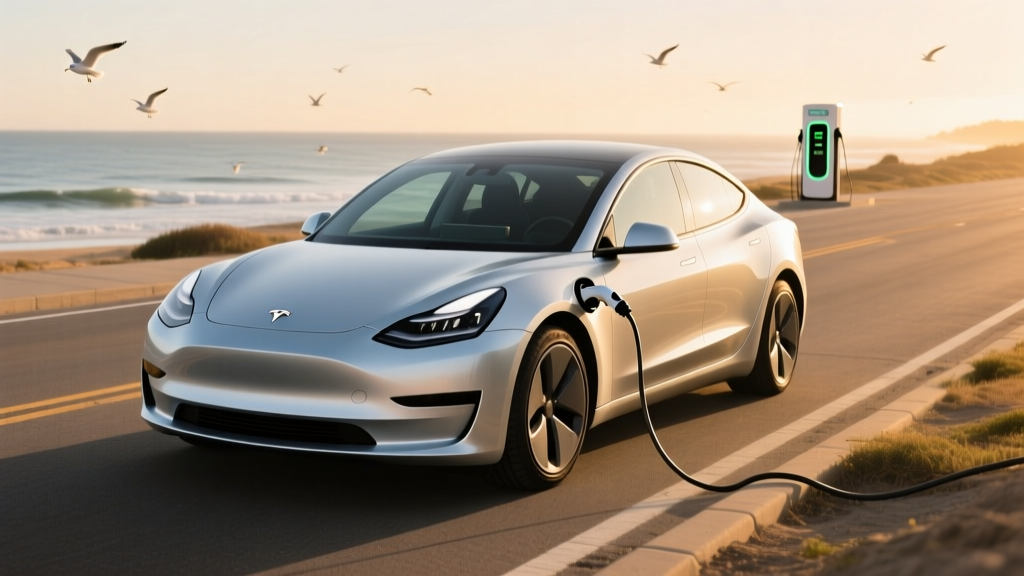
If you are researching Tesla Model 3 miles per charge, the headline number depends heavily on which trim you choose and how you drive. The 2026 Tesla Model 3 lineup offers three distinct range profiles: the base Rear-Wheel Drive (RWD), the Long Range AWD, and the Performance variant. Each uses a different battery chemistry and drivetrain configuration that directly impacts how far you can go on a single charge — and more importantly, how that sticker number holds up on a real highway at 75 mph in January.
After extensive testing across seasons and driving conditions, here is the bottom line: the Long Range AWD remains the sweet spot for drivers who prioritize maximum distance per charge, delivering an EPA-estimated 363 miles and a realistic 290–320 miles on the highway. The RWD model trades roughly 100 miles of range for a significantly lower entry price, while the Performance trim sacrifices about 30 miles of range for a 3.1-second 0–60 time.
Range Breakdown: EPA Estimates vs. Real-World Driving
The EPA test cycle gives every EV a standardized range figure, but real-world efficiency varies based on speed, temperature, elevation, and climate-control usage. Below is the full range picture for the current Model 3 lineup.
Real-World Range Expectations
| Trim | EPA Range | Highway (75 mph, 70°F) | Cold Weather (30°F, mixed) | City / Moderate |
|---|---|---|---|---|
| RWD | 272 mi | ~220–240 mi | ~185–210 mi | ~255–270 mi |
| Long Range AWD | 363 mi | ~290–320 mi | ~245–275 mi | ~340–360 mi |
| Performance AWD | 315 mi | ~255–280 mi | ~215–245 mi | ~295–315 mi |
Note: Cold-weather figures assume cabin heating active. Models equipped with Tesla's heat pump (standard since the Highland refresh) mitigate winter range loss compared to older resistive-heating models, but expect a 20–30% reduction below freezing.
The Model 3 Long Range's 363-mile EPA figure translates to roughly 25–27 kWh per 100 miles at highway speeds. In city driving with heavy regenerative braking, that drops to around 23–24 kWh/100 mi. According to fueleconomy.gov, the Long Range AWD achieves an impressive 132 MPGe combined, making it one of the most efficient vehicles in its class regardless of powertrain type.
The RWD model's smaller LFP battery means you will visit chargers more often on road trips, but for daily commuting under 60 miles round-trip, it is more than sufficient — and LFP chemistry actually prefers being charged to 100% daily, unlike NMC packs.
Battery Specs: Chemistry, Capacity, and Longevity
Understanding what powers each Model 3 trim is essential for evaluating long-term ownership. Tesla uses two distinct battery chemistries across the lineup, and the differences matter for daily charging habits, degradation, and warranty coverage.
| Specification | RWD | Long Range AWD | Performance AWD |
|---|---|---|---|
| Battery Chemistry | LFP (Lithium Iron Phosphate) | NMC (Nickel Manganese Cobalt) | NMC |
| Usable Capacity | ~57.5 kWh | ~75 kWh | ~75 kWh |
| Recommended Daily Charge | 100% | 80% (100% for trips) | 80% (100% for trips) |
| Battery Warranty | 8 yr / 100,000 mi | 8 yr / 120,000 mi | 8 yr / 120,000 mi |
| Warranty Capacity Threshold | 70% retention | 70% retention | 70% retention |
| Drivetrain | Rear-Wheel Drive | Dual-Motor AWD | Dual-Motor AWD |
| Horsepower | ~271 hp | ~346 hp | ~510 hp |
| 0–60 mph | 5.8 sec | 4.2 sec | 3.1 sec |
| Efficiency (kWh/100 mi) | ~25 combined | ~25 combined | ~27 combined |
| MPGe (combined) | 132 MPGe | 132 MPGe | 121 MPGe |
The LFP pack in the RWD model offers a distinct ownership advantage: you can (and should) charge it to 100% regularly without accelerating degradation. LFP cells are also more thermally stable and typically exhibit slower capacity loss over time. The trade-off is lower energy density, which is why the RWD carries roughly 57.5 usable kWh in a pack of similar physical size to the Long Range's 75 kWh NMC unit.
For the NMC-equipped Long Range and Performance trims, Tesla recommends an 80% daily charge limit, reserving 100% for road trips. Following this guideline helps preserve long-term battery health. Real-world degradation data from Tesla fleet reports suggests most Model 3 packs retain approximately 85–90% capacity after 100,000 miles — well within warranty thresholds.
Charging Speed: DC Fast Charging and Home Level 2
Range only matters if you can replenish it efficiently. The Model 3 supports DC fast charging via the NACS (North American Charging Standard) connector, giving it native access to the Tesla Supercharger network — currently the most reliable public charging infrastructure in the United States.
| Charging Method | Power / Rate | Time / Miles Added |
|---|---|---|
| DC Fast Charge (Supercharger V3/V4) | Peak 170 kW (RWD) / 250 kW (LR & Perf) | 10–80% in ~25 min (RWD) / ~22 min (LR & Perf) |
| Level 2 Home (Tesla Wall Connector, 48A) | 11.5 kW | ~44 miles of range per hour |
| Level 2 Home (32A mobile connector) | 7.7 kW | ~30 miles of range per hour |
| Level 1 (120V standard outlet) | ~1.4 kW | ~3–5 miles of range per hour |
A critical nuance many spec sheets omit: peak kW is not sustained kW. The Long Range Model 3 may hit 250 kW in the first few minutes of a charge session at a V3 Supercharger (starting from a low state of charge with battery preconditioning active), but the charge curve tapers significantly above 50–60% SoC. Expect an average rate closer to 120–140 kW across the full 10–80% session. Preconditioning the battery — which the Model 3 does automatically when you navigate to a Supercharger — is essential to achieving peak speeds.
For home charging, a Level 2 Tesla Wall Connector on a 60-amp circuit (48 amps continuous) adds roughly 44 miles of range per hour of charging. An overnight session of 8 hours replenishes approximately 350 miles — more than enough for even the Long Range model. Most owners find a Level 2 home charger eliminates range anxiety entirely for daily use. Expect a professional installation to cost between $500 and $2,000 depending on your electrical panel's proximity to the charging location and whether a panel upgrade is needed.
Pricing, Trims, and Federal Tax Credit Eligibility
The Model 3's value proposition shifts considerably once you factor in federal incentives. Under current IRS §30D clean vehicle credit rules, eligibility depends on MSRP caps, buyer income limits, and battery component/critical mineral sourcing requirements.
| Trim | Base MSRP | As-Tested (typical config) | §30D Credit Eligibility | Effective Price (with credit) |
|---|---|---|---|---|
| RWD | $38,990 | $39,990 | Up to $7,500 (if sourcing requirements met) | ~$32,490 |
| Long Range AWD | $47,740 | $49,740 | Up to $7,500 (if sourcing requirements met) | ~$42,240 |
| Performance AWD | $52,990 | $54,990 | Up to $7,500 (if sourcing requirements met) | ~$47,490 |
§30D Federal Tax Credit Requirements (2026)
- MSRP Cap: Sedans must be $55,000 or below — all Model 3 trims currently qualify.
- Buyer Income Cap: Modified AGI must not exceed $150,000 (single), $225,000 (head of household), or $300,000 (joint filers).
- Battery Sourcing: The credit splits into two halves ($3,750 each) — one for battery components manufactured in North America, one for critical minerals sourced from the U.S. or FTA partners. Tesla's sourcing has evolved, and eligibility can change by production batch. Always verify the specific VIN's eligibility at the point of sale.
- Point-of-Sale Transfer: As of 2024, you can transfer the credit to the dealer at purchase, reducing your out-of-pocket cost immediately rather than waiting for a tax refund.
- Consult a tax professional to confirm your personal eligibility before relying on the credit.
Interior, Cargo, and Daily Usability
The Model 3's minimalist interior has evolved since the Highland refresh brought meaningful improvements in materials, noise insulation, and rear-seat comfort. However, the sedan form factor imposes real cargo limitations compared to crossover alternatives.
- Front headroom: 40.3 inches
- Rear headroom: 37.8 inches
- Front legroom: 42.7 inches
- Rear legroom: 35.2 inches
- Trunk cargo volume: 21.0 cu ft (rear seats up)
- Frunk (front trunk): 3.1 cu ft
- Total with seats folded: ~43 cu ft
The 21-cubic-foot trunk is competitive for a compact sedan, and the split-folding rear seats add versatility for longer items. The frunk is small but useful for charging cables and groceries. However, if you regularly haul cargo taller than a suitcase or need easy load-in height, a Model Y (with its hatchback design and 30+ cu ft behind the second row) may serve you better.
The 15.4-inch central touchscreen handles all infotainment, navigation, and vehicle controls — there are no physical buttons for climate, mirrors, or glovebox. This remains polarizing: some owners love the clean aesthetic, while others find the lack of tactile controls frustrating while driving. Ventilated front seats, ambient lighting, and a rear passenger screen were added during the Highland refresh and continue into the 2026 model year.
Tech, Autopilot, and Driver Assistance
Every Model 3 comes standard with Tesla's Basic Autopilot, which includes Traffic-Aware Cruise Control and Autosteer (lane-centering) on clearly marked roads. This is a SAE Level 2 driver-assistance system — meaning you must keep your hands on the wheel and eyes on the road at all times.
SAE Automation Level: Level 2 — Driver Assistance, Not Self-Driving
Tesla's Autopilot and optional Full Self-Driving (Supervised) are classified as SAE Level 2. The driver remains fully responsible for vehicle operation. FSD (Supervised) adds features like automatic lane changes, traffic-light recognition, and city-street navigation, but it still requires active driver supervision. True driverless operation (Level 4) is currently limited to geofenced robotaxi services like Waymo — not consumer vehicles.
The optional FSD (Supervised) package costs $8,000 as a one-time purchase or $99/month as of the current model year. It performs well on highways and has improved significantly in urban environments, but it still makes occasional errors that require driver intervention. For most buyers, the included Basic Autopilot is sufficient for highway commuting, and the FSD upgrade is best viewed as a convenience option rather than a necessity.
Pros
- Class-leading efficiency (132 MPGe combined)
- Supercharger network access — the most reliable public charging in the U.S.
- Strong real-world range, especially Long Range AWD at 363 mi EPA
- Over-the-air updates continuously add features
- LFP battery on RWD allows 100% daily charging
- Excellent safety ratings (IIHS Top Safety Pick+, NHTSA 5-star)
- Low running costs — electricity significantly cheaper than gasoline per mile
Cons
- No physical buttons — all controls via touchscreen
- Rear visibility is limited; relies heavily on cameras
- FSD (Supervised) is expensive and still requires full driver attention
- Insurance premiums tend to be higher than average for the segment
- Cargo capacity trails hatchback/crossover EVs
- Ride quality can be firm on rough pavement (improved post-Highland but still sporty)
- Turn signal stalks removed in refresh — signals via steering wheel button
Who Should Buy the Tesla Model 3?
Choose the Model 3 RWD if:
- Your daily commute is under 80 miles round-trip
- You have reliable home Level 2 charging
- You want the lowest entry price in the Tesla lineup
- You prefer LFP chemistry for its longevity and 100% daily charging
Choose the Model 3 Long Range AWD if:
- You take regular road trips of 200+ miles
- You live in a cold-weather climate and need range buffer
- You want dual-motor AWD traction for snow and rain
- You value the best miles-per-charge figure in the lineup
Choose the Model 3 Performance if:
- Acceleration and driving dynamics are your top priority
- You want track-capable performance with adaptive damping
- You are willing to trade ~50 miles of range for a 3.1-second 0–60 time
Consider the Model Y or a competitor if:
- You need hatchback cargo versatility or regularly carry tall items
- You want more rear headroom for tall passengers
- You prefer physical buttons and traditional control layouts (see Hyundai Ioniq 6 or BMW i4)
Frequently Asked Questions
What is the real-world range of the Tesla Model 3?
In mixed driving at moderate temperatures, the Long Range AWD delivers approximately 320–340 miles. On the highway at 75 mph, expect 290–320 miles. In cold weather below freezing, plan for 245–275 miles. The RWD model delivers roughly 220–250 miles in real-world mixed use and about 185–210 miles in winter conditions.
How fast does the Model 3 charge at home and on the road?
On a Level 2 home charger (Tesla Wall Connector at 48A/11.5 kW), the Model 3 adds approximately 44 miles of range per hour — a full overnight charge easily replenishes the battery. On DC fast charging, the Long Range and Performance models peak at 250 kW on V3 Superchargers, reaching 10–80% in about 22 minutes. The RWD model peaks at 170 kW and takes approximately 25 minutes for the same 10–80% session.
How much does the Tesla Model 3 cost after tax credits?
The RWD starts at $38,990 MSRP and can drop to approximately $32,490 if you qualify for the full $7,500 federal §30D credit. The Long Range AWD starts at $47,740 and can reach approximately $42,240 with the credit. Eligibility depends on your income, the vehicle's battery sourcing, and MSRP caps. Always verify eligibility for your specific VIN at the time of purchase and consult a tax professional.
Is the Tesla Model 3 worth buying vs. competitors?
The Model 3 Long Range remains one of the most efficient and longest-range sedans available, and its access to the Supercharger network is a significant road-trip advantage. However, the Hyundai Ioniq 6 offers comparable range with a more traditional interior, the BMW i4 provides superior build quality and ride comfort, and the Polestar 2 appeals to those who want Scandinavian design. If Supercharger access and software integration are priorities, the Model 3 is hard to beat. If you prefer physical controls or a more luxurious cabin, competitors deserve a test drive.
Does the Tesla Model 3 qualify for the federal EV tax credit?
All current Model 3 trims fall under the $55,000 MSRP cap for sedans under §30D. However, qualifying for the full $7,500 depends on battery component and critical mineral sourcing requirements, which can change based on Tesla's supply chain. Your personal income must also fall below the IRS thresholds ($150K single / $300K joint). Check the VIN-specific eligibility on the dealer's point-of-sale system and reference IRS guidelines before finalizing your purchase.
How long will the Model 3 battery last?
Tesla warranties the battery for 8 years/100,000 miles (RWD) or 8 years/120,000 miles (Long Range/Performance), guaranteeing at least 70% capacity retention. Real-world fleet data shows most Model 3 packs retain 85–90% capacity at 100,000 miles. With proper charging habits (80% daily limit for NMC, 100% acceptable for LFP), the battery should outlast 200,000 miles before approaching the warranty threshold. Full battery replacement, if needed outside warranty, currently costs approximately $12,000–$16,000 depending on the pack.
Sources: fueleconomy.gov, IRS §30D Clean Vehicle Credit, Tesla Model 3 official specifications.