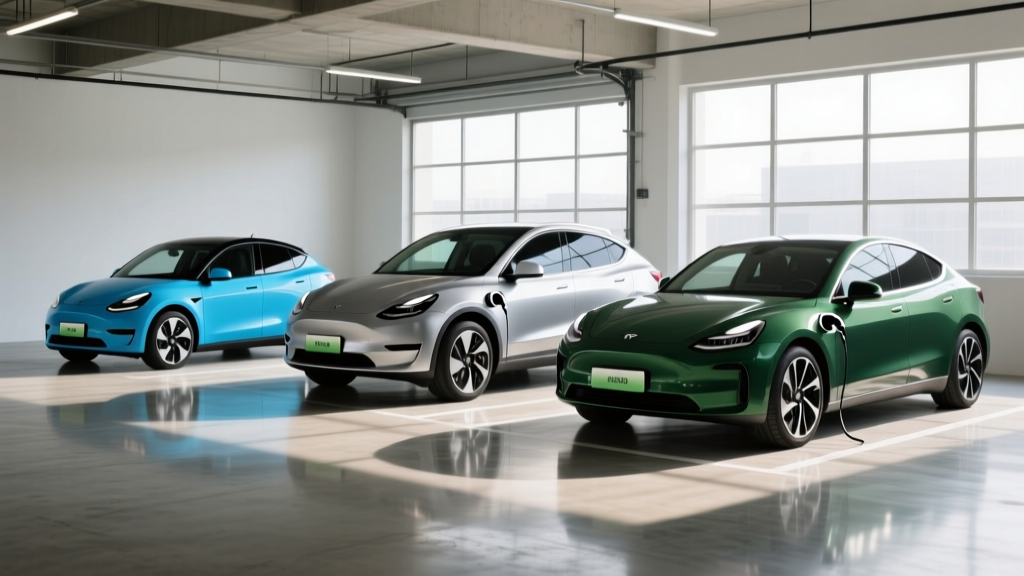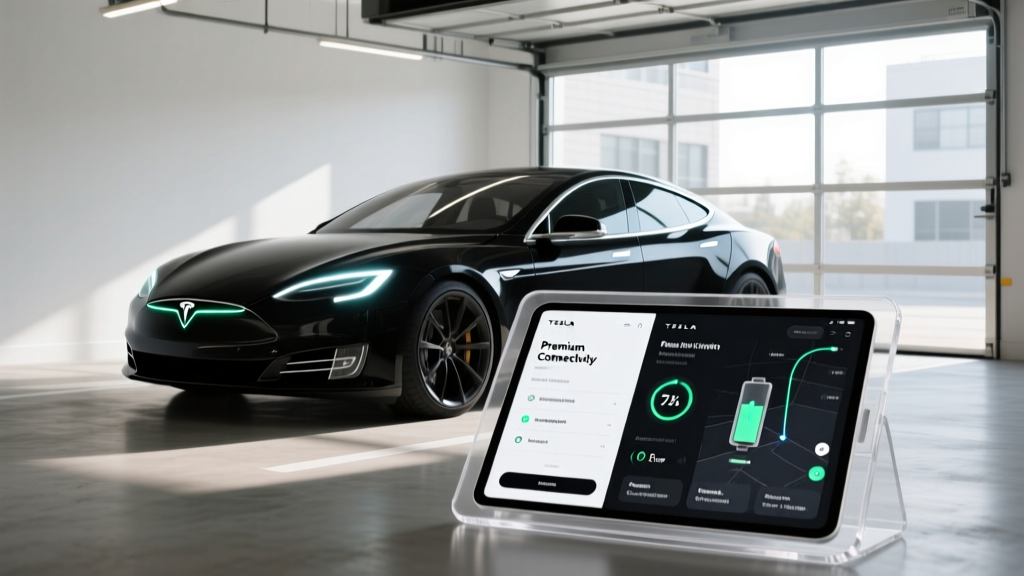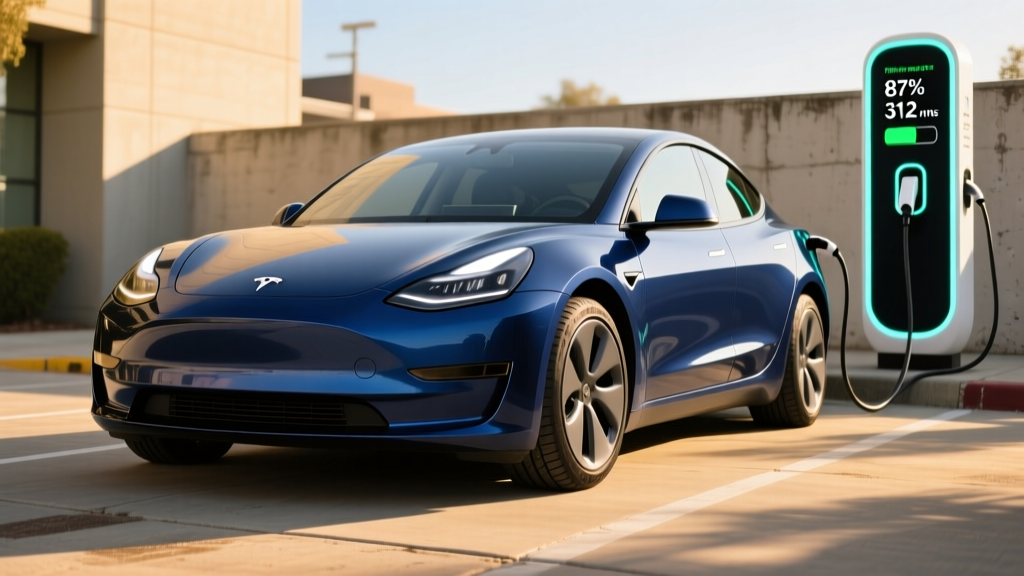
If you're researching how long does a Tesla Model 3 last, you're asking the right question before spending $38,000+. The answer isn't a single number—it's a combination of battery chemistry, thermal management, real-world driving conditions, and how you charge. After years of tracking Tesla's data and driving multiple Model 3 variants through winter and summer, I can tell you that the 2026 Model 3 (the "Highland" refresh carried forward) is engineered to outlast most gas cars on the road, but longevity depends heavily on which trim you buy and how you treat the pack.
This review covers the full lifespan picture: battery degradation data, real-world range versus the EPA sticker, charging speeds that affect cell health, 2026 pricing and federal tax credit eligibility, and whether the Model 3 still earns its spot against rivals like the Hyundai Ioniq 6 and BMW i4.
2026 Tesla Model 3: Quick Specs at a Glance
| Spec | RWD (Standard Range) | Long Range RWD | Long Range AWD | Performance AWD |
|---|---|---|---|---|
| EPA Range | 272 mi | 363 mi | 341 mi | 315 mi |
| Battery (usable) | ~60 kWh | ~82 kWh | ~82 kWh | ~82 kWh |
| Chemistry | LFP (CATL) | NMC | NMC | NMC |
| 0–60 mph | 5.8 sec | 5.0 sec | 4.2 sec | 2.9 sec |
| Horsepower | 271 hp | 346 hp | 440 hp | 510 hp |
| Drivetrain | RWD | RWD | Dual-Motor AWD | Dual-Motor AWD |
| Efficiency (MPGe) | 132 MPGe | 132 MPGe | 125 MPGe | 113 MPGe |
| kWh/100 mi | 25 | 25 | 27 | 30 |
| Base MSRP | $38,990 | $42,990 | $47,990 | $53,990 |
Source: EPA fueleconomy.gov and Tesla.com. Prices exclude $1,390 destination fee. Specs reflect 2026 model year.
Battery Lifespan: How Many Miles Will a Model 3 Pack Really Last?
Tesla's official position, backed by the 2025 Impact Report, is that Model 3 battery packs retain approximately 85% of original capacity after 200,000 miles. That's significantly better than the industry-average degradation curve. But the real answer depends on chemistry.
LFP vs. NMC: The Chemistry That Defines Longevity
The base RWD Model 3 uses a lithium iron phosphate (LFP) battery supplied primarily by CATL. LFP cells have a longer cycle life—typically 3,000+ full charge cycles before hitting 80% capacity—compared to NMC's roughly 1,500–2,000 cycles. In practical terms:
- LFP (RWD): Can be charged to 100% daily without meaningful degradation penalty. Tesla recommends 100% at least once per week for cell balancing. Projected lifespan well beyond 250,000 miles.
- NMC (Long Range / Performance): Tesla recommends daily charge limit of 80–90%. Charging to 100% regularly accelerates degradation. Best reserved for road trips. Projected lifespan 200,000–300,000 miles with proper care.
For high-mileage commuters doing 20,000+ miles per year, the LFP RWD model may paradoxically outlast the more expensive Long Range variant in terms of battery health—despite having less total range.
Battery Warranty Coverage
| Trim | Battery Warranty | Capacity Threshold |
|---|---|---|
| RWD (Standard Range) | 8 years / 100,000 miles | 70% retention minimum |
| Long Range / Performance | 8 years / 120,000 miles | 70% retention minimum |
If your pack drops below 70% capacity within the warranty window, Tesla replaces or remanufactures it at no cost. Out-of-warranty replacement runs $12,000–$16,000 depending on pack size and labor—a figure worth factoring into long-term ownership cost if you plan to keep the car past 150,000 miles.
Real-World Range: What the EPA Sticker Doesn't Tell You
EPA Range vs. Real-World Expectations
- RWD (EPA 272 mi): Expect ~230–250 mi on mixed highway driving at 70 mph. In winter (below 32°F), plan for 180–210 mi.
- Long Range RWD (EPA 363 mi): Expect ~300–320 mi highway. Winter drops this to ~240–270 mi.
- Long Range AWD (EPA 341 mi): Expect ~285–310 mi highway. Winter: ~230–260 mi.
- Performance AWD (EPA 315 mi): Expect ~260–280 mi highway with spirited driving. Winter: ~210–240 mi.
The Model 3 Highland refresh improved aerodynamics and added a heat pump as standard across all trims, which reduces cold-weather range loss compared to pre-2024 models. However, the laws of physics still apply: cold batteries are less efficient, cabin heating draws power, and winter tires add rolling resistance. If you live in the upper Midwest or Northeast and commute more than 80 miles round-trip in winter, the Long Range trims provide a necessary buffer.
On the positive side, the Model 3's efficiency (25–30 kWh/100 mi) remains class-leading. The Hyundai Ioniq 6 achieves similar efficiency, but the Model 3's regenerative braking calibration is among the smoothest in the segment, recapturing energy effectively in stop-and-go traffic.
Charging Speed: DC Fast Charge, Level 2, and Battery Health
| Charging Type | RWD (LFP) | Long Range / Performance (NMC) |
|---|---|---|
| Max DC Fast Charge | 170 kW peak | 250 kW peak |
| 10–80% DC Time | ~25 minutes | ~22 minutes |
| Sustained DC Rate (20–60%) | ~120–140 kW | ~180–210 kW |
| Level 2 (240V / 48A home) | 11.5 kW (~44 mi/hr) | 11.5 kW (~44 mi/hr) |
| Level 2 (240V / 32A Mobile Connector) | 7.7 kW (~30 mi/hr) | 7.7 kW (~30 mi/hr) |
| Level 1 (120V) | ~1.4 kW (~5 mi/hr) | ~1.4 kW (~5 mi/hr) |
Key ownership insight: The NMC trims peak at 250 kW on Tesla V3 and V4 Superchargers, but that peak only holds between roughly 10–30% state of charge. Above 50%, the charge curve tapers significantly—dropping to under 100 kW by 70% and under 40 kW by 90%. This is why Tesla quotes 10–80% times, not 0–100%. For road trips, plan your stops around the 10–80% window to minimize total charging time.
The LFP RWD charges slower in absolute terms (170 kW peak), but LFP chemistry tolerates frequent DC fast charging better than NMC. If your daily routine relies heavily on public fast chargers rather than home Level 2, the LFP pack will degrade more slowly under that usage pattern.
For home charging, a Tesla Wall Connector on a 60-amp circuit (48A continuous) delivers 11.5 kW—enough to fully replenish any Model 3 overnight in 6–9 hours. Installation typically costs $800–$2,000 depending on your electrical panel's capacity and proximity to the parking spot.
Performance, Interior Space, and Technology
The 2026 Model 3 continues with the Highland-generation interior, which brought meaningful improvements over the pre-2024 version: ventilated front seats, acoustic glass all around, rear-seat touchscreen, ambient lighting, and a stiffer suspension tune that firms up the ride without being harsh.
Dimensions and Practicality
- Front legroom: 42.7 inches
- Rear legroom: 35.2 inches
- Cargo (trunk + frunk): 23 cu ft total (19.7 trunk + 3.1 frunk)
- Cargo (rear seats folded): ~43 cu ft
- Ground clearance: 5.5 inches
The rear seat is adequate for adults on shorter trips but tighter than an Ioniq 6 or BMW i4 for anyone over 5'10". The frunk (front trunk) is small—enough for a charging cable bag and a laptop case, not a full grocery run. Cargo capacity is sufficient for a couple's weekend trip but will require packing discipline for a family of four.
Technology and Driver Assistance
Every Model 3 includes a 15.4-inch center touchscreen running Tesla's proprietary OS—no Apple CarPlay or Android Auto. The interface is fast and the navigation is excellent, but the lack of phone projection is a dealbreaker for some buyers. Over-the-air updates continue to add features years after purchase.
Driver Assistance — SAE Level 2 (Not Self-Driving)
Tesla's Basic Autopilot (included) provides adaptive cruise control and lane centering. Enhanced Autopilot ($6,000) adds auto lane change, autosteer on city streets, and summon. Full Self-Driving (Supervised) ($8,000) adds traffic light/stop sign recognition and more aggressive city navigation.
All of these are SAE Level 2 systems. The driver must remain fully attentive, hands on or near the wheel, and legally responsible at all times. Tesla's FSD is not a Level 4 autonomous system like Waymo's driverless robotaxis. Treat it as an advanced cruise control, not a chauffeur.
2026 Pricing and Federal Tax Credit Eligibility
| Trim | MSRP (incl. destination) | §30D Credit Potential | Effective Price |
|---|---|---|---|
| RWD (Standard Range) | $40,380 | Up to $7,500* | ~$32,880* |
| Long Range RWD | $44,380 | Up to $7,500* | ~$36,880* |
| Long Range AWD | $49,380 | Up to $7,500* | ~$41,880* |
| Performance AWD | $55,380 | Up to $7,500* | ~$47,880* |
* Federal tax credit eligibility depends on multiple requirements under IRS §30D rules. See checklist below.
Federal EV Tax Credit Checklist (§30D)
- MSRP cap: Vehicle must be under $55,000 (sedans). The Performance trim at $55,380 may exceed this cap—confirm with your dealer and tax professional.
- Buyer income limits: AGI must not exceed $150,000 (single), $225,000 (head of household), or $300,000 (joint filers).
- Battery sourcing: A percentage of critical minerals and battery components must be sourced from the U.S. or FTA partners. Tesla's supply chain has shifted significantly toward compliance, but exact eligibility can change quarterly.
- Point-of-sale transfer: As of 2024+, you can transfer the credit to the dealer at purchase, reducing your out-of-pocket cost immediately rather than waiting for a tax refund.
- One credit per VIN, one new EV credit per taxpayer per year.
The RWD and Long Range RWD trims are the most likely to qualify for the full $7,500 credit given their MSRPs. The Long Range AWD at $49,380 clears the cap. The Performance at $55,380 sits right at the sedan threshold—verify current eligibility before purchase.
How the Model 3 Compares to Key Rivals
The Model 3 competes in a segment that has grown considerably since its launch. Here's how it stacks up against the three most common cross-shops:
| Factor | Tesla Model 3 LR AWD | Hyundai Ioniq 6 SEL AWD | BMW i4 xDrive40 | Polestar 2 LR AWD |
|---|---|---|---|---|
| EPA Range | 341 mi | 316 mi | 282 mi | 320 mi |
| Max DC Charge | 250 kW | 235 kW | 205 kW | 205 kW |
| 10–80% Time | ~22 min | ~18 min | ~31 min | ~27 min |
| Base MSRP | $47,990 | $46,000 | $57,900 | $53,550 |
| Charging Network | Supercharger (native NACS) | NACS adapter (Supercharger access) | NACS adapter | NACS adapter |
| Battery Warranty | 8 yr / 120k mi | 10 yr / 100k mi | 8 yr / 100k mi | 8 yr / 100k mi |
Where the Model 3 wins: Supercharger network access (native NACS, no adapter needed), software/OTA update maturity, and efficiency (kWh/100 mi). The Supercharger network remains the most reliable public charging ecosystem in the U.S. by a wide margin.
Where rivals have an edge: The Ioniq 6 charges faster in the 10–80% window thanks to its 800V architecture and offers a 10-year battery warranty. The BMW i4 provides a more premium interior and traditional dealership service. The Polestar 2 has a more conventional control layout (physical buttons, Google-based infotainment with CarPlay).
Pros
- Class-leading efficiency (25–30 kWh/100 mi)
- Native NACS / Supercharger network access
- LFP battery on RWD enables daily 100% charging
- Strong OTA update track record
- Highland refresh improved ride quality and cabin quietness
- Competitive pricing after tax credit
Cons
- No Apple CarPlay or Android Auto
- Rear seat legroom is tight for taller passengers
- Turn signals on steering wheel (no stalk) takes adjustment
- FSD costs $8,000 extra and is still Level 2
- Service center wait times can be long in some markets
- Performance trim may exceed §30D MSRP cap
Who Should Buy the 2026 Tesla Model 3?
Choose the Model 3 RWD if: You're a commuter with home Level 2 charging, drive under 60 miles round-trip daily, want the lowest entry price, and value LFP battery longevity over maximum range. This is the best value in the lineup and the most durable battery for daily charging.
Choose the Model 3 Long Range RWD if: You take regular road trips (300+ mi), live in a region with cold winters where range drops 20–25%, and don't need AWD. The 363-mile EPA range provides the best buffer for real-world conditions.
Choose the Model 3 Long Range AWD if: You need all-weather traction, live in a snowy climate, and want a balance of range and performance. This is the best all-around trim for most buyers who can swing the price.
Choose the Model 3 Performance if: You prioritize acceleration (2.9 sec 0–60) and track capability over range and cost. Verify §30D eligibility before committing.
Look elsewhere if: You need a spacious rear seat for car seats or tall passengers, want Apple CarPlay, prefer a traditional dealership service experience, or need towing capability (Model 3 is not rated for towing).
So, How Long Does a Tesla Model 3 Last?
The data points to 200,000–300,000 miles as a realistic lifespan for the battery pack before it drops below 70–80% capacity, with the rest of the vehicle (motors, chassis, electronics) capable of exceeding 300,000 miles with routine maintenance. Tesla's own fleet data shows average degradation of roughly 12–15% at 200,000 miles for NMC packs, and LFP packs are expected to do even better.
The electric motors have far fewer moving parts than an internal combustion engine—no timing belts, no oil changes, no transmission fluid. The most common maintenance items are tires (EVs wear tires faster due to instant torque and heavier weight), cabin air filters, brake fluid checks, and wiper blades. Brake pads last significantly longer than on gas cars thanks to regenerative braking.
At 15,000 miles per year, a well-maintained Model 3 can realistically serve as a daily driver for 15–20 years before a battery replacement becomes economically necessary. That longevity, combined with low operating costs (electricity at $0.13/kWh averages roughly $0.04/mile versus $0.12–$0.15/mile for a gas sedan), makes the Model 3 one of the lowest total-cost-of-ownership vehicles in its class—especially when the $7,500 federal credit applies.
Frequently Asked Questions
What is the real-world range of the Tesla Model 3?
The EPA rates the Long Range RWD at 363 miles, but expect 300–320 miles on highway trips at 70 mph, and 240–270 miles in freezing weather. The base RWD delivers about 230–250 real-world miles in mild conditions and 180–210 in winter.
How fast does the Model 3 charge at home and on the road?
On a home Level 2 Wall Connector (48A / 11.5 kW), any Model 3 gains about 44 miles of range per hour—a full overnight charge. On DC fast chargers, the Long Range and Performance trims peak at 250 kW and charge from 10–80% in about 22 minutes. The RWD peaks at 170 kW with a 10–80% time of roughly 25 minutes.
Does the 2026 Tesla Model 3 qualify for the $7,500 federal tax credit?
The RWD ($40,380), Long Range RWD ($44,380), and Long Range AWD ($49,380) all fall under the $55,000 sedan MSRP cap and are strong candidates for the full credit, assuming your income is within limits ($150k single / $300k joint) and battery-sourcing requirements are met at time of purchase. The Performance at $55,380 may exceed the cap—confirm with your tax professional. Check current rules at IRS.gov.
Is the Tesla Model 3 worth buying over the Hyundai Ioniq 6 or BMW i4?
The Model 3 wins on efficiency, Supercharger network access, and software. The Ioniq 6 charges faster (18 min 10–80%) and has a longer battery warranty (10 years). The BMW i4 offers a more premium interior and dealership service. If you road-trip frequently and value charging reliability, the Model 3's Supercharger advantage is hard to beat. If interior quality and rear-seat space matter more, cross-shop the Ioniq 6 and i4.
How much does it cost to replace a Model 3 battery?
Out-of-warranty battery replacement runs $12,000–$16,000 depending on pack size and labor. However, Tesla's degradation data suggests most packs retain 85%+ capacity at 200,000 miles, meaning many owners will never need a replacement during typical ownership.
Does the Model 3 have Apple CarPlay?
No. Tesla uses its proprietary infotainment system exclusively. There is no Apple CarPlay, Android Auto, or any phone-projection option. The built-in navigation, media, and apps are robust, but if CarPlay is a non-negotiable, consider the Ioniq 6, Polestar 2, or BMW i4.
How long do Tesla Model 3 tires last?
Expect 25,000–40,000 miles from the OEM tires, depending on driving style. EVs wear tires faster than gas cars due to higher curb weight and instant torque. Budget $800–$1,400 for a set of four replacement tires.