Why the Model 3 Long Range Is Tesla's Reliability Benchmark
If you've been researching the most reliable Tesla you can buy in 2026, the answer keeps pointing to one vehicle: the Tesla Model 3 Long Range AWD. It's not the cheapest Tesla, and it's not the fastest — but it occupies a sweet spot where Tesla's engineering maturity, proven powertrain, and refined Highland-platform build quality converge into a package that consistently earns top marks for long-term dependability.
The Model 3 was Tesla's first mass-market vehicle, and by the 2026 model year it has benefited from nearly a decade of iterative refinement. The current "Highland" refresh (introduced for 2024) addressed the most common complaints from early Model 3 owners: panel gaps, suspension harshness, cabin noise, and interior material quality. The result is a sedan that Consumer Reports and owner surveys consistently rank among the most trouble-free EVs on the road.
But reliability isn't just about avoiding repairs — it's about predictable range, consistent charging, battery longevity, and software stability. This review examines the 2026 Model 3 Long Range across every dimension that matters to an EV owner who plans to keep the car for 5–10 years.
Range, Efficiency, and Battery: The Numbers That Matter
The 2026 Tesla Model 3 Long Range AWD carries an EPA-estimated range of 341 miles on a full charge, powered by a 79 kWh usable lithium-ion battery pack. Tesla uses a nickel-manganese-cobalt (NMC) chemistry in the Long Range variant — chosen for its higher energy density, which is necessary to hit that 341-mile target in a sedan-sized footprint.
EPA sticker: 341 miles
Highway driving (70-75 mph): Expect ~285–310 miles in moderate temperatures. The Model 3's aerodynamic efficiency helps on the highway, but sustained high-speed driving still costs 8–15% vs. the EPA combined cycle.
City/commuter driving: 330–350+ miles is achievable thanks to regenerative braking and lower average speeds.
Cold weather (below 32°F): Plan for 240–280 miles. NMC batteries experience more cold-weather range loss than LFP packs. Preconditioning via the Tesla app before departure mitigates this by warming the battery, and the Model 3's heat pump (standard since 2021) significantly reduces cabin-heating energy draw compared to older resistive heaters.
Efficiency is rated at 132 MPGe combined (126 city / 138 highway) per fueleconomy.gov, which translates to roughly 25 kWh per 100 miles. That's among the most efficient all-wheel-drive sedans in the EV market — a direct result of Tesla's industry-leading drivetrain efficiency and the Model 3's low 0.219 drag coefficient.
| Spec | Value |
|---|---|
| EPA Range | 341 miles |
| Battery (usable) | 79 kWh, NMC chemistry |
| Efficiency | 132 MPGe combined (25 kWh/100 mi) |
| Drivetrain | Dual-motor AWD |
| Horsepower | ~384 hp (combined) |
| 0–60 mph | 4.2 seconds |
| Max DC Fast Charge | 250 kW peak (CCS/NACS) |
| 10–80% DC Charge Time | ~27 minutes |
| Level 2 Home Charging | 11.5 kW (44 mi/hr) |
| Cargo Volume | 23 cu ft (trunk) + 3.1 cu ft (frunk) |
| Rear Legroom | 35.3 inches |
| Base MSRP | $47,740 (incl. destination) |
| Battery Warranty | 8 years / 120,000 miles (≥70% retention) |
NMC vs. LFP: Why the Long Range Uses NMC
Tesla offers LFP (lithium iron phosphate) batteries in the Model 3 Rear-Wheel-Drive (Standard Range) trim. LFP is prized for its longer cycle life, thermal stability, and lower cost — but it has lower energy density. That means an LFP Model 3 can't match the 341-mile range of the NMC Long Range without adding significant weight and reducing cargo space.
For buyers prioritizing maximum battery longevity over range, the RWD model's LFP pack may actually be the "most reliable" choice from a pure chemistry-degradation standpoint. LFP packs degrade more slowly and can be charged to 100% daily without harm. But for most buyers, the Long Range's combination of 341 miles and NMC durability (Tesla warrants 70% capacity retention at 120,000 miles) is the right balance.
Charging Speed: DC Fast Charging and Home Setup
The 2026 Model 3 Long Range supports a peak DC fast-charge rate of 250 kW on Tesla Superchargers and compatible third-party CCS/NACS stations. In practice, the charging curve looks like this:
| Charging Level | Power | Speed (miles added) | Notes |
|---|---|---|---|
| Level 1 (120V outlet) | ~1.4 kW | ~4–5 mi/hr | Emergency/trickle only |
| Level 2 (240V, 48A) | 11.5 kW | ~44 mi/hr | Full overnight charge in ~8 hrs |
| Level 2 (240V, 32A Mobile Connector) | 7.7 kW | ~30 mi/hr | Standard Tesla Mobile Connector |
| DC Fast Charge (Supercharger) | 250 kW peak | 10–80% in ~27 min | Tapers significantly above 80% |
| DC Fast Charge (50 kW public) | 50 kW | ~180 mi/hr | Older CCS stations |
A critical note on the charge curve: the Model 3 Long Range sustains peak charging rates only between roughly 10–45% State of Charge (SoC). Above 50%, the rate tapers progressively, and above 80% it drops sharply to protect the NMC battery. If you're road-tripping, plan your Supercharger stops to arrive at ~10–15% and leave at ~80% — charging from 80–100% can take as long as the 10–80% session.
At home, the Model 3's onboard charger accepts up to 11.5 kW on a 60-amp circuit (48 amps continuous). This requires a Tesla Wall Connector or equivalent hardwired Level 2 charger installed by a licensed electrician. On a standard 14-50 outlet with the Mobile Connector, you'll get 7.7 kW — enough to add ~240 miles overnight for most commuters. Home installation costs typically run $500–$1,500 for a straightforward Wall Connector install, or $2,000–$4,500 if your electrical panel needs an upgrade to 200 amps.
Performance, Ride Quality, and Daily Driving
The dual-motor all-wheel-drive powertrain delivers approximately 384 horsepower and launches the Model 3 Long Range from 0–60 mph in 4.2 seconds. That's quick enough to merge confidently onto any freeway and overtake without hesitation, though it's deliberately detuned compared to the Model 3 Performance (3.1 seconds, 510 hp) in favor of efficiency and range.
The Highland platform's suspension revisions are where daily-driving livability really shows. Tesla retuned the dampers, added frequency-selective damping, and improved sound insulation throughout the cabin. The result is a ride that's noticeably more compliant over expansion joints and potholes than the pre-2024 Model 3, while still maintaining the firm, controlled feel that Tesla buyers expect.
Cabin noise levels at 70 mph dropped measurably with the Highland update — Tesla added acoustic glass and additional insulation. It's still not Lexus-quiet, but it's a significant improvement and contributes to the perception of a well-built, reliable vehicle.
Interior Space and Practicality
The Model 3 Long Range offers 23 cubic feet of trunk space plus a 3.1 cu ft front trunk (frunk). Rear legroom measures 35.3 inches, which is adequate for adults on shorter trips but tight for taller passengers on long drives. If rear-seat comfort is a priority, the Model Y or Model S provide more room.
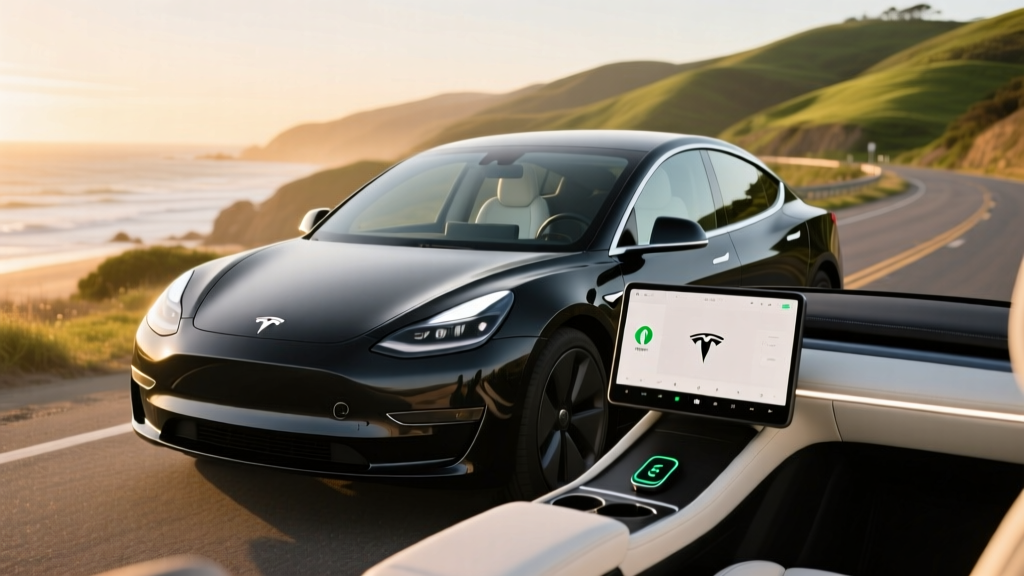
The minimalist interior centers on a 15.4-inch touchscreen that handles climate, navigation, media, and vehicle settings. Physical controls are limited to steering-wheel buttons and window switches. This design is polarizing — some owners love the simplicity, others miss physical knobs for volume and temperature — but it reduces the number of mechanical components that can fail, which is a reliability positive.
Tech, Autopilot, and Software
Every 2026 Model 3 comes with Tesla's Basic Autopilot, which includes Traffic-Aware Cruise Control and Autosteer (lane-centering). This is a SAE Level 2 driver-assistance system — meaning you must keep your hands on the wheel and eyes on the road at all times. It is not self-driving.
Tesla's Autopilot and available Full Self-Driving (Supervised) are SAE Level 2 systems. The driver is legally and practically responsible for the vehicle at all times. FSD (Supervised) adds features like automatic lane changes, traffic-light recognition, and city-street navigation, but it still requires active driver supervision. True driverless operation (SAE Level 4) is currently only available through robotaxi services like Waymo in select cities.
The optional Full Self-Driving (Supervised) package costs $8,000 (or $99/month) and adds Navigate on Autopilot, Auto Lane Change, Autopark, Summon, and Smart Summon. FSD's city-street capability has improved substantially, but it remains a supervised system with documented limitations in construction zones, heavy rain, and complex intersections.
On the software side, Tesla's over-the-air (OTA) update system is a reliability advantage: bugs, feature additions, and even efficiency improvements are pushed remotely without dealer visits. The infotainment system includes Netflix, YouTube, Spotify, and a built-in web browser for charging-stop entertainment.
Pricing, Tax Credits, and Total Cost of Ownership
The 2026 Tesla Model 3 Long Range AWD starts at $47,740 (including $1,390 destination fee). A typical well-equipped example with a premium color, 19-inch wheels, and FSD (Supervised) lands around $57,000–$59,000.
| Item | Amount |
|---|---|
| Base MSRP (AWD Long Range) | $47,740 |
| As-tested (w/ FSD, premium paint, 19" wheels) | ~$58,740 |
| Federal §30D Tax Credit (if eligible) | Up to $7,500 |
| Effective price after max credit | ~$40,240 (base) / ~$51,240 (as-tested) |
| Estimated 5-yr fuel savings vs. gas sedan (35 MPG) | ~$5,500–$7,000 |
Federal tax credit eligibility for the Model 3 Long Range depends on several IRS §30D requirements that change periodically. As of 2026, the key rules include:
- MSRP cap: Sedans must have an MSRP at or below $55,000 to qualify. The base Model 3 Long Range at $47,740 clears this; heavily optioned models may exceed it.
- Buyer income cap: Modified adjusted gross income must not exceed $150,000 (single), $225,000 (head of household), or $300,000 (joint filers).
- Battery sourcing: A percentage of critical minerals and battery components must be sourced from the U.S. or FTA partners. Tesla has worked to localize supply chains, but eligibility can shift based on annual IRS guidance. Always verify current-year rules at IRS.gov.
- Point-of-sale transfer: Eligible buyers can transfer the credit to the dealer at purchase, reducing the out-of-pocket price immediately rather than waiting for a tax refund.
For total cost of ownership, the Model 3 Long Range benefits from low electricity costs (~$0.13–$0.18/kWh national average for home charging), minimal maintenance (no oil changes, fewer brake replacements due to regenerative braking), and strong resale value. Insurance costs tend to run 15–25% higher than comparable gas sedans due to repair-cost data — budget accordingly.
Reliability Track Record: What the Data Shows
The Model 3's reliability reputation has improved dramatically since its turbulent 2018–2020 launch. Early build-quality issues — panel misalignment, paint defects, suspension squeaks, and phantom-braking incidents — have been largely resolved through manufacturing process changes at the Fremont and Shanghai factories.
Consumer Reports' most recent owner surveys rank the refreshed Model 3 (2024+) as one of the more reliable EVs in Tesla's lineup, and notably better than the Model Y and Model X. The simpler sedan architecture, fewer moving parts than an SUV, and mature Highland production line all contribute.
The battery and drive unit warranty provides strong peace of mind: 8 years or 120,000 miles (whichever comes first), with Tesla guaranteeing at least 70% capacity retention over that period. Real-world data from high-mileage Tesla owners suggests NMC packs in the Model 3 typically lose 8–12% capacity in the first 100,000 miles — well within the warranty threshold. A full battery replacement out of warranty currently costs approximately $12,000–$16,000, though this is rare before 150,000+ miles.
For the ultimate reliability play within Tesla's lineup, consider the Model 3 Rear-Wheel-Drive with its LFP battery. LFP chemistry offers a longer cycle life (2,000–3,000+ full cycles vs. ~1,000–1,500 for NMC) and can be charged to 100% daily. The trade-off is lower range (~272 miles EPA) and less cold-weather performance. If your commute is under 60 miles round-trip and you rarely road-trip, the RWD/LFP variant is arguably the most bulletproof Tesla you can buy.
Model 3 Long Range vs. Key Competitors
Is the Model 3 Long Range worth buying over its rivals? Here's how it compares on the metrics that matter:
| Spec | Tesla Model 3 LR AWD | BMW i4 eDrive40 | Hyundai Ioniq 6 SEL |
|---|---|---|---|
| EPA Range | 341 mi | 307 mi | 361 mi |
| Battery | 79 kWh NMC | 81.5 kWh NMC | 77.4 kWh NMC |
| 0–60 mph | 4.2 sec | 5.5 sec | 5.1 sec |
| Max DC Charge | 250 kW | 200 kW | 240 kW |
| Base MSRP | $47,740 | $57,900 | $42,750 |
| Charging Network | Tesla Supercharger | CCS (EA, etc.) | CCS (EA, etc.) |
| Battery Warranty | 8 yr / 120k mi | 8 yr / 100k mi | 10 yr / 100k mi |
The Model 3 Long Range wins on performance, charging infrastructure access (the Supercharger network remains the most reliable DC fast-charging network in the U.S.), and software integration. The Ioniq 6 beats it on range and price, and the BMW i4 on interior luxury — but neither matches Tesla's combination of efficiency, charging speed, and over-the-air improvement capability.
- 341-mile EPA range with excellent real-world efficiency
- Access to Tesla Supercharger network (most reliable DC charging)
- Class-leading software, OTA updates, and infotainment
- Highland refresh fixed ride quality and cabin noise issues
- Strong safety ratings (IIHS Top Safety Pick+, 5-star NHTSA)
- Low running costs and strong resale value
- Touchscreen-only controls frustrate some drivers
- Rear seat is tighter than Model Y or competitors
- FSD (Supervised) is expensive and still requires full attention
- Insurance costs 15–25% higher than gas equivalents
- NMC battery degrades faster than LFP in high-heat climates
- Options can push MSRP above $55K tax-credit cap
Who Should Buy the Model 3 Long Range?
- You want the best balance of range, performance, and charging access in Tesla's lineup
- You road-trip 2+ times per year and need reliable DC fast-charging infrastructure
- You value OTA software improvements and a mature tech ecosystem
- Your household has Level 2 home charging access (or can install it)
- You need maximum rear-seat space → look at the Model Y or Hyundai Ioniq 5
- Your budget is under $40K → the Model 3 RWD ($38,990) or a used Model 3 with the used-EV credit
- You want the absolute longest battery cycle life → the Model 3 RWD with LFP battery
- You prefer physical buttons and traditional luxury → BMW i4 or Polestar 2
Frequently Asked Questions
What is the real-world range of the 2026 Tesla Model 3 Long Range?
The EPA rates it at 341 miles combined. In real-world highway driving at 70–75 mph in moderate weather, expect 285–310 miles. City driving with regenerative braking can match or exceed the EPA estimate. In sub-freezing temperatures, plan for 240–280 miles unless you precondition the battery.
How fast does the Model 3 Long Range charge?
On a 250 kW Tesla Supercharger, it charges from 10–80% in approximately 27 minutes. At home on a 48-amp Level 2 charger (11.5 kW), a full charge takes about 8 hours, adding roughly 44 miles of range per hour.
Does the 2026 Model 3 Long Range qualify for the federal EV tax credit?
The base model at $47,740 is under the $55,000 MSRP cap for sedans, so it can qualify for up to $7,500 under IRS §30D — provided you meet the income limits ($150K single / $300K joint) and the battery-sourcing requirements are met for that model year. Always check IRS.gov for current eligibility before purchasing. The credit can be transferred at the point of sale to reduce your purchase price directly.
Is the Model 3 Long Range the most reliable Tesla?
Among Tesla's current lineup, the Model 3 Long Range (and the RWD variant with LFP) consistently ranks as the most reliable based on owner surveys, Consumer Reports data, and the maturity of the Highland production process. The Model Y has had more reported issues with suspension and build quality, while the Model S and Model X, as lower-volume vehicles, have more variable reliability records.
How long will the Model 3 battery last?
Tesla warrants the battery for 8 years or 120,000 miles with at least 70% capacity retention. Real-world data from high-mileage owners suggests NMC packs typically retain 88–92% capacity at 100,000 miles. Full replacement out of warranty costs approximately $12,000–$16,000 but is rarely needed before 150,000+ miles.
Is the Model 3 Long Range worth buying over the Model Y?
If you don't need SUV cargo space or a higher seating position, the Model 3 Long Range offers better range (341 vs. ~310 miles), better efficiency, a lower price, and generally stronger reliability ratings. The Model Y is the better choice for families needing easier car-seat installation and more cargo volume.