Quick Verdict: The $80K Tesla Question
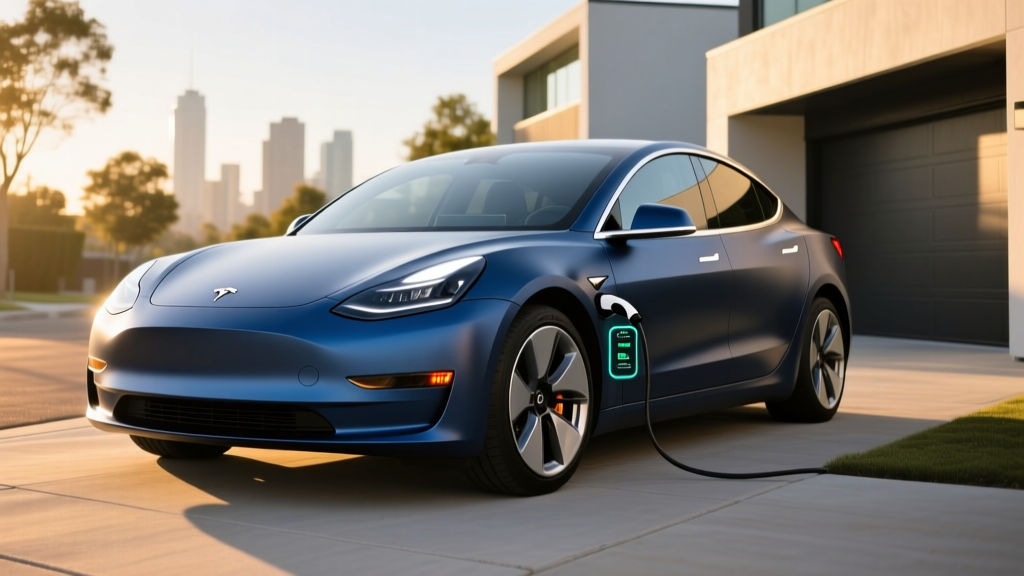
When buyers search for "Tesla 80K," they're usually asking one of two things: which Tesla configuration lands around $80,000, and whether that money is well spent. In 2026, the Tesla Model 3 Long Range AWD with Full Self-Driving (Supervised) plus premium add-ons sits squarely at that price point — roughly $54,990 base MSRP climbing to ~$80,000 after the FSD package, special paint, and wheels. This review examines whether that investment holds up against a rapidly maturing field of competitors.
The short answer: the Model 3 Long Range AWD remains one of the most efficient, best-charging, and tech-forward sedans on the market. But at $80K fully loaded, it faces credible pressure from luxury rivals offering more interior refinement, quieter cabins, and increasingly competitive range.
| Spec | Value |
|---|---|
| EPA Range | 341 miles |
| Battery (usable) | ~75 kWh, NMC chemistry |
| Drivetrain | Dual-motor AWD |
| Horsepower | 346 hp (combined) |
| 0–60 mph | 4.2 seconds |
| Peak DC Fast Charge | 250 kW (V3 Supercharger) |
| 10–80% DCFC Time | ~25 minutes |
| Level 2 Home Charge | 11.5 kW / ~44 mi/hr |
| Efficiency | 132 MPGe combined (25 kWh/100 mi) |
| Cargo Volume | 23 cu ft (trunk + frunk) |
| Base MSRP | $54,990 (before incentives) |
| Battery Warranty | 8 years / 120,000 miles |
Range & Efficiency: 341 Miles EPA, But What About Reality?
The EPA rates the 2026 Model 3 Long Range AWD at 341 miles on a full charge, placing it near the top of the electric-sedan segment. Tesla's efficiency advantage — just 25 kWh per 100 miles — is real and measurable, driven by low drag (Cd ~0.219), a heat pump for cabin and battery conditioning, and aggressive regenerative braking.
- Mild-weather city/combined: 320–340 mi (near EPA sticker)
- Highway (75 mph sustained): ~275–300 mi (aerodynamic drag penalizes EVs at speed)
- Cold weather (below 32°F): ~235–275 mi (battery resistance + cabin heating; heat pump helps but doesn't eliminate loss)
- Mountain/towing: Expect 30–40% reduction on steep grades
Bottom line: plan road trips around ~270 miles of usable range to keep a safety buffer.
Tesla's navigation system is a genuine strength here — it factors elevation, temperature, and driving history into arrival SoC predictions that are typically accurate within 2–3%. According to fueleconomy.gov, the Model 3 Long Range AWD achieves 132 MPGe combined, outperforming the BMW i4 eDrive40 (109 MPGe) and rivaling the Hyundai Ioniq 6 Long Range (140 MPGe).
Charging: 250 kW Peak, Supercharger Network Dominance
Charging speed remains a Tesla stronghold. The Model 3 Long Range supports up to 250 kW on Tesla V3 Superchargers, adding roughly 175 miles in 15 minutes under ideal conditions. The 10–80% charge takes approximately 25 minutes.
Understanding the charge curve is critical: peak 250 kW is only sustained between roughly 10–30% State of Charge (SoC). Above 50%, power tapers progressively — by 80% SoC, you're pulling closer to 60–70 kW. This is normal lithium-ion behavior, not a Tesla-specific flaw, but it means the last 20% takes almost as long as the first 60%.
| Level | Power | Speed | Typical Use |
|---|---|---|---|
| Level 1 (120V) | ~1.4 kW | ~5 mi/hr | Emergency / overnight trickle |
| Level 2 (240V, 48A) | 11.5 kW | ~44 mi/hr | Home daily charging (~7 hr empty→full) |
| DC Fast (V3 Supercharger) | 250 kW peak | ~175 mi in 15 min | Road trips, 10–80% in ~25 min |
| DC Fast (CCS adapter, non-Tesla) | Up to ~200 kW | Varies by station | Electrify America, EVgo networks |
Since 2024, Tesla has opened its Supercharger network to non-Tesla EVs via a built-in CCS adapter (included with the vehicle). This means Model 3 owners can also use Electrify America or EVgo stations when traveling in Supercharger-sparse corridors — a flexibility advantage over earlier Tesla-only years.
Preconditioning matters. If you navigate to a Supercharger, the car automatically warms or cools the battery en route, enabling peak charge rates on arrival. Without preconditioning (e.g., pulling into a random charger), peak power may be limited to 150–175 kW in cold weather.
Performance: 4.2-Second 0–60, Dual-Motor Precision
The dual-motor AWD powertrain delivers 346 combined horsepower and a 4.2-second 0–60 mph time. That's not Performance-trim territory (3.1 seconds), but it's genuinely quick for a daily commuter and sufficient for confident highway merging.
Regenerative braking in the Model 3 is aggressive enough for near-one-pedal driving in most conditions, though Tesla removed the user toggle for regen strength in recent years — you get one calibration, and it's firm. The low center of gravity (battery pack under the floor) produces flat cornering, and the steering, while artificially weighted, is precise.
Ride quality on the 2026 Highland refresh is noticeably improved over the pre-2024 Model 3. New damper tuning, acoustic glass, and additional sound deadening reduce road noise substantially. It's still not Lexus-quiet, but the gap to luxury competitors has narrowed meaningfully.
Interior, Tech & Driver Assistance
The minimalist interior centers on a 15.4-inch touchscreen controlling virtually every vehicle function — climate, mirrors, glovebox, and drive settings. An 8-inch rear passenger screen handles climate and media for back-seat riders. Material quality on the 2026 refresh includes ventilated front seats, ambient lighting, and a stitched dash, a clear step up from the spartan 2022 interior.
Cargo: 23 cubic feet total (trunk + frunk), competitive with the BMW i4 but trailing the Hyundai Ioniq 6's larger trunk. Rear legroom measures 35.3 inches — adequate for adults on shorter trips, tight for tall passengers on long hauls.
Autopilot & Full Self-Driving (Supervised)
Tesla Autopilot and FSD (Supervised) are Level 2 driver-assist systems, not self-driving. The driver must remain engaged, hands on the wheel (or torque-monitored), and eyes on the road at all times. Tesla's cabin camera monitors attention and issues escalating warnings. Only Level 4 services (Waymo, Zoox in geofenced areas) operate without a human driver.
Basic Autopilot (included) handles adaptive cruise and lane centering competently on highways. The $8,000 FSD (Supervised) upgrade adds traffic-light recognition, city-street autosteer, and automatic parking. As of 2026, FSD remains impressive in low-complexity suburban driving but requires frequent interventions in construction zones, unmapped areas, and adverse weather. The subscription option ($99/month) makes sense for occasional road-trippers who don't need FSD daily.
Pricing, Tax Credits & Total Cost
Here's how an ~$80K Model 3 build breaks down:
| Item | Cost |
|---|---|
| Base MSRP (Long Range AWD) | $54,990 |
| Ultra Red premium paint | $2,500 |
| 19" Nova wheels | $1,500 |
| Full Self-Driving (Supervised) | $8,000 |
| Destination / order fee | $1,800 |
| Estimated Total | ~$68,790 |
| Federal §30D Tax Credit (if eligible) | −$7,500 |
| Effective Price (post-credit) | ~$61,290 |
Reaching a true $80K out-the-door requires adding insurance, registration, and a home charger installation (~$1,000–$2,500 for a Level 2 Wall Connector setup). Buyers who skip FSD or choose no-cost paint land in the low $60Ks.
Federal Tax Credit Eligibility (§30D)
- MSRP cap: Sedans must be ≤$55,000. The Model 3 Long Range AWD at $54,990 base qualifies; adding options that push MSRP above $55K may disqualify the vehicle (confirm with your dealer and tax professional).
- Buyer income caps (MAGI): $150K single / $225K head of household / $300K joint filers.
- Battery sourcing: Critical minerals and battery components must meet phased-in percentage thresholds from US or FTA-partner countries. Tesla's US-built LFP and NMC packs have largely met 2026 thresholds, but always verify the specific VIN on the IRS eligible-vehicle list.
- Point-of-sale transfer: Since 2024, buyers can transfer the credit to the dealer at purchase, reducing the out-of-pocket price immediately rather than waiting for tax filing.
Consult IRS.gov §30D guidance and a tax professional before relying on credit eligibility. Rules are subject to legislative change.
Ownership Costs & Warranty
Tesla's battery and drive-unit warranty covers 8 years or 120,000 miles (whichever comes first), with a guaranteed minimum 70% capacity retention. Real-world data from Tesla's 2025 Impact Report indicates Model 3/Y packs retain approximately 85% capacity at 150,000 miles — well above the warranty floor.
Insurance is the hidden cost: Model 3 premiums average 20–35% higher than comparable gas sedans due to repair costs and parts pricing. Expect $1,800–$2,800/year depending on your ZIP code and driving record.
Five-year total cost of ownership (TCO) for a Model 3 Long Range — factoring electricity at $0.15/kWh, no oil changes, and lower maintenance — typically undercuts a BMW 330i by $8,000–$12,000, even with higher insurance. Compared to a Toyota Camry, the TCO gap narrows or reverses due to the Tesla's higher purchase price.
Pros, Cons & Who Should Buy
- Class-leading efficiency (132 MPGe, 25 kWh/100 mi)
- Supercharger network access — the most reliable DCFC ecosystem in North America
- Over-the-air updates continuously add features
- Strong real-world range (320+ mi in mild conditions)
- 250 kW peak charging with battery preconditioning
- Low center of gravity, sharp handling
- Touchscreen-dependent controls frustrate some drivers
- Rear-seat space is tighter than midsize competitors
- FSD ($8K) remains Level 2 — not a hands-off system
- Insurance premiums above segment average
- MSRP cap sensitivity: options can push past $55K threshold
- No Apple CarPlay / Android Auto
- You want maximum Supercharger convenience for road trips
- Efficiency and range-per-dollar are your top priorities
- You prefer OTA-updated tech over traditional luxury interiors
- You value physical buttons, premium materials, or Apple CarPlay
- You need more rear-seat room for adult passengers
- You want a more traditional dealership service experience
Frequently Asked Questions
What is the real-world range of the Tesla Model 3 Long Range AWD?
The EPA rates it at 341 miles. In mixed real-world driving at moderate temperatures, expect 310–330 miles. Highway-only at 75+ mph drops to ~275–300 miles. In freezing weather, plan for 235–275 miles depending on cabin-heat usage and whether you precondition.
How fast does the Model 3 Long Range charge at home and on the road?
On a Level 2 home charger (11.5 kW / 48A), you gain roughly 44 miles per hour — a full overnight charge from 20% to 100% takes about 7 hours. On a V3 Supercharger at 250 kW peak, 10–80% takes approximately 25 minutes, with the curve tapering significantly above 50% SoC.
Does the 2026 Model 3 qualify for the $7,500 federal tax credit?
The base Long Range AWD at $54,990 MSRP meets the sedan price cap. However, buyer income limits ($150K–$300K MAGI depending on filing status) and battery-sourcing rules apply. Adding high-cost options may push MSRP above the $55K threshold — verify with your dealer. Check the current fueleconomy.gov tax credit list for VIN-level eligibility.
Is the Model 3 Long Range worth buying over competitors in 2026?
For efficiency, charging network access, and tech, yes — it remains a segment benchmark. For interior luxury, rear-seat comfort, or traditional controls, the BMW i4 or Hyundai Ioniq 6 are strong alternatives. The Model 3 wins for road-trippers who value Supercharger reliability; the i4 wins for luxury-sedan buyers transitioning from a 3 Series.
How long will the Model 3 battery last, and what does replacement cost?
Tesla warranties the battery for 8 years / 120,000 miles at ≥70% capacity. Fleet data suggests most NMC packs retain ~85% at 150,000 miles. Out-of-warranty replacement is estimated at $12,000–$16,000 depending on pack size and labor — rare before 200,000 miles based on current degradation curves.
Is FSD (Supervised) worth $8,000?
For daily commuters on well-mapped routes, FSD reduces fatigue and handles most suburban scenarios. It is not self-driving — expect interventions every few miles in complex environments. The $99/month subscription is a lower-risk option to evaluate it before committing the full purchase price.
Sources: fueleconomy.gov (EPA range and MPGe data), Tesla.com Model 3 configurator (2026 pricing and specs), IRS.gov §30D guidance (tax credit rules). All specs reflect 2026 model year at time of publication; verify current pricing and credit eligibility before purchasing.