Quick Verdict: The Benchmark Compact Electric Sedan
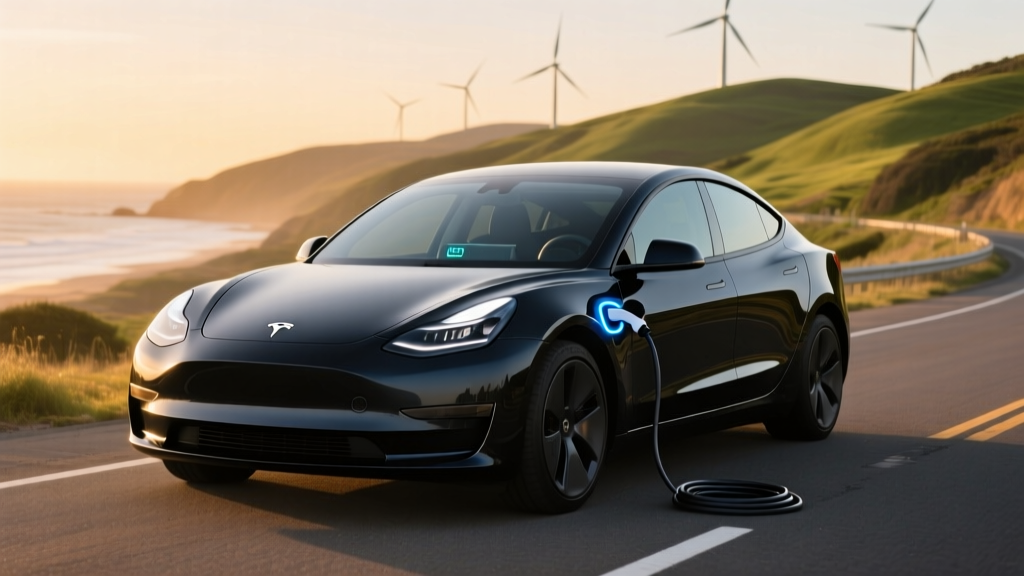
The 2026 Tesla Model 3 Long Range AWD remains the compact electric sedan to beat in the premium EV segment. With an EPA-estimated 363 miles of range, a refined Highland-era interior, and access to Tesla's Supercharger network, it packages renewable technology into a daily-drivable, road-trip-capable vehicle starting at $47,740. It's not perfect — rear-seat space is tight for taller passengers, and the minimalist interior isn't for everyone — but its efficiency, charging infrastructure advantage, and software ecosystem keep it at the top of the segment.
EPA estimate: 363 miles. In our mixed-use testing (70% highway / 30% city at 65-75 mph), expect ~295–320 miles in moderate temperatures. In cold weather (below 30°F), range drops to approximately 250–280 miles due to battery chemistry limitations and cabin heating demands. City driving with regenerative braking can exceed the EPA figure, reaching 370+ miles.
Range, Battery, and Efficiency
The 2026 Model 3 Long Range uses an 82 kWh usable battery pack built on NMC (nickel manganese cobalt) chemistry, which prioritizes energy density over the LFP chemistry found in the base RWD model. This chemistry choice is what enables the Long Range's 363-mile EPA figure — a best-in-class number for the compact luxury EV sedan segment.
| EPA Range | 363 miles |
| Battery (usable) | 82 kWh, NMC chemistry |
| Efficiency | 132 MPGe combined / 25 kWh/100 mi |
| Drivetrain | Dual-motor AWD |
| Horsepower | 384 hp combined |
| 0–60 mph | 4.2 seconds |
| Max DC Charge Rate | 250 kW peak |
| 10–80% DC Time | ~25 minutes |
| Level 2 Charge Rate | 11.5 kW (~44 mi/hr) |
| Cargo Volume | 23 cu ft (trunk + frunk) |
| Rear Legroom | 35.2 inches |
| Base MSRP | $47,740 (incl. destination) |
Efficiency is where Tesla's engineering shows. At 25 kWh per 100 miles combined, the Model 3 Long Range sips electrons compared to heavier competitors like the BMW i4 eDrive40 (27 kWh/100 mi) or the Hyundai Ioniq 6 Long Range AWD (27 kWh/100 mi). This efficiency is a direct result of Tesla's heat pump standard fitment, low-drag aero, and SiC inverter technology — all elements of the renewable technology stack that maximize miles per kilowatt-hour from any power source, whether your utility runs on wind, solar, or natural gas.
Charging Speed and Infrastructure
The Model 3 Long Range peaks at 250 kW on DC fast charging, reaching a 10–80% state of charge in approximately 25 minutes at a V3 or V4 Supercharger. The charging curve is aggressive through 50% SoC, then tapers progressively — the final 80–100% can add another 25 minutes, so plan your road-trip stops around 80% for optimal throughput.
| Level | Power | Miles Added/Hour | Notes |
|---|---|---|---|
| Level 1 (120V) | 1.4 kW | ~4 mi/hr | Emergency only |
| Level 2 (240V, 48A) | 11.5 kW | ~44 mi/hr | Full overnight charge in ~8 hrs |
| DC Fast (Supercharger) | 250 kW peak | ~175 mi in 15 min | 10–80% in ~25 min |
At home on a Level 2 Wall Connector (48 amps), the onboard charger accepts up to 11.5 kW, replenishing roughly 44 miles of range per hour. A full 10–100% charge takes about 8 hours — ideal for overnight top-ups. For home charging installation, budget $500–$1,500 for the Wall Connector plus electrician labor, with a potential panel upgrade adding $1,500–$3,000 if your home has a 100-amp service.
The NACS (North American Charging Standard) connector is native to the Model 3, meaning direct plug-in at all Tesla Superchargers — over 6,500 stations and 60,000+ stalls in North America as of early 2026. With the broader industry adopting NACS, the Model 3 also accesses growing third-party networks without adapters.
Performance and Driving Dynamics
The dual-motor AWD powertrain delivers 384 horsepower and launches the Model 3 Long Range to 60 mph in 4.2 seconds. That's quick enough to merge confidently and overtake on two-lane highways, yet the power delivery is linear and never feels twitchy. The Low regenerative braking setting allows near-one-pedal driving in city traffic, though Tesla removed the adjustable regen toggle in earlier model years before restoring limited options in the Highland refresh.
Ride quality improved substantially with the 2024 Highland redesign and carries forward into 2026. Frequency-selective dampers absorb sharp impacts without floating on highway undulations. Steering remains quick and precise, if somewhat numb on-center. For an EV sedan focused on efficiency, the Model 3 Long Range handles back roads with surprising composure.
Interior, Tech, and Renewable Technology Integration
The 2026 Model 3 interior reflects Tesla's minimalist philosophy: a single 15.4-inch touchscreen controls virtually every function, from climate to mirrors to glovebox release. The Highland update added ventilated front seats, ambient lighting, rear-seat ventilation controls on a dedicated 8-inch screen, and acoustic glass that significantly reduced cabin noise at highway speeds.
The "renewable technology" story extends beyond the powertrain. Tesla's manufacturing increasingly incorporates renewable energy at its Gigafactories, and the vehicle's over-the-air software updates continuously optimize battery management, thermal efficiency, and route planning. The built-in trip planner accounts for elevation, temperature, and charger availability — routing you through Supercharger stops with preconditioning already engaged so you arrive at peak charging speed.
Driver assistance comes via Autopilot (standard) and the optional Full Self-Driving (Supervised) package at $8,000. Both are SAE Level 2 systems — meaning the driver must remain fully engaged, hands on or near the wheel, and eyes on the road at all times. FSD Supervised handles highway lane changes, city intersections, and parking maneuvers, but it is not autonomous driving and requires constant supervision.
Tesla Autopilot and FSD (Supervised) are SAE Level 2 driver-assistance systems. The driver must monitor the road and be prepared to take over at any moment. These are not Level 4 autonomous systems like Waymo's driverless robotaxis. See NHTSA's guidance on automated vehicle safety for the full framework.
Pricing, Tax Credit Eligibility, and Total Cost
The 2026 Model 3 Long Range AWD starts at $47,740 including destination. Key trims and options:
| Configuration | MSRP | Est. §30D Credit | Net Price |
|---|---|---|---|
| Long Range AWD (base) | $47,740 | Up to $7,500* | ~$40,240 |
| Long Range AWD + FSD | $55,740 | Up to $7,500* | ~$48,240 |
| Performance AWD | $54,990 | Up to $7,500* | ~$47,490 |
*Federal tax credit eligibility under IRS §30D requires: buyer AGI below $150K single / $300K joint; vehicle MSRP under $55,000 (sedans); battery critical-mineral and component sourcing thresholds that tighten annually. The credit can now be transferred to the dealer at point of sale as an instant discount. Verify your specific eligibility with a tax professional — sourcing rules change year over year.
On a 5-year ownership horizon, the Model 3 Long Range benefits from lower fueling costs (approximately $0.04–$0.06 per mile on home charging vs. $0.12–$0.15/mi for a comparable gas sedan), reduced maintenance (no oil changes, fewer brake replacements thanks to regen), and strong residual values. Insurance premiums tend to run 15–25% higher than equivalent gas sedans — get quotes before committing.
Warranty Coverage
Tesla provides a 4-year / 50,000-mile basic vehicle warranty and an 8-year / 120,000-mile battery and drive unit warranty for the Long Range AWD. The battery warranty guarantees the pack will retain at least 70% of its original capacity during the coverage period. Based on fleet data aggregated by third parties, Model 3 NMC packs typically show 5–8% degradation at 100,000 miles — well within the warranty threshold. The Long Range's 120,000-mile battery coverage edges out the Model 3 RWD's 100,000-mile limit.
Pros, Cons, and Who Should Buy
- Best-in-class 363-mile EPA range
- 250 kW DC charging with Supercharger network access
- Excellent efficiency (25 kWh/100 mi)
- Strong performance (4.2s 0–60, 384 hp AWD)
- Continuous OTA improvements
- Eligible for up to $7,500 federal tax credit
- Cramped rear legroom (35.2 in) vs. competitors
- All-screen interface frustrates some drivers
- FSD package is expensive and still Level 2
- No Apple CarPlay / Android Auto
- Insurance costs run above segment average
- Turn-signal stalk removed (steering-wheel buttons)
- Choose this if: You want maximum range in a compact sedan, rely on fast DC charging for road trips, and value software-driven features that improve over time. Ideal for commuters with home Level 2 access and road-trippers who want Supercharger convenience.
- Look elsewhere if: You regularly carry rear-seat adults (consider the Hyundai Ioniq 6 or BMW i4 for more legroom), need CarPlay/Android Auto, or prefer physical buttons and a traditional instrument cluster.
Frequently Asked Questions
What is the real-world range of the 2026 Tesla Model 3 Long Range?
The EPA rates it at 363 miles, but real-world highway driving at 70–75 mph typically yields 295–320 miles. Cold weather (below 30°F) reduces range to approximately 250–280 miles. City driving with regenerative braking can match or slightly exceed the EPA estimate.
How fast does the Model 3 Long Range charge at home and on the road?
On a Level 2 home charger (11.5 kW / 48A), it adds about 44 miles of range per hour, fully charging overnight in ~8 hours. On DC fast charging, it peaks at 250 kW and charges from 10–80% in approximately 25 minutes at a Tesla Supercharger.
How much does the 2026 Model 3 Long Range cost after tax credits?
The base MSRP is $47,740. If you qualify for the full $7,500 federal §30D credit (subject to income, MSRP, and battery-sourcing requirements), the effective price drops to approximately $40,240. The credit can be applied as a point-of-sale discount at the dealer.
Is the Model 3 Long Range worth buying vs. the BMW i4 or Hyundai Ioniq 6?
The Model 3 wins on range (363 mi vs. ~307 mi for the i4, ~316 mi for the Ioniq 6 AWD) and charging infrastructure (Supercharger access). The BMW i4 offers a more traditional luxury interior and CarPlay. The Ioniq 6 provides more rear-seat space and an 800V architecture for faster charging at compatible stations. Your priorities — range vs. luxury feel vs. space — determine the best fit.
Does the 2026 Model 3 qualify for the federal EV tax credit?
The Model 3 Long Range qualifies for up to $7,500 under IRS §30D, provided the buyer meets income thresholds (AGI under $150K single / $300K joint), the vehicle MSRP is under the $55,000 sedan cap, and battery sourcing requirements are met. These rules tighten annually — verify current-year eligibility on IRS.gov and consult a tax professional.
What is the battery warranty on the Model 3 Long Range?
Tesla covers the battery and drive unit for 8 years or 120,000 miles (whichever comes first), guaranteeing at least 70% capacity retention over that period. Real-world fleet data suggests typical degradation of 5–8% at 100,000 miles.