Quick Verdict: The Benchmark Lithium-Ion EV Sedan
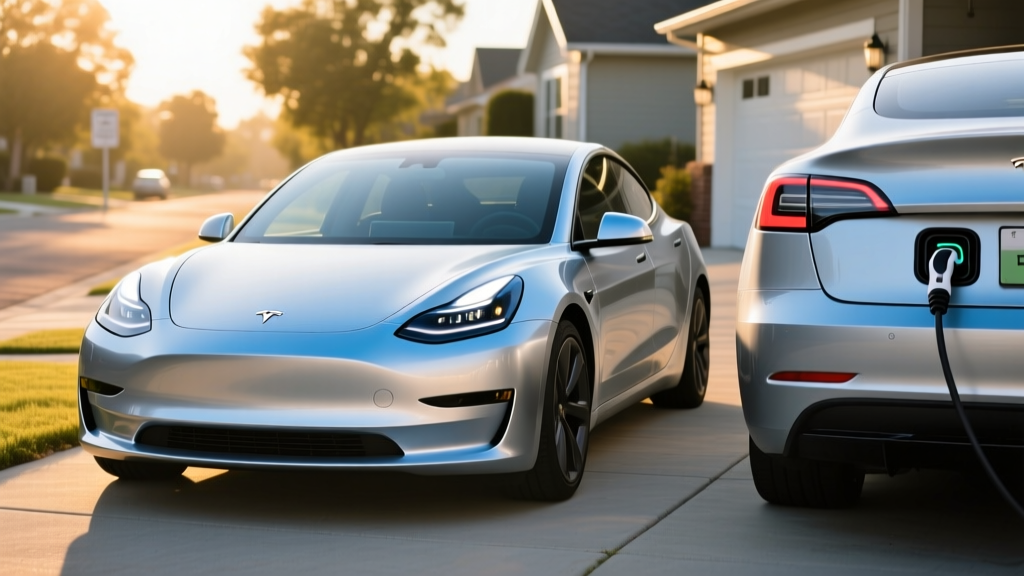
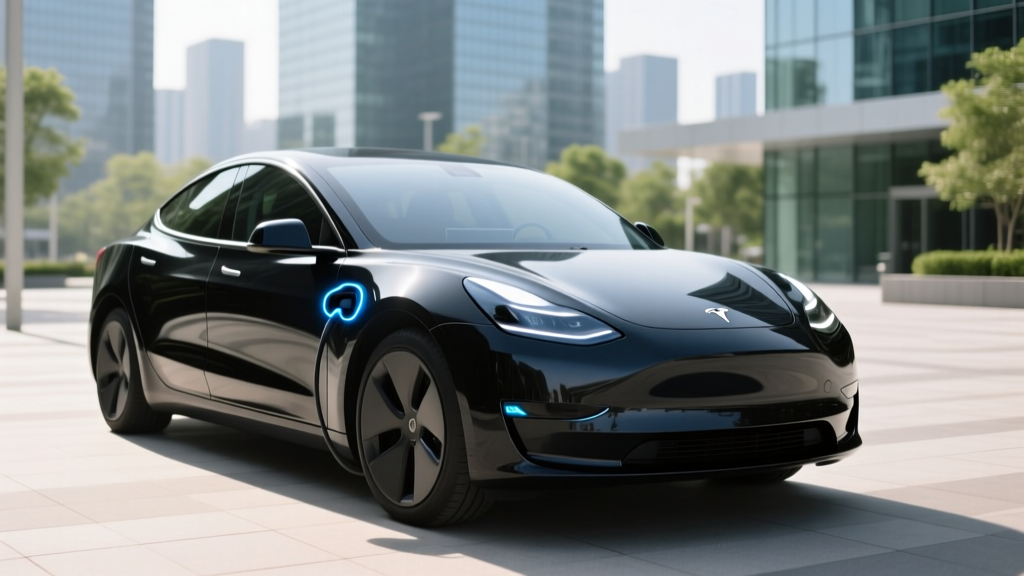
The 2026 Tesla Model 3 remains the best-selling premium electric sedan in the U.S. for a reason: it pairs a mature lithium-ion battery platform with the most extensive DC fast-charging network available to any single-brand buyer. Whether you choose the rear-wheel-drive Standard Range trim with its iron-based LFP pack or the dual-motor Long Range AWD with NMC chemistry, the Model 3 delivers class-leading efficiency, strong software integration, and real-world road-trip practicality. For 2026, Tesla has refined the "Highland" refresh introduced in late 2023 with updated suspension tuning, ventilated front seats, and a rear touchscreen for passengers — but the core li-ion Tesla powertrain formula is unchanged because it didn't need fixing.
This review covers every spec a buyer needs: EPA range versus real-world expectations, battery chemistry trade-offs, charging speeds at home and on the road, pricing after the federal §30D tax credit, and how the Model 3 stacks up against the Hyundai Ioniq 6, BMW i4, and Polestar 2.
2026 Tesla Model 3 Specifications at a Glance
| Spec | Standard Range (RWD) | Long Range (AWD) | Performance (AWD) |
|---|---|---|---|
| EPA Range | 272 mi | 341 mi | 315 mi |
| Battery (usable) | ~60 kWh | ~79 kWh | ~79 kWh |
| Chemistry | LFP (lithium iron phosphate) | NMC (nickel manganese cobalt) | NMC |
| Drivetrain | Rear-Wheel Drive | Dual-Motor AWD | Dual-Motor AWD |
| Horsepower | 271 hp | 346 hp | 510 hp |
| 0-60 mph | 5.8 sec | 4.2 sec | 2.9 sec |
| MPGe (combined) | 142 MPGe | 132 MPGe | 121 MPGe |
| kWh / 100 mi | 24 | 25 | 28 |
| Max DC Fast Charge | 170 kW | 250 kW | 250 kW |
| 10-80% DC Time | ~25 min | ~22 min | ~22 min |
| Level 2 Home Rate | 11.5 kW (~44 mi/hr) | 11.5 kW (~44 mi/hr) | 11.5 kW (~44 mi/hr) |
| Base MSRP | $38,990 | $47,740 | $54,990 |
| Battery Warranty | 8 yr / 100,000 mi | 8 yr / 120,000 mi | 8 yr / 120,000 mi |
Source: EPA / fueleconomy.gov and Tesla spec sheets. Prices reflect 2026 model year MSRP before destination fee ($1,390).
Battery Chemistry: LFP vs. NMC in the Tesla Model 3
Not all lithium-ion batteries are created equal. Tesla uses two distinct li-ion chemistries across the Model 3 lineup, and the choice affects your daily charging habits, long-term degradation expectations, and cold-weather performance.
| Attribute | LFP (Standard Range) | NMC (Long Range / Performance) |
|---|---|---|
| Energy Density | Lower — heavier pack for same kWh | Higher — more range in similar weight |
| Daily Charging | Can charge to 100% daily (Tesla recommends it) | Best kept at 80% daily; 100% for trips only |
| Cold-Weather Range Loss | Greater — expect 25-35% reduction below 32°F | Moderate — expect 15-25% reduction below 32°F |
| Cycle Life / Longevity | Higher — 3,000+ full cycles typical | Moderate — 1,500-2,000 full cycles typical |
| Cobalt Content | Zero cobalt | Contains cobalt |
| Cost to Replace (out of warranty) | ~$8,000-$10,000 (est.) | ~$12,000-$16,000 (est.) |
Bottom line: If you charge at home every night and want a commuter car you can set to 100% without worrying, the LFP Standard Range is ideal. If you need maximum range for road trips or live in a cold climate, the NMC Long Range is the better pick despite the 80% daily charge recommendation.
Real-World Range: What the EPA Sticker Doesn't Tell You
Standard Range RWD: EPA 272 mi — expect ~220-240 mi on highway trips at 75 mph; ~180-200 mi in sub-32°F winter conditions.
Long Range AWD: EPA 341 mi — expect ~280-300 mi highway; ~240-270 mi in freezing weather.
Performance AWD: EPA 315 mi — expect ~250-275 mi highway; ~210-240 mi in freezing weather.
Highway driving at sustained 75+ mph, headwinds, and elevation changes all reduce range further. Tesla's heat pump (standard on all trims) mitigates cold-weather cabin-heating losses but cannot eliminate them.
The Model 3 Long Range's 341-mile EPA figure is among the highest of any non-luxury sedan, and Tesla's drivetrain efficiency is genuinely best-in-class. On a 70°F day at 65 mph on flat terrain, some owners report exceeding the EPA number. But real-world highway travel at 75-80 mph consistently knocks 10-15% off the sticker, and winter driving in northern states can cut range by a quarter or more. This is physics, not a Tesla-specific flaw — all EVs experience it — but buyers in Minnesota or Maine should plan accordingly.
For a 300-mile road trip in the Long Range, you'll likely arrive with 40-60 miles of buffer in summer, but may need one 10-minute Supercharger stop in winter.
Charging Speed: DC Fast Charge and Home Level 2
| Charging Level | Power | Speed | Notes |
|---|---|---|---|
| Level 1 (120V outlet) | ~1.4 kW | ~3-5 mi/hr | Emergency/trickle only; full charge in 3-4 days |
| Level 2 (240V home) | 11.5 kW | ~44 mi/hr | Full charge overnight (~7-9 hrs); requires 60A circuit |
| DC Fast (V4 Supercharger) | Up to 250 kW (LR/Perf) Up to 170 kW (Std) | 10-80% in ~22-25 min | Peak rate sustained to ~50% SoC, then tapers |
| CCS Adapter (non-Tesla DCFC) | Up to 150 kW typical | 10-80% in ~28-32 min | Requires Tesla CCS adapter (included with new vehicles) |
Charging-curve reality check: The 250 kW peak on Long Range and Performance trims is a ceiling, not a sustained rate. In practice, the Model 3 holds above 200 kW from roughly 10-45% state of charge, then tapers to ~100 kW by 65% and ~50 kW by 80%. The 10-80% time of approximately 22 minutes assumes you arrive at the charger with a preconditioned battery (the car does this automatically when a Supercharger is set as your navigation destination).
At home on a Level 2 Wall Connector, 11.5 kW adds about 44 miles of range per hour of charging. A typical overnight session of 8 hours replenishes roughly 350 miles — more than enough for any daily commute and sufficient to fully recharge even the Long Range pack. Note: A 60-amp dedicated circuit is required for full 11.5 kW output. Many older homes need a panel upgrade ($1,500-$3,000) to support this — consult a licensed electrician before purchasing equipment.
Pricing, Trims, and Federal Tax Credit Eligibility
| Trim | Base MSRP | + Destination | Est. §30D Credit | Effective Price |
|---|---|---|---|---|
| Standard Range RWD | $38,990 | $40,380 | $7,500 (if eligible) | ~$32,880 |
| Long Range AWD | $47,740 | $49,130 | $7,500 (if eligible) | ~$41,630 |
| Performance AWD | $54,990 | $56,380 | $3,750-$7,500* | ~$48,880-$52,630 |
*Performance trim credit depends on critical-mineral and battery-component sourcing compliance, which can shift mid-year. Always verify current eligibility.
- MSRP Cap: Sedans must be ≤$55,000 MSRP. Standard Range and Long Range qualify; Performance is right at the edge — confirm the exact MSRP including mandatory options.
- Buyer Income Cap: Modified AGI ≤$150,000 (single), ≤$225,000 (head of household), ≤$300,000 (joint).
- Battery Sourcing: Critical minerals and battery components must meet escalating domestic-content thresholds. Tesla's U.S.-built packs have generally met requirements, but rules tighten annually. Verify on fueleconomy.gov before purchasing.
- Point-of-Sale Transfer: As of 2024, you can transfer the credit to the dealer at purchase, reducing your out-of-pocket cost immediately rather than waiting for tax filing.
- Tax Liability: The credit is non-refundable — you must owe at least $7,500 in federal tax to capture the full amount (unless transferred at point of sale).
Source: IRS.gov — Clean Vehicle Credits
Interior, Tech, and Daily Livability
The Model 3 cabin is minimalist by design — some say starkly so. A single 15.4-inch center touchscreen handles navigation, climate, media, and vehicle settings. For 2026, a rear 8-inch touchscreen gives back-seat passengers control over climate and entertainment, addressing a common complaint from the pre-Highland era.
Cargo and passenger space:
- Trunk: 23 cu ft (including rear frunk of ~3 cu ft)
- Front legroom: 42.7 in
- Rear legroom: 35.2 in — adequate for adults under 6 feet, tight for taller passengers on long trips
- Ground clearance: 5.5 in — watch steep driveways and speed bumps
Tech highlights:
- Tesla Autopilot (SAE Level 2): Adaptive cruise + lane centering, standard on all trims
- Full Self-Driving Supervised ($8,000 option): City-street navigation, traffic-light recognition, automatic lane changes — still requires driver attention at all times
- Over-the-air updates that add features post-purchase
- Sentry Mode dashcam recording, Dog Mode cabin climate for pets
- Phone-as-key with Bluetooth proximity unlock
Tesla Autopilot and FSD (Supervised) are SAE Level 2 driver-assistance systems. They do NOT make the Model 3 self-driving. You must keep your hands on the wheel and eyes on the road at all times. The system can miss construction zones, emergency vehicles, and unusual road geometry. Full Self-Driving remains a supervised beta — treat it as an advanced cruise control, not a chauffeur.
Notable drawbacks:
- No physical turn-signal stalk (steering-wheel buttons instead — divisive among owners)
- No Apple CarPlay or Android Auto — Tesla's native infotainment only
- Rear visibility is limited; rely on the backup camera
- Service center wait times can stretch weeks in rural areas
- Insurance premiums run 15-30% higher than comparable gas sedans in most states
Pros, Cons, and Who Should Buy
- Best-in-class efficiency (24-28 kWh/100 mi)
- Access to Tesla Supercharger network — 6,000+ U.S. stalls
- LFP option allows daily 100% charging without degradation anxiety
- Over-the-air updates continuously improve the car
- Strong resale value relative to EV segment average
- Excellent safety ratings (IIHS Top Safety Pick+)
- Minimalist interior not for everyone — no physical buttons or gauges
- No CarPlay/Android Auto
- Rear seat is tighter than Hyundai Ioniq 6 or BMW i4 Gran Coupe
- FSD subscription cost is steep for a Level 2 system
- Panel-gap quality still inconsistent on some deliveries
- Ride firmness on 19-inch sport wheels
Who this EV suits best:
- Daily commuters (20-80 miles round trip) who can charge at home — the Standard Range RWD at ~$33K after credits is one of the best value propositions in the entire car market, electric or gas.
- Road-trip enthusiasts who want reliable fast-charging infrastructure — Tesla's Supercharger network remains the most dependable DC fast-charging ecosystem in North America.
- Tech-forward buyers who want OTA updates, app-based climate preconditioning, and integrated navigation with real-time charger routing.
Who should look elsewhere: Buyers who prioritize rear-seat comfort (consider the Ioniq 6), physical controls (BMW i4), or who lack home charging access and live far from Superchargers.
How the Tesla Model 3 Compares to Key Rivals
| Attribute | Tesla Model 3 LR AWD | Hyundai Ioniq 6 SEL AWD | BMW i4 xDrive40 | Polestar 2 LR Dual Motor |
|---|---|---|---|---|
| EPA Range | 341 mi | 316 mi | 282 mi | 276 mi |
| 0-60 mph | 4.2 sec | 5.1 sec | 4.7 sec | 4.3 sec |
| Max DC Charge | 250 kW | 240 kW | 205 kW | 205 kW |
| MPGe (combined) | 132 | 125 | 109 | 107 |
| MSRP (AWD) | $47,740 | $46,500 | $57,900 | $54,300 |
| Charging Network | Supercharger (native) | NACS adapter needed* | NACS adapter needed* | NACS adapter needed* |
*As of 2025-2026, most non-Tesla EVs can access Superchargers via NACS adapter, but adapter availability and station compatibility vary by location.
The Model 3 Long Range wins on efficiency, range, and charging-network access. The Ioniq 6 offers a more comfortable rear seat and physical controls. The BMW i4 delivers a more traditional luxury interior but at a $10K premium with less range. The Polestar 2 is stylish but trails on range and efficiency.
Frequently Asked Questions
What is the real-world range of the Tesla Model 3?
The EPA rates the Long Range AWD at 341 miles, but expect 280-300 miles on a highway road trip at 75 mph and 240-270 miles in freezing temperatures. The Standard Range RWD delivers roughly 220-240 highway miles in fair weather. These are real-world figures based on sustained highway driving; city and suburban driving with regenerative braking can match or slightly exceed the EPA sticker.
How fast does the Model 3 charge at home and on the road?
On DC fast charging, the Long Range and Performance trims peak at 250 kW, achieving a 10-80% charge in approximately 22 minutes at a V3 or V4 Supercharger. The Standard Range peaks at 170 kW with a 10-80% time of about 25 minutes. At home on Level 2 (240V, 60A circuit), all trims charge at 11.5 kW, adding roughly 44 miles of range per hour — a full overnight charge covers any daily driving need.
How much does the Tesla Model 3 cost after the federal tax credit?
The Standard Range RWD starts at $40,380 including destination. With the full $7,500 §30D credit applied at point of sale, the effective price drops to approximately $32,880. The Long Range AWD comes in around $41,630 after credit. Eligibility depends on your income (≤$150K single / ≤$300K joint), the vehicle's MSRP being under the $55K sedan cap, and current battery-sourcing compliance. Always verify on the IRS clean vehicle credits page before committing.
Is the Tesla Model 3 worth buying versus competitors in 2026?
For buyers who prioritize range, efficiency, and charging infrastructure, yes — the Model 3 Long Range is still the segment benchmark. Its 341-mile EPA range, 132 MPGe combined, and Supercharger access are unmatched at this price. However, if you want a more traditional interior with physical controls, a roomier back seat, or Apple CarPlay, the Hyundai Ioniq 6 or BMW i4 may suit you better. Test-drive both before deciding.
Does the Tesla Model 3 qualify for the $7,500 federal EV tax credit?
The Standard Range and Long Range trims qualify for the full $7,500 under current IRS §30D rules, assuming you meet the income caps and the vehicle's battery sourcing meets the critical-mineral and component thresholds (which Tesla's U.S.-assembled packs have generally satisfied). The Performance trim may qualify for a partial $3,750 credit depending on sourcing compliance at time of delivery. Rules can change — check fueleconomy.gov for the latest status before purchasing.
How long will the Tesla Model 3 battery last?
Tesla warrants the battery for 8 years / 100,000 miles (Standard Range) or 8 years / 120,000 miles (Long Range / Performance), guaranteeing at least 70% capacity retention. Real-world data from high-mileage owners suggests NMC packs retain roughly 85-90% capacity at 100,000 miles, while LFP packs show even less degradation due to their superior cycle life. Out-of-warranty replacement costs range from approximately $8,000 (LFP) to $16,000 (NMC), though full replacements are rare.