Quick Verdict: Is a Tesla Model 3 Leasing Deal Smart in 2026?
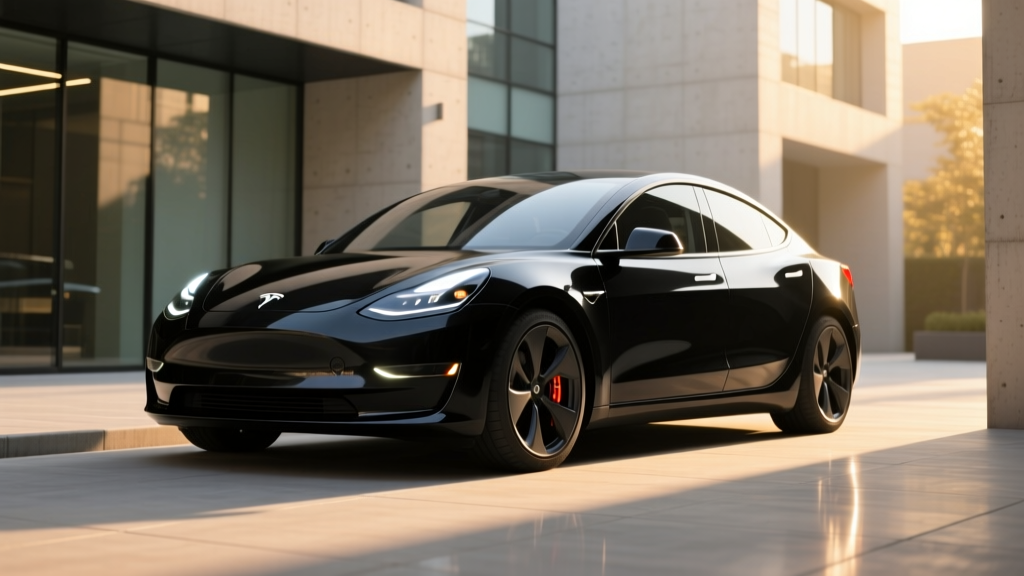
Tesla's Model 3 remains the benchmark compact electric sedan, and for 2026, leasing it can be a strategic move for drivers who want access to the Supercharger network, over-the-air improvements, and the latest battery chemistry without long-term depreciation risk. A competitive Tesla leasing deal on the Model 3 Long Range AWD puts you in a car with an EPA-estimated 363 miles of range, 250 kW peak DC fast charging, and a refined interior that has improved markedly since the "Highland" refresh.
But leasing an EV comes with unique considerations — most notably, whether the federal §30D tax credit can be applied to a lease (spoiler: it can, through the lessor, and it typically reduces your monthly payment). Below, we dissect the numbers, the real-world driving experience, and how the Model 3 stacks up against rivals like the Hyundai Ioniq 6 and BMW i4.
2026 Tesla Model 3 at a Glance: Key Specs
| Specification | Model 3 RWD | Model 3 Long Range AWD | Model 3 Performance |
|---|---|---|---|
| EPA Range | 346 mi | 363 mi | 315 mi |
| Battery Capacity (usable) | ~60 kWh (LFP) | ~79 kWh (NMC) | ~79 kWh (NMC) |
| Peak DC Fast Charge | 170 kW | 250 kW | 250 kW |
| 10–80% DC Charge Time | ~25 min | ~18 min | ~18 min |
| Level 2 Home Charging | 11.5 kW (~44 mi/hr) | 11.5 kW (~44 mi/hr) | 11.5 kW (~44 mi/hr) |
| 0–60 mph | 5.8 sec | 4.2 sec | 2.9 sec |
| Horsepower | 271 hp | 346 hp | 510 hp |
| Drivetrain | RWD (single motor) | AWD (dual motor) | AWD (dual motor) |
| MPGe (combined) | 132 MPGe | 130 MPGe | 115 MPGe |
| Efficiency (kWh/100 mi) | 25 kWh | 26 kWh | 29 kWh |
| Base MSRP | $38,990 | $45,990 | $53,990 |
| Battery Warranty | 8 yr / 100,000 mi | 8 yr / 120,000 mi | 8 yr / 120,000 mi |
Source: fueleconomy.gov, Tesla.com (2026 model year). Specs subject to mid-year updates.
Real-World Range: What the EPA Number Doesn't Tell You
Real-World Expectation: ~300–320 mi highway driving at 70–75 mph; ~260–290 mi in freezing temperatures (below 32°F); ~340+ mi in mixed city/suburban driving with regenerative braking engaged.
The Model 3 Long Range's 363-mile EPA figure is among the best in its class, but real-world range depends heavily on driving conditions. In our experience and consistent with independent testing, highway driving at sustained speeds of 70–75 mph reduces range by roughly 12–18% compared to the EPA combined estimate. Cold weather is the bigger penalty: lithium-ion batteries lose efficiency in freezing temperatures, and cabin heating (even with the Model 3's heat pump) draws significant energy. Expect a 20–28% range reduction in sub-freezing conditions.
The RWD model's LFP (lithium iron phosphate) battery has a different real-world profile. LFP chemistry is less energy-dense, which is why the 60 kWh pack yields 346 miles — still impressive, but LFP's advantage is longevity and the ability to charge routinely to 100% without degradation concerns. For daily commuters who charge at home nightly, the RWD model's smaller battery is often more than sufficient and costs less to charge.
Charging Speed: DC Fast Charging and Home Setup
Charging speed is where Tesla continues to lead much of the competition, thanks to both its vehicle architecture and the Supercharger network's reliability. Here's what to expect across charging levels:
| Charging Level | Power / Rate | Miles Added per Hour | Notes |
|---|---|---|---|
| Level 1 (120V household) | ~1.4 kW | ~5 mi/hr | Emergency/trickle only |
| Level 2 (240V home) | 11.5 kW | ~44 mi/hr | Full charge overnight (~8–9 hrs for LR) |
| DC Fast Charge (V3 Supercharger) | 250 kW peak (LR/Perf) | ~1,000 mi/hr at peak | 10–80% in ~18 min; tapers sharply above 80% |
| DC Fast Charge (V4 Supercharger) | Up to 350 kW (future-capable) | Higher sustained rates | Currently limited by vehicle-side charge rate |
Charge curve reality check: The 250 kW peak on Long Range and Performance trims is not sustained across the entire session. The battery accepts peak power roughly between 10–45% State of Charge (SoC), then tapers progressively. A typical 10–80% session takes about 18 minutes at a V3 Supercharger, but if you arrive at a low SoC (5%) and charge to 90%, expect closer to 30–35 minutes due to the steep taper above 80%. This is physics — all EVs do it, but Tesla's thermal preconditioning (navigating to a Supercharger in the nav system triggers battery preheating) helps you hit peak rates faster.
Home charging: Installing a Tesla Wall Connector on a 60-amp circuit delivers the full 11.5 kW (48 amps continuous). Budget $500–$1,500 for installation depending on panel proximity and whether your electrical panel needs an upgrade. Most Model 3 owners wake up to a full battery every morning, making public charging a road-trip-only affair.
Lease Pricing, Tax Credits, and Total Monthly Cost
The economics of a Tesla leasing deal hinge on three factors: the negotiated lease terms (money factor, residual value, mileage allowance), the federal tax credit's applicability, and your state's incentive landscape.
How the §30D Tax Credit Works with a Lease
Under current IRS rules, the §30D Clean Vehicle Credit is technically available to the lessor (the financing entity), not the lessee. However, most major lessors — including Tesla's own leasing partners — pass this credit through as a capitalized cost reduction, effectively lowering your monthly payment. For the 2026 Model 3, the full $7,500 credit is available provided:
- MSRP cap: Vehicle MSRP is ≤ $55,000 for sedans (all Model 3 trims qualify at base MSRP)
- Buyer income cap: AGI ≤ $150,000 (single) / $300,000 (joint) — applies to the lessee's tax situation
- Battery sourcing: Critical minerals and battery component requirements must be met (Tesla's US-assembled vehicles with North American-sourced batteries currently qualify — verify at purchase time via the dealer/lessor)
- Point-of-sale transfer: As of 2024+, the credit can be transferred to the dealer/lessor at sale, reducing the upfront cost
Always confirm eligibility with your tax professional and the lessor before signing. Rules may shift — check IRS.gov for current-year guidance.
Sample Lease Cost Breakdown (Model 3 Long Range AWD)
| Cost Component | Estimated Amount |
|---|---|
| Base MSRP | $45,990 |
| Typical lease residual (36 months, 10K mi/yr) | ~58% ($26,674) |
| Rent charge / depreciation over 36 months | ~$19,316 |
| Monthly before credit (excl. tax/fees) | ~$537/mo |
| $7,500 §30D credit applied as cap reduction | −$208/mo equivalent |
| Estimated monthly payment (before state tax) | ~$329–$399/mo |
| Due at signing (typical) | $0–$3,500 (first month + fees) |
Actual lease terms vary by lessor, credit score, money factor, and mileage allowance. A 12,000-mile/year lease will cost roughly $20–40/mo more than a 10,000-mile lease. Tesla periodically offers promotional lease rates (subvented money factors) that can push payments below $300/mo on the RWD trim — watch for these around quarter-end.
Interior, Cargo, and Technology
The post-Highland Model 3 interior is a substantial upgrade. Ambient lighting, ventilated front seats, rear-seat ventilation, acoustic glass all around, and a secondary 8-inch rear touchscreen make the cabin feel a tier above the pre-2024 models. The minimalist approach remains: no physical instrument cluster, everything routes through the 15.4-inch center display.
Dimensions and Space
- Cargo volume: 23 cu ft (trunk + frunk combined) — the frunk adds ~3.1 cu ft for charging cables or a small bag
- Front legroom: 42.7 in
- Rear legroom: 35.2 in — adequate for adults on shorter trips, tight for tall passengers on long hauls
- Rear headroom: 37.1 in — the sloping roofline cuts into space for passengers over 6'0"
Compared to the Hyundai Ioniq 6 (which offers 36.5 in of rear legroom) or the BMW i4 (35.7 in), the Model 3 is competitive but not class-leading in rear comfort. The nearly flat floor, however, makes the middle seat more usable than in most sedans.
Standout Tech and Drawbacks
What works: Tesla's infotainment remains the industry benchmark for responsiveness, over-the-air updates, and integrated trip planning with Supercharger routing. The Tesla app provides best-in-class remote climate control, charge monitoring, and vehicle location. Autopilot (standard) handles highway lane centering and adaptive cruise competently.
What doesn't: Full Self-Driving (Supervised) remains a SAE Level 2 driver-assist system — you must keep your hands on the wheel and eyes on the road at all times. It is not autonomous driving. The $8,000 FSD purchase or $99/mo subscription is a significant add-on that does not yet deliver hands-free operation in most scenarios. Additionally, the lack of physical buttons for wipers, glovebox, and mirror adjustment continues to frustrate some drivers.
Model 3 vs. Key Competitors: Is It Still the Best Choice?
The compact electric sedan segment has matured considerably. Here's how the Model 3 Long Range stacks up against its primary rivals:
Choose the Hyundai Ioniq 6 if: You need more rear-seat space, prefer a more conventional interior layout with physical buttons, or find a better lease incentive from Hyundai.
Choose the BMW i4 if: You value traditional luxury build quality, driving dynamics, and dealer service experience — and are willing to accept ~30 miles less range and CCS charging (though NACS adapters are available).
Pros and Cons of Leasing the Model 3
- Class-leading 363-mi EPA range (Long Range AWD)
- 250 kW peak DC fast charging; 10–80% in ~18 min
- Supercharger network — still the most reliable public charging ecosystem
- $7,500 federal credit typically passed through on leases
- OTA updates continuously improve the vehicle
- LFP option (RWD) allows routine 100% charging with minimal degradation
- Strong resale values protect lessor residuals = better lease terms
- Rear seat space is tighter than some rivals (35.2 in legroom)
- No physical buttons — everything via touchscreen
- FSD (Supervised) is expensive and still Level 2 only
- Lease-end mileage penalties can add up ($0.20–$0.25/mi over limit)
- No Apple CarPlay / Android Auto (Tesla's native system is excellent, but not for everyone)
- Insurance costs run 15–30% higher than comparable gas sedans
- You don't build equity — at lease end, you return the car
Who Should Lease the Tesla Model 3?
Best for: Daily commuters with home charging access who drive 20–60 miles round-trip, tech-savvy drivers who value software integration, and road-trippers who want Supercharger convenience. The Long Range AWD is the sweet spot for most lessees — it balances range, performance, and price while qualifying for the full tax credit.
Consider alternatives if: You regularly carry rear-seat adults (Ioniq 6 or Model Y may be better), you prefer traditional luxury dealer experiences (BMW i4), or you drive very low annual miles where a cheaper EV or PHEV might make more financial sense.
Lease vs. buy decision: Leasing makes sense if you want to upgrade every 3 years, want to avoid battery degradation risk (though Tesla's 8-year warranty mitigates this), and can benefit from the tax credit pass-through. Buying makes more sense if you drive high annual miles, plan to keep the car 5+ years, or want to modify the vehicle.
Frequently Asked Questions
What is the real-world range of the Tesla Model 3?
The Long Range AWD achieves an EPA-estimated 363 miles, but expect approximately 300–320 miles on the highway at 70+ mph and 260–290 miles in freezing weather. City driving with regenerative braking can approach or slightly exceed the EPA figure. The RWD model's 346-mile EPA rating translates to roughly 280–300 real-world highway miles.
How fast does the Model 3 charge at home and on the road?
At home on a Level 2 (240V) Wall Connector, the Model 3 charges at 11.5 kW, adding about 44 miles of range per hour — a full overnight charge takes 8–9 hours for the Long Range. On DC fast charging, the Long Range and Performance models peak at 250 kW at V3 Superchargers, achieving a 10–80% charge in approximately 18 minutes. The RWD model peaks at 170 kW, taking about 25 minutes for 10–80%.
How much does a Tesla Model 3 lease cost after tax credits?
With the $7,500 federal §30D credit applied as a capitalized cost reduction, a 2026 Model 3 Long Range AWD lease typically runs $329–$399/month for 36 months with 10,000 miles per year and minimal money due at signing. The RWD trim can lease for under $300/month on promotional rates. Exact figures depend on your credit score, lessor, mileage allowance, and state taxes.
Does the Tesla Model 3 qualify for the federal EV tax credit?
Yes, the 2026 Model 3 qualifies for the full $7,500 §30D credit, provided the buyer/lessee meets income requirements (≤$150K single / ≤$300K joint AGI) and the vehicle's battery components and critical minerals meet North American sourcing thresholds. Tesla's US-built vehicles have consistently met these requirements, but always verify at the point of sale. On a lease, the credit is claimed by the lessor and typically passed through as a cap cost reduction.
Is leasing a Tesla better than buying in 2026?
Leasing is advantageous if you want lower monthly payments, plan to upgrade within 3 years, want to avoid long-term depreciation risk, and can benefit from the tax credit pass-through. Buying is better if you drive high annual miles (leases penalize excess mileage at $0.20–$0.25/mi), plan to keep the vehicle 5+ years, or want to build equity. Tesla's 8-year battery warranty reduces the ownership risk of buying significantly.
What happens at the end of a Tesla Model 3 lease?
At lease-end, you typically have three options: return the vehicle (subject to excess wear and mileage charges), purchase the vehicle at the pre-set residual value, or lease a new Tesla. Tesla's lease agreements historically did not always include a purchase option, so confirm this in your contract before signing — this is a critical differentiator from many other automakers' leases.