Leasing a Tesla Model 3 in 2026 remains one of the most accessible entry points into the premium electric sedan segment. With the refreshed "Highland" platform now fully rolled out, improved build quality, and a maturing Supercharger network, the Model 3 presents a compelling case for drivers who want to avoid long-term depreciation risk while benefiting from Tesla's software ecosystem. But a lease only makes financial sense if you understand the math behind residual values, mileage caps, and how the federal EV tax credit flows through to lessees. This guide covers every number that matters.
2026 Tesla Model 3 Lease: Quick Verdict
The Model 3 continues to set the efficiency benchmark in its class. The base Rear-Wheel Drive trim delivers up to 363 miles of EPA-estimated range from a 60 kWh LFP battery, while the Long Range AWD pushes past 400 miles with its 78 kWh NMC pack. Lease deals in early 2026 typically run between $349 and $499 per month depending on trim, down payment, and mileage allowance. The critical question for most shoppers: does the leased Model 3 qualify for the $7,500 federal tax credit? The answer depends on how the lease is structured — and we'll break that down below.
Range, Battery & Efficiency: The Real Numbers
| Spec | RWD | Long Range AWD | Performance AWD |
|---|---|---|---|
| EPA Range | 363 mi | 404 mi | 346 mi |
| Battery (usable) | 60 kWh (LFP) | 78 kWh (NMC) | 78 kWh (NMC) |
| Efficiency | 132 MPGe / 25 kWh/100mi | 134 MPGe / 25 kWh/100mi | 118 MPGe / 28 kWh/100mi |
| 0-60 mph | 5.8 sec | 4.2 sec | 2.9 sec |
| Horsepower | 271 hp | 384 hp | 510 hp |
| Drivetrain | RWD | Dual-Motor AWD | Dual-Motor AWD |
| Base MSRP | $38,990 | $45,990 | $52,990 |
Tesla's efficiency advantage remains real. At 25 kWh per 100 miles, the Model 3 RWD sips electrons at a rate that competitors like the Hyundai Ioniq 6 (27 kWh/100mi) and BMW i4 (28 kWh/100mi) struggle to match. Over 15,000 annual miles, that efficiency gap translates to roughly $75–$120 in annual electricity savings at the national average rate of $0.16/kWh, per fueleconomy.gov.
Charging Speed: DC Fast Charge & Home Level 2
| Charging Method | RWD (LFP) | Long Range / Performance (NMC) |
|---|---|---|
| Max DC Fast Charge | 170 kW peak | 250 kW peak |
| 10–80% DC Time | ~30 min | ~25 min |
| Level 2 Home (11.5 kW) | ~30 mi/hr | ~44 mi/hr |
| Level 1 (120V, 12A) | ~3 mi/hr | ~3 mi/hr |
The Model 3's charging architecture uses Tesla's proprietary NACS connector, which has been adopted as the North American standard. This means access to the entire Supercharger network — over 6,500 stations in the U.S. — without adapters. For DC fast charging, the Long Range and Performance models peak at 250 kW at V3 Superchargers, though sustained rates average closer to 175–200 kW through the 10–80% window due to charge-curve tapering above 60% State of Charge.
The RWD model's LFP battery is chemically more tolerant of sustained 100% charges — Tesla actually recommends periodic full charges for LFP packs to maintain accurate range estimation. This is a notable ownership advantage over NMC packs, which degrade faster when routinely charged to 100%.
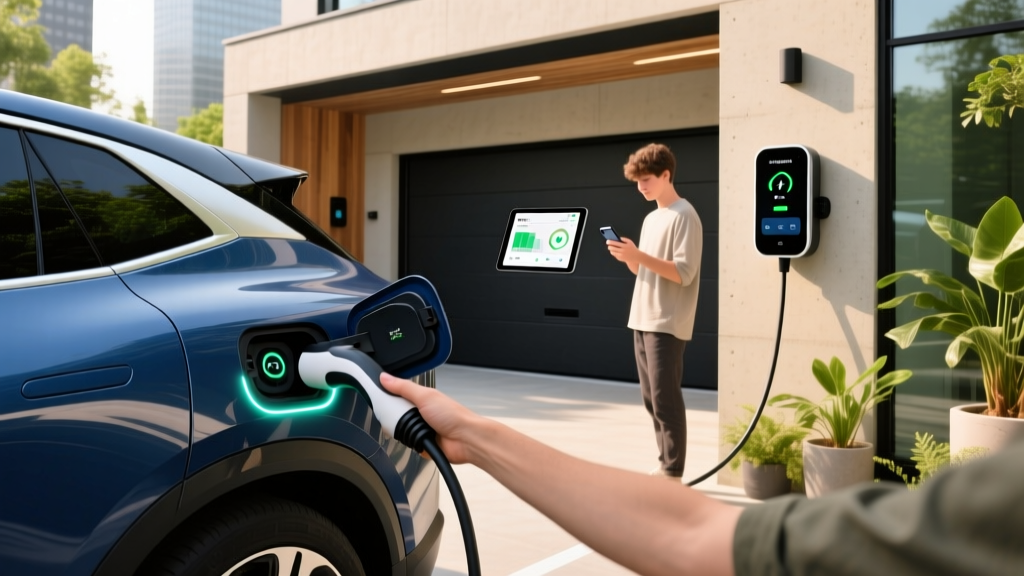
For home Level 2 charging, the onboard charger accepts up to 11.5 kW (48A). A full overnight charge from 20% to 100% takes approximately 5–6 hours for the RWD and 7–8 hours for the Long Range. Home installation of a 240V/60A circuit typically runs $800–$2,000 depending on panel proximity and local permitting, according to industry averages.
Lease Pricing & Federal Tax Credit Eligibility
Understanding the tax credit mechanics is essential for lease shoppers. Under IRS §30D rules, the $7,500 federal EV tax credit applies to purchased vehicles that meet MSRP caps ($55,000 for sedans), buyer income limits ($150,000 single / $300,000 joint AGI), and battery critical-mineral sourcing requirements. However, when you lease a vehicle, the credit technically goes to the lessor (the financing company), not to you directly.
Here's the practical reality: most Tesla lease offers through Tesla Financial Services pass the $7,500 credit value to the lessee as a capitalized cost reduction, effectively lowering your monthly payment. This "lease loophole" has been a major driver of Model 3 lease popularity because it sidesteps the buyer income caps and battery-sourcing requirements that disqualify many purchase scenarios.
| Trim | Base MSRP | Est. Monthly w/ $7,500 Credit Applied | Due at Signing |
|---|---|---|---|
| RWD | $38,990 | $349–$389 | $3,500–$4,500 |
| Long Range AWD | $45,990 | $429–$479 | $4,000–$5,500 |
| Performance AWD | $52,990 | $499–$549 | $4,500–$6,000 |
These figures are estimates based on early 2026 market conditions. Actual lease terms vary by region, credit tier, and promotional incentives. Always confirm the capitalized cost, money factor, and residual value with your Tesla advisor. For current IRS rules, consult irs.gov directly.
Interior, Cargo & Technology
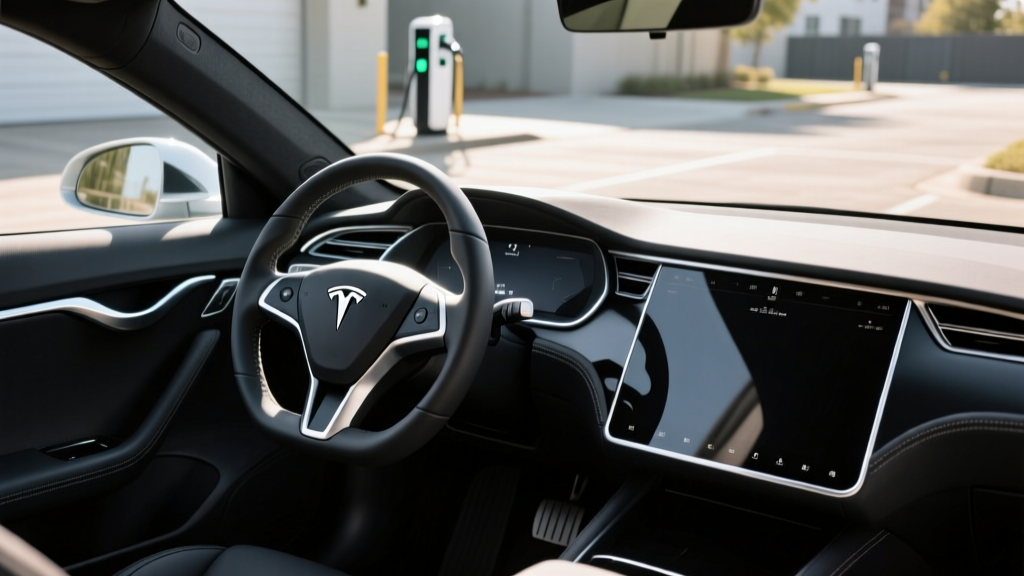
The refreshed Model 3 interior represents a significant step up from pre-2024 models. Ventilated front seats, acoustic glass, ambient lighting, and a rear-seat touchscreen for climate and entertainment controls are now standard. The minimalist cabin remains polarizing — there are no physical stalks for turn signals (steering-wheel buttons instead) and no instrument cluster, with all information displayed on the 15.4-inch center touchscreen.
Cargo capacity stands at 23 cubic feet (trunk + frunk combined), which is competitive with the BMW 3 Series but trails the Hyundai Ioniq 6's 27 cu ft. Rear legroom measures 35.2 inches — adequate for adults on moderate trips but tight for taller passengers on long drives.
Technology highlights include:
- Tesla OS with over-the-air updates, navigation, and integrated streaming
- Autopilot (Level 2 SAE) with adaptive cruise and lane centering — standard
- Full Self-Driving (Supervised) available as a $8,000 add-on or $99/month subscription — still Level 2, requires driver attention
- Sentry Mode dashcam surveillance while parked
- Phone-as-key with Bluetooth Low Energy
Warranty & Long-Term Battery Outlook
Tesla's warranty coverage for the Model 3:
- Basic Vehicle: 4 years / 50,000 miles
- Battery & Drive Unit (RWD): 8 years / 100,000 miles, minimum 70% capacity retention
- Battery & Drive Unit (Long Range/Performance): 8 years / 120,000 miles, minimum 70% capacity retention
For lessees, the warranty period comfortably exceeds a typical 36-month lease term, meaning you'll never touch an out-of-warranty repair. Battery degradation data from Tesla's 2024 Impact Report suggests Model 3 packs retain approximately 85% capacity after 150,000 miles — well above the warranty threshold. LFP packs in the RWD model show even slower degradation curves, making them attractive for high-mileage drivers who plan to purchase at lease-end.
Pros, Cons & Who Should Lease
- Class-leading efficiency (25 kWh/100mi)
- Access to Tesla Supercharger network (NACS standard)
- $7,500 credit often passes through on leases
- Over-the-air updates add features post-purchase
- Strong residual values reduce lease cost
- LFP battery tolerates 100% charging cycles
- Turn-signal buttons on steering wheel (no stalks)
- Rear seat space tight for tall adults
- FSD subscription adds cost without Level 4 autonomy
- No Apple CarPlay / Android Auto
- Insurance costs 15–25% above segment average
- Mileage penalties on lease can add up fast
Best for: Daily commuters with home charging access, tech-forward professionals who value software integration, and drivers who want to test EV ownership without long-term battery risk. The 10,000–12,000 mile/year lease allowance suits suburban and urban driving patterns well.
Not ideal for: High-mileage road-trippers (consider the Model S or a PHEV), families needing rear-seat space for car seats (look at Model Y), or drivers in areas without reliable Supercharger access.
Frequently Asked Questions
What is the real-world range of the 2026 Tesla Model 3?
The EPA estimates 363 miles for the RWD and 404 miles for the Long Range AWD. Real-world highway driving at 75 mph yields approximately 300–320 miles (RWD) and 340–360 miles (Long Range) in mild weather. Cold weather reduces these figures by 15–25%.
How fast does the Model 3 charge at home and on the road?
DC fast charging peaks at 170 kW (RWD) or 250 kW (Long Range/Performance), with 10–80% taking 25–30 minutes at a V3 Supercharger. Home Level 2 charging at 11.5 kW adds roughly 30–44 miles of range per hour, fully replenishing overnight.
Does a leased Model 3 qualify for the $7,500 federal tax credit?
The credit technically goes to the lessor, but most Tesla Financial Services leases pass the value to you as a capitalized cost reduction, lowering monthly payments. This bypasses the buyer income caps and battery-sourcing requirements. Verify with your Tesla advisor and consult IRS §30D guidance.
Is the Model 3 worth leasing vs. buying?
Leasing makes sense if you want to avoid depreciation risk, plan to drive under 12,000 miles/year, and want to upgrade in 3 years. Buying is better if you drive high miles, want to keep the car 6+ years, or can fully utilize the tax credit on a purchase. The Model 3's strong residuals make lease payments competitive with purchase financing in 2026.
What are the biggest drawbacks of the Model 3?
The lack of turn-signal stalks and instrument cluster frustrates some drivers. Rear seat space is tight. Insurance costs run higher than competitors. And while the Supercharger network is excellent, rural charging deserts still exist in parts of the country.
How does the Model 3 compare to the Hyundai Ioniq 6 or BMW i4?
The Model 3 wins on efficiency and charging-network access. The Ioniq 6 offers more cargo space and a more conventional interior. The BMW i4 provides superior ride quality and Apple CarPlay but costs $10,000+ more at comparable trims. For most lease shoppers prioritizing value and tech, the Model 3 remains the benchmark.