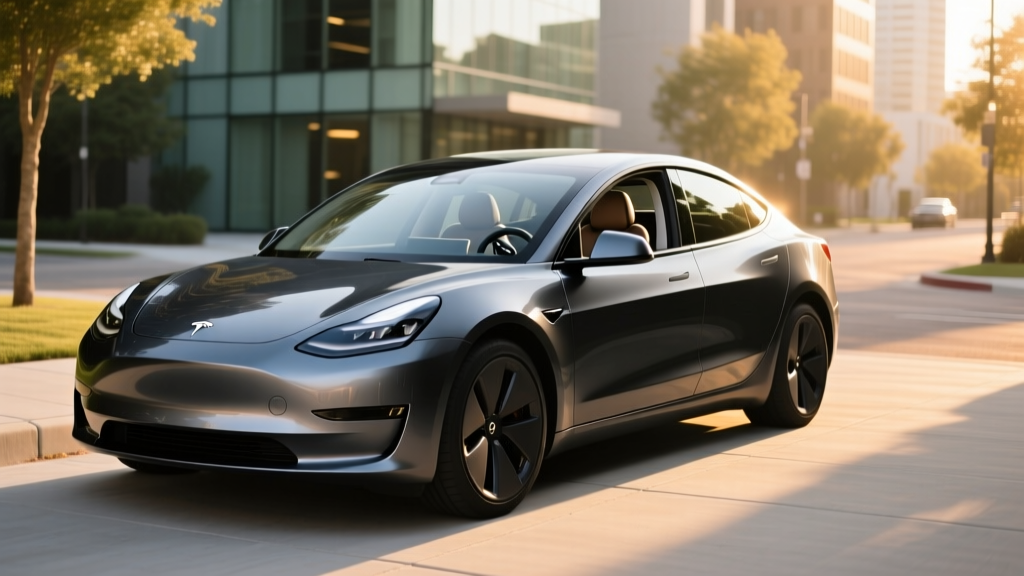
Leasing a Tesla Model 3 in 2026 is a fundamentally different proposition than it was even two years ago. The refreshed "Highland" Model 3 has matured with improved ride quality, a quieter cabin, and NACS-native Supercharger access that eliminates the adapter anxiety plaguing early CCS adopters. But with lease deals fluctuating, tax credit rules shifting, and competitors like the Hyundai Ioniq 6 and BMW i4 pressing hard, the math requires a careful look.
This guide dissects the 2026 Tesla Model 3 from a lessee's perspective: what you'll actually drive, what you'll actually pay, and whether a lease is the smartest path to Tesla ownership—or the most expensive mistake you can make.
2026 Model 3 Trims, Pricing, and Lease Economics
Tesla's leasing structure operates differently from traditional automakers. There's no dealer negotiation, no money-factor haggling, and typically no lease-end purchase option on Model 3 (a major consideration we'll address below). Lease terms are generally 24 or 36 months with 10,000 or 12,000 annual miles.
| Trim | Base MSRP | Est. Monthly Lease (36 mo, 10k mi/yr) | Drivetrain |
|---|---|---|---|
| Model 3 Long Range RWD | $42,490 | $449–$529 | RWD |
| Model 3 Long Range AWD | $47,490 | $509–$589 | Dual Motor AWD |
| Model 3 Performance | $54,990 | $599–$679 | Dual Motor AWD |
Key lease math: Tesla's residual values on the Model 3 have stabilized after the depreciation turbulence of 2023–2024. A 36-month/36,000-mile lease on the Long Range RWD typically residuals around 50–54%, making monthly payments competitive with financing when you factor in that you're not absorbing the vehicle's steepest depreciation years.
Range, Battery, and Real-World Efficiency
The 2026 Model 3 Long Range RWD leads the lineup with an EPA-estimated 363 miles of range—the highest of any Model 3 variant and among the best in its class. The Long Range AWD achieves 341 miles, while the Performance variant comes in at 315 miles.
- Highway-only at 70 mph: Expect ~290–310 miles (Long Range RWD). Aerodynamic drag at sustained highway speed cuts range 15–20%.
- Cold weather (below 32°F): Expect 20–30% range loss. A 363-mile EPA car becomes a ~255–290 mile car in January in Minnesota. The heat pump helps, but battery chemistry physics are unforgiving.
- City/commuter driving: You may meet or slightly exceed EPA thanks to regenerative braking recapturing energy in stop-and-go traffic.
| Spec | Long Range RWD | Long Range AWD | Performance |
|---|---|---|---|
| EPA Range | 363 mi | 341 mi | 315 mi |
| Battery Capacity (usable) | ~79 kWh | ~79 kWh | ~79 kWh |
| Battery Chemistry | NMC (Nickel Manganese Cobalt) | NMC | NMC |
| MPGe (combined) | 132 MPGe | 125 MPGe | 119 MPGe |
| Efficiency (kWh/100 mi) | 25 kWh | 27 kWh | 28 kWh |
Why chemistry matters for lessees: The Long Range and Performance trims use NMC (nickel manganese cobalt) chemistry, which offers higher energy density than LFP (lithium iron phosphate). This translates to more range in the same physical battery pack. The tradeoff is that NMC degrades slightly faster over time and Tesla recommends daily charging to 80% rather than 100% for longevity. Since most leases run 24–36 months, degradation won't meaningfully affect you—you'll return the car well before any capacity loss becomes noticeable.
The base RWD model (when available) has historically used LFP chemistry with a smaller ~60 kWh pack and lower range. Check Tesla's current configurator for availability, as the base RWD trim is periodically discontinued or reconfigured.
Charging Speed: DC Fast and Home Level 2
Charging speed is where the Model 3's 400-volt architecture shows its age against 800-volt rivals like the Hyundai Ioniq 6 and Porsche Taycan. The Model 3 remains highly capable, but it doesn't lead the pack anymore.
| Charging Method | Long Range (RWD/AWD) | Performance |
|---|---|---|
| Max DC Fast Charge | 250 kW peak | 250 kW peak |
| 10–80% DCFC Time | ~25–28 minutes | ~25–28 minutes |
| Level 2 Home (11.5 kW / 48A) | ~44 mi/hr | ~44 mi/hr |
| Level 2 Home (7.7 kW / 32A) | ~30 mi/hr | ~30 mi/hr |
| Level 1 (120V, 12A) | ~3–4 mi/hr | ~3–4 mi/hr |
| Connector | NACS (native) | NACS (native) |
Charging curve reality: The 250 kW peak rate is not sustained. The Model 3 typically holds peak power from roughly 10–30% state of charge, then tapers progressively. From 50–80%, expect rates closer to 80–120 kW. This is normal lithium-ion behavior but means your actual average charging rate over a 10–80% session is closer to 150–170 kW, not 250 kW. Always precondition the battery via the car's navigation-routed Supercharger preconditioning for best results—arriving at a Supercharger without preconditioning can add 5–10 minutes to your session in cold weather.
NACS advantage: The Model 3 uses the North American Charging Standard natively. You get seamless access to 25,000+ Tesla Superchargers without adapters, and Tesla's network remains the most reliable public charging infrastructure in the US by a wide margin. Non-Tesla networks (Electrify America, EVgo) are accessible via NACS-to-CCS adapters if needed, but most lessees will live and die by Superchargers.
Home charging setup: For a 48-amp/11.5 kW Level 2 home installation (Tesla Wall Connector or equivalent), budget $800–$2,500 for the full job including a licensed electrician, assuming your electrical panel has capacity. If you need a panel upgrade from 100A to 200A service, add $1,500–$3,000. Most lessees installing a Level 2 charger on a 240V/50A circuit report total costs of $1,200–$2,000.
Performance, Ride Quality, and Daily Driving
| Spec | Long Range RWD | Long Range AWD | Performance |
|---|---|---|---|
| Horsepower | ~271 hp | ~346 hp | ~510 hp |
| 0–60 mph | 5.8 sec | 4.2 sec | 2.9 sec |
| Top Speed | 125 mph | 125 mph | 163 mph |
| Drivetrain | Rear-Wheel Drive | Dual Motor AWD | Dual Motor AWD |
The Highland refresh transformed the Model 3's driving character. Where the pre-2024 Model 3 was often criticized for firm ride quality and road noise, the current generation rides noticeably smoother, with revised suspension tuning, acoustic glass, and improved sealing that drops cabin noise levels by several decibels at highway speed. It's still a sporty sedan—don't expect BMW 5 Series plushness—but the gap has closed considerably.
The Performance trim adds adaptive dampers, a track-oriented chassis tune, and Tesla's latest generation drive unit. The 2.9-second 0–60 time places it firmly in supercar territory, and unlike many fast EVs, the Performance Model 3 can sustain repeated hard launches without significant power derating thanks to its thermal management system.
Autopilot and FSD (Supervised): Every Model 3 comes with basic Autopilot (traffic-aware cruise control and autosteer within a single lane). Full Self-Driving (Supervised) is a $8,000 add-on purchase or $99/month subscription. Important: FSD is an SAE Level 2 driver-assistance system—not self-driving. You must keep your hands on the wheel and eyes on the road at all times. FSD can handle complex intersections, lane changes, and highway on/off-ramps, but it makes errors that require immediate human intervention. As a lessee, the $99/month subscription is more practical than the $8,000 purchase since you won't own the car long-term.
Interior, Cargo, and Practicality
The Model 3's minimalist interior remains polarizing. There are no physical buttons—everything routes through the 15.4-inch center touchscreen, including climate controls, mirror adjustments, and glovebox release. The 2026 Highland update added a rear touchscreen for rear passengers, ventilated front seats, ambient lighting, and improved material quality across the cabin.
| Dimension | Measurement |
|---|---|
| Cargo Volume (trunk) | 21.0 cu ft |
| Front Legroom | 42.7 in |
| Rear Legroom | 35.2 in |
| Front Headroom | 40.3 in |
| Rear Headroom | 37.8 in |
| Seating Capacity | 5 passengers |
| Frunk (front trunk) | Not available (components occupy space) |
Practicality verdict: The 21-cubic-foot trunk is generous for a compact sedan and features a wide-opening liftback design that makes loading easy. However, rear legroom at 35.2 inches is tight for taller passengers on long trips—rivals like the Hyundai Ioniq 6 offer slightly more rear space. The lack of a frunk (unlike the Model Y) means you're limited to the trunk and a small center-console bin for storage. Families with two car seats will find the rear bench snug but workable.
Warranty, Reliability, and Lease-End Considerations
| Coverage | Terms |
|---|---|
| Basic Vehicle | 4 years / 50,000 miles |
| Battery & Drive Unit | 8 years / 120,000 miles (Long Range/Performance) |
| Battery Capacity Retention | Minimum 70% over warranty period |
For a 24- or 36-month lessee, the 8-year/120,000-mile battery warranty is largely irrelevant to your ownership period—it protects the next owner. What does matter is the 4-year/50,000-mile basic warranty, which covers you fully during a typical lease. Tesla's service network has expanded, but wait times for non-critical repairs can stretch weeks in some metro areas. Mobile service handles many minor issues at your home or office.
Model 3 Lease vs. Key Competitors
Tesla Model 3 Advantages
- Best-in-class Supercharger network access
- Highest EPA range in segment (363 mi LR RWD)
- Industry-leading software/OTA updates
- Strongest resale value trajectory
- Lowest energy consumption (25 kWh/100mi)
Tesla Model 3 Drawbacks
- No lease-end purchase option
- Minimalist interior isn't for everyone
- 400V architecture = slower peak DCFC vs 800V rivals
- Rear seat space tighter than some competitors
- No physical buttons; touchscreen-only controls
vs. Hyundai Ioniq 6: The Ioniq 6 SE Long Range delivers 361 EPA miles and charges significantly faster thanks to its 800V architecture (10–80% in ~18 minutes at 350 kW). Lease deals on the Ioniq 6 are often more aggressive, and Hyundai includes a lease-end purchase option. The tradeoff: no Supercharger access (CCS/NACS adapter required), and Hyundai's public charging experience is less seamless.
vs. BMW i4 eDrive40: The i4 offers a more traditional luxury interior, physical controls, and BMW's build quality. Range is lower (307 EPA miles), and lease payments run $100–$150/month higher. You're paying for refinement and badge prestige over efficiency.
vs. Polestar 2: The Polestar 2 Long Range Dual Motor is a compelling alternative with a more conventional interior, Google-based infotainment, and strong build quality. Range trails at ~276 miles (dual motor), and charging is slower. Lease pricing is often competitive, and Polestar offers a purchase option at lease end.
Who Should Lease the Model 3 (and Who Shouldn't)
Lease the Model 3 If:
- You commute 20–60 miles daily and can charge at home. The efficiency and range make it an exceptional commuter car with minimal charging cost (~$0.04–$0.06/mile on residential electricity).
- You want access to the Supercharger network for road trips without adapter hassle or reliability gambling.
- You prefer to swap cars every 2–3 years and don't want to worry about long-term battery degradation or resale value.
- You live in a state with strong EV incentives (check state-level programs) that stack on top of any federal lease credit pass-through.
Skip the Lease (Buy or Look Elsewhere) If:
- You want to own the car eventually. No purchase option means you'll walk away with nothing at lease end.
- You drive more than 15,000 miles/year. Excess mileage penalties on Tesla leases run $0.20–$0.25/mile, which adds up fast.
- You need maximum rear-seat space for tall passengers or car seats—test the rear bench before signing.
- You want physical buttons and a traditional cockpit. The all-screen interface is a dealbreaker for some drivers.
Frequently Asked Questions
Does the Tesla Model 3 qualify for the $7,500 federal EV tax credit?
When purchased, the Model 3 Long Range and Performance may qualify for the full or partial §30D credit, subject to IRS battery-sourcing requirements that tighten annually. For 2026, eligibility depends on critical-mineral and battery-component sourcing thresholds. On a lease, the credit goes to Tesla (the lessor) and is typically passed through as a cap-cost reduction, but this is not legally mandated. Verify current eligibility on the IRS clean vehicle credits page and confirm with Tesla that the lease offer includes the credit pass-through.
What is the real-world range of the Model 3 Long Range?
EPA-estimated at 363 miles (Long Range RWD), expect approximately 290–310 miles in sustained highway driving at 70 mph and 255–290 miles in freezing temperatures. City driving with regenerative braking may approach or slightly exceed the EPA figure.
How much does it cost to charge a Model 3 at home vs. Superchargers?
Home charging at the US average residential rate of ~$0.16/kWh costs approximately $12.64 for a full 79 kWh charge (0–100%), or about $0.045/mile. Supercharger pricing varies by location and time but averages $0.25–$0.35/kWh, making a full charge $20–$28, or roughly $0.08–$0.10/mile. Both are substantially cheaper than gasoline at current prices.
Can I modify a leased Model 3 (wraps, wheels, FSD)?
Vehicle wraps and wheel changes are generally permitted if you restore the car to stock condition at lease end. FSD can be subscribed to monthly ($99/month) during your lease without a long-term commitment. Avoid permanent modifications—Tesla's lease-end inspection will flag unapproved changes.
Is leasing a Model 3 better than buying in 2026?
Leasing makes sense if you want lower monthly payments, plan to drive under 12,000 miles/year, and want to upgrade every 2–3 years without worrying about depreciation. Buying makes sense if you drive high mileage, want a purchase option, plan to keep the car 5+ years, or want to claim the §30D tax credit directly. Run both scenarios through Tesla's configurator with your specific down payment, mileage, and local tax rate before deciding.