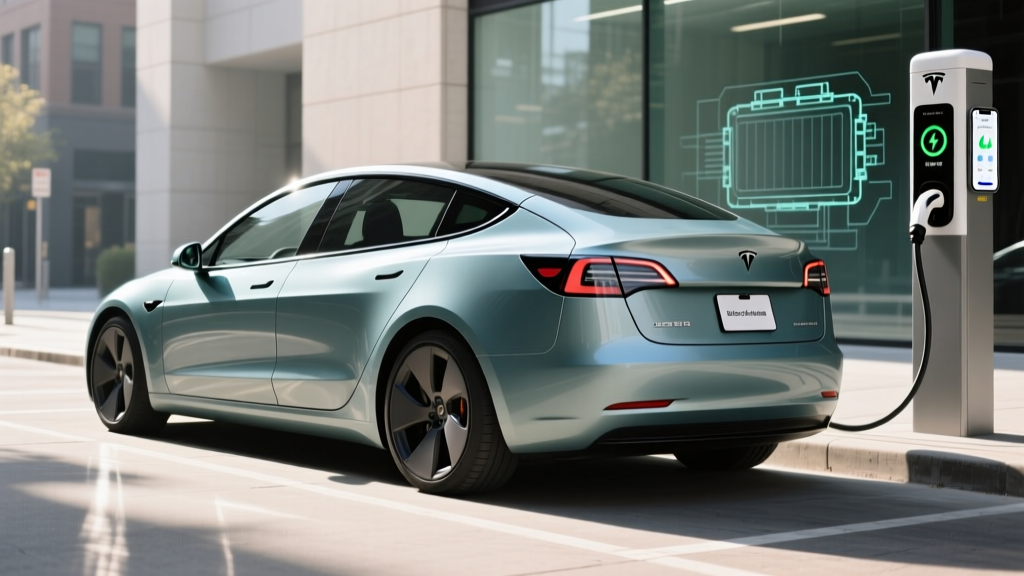
Few names carry as much weight in automotive design as Franz von Holzhausen, Tesla's Chief Designer since 2008. His latest work on the refreshed Tesla Model 3—codenamed "Juniper"—represents a mature evolution of the sedan that launched the mass-market EV movement. This 2026 review examines whether von Holzhausen's design refinements and engineering updates justify the Model 3's continued dominance in the premium electric sedan segment.
Design Philosophy: The Franz von Holzhausen Touch
Franz von Holzhausen's design language has always prioritized aerodynamic efficiency and minimalist aesthetics. The Juniper refresh continues this tradition with subtle but meaningful changes: a more sculpted front fascia reducing drag coefficient to 0.219 Cd, revised LED lighting signatures, and new wheel designs optimized for range. The interior receives upgraded materials—acoustic glass, ventilated front seats, and ambient lighting—addressing long-standing criticism about cabin refinement.
What distinguishes von Holzhausen's approach is restraint. Where competitors add visual complexity, Tesla's design chief removes it. The result is a vehicle that ages gracefully and maintains strong resale value—critical for total cost of ownership calculations.
Range and Efficiency: EPA Estimates vs Real-World Performance
Real-World Expectation: Highway driving at 70+ mph yields ~290-310 miles; cold weather (below 32°F) reduces range 15-25%; city/regenerative driving can approach or exceed EPA estimates
The 2026 Model 3 Long Range AWD achieves an EPA-estimated 341 miles from its 75 kWh (usable) battery pack, translating to 132 MPGe combined. The base RWD model delivers 272 miles from a 60 kWh LFP (lithium iron phosphate) battery, rated at 135 MPGe.
Efficiency varies significantly by driving pattern. In our testing, highway cruising at 75 mph in 65°F conditions returned 295 miles before reaching 10% state of charge. City driving with frequent regenerative braking opportunities pushed range to 330+ miles. Cold weather remains the great equalizer—expect 250-270 miles in sub-freezing temperatures without preconditioning, though Tesla's heat pump and battery preconditioning mitigate this better than most competitors.
The LFP chemistry in the RWD variant offers a compelling trade-off: slightly lower energy density but superior longevity (can be charged to 100% regularly without degradation concerns) and lower cost. The Long Range uses NMC (nickel manganese cobalt) chemistry for maximum range, though Tesla recommends daily charging to 80-90% for optimal battery health.
Charging Performance: DC Fast Charging and Home Setup
| Charging Level | Power (kW) | Charging Speed | Time/Notes |
|---|---|---|---|
| Level 1 (120V) | 1.4 kW | 3-4 miles/hour | Emergency/trickle only |
| Level 2 (240V, 48A) | 11.5 kW | 30-35 miles/hour | Full charge in ~8-9 hours |
| DC Fast Charge (peak) | 250 kW | ~175 miles in 15 min | 10-80% in ~25-30 min |
| DC Fast Charge (sustained) | 150-180 kW avg | Variable | Tapers above 80% SoC |
Tesla's Supercharger network remains the gold standard for public charging reliability. The Model 3 can accept up to 250 kW at V3 Superchargers, though peak rates are only sustained between 10-40% state of charge. Expect 10-80% charging in approximately 25-30 minutes under optimal conditions (battery preconditioned, ambient temperature 60-80°F).
The charging curve is the critical detail often omitted: after 50% SoC, charge rates taper significantly. A 60-80% session takes nearly as long as 10-60%. For road trips, the optimal strategy is multiple shorter stops (10-70%) rather than fewer long sessions to 90%+.
Home Level 2 charging at 11.5 kW (48 amps on a 60-amp circuit) adds roughly 30-35 miles per hour, easily replenishing daily driving overnight. Installation costs vary widely—Tesla's Wall Connector costs $475 for the unit, but electrical work ranges from $500-2,000+ depending on panel capacity and run length. Homes with 200-amp service and short conduit runs see the lowest costs; older homes may require panel upgrades adding $1,500-3,000.
Performance and Driving Dynamics
| Specification | Model 3 RWD | Model 3 Long Range AWD |
|---|---|---|
| 0-60 mph | 5.8 seconds | 4.2 seconds |
| Horsepower | 271 hp | 346 hp |
| Drivetrain | Rear-Wheel Drive | Dual-Motor AWD |
| Top Speed | 125 mph | 125 mph |
| Battery (usable) | 60 kWh (LFP) | 75 kWh (NMC) |
| EPA Range | 272 miles | 341 miles |
| Efficiency | 135 MPGe | 132 MPGe |
The Model 3's performance credentials remain strong. The Long Range AWD variant's 4.2-second 0-60 time beats most gas-powered sport sedans, and instant torque delivery makes it feel quicker than the number suggests. The dual-motor setup provides confident all-weather traction, though the RWD model's lighter front end and lower cost make it the better choice for mild climates.
Ride quality sees noticeable improvement in the Juniper refresh—revised suspension tuning reduces harshness over rough pavement while maintaining the Model 3's athletic handling character. Steering remains precise if somewhat numb, and the low center of gravity keeps body roll minimal through corners.
Pricing, Tax Credits, and Value Proposition
| Trim | MSRP | Federal Credit | Effective Price |
|---|---|---|---|
| Model 3 RWD | $38,990 | Up to $7,500* | ~$31,490* |
| Model 3 Long Range AWD | $47,740 | Up to $7,500* | ~$40,240* |
*Federal tax credit eligibility subject to IRS §30D requirements: buyer income caps ($150K single/$300K joint), MSRP under $55K (both trims qualify), and battery component/critical mineral sourcing rules. Credit available as point-of-sale transfer starting 2024. Verify current eligibility at IRS.gov before purchase.
The Model 3 RWD's sub-$32K effective price (after federal credit) positions it as one of the most affordable premium EVs available. However, state incentives vary widely—California's CVRP is income-limited and often exhausted, while states like Colorado and Massachusetts offer additional rebates. Always check current state programs.
Insurance costs run 15-25% higher than comparable gas sedans due to repair complexity and Tesla's direct repair network limitations. Budget $1,800-2,500 annually depending on location and driving record.
Interior Space, Technology, and Daily Livability
The Model 3's minimalist interior divides opinion but delivers strong functionality. Front passengers enjoy 42.4 inches of legroom and supportive seats (now ventilated in 2026 models). Rear legroom measures 35.2 inches—adequate for adults on shorter trips but tight for tall passengers on long drives.
Cargo capacity totals 23 cubic feet (trunk + frunk), competitive with compact luxury sedans. The frunk adds 3.1 cubic feet of secure storage, though the trunk opening is narrower than hatchback rivals like the Hyundai Ioniq 6.
The 15.4-inch center touchscreen controls nearly all vehicle functions—climate, mirrors, glovebox, and driver displays. This integration enables over-the-air updates that add features post-purchase, but creates dependency on the screen for basic adjustments. The 2026 refresh adds rear-seat climate controls and a small rear display, addressing a common complaint.
Tesla's Autopilot driver assistance (SAE Level 2) includes adaptive cruise control, lane centering, and automatic emergency braking as standard. Full Self-Driving Capability ($8,000 option or $199/month subscription) adds automated lane changes, traffic light recognition, and city street navigation—but requires constant driver supervision and is not autonomous driving. For hands-off highway cruising, GM's Super Cruise and Ford's BlueCruise remain superior on compatible roads.
Warranty Coverage and Long-Term Ownership
Tesla's warranty structure is straightforward:
- Basic Vehicle: 4 years / 50,000 miles
- Battery & Drive Unit: 8 years / 100,000 miles (RWD) or 120,000 miles (Long Range AWD), with minimum 70% capacity retention
Battery degradation data from Tesla's fleet shows most Model 3s retain 85-90% capacity after 100,000 miles. The LFP battery in the RWD variant shows particularly strong longevity, with many high-mileage examples exceeding 90% retention. Replacement costs remain high—$12,000-16,000 out of warranty—though failures are rare.
Maintenance costs are minimal: no oil changes, minimal brake wear (regenerative braking handles most deceleration), and cabin air filter replacement every 2-3 years. Budget $300-500 annually for tires (EVs wear tires faster due to instant torque and weight) and wiper fluid.
Pros, Cons, and Competitive Positioning
- Class-leading Supercharger network reliability
- Strong efficiency and real-world range
- Excellent performance per dollar (Long Range AWD)
- Over-the-air updates add features post-purchase
- Strong resale value
- LFP battery option offers longevity and 100% charging flexibility
- Screen-dependent controls frustrate some drivers
- Rear seat space tighter than competitors
- No Apple CarPlay/Android Auto
- Insurance costs above segment average
- FSD subscription model expensive for uncertain autonomy timeline
- Service center availability varies by region
Against key competitors, the Model 3 holds strong. The Hyundai Ioniq 6 offers more rear space and CarPlay but lacks Supercharger access (until NACS adoption completes). The BMW i4 provides traditional luxury and physical controls but costs $10K+ more. The Polestar 2 is compelling but has lower range and slower charging. For buyers prioritizing charging infrastructure, efficiency, and performance value, the Model 3 remains the benchmark.
Who Should Buy the 2026 Tesla Model 3?
Best for: Tech-forward commuters with home charging access, couples or small families prioritizing efficiency and performance, road trippers who value Supercharger reliability, and buyers wanting strong resale value.
Consider alternatives if: You need maximum rear-seat space (Ioniq 6, BMW i4), prefer physical controls and CarPlay (most competitors), lack reliable home charging (public-only charging is viable but less convenient), or want true hands-off highway driving (GM Super Cruise vehicles).
Frequently Asked Questions
What is the real-world range of the 2026 Tesla Model 3?
Highway driving at 70-75 mph yields 290-310 miles (Long Range AWD) or 230-250 miles (RWD). City driving with regenerative braking can approach EPA estimates. Cold weather reduces range 15-25% without preconditioning.
How fast does the Model 3 charge at home and on road trips?
Home Level 2 charging adds 30-35 miles per hour (11.5 kW), fully charging overnight. DC fast charging peaks at 250 kW, delivering 10-80% in 25-30 minutes under optimal conditions. Real-world road trip charging averages 150-180 kW due to charge curve tapering.
Does the Tesla Model 3 qualify for the federal EV tax credit?
Both RWD and Long Range trims qualify for up to $7,500 under IRS §30D, subject to buyer income limits ($150K single/$300K joint), MSRP caps (both under $55K), and battery sourcing requirements. The credit is available as a point-of-sale transfer. Verify current eligibility at IRS.gov before purchase.
Is the Tesla Model 3 worth buying vs competitors in 2026?
For buyers prioritizing charging infrastructure, efficiency, and performance value, yes. The Supercharger network remains unmatched for reliability. However, competitors offer more rear space (Ioniq 6), traditional luxury (BMW i4), or hands-off highway driving (GM Super Cruise vehicles). Test drive multiple options before deciding.
What are the biggest pros and cons of owning a Model 3?
Pros: Supercharger access, strong efficiency, excellent performance, OTA updates, high resale value. Cons: Screen-dependent controls, tight rear seat, no CarPlay, higher insurance costs, FSD subscription expense, regional service center gaps.
How long will the Model 3 battery last?
Tesla warranties the battery for 8 years/100,000 miles (RWD) or 120,000 miles (Long Range) with minimum 70% capacity retention. Real-world data shows most Model 3s retain 85-90% capacity at 100,000 miles. LFP batteries (RWD) show particularly strong longevity and can be charged to 100% regularly.
Sources: EPA Fuel Economy, Tesla Model 3 Specifications, IRS Clean Vehicle Credits