Quick Verdict: The Model 3 Remains the EV Benchmark — If You Can Afford the Premium
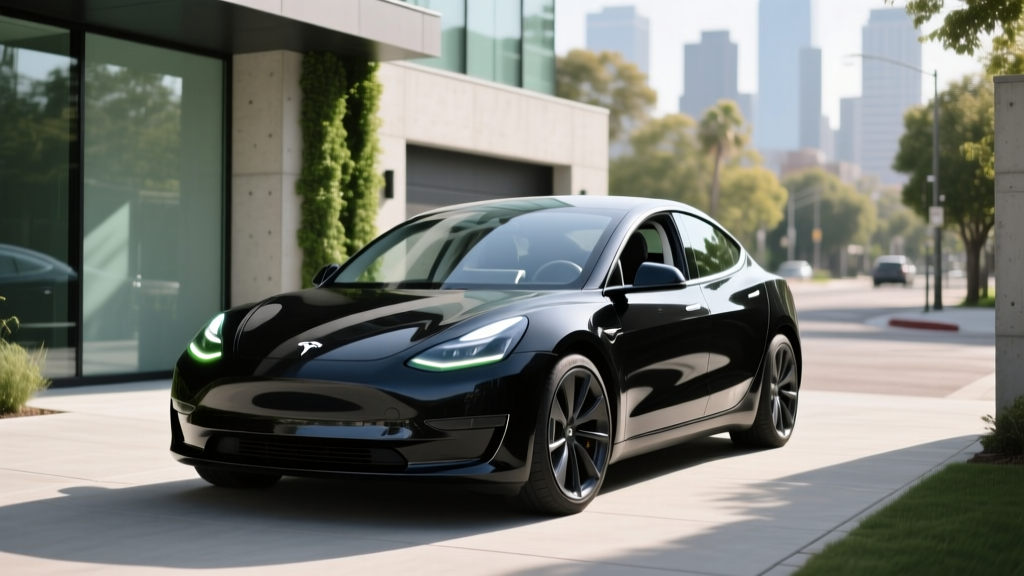
The 2026 Tesla Model 3 (often searched as the "Tesla 3") continues to define the compact electric sedan segment. With EPA range stretching to 363 miles on the Long Range AWD trim, access to the industry's most reliable DC fast-charging network, and a starting price that undercuts most luxury EV rivals, it remains the default recommendation for first-time EV buyers. But there's a catch that rarely shows up in spec sheets: Tesla Model 3 insurance costs are significantly higher than comparable gas sedans and even some EV competitors. In this review, we'll cover everything you need to know — range, charging, pricing, tax credits, and the insurance premiums that can add $600–$1,200+ per year to your ownership cost.
The Long Range AWD Model 3 carries an EPA-estimated 363 miles of range. In real-world highway driving at 70–75 mph, expect 290–320 miles. In freezing temperatures (below 30°F), range can drop to 240–280 miles due to battery heating demands and cabin climate load. The RWD base model's 272-mile EPA sticker translates to roughly 220–245 miles on the highway.
2026 Tesla Model 3 Specifications at a Glance
| Spec | RWD (Base) | Long Range AWD | Performance |
|---|---|---|---|
| EPA Range | 272 mi | 363 mi | 315 mi |
| Battery (usable) | ~57.5 kWh (LFP) | ~75 kWh (NMC) | ~75 kWh (NMC) |
| Drivetrain | Rear-Wheel Drive | Dual-Motor AWD | Dual-Motor AWD |
| Horsepower | 271 hp | 346 hp | 510 hp |
| 0–60 mph | 5.8 sec | 4.2 sec | 2.9 sec |
| Max DC Fast Charge | 170 kW | 250 kW | 250 kW |
| 10–80% DCFC Time | ~25 min | ~22 min | ~22 min |
| Level 2 Home Charging | 11.5 kW (~44 mi/hr) | 11.5 kW (~44 mi/hr) | 11.5 kW (~44 mi/hr) |
| MPGe (combined) | 132 MPGe | 132 MPGe | 114 MPGe |
| Base MSRP | $38,990 | $45,990 | $52,990 |
Source: EPA Fuel Economy and Tesla spec sheets. Prices before destination fee or incentives. 2026 model-year figures; confirm with Tesla for latest updates.
The Elephant in the Room: Tesla Model 3 Insurance Costs
If you're researching "Tesla 3 insurance," you've likely noticed quotes running higher than expected. Here's why, and what real numbers look like.
Why Is Tesla Model 3 Insurance More Expensive?
- Repair costs: Tesla's unibody construction, integrated sensor suite, and proprietary body panels mean collision repairs often require Tesla-certified body shops, which charge premium labor rates.
- Parts availability: Replacement parts — especially the front bumper, headlight assemblies, and sensor arrays — carry higher costs and longer lead times than mainstream brands.
- Vehicle MSRP: Insurers factor in replacement value. A $45,990+ vehicle demands higher collision/comprehensive premiums than a $28,000 Camry.
- Performance profile: The Performance trim's 2.9-second 0–60 time places it in sports-car territory for actuarial tables, regardless of how you actually drive.
- Driver demographics: Insurers use aggregated data, and Tesla's buyer profile skews toward higher mileage and urban environments, both of which raise claim frequency.
Average Tesla Model 3 Insurance Premiums (2026 Estimates)
| Trim | Annual Premium (Avg.) | Monthly (Avg.) | vs. Toyota Camry Hybrid |
|---|---|---|---|
| Model 3 RWD | $2,400–$3,000 | $200–$250 | +65–90% |
| Model 3 Long Range AWD | $2,700–$3,400 | $225–$285 | +80–110% |
| Model 3 Performance | $3,200–$4,200 | $265–$350 | +110–160% |
Premiums vary widely by state, ZIP code, driving record, age, and coverage level. These are national averages for a 35-year-old driver with a clean record, 100/300/100 liability, and $500 deductibles. Always get personalized quotes from at least 3 insurers.
Tesla Insurance vs. Third-Party Insurers
Tesla offers its own insurance product in most states, using real-time driving data from the vehicle to calculate a monthly "Safety Score." Drivers with high Safety Scores (90+) can see premiums 15–30% lower than third-party quotes. However, aggressive drivers or those in high-risk ZIP codes may find Tesla Insurance is actually more expensive. Our recommendation: pull quotes from Geico, Progressive, State Farm, and Tesla Insurance simultaneously. The spread can be $800+/year.
Charging Speed: DC Fast Charging and Home Setup
The Model 3's charging capability is one of its strongest competitive advantages, thanks to access to Tesla's Supercharger network — now the largest and most reliable DC fast-charging network in North America, with many stations also open to NACS-equipped non-Tesla EVs.
| Charging Level | Power | Speed (Approx.) | Use Case |
|---|---|---|---|
| Level 1 (120V outlet) | ~1.4 kW | 3–5 mi/hr | Overnight trickle, emergencies |
| Level 2 (240V home) | 11.5 kW | ~44 mi/hr | Daily home charging (full in ~7–8 hrs) |
| DC Fast (Supercharger V3) | up to 250 kW | ~175 mi in 15 min (LR) | Road trips, 10–80% in ~22 min |
Charging curve reality: The 250 kW peak on Long Range and Performance trims is sustained only between roughly 10–35% State of Charge. Above 50%, the rate tapers to ~100 kW, and above 80% it drops further to ~40–50 kW. This is why Tesla (and all manufacturers) quote 10–80% times — the last 20% takes nearly as long as the first 70%. On the RWD's LFP battery, Tesla actually recommends charging to 100% regularly, which is a notable advantage for daily usability.
Federal Tax Credit: Does the Model 3 Qualify?
Under IRS §30D rules for 2026, the Tesla Model 3's tax credit eligibility depends on the specific trim, your income, and battery component sourcing — all of which shift periodically.
- MSRP cap: Sedans must be ≤$55,000. All Model 3 trims qualify on price.
- Buyer income cap: Modified AGI ≤$150,000 (single), ≤$225,000 (head of household), ≤$300,000 (joint).
- Battery sourcing: Critical minerals and battery components must meet phased-in domestic/free-trade-partner thresholds. Tesla has shifted some Model 3 battery sourcing to US-based suppliers, but eligibility can change by production batch.
- Point-of-sale transfer: You can transfer the credit to the dealer at purchase for an immediate price reduction — no need to wait for tax filing.
- Credit amount: Up to $7,500, split between critical mineral ($3,750) and battery component ($3,750) requirements. Some Model 3 variants may qualify for only $3,750 depending on sourcing.
Always verify current eligibility on the IRS website and with your Tesla advisor before purchase. Consult a tax professional for your specific situation.
| Trim | MSRP | Est. Tax Credit | Effective Price |
|---|---|---|---|
| Model 3 RWD | $38,990 | $3,750–$7,500 | $31,490–$35,240 |
| Model 3 Long Range AWD | $45,990 | $3,750–$7,500 | $38,490–$42,240 |
| Model 3 Performance | $52,990 | $3,750–$7,500 | $45,490–$49,240 |
Interior, Cargo, and Technology
Passenger and Cargo Space
- Front legroom: 42.7 inches
- Rear legroom: 35.2 inches (adequate for adults on shorter trips; tight for tall passengers on long hauls)
- Cargo volume: 23 cu ft (rear trunk) + ~3 cu ft (frunk) = ~26 cu ft total
- Rear seats: 60/40 split-folding, enabling longer cargo like skis or flat-pack furniture
Compared to the Hyundai Ioniq 6 (which offers slightly more rear legroom and a larger frunk), the Model 3's cabin is minimalist by design. There are no physical buttons — climate, mirrors, and glovebox are all controlled via the 15.4-inch center touchscreen. This polarizes buyers: some love the clean aesthetic, others find it distracting while driving.
Standout Tech
- 15.4-inch center touchscreen with navigation, media, and vehicle controls
- Over-the-air (OTA) updates that regularly add features and refine performance
- Autopilot (standard): SAE Level 2 driver assistance with adaptive cruise, lane centering, and automatic emergency braking. This is not self-driving — you must remain engaged at all times.
- Full Self-Driving (Supervised): Optional $8,000 upgrade (or $99/month subscription) adding auto lane change, navigate on Autopilot, and traffic light recognition. Still SAE Level 2 — driver supervision is mandatory.
- Sentry Mode: 360-degree camera recording when parked, with mobile alerts
- Dashcam: Built-in, no aftermarket hardware needed
Notable Drawbacks
- No physical instrument cluster or head-up display
- Turn signals are on the steering wheel (refreshed Model 3), which some drivers find unintuitive
- Rear visibility is limited; relies heavily on the backup camera
- No Apple CarPlay or Android Auto — Tesla's proprietary infotainment only
- Panel gaps and paint quality, while improved, still lag behind German/Japanese competitors
Warranty Coverage
| Coverage | RWD | Long Range / Performance |
|---|---|---|
| Basic Vehicle | 4 years / 50,000 mi | 4 years / 50,000 mi |
| Battery & Drive Unit | 8 years / 100,000 mi | 8 years / 120,000 mi |
| Battery Capacity Retention | ≥70% during warranty | ≥70% during warranty |
Tesla's battery warranty guarantees at least 70% capacity retention over the warranty period. Real-world data from high-mileage Model 3 owners suggests NMC batteries typically retain ~88–92% capacity at 100,000 miles, while LFP batteries (RWD) show even slower degradation due to the chemistry's inherent cycle-life advantage. Out-of-warranty battery replacement costs range from $12,000–$16,000 depending on the pack.
Tesla Model 3 vs. Key Competitors
| Attribute | Tesla Model 3 LR | Hyundai Ioniq 6 SEL | BMW i4 eDrive40 |
|---|---|---|---|
| EPA Range | 363 mi | 361 mi | 301 mi |
| Base MSRP | $45,990 | $42,750 | $52,200 |
| Max DCFC | 250 kW | 350 kW | 205 kW |
| Charging Network | Supercharger (NACS) | CCS / NACS adapter | CCS / NACS adapter |
| Insurance (avg.) | $2,700–$3,400 | $2,100–$2,600 | $2,800–$3,500 |
| CarPlay / Android Auto | No | Yes | Yes |
The Ioniq 6 matches the Model 3's range at a lower price and charges faster at compatible 350 kW stations, but lacks Supercharger access (though a NACS adapter is available). The BMW i4 offers superior build quality and a traditional cockpit layout but costs more and offers less range. Insurance costs for the Ioniq 6 tend to run 15–25% lower than the Model 3, a meaningful gap over a 5-year ownership period.
Who Should Buy the 2026 Tesla Model 3?
- You want access to the Supercharger network for hassle-free road trips
- You value OTA software updates and a minimalist tech-forward cabin
- You commute 30–80 miles daily and can charge at home overnight
- You want strong performance (especially the 2.9-sec Performance trim)
- You live in an area with robust Tesla Service Center coverage
- Insurance premiums in your ZIP code push total cost of ownership above rivals
- You need Apple CarPlay, Android Auto, or physical buttons
- Rear-seat passenger comfort is a priority (Ioniq 6 or BMW i4 offer more space)
- You want the lowest possible insurance cost — the Hyundai Ioniq 6 or Chevrolet Equinox EV may be significantly cheaper to insure
Pros and Cons
- Class-leading Supercharger network access
- Up to 363 miles EPA range (Long Range AWD)
- LFP battery option (RWD) allows daily 100% charging
- Excellent efficiency: 132 MPGe combined
- Continuous OTA updates add new features over time
- Strong resale value relative to EV segment average
- Insurance premiums 65–160% higher than gas sedans
- No Apple CarPlay or Android Auto
- Minimalist interior isn't for everyone
- Service center wait times can be long in some regions
- Turn signal placement on steering wheel takes adaptation
- Performance trim insurance costs can be prohibitive
Frequently Asked Questions
What is the real-world range of the Tesla Model 3?
The EPA rates the Long Range AWD at 363 miles and the RWD at 272 miles. In real-world highway driving at 70–75 mph, expect 290–320 miles from the Long Range and 220–245 miles from the RWD. Cold weather (below 30°F) can reduce range by 20–30% on any EV due to battery preconditioning demands and cabin heating.
How fast does the Tesla Model 3 charge?
On a V3 Supercharger (250 kW DC), the Long Range and Performance models charge from 10–80% in approximately 22 minutes. The RWD model peaks at 170 kW and takes about 25 minutes for the same interval. At home on a Level 2 (240V, 48A) charger, all trims add roughly 44 miles of range per hour, fully recharging overnight in 7–8 hours.
How much does the Tesla Model 3 cost after tax credits?
With the base RWD starting at $38,990 and a potential $7,500 federal tax credit (subject to IRS §30D sourcing, income, and MSRP rules), the effective price can drop to approximately $31,490. The Long Range AWD at $45,990 can fall to roughly $38,490. Always verify current credit eligibility with the IRS and a tax professional before purchasing.
Why is Tesla Model 3 insurance so expensive?
Higher repair costs (Tesla-certified body shops, proprietary parts), elevated vehicle MSRP, performance-tier actuarial classification, and aggregated driver demographic data all contribute. Average premiums run $2,400–$4,200/year depending on trim, compared to $1,400–$1,800 for a comparable gas sedan. Tesla's own insurance product can reduce costs for safe drivers with high Safety Scores.
Is the Tesla Model 3 worth buying over competitors?
For buyers who prioritize Supercharger network reliability, OTA updates, and strong performance, the Model 3 remains the benchmark. If insurance costs, CarPlay support, or rear-seat comfort are higher priorities, the Hyundai Ioniq 6 or BMW i4 are compelling alternatives. Total cost of ownership over 5 years is competitive once fuel savings and tax credits are factored in — but insurance can erase a significant portion of those savings.
Does the Tesla Model 3 qualify for the federal EV tax credit?
All Model 3 trims fall under the $55,000 MSRP sedan cap. However, the actual credit amount ($3,750 or $7,500) depends on battery component and critical mineral sourcing, which Tesla periodically adjusts. Buyer income must not exceed $150K (single) / $300K (joint). The credit can be transferred to the dealer at point of sale for an immediate price reduction. Verify current eligibility at IRS.gov.