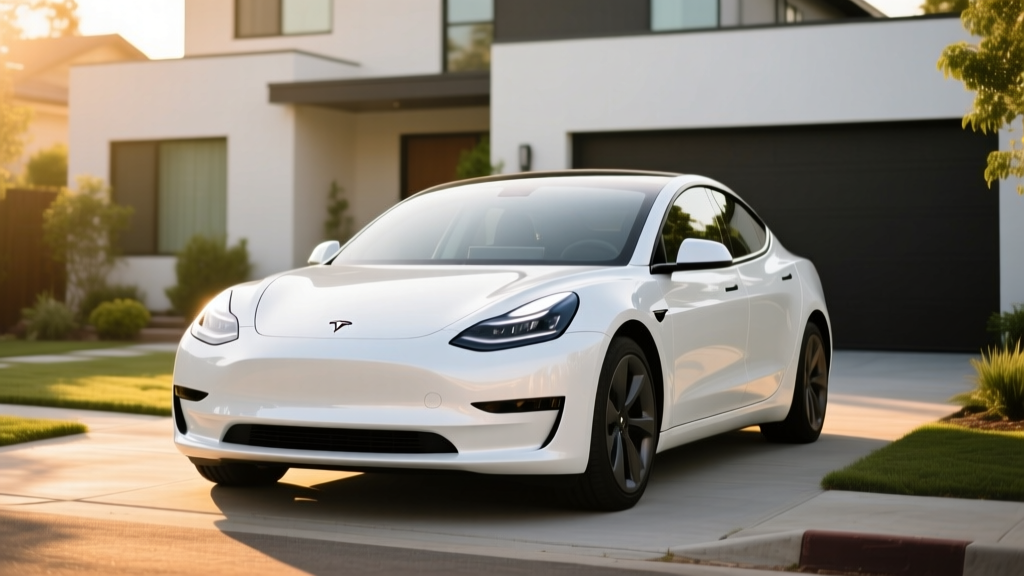
If you're shopping for a Tesla Model 3, the sticker price is only part of the equation. Insurance premiums for the Model 3 consistently rank among the highest in the compact EV segment, often catching first-time buyers off guard. This guide dissects what drives Tesla Model 3 insurance cost in 2026, how it compares to key rivals, and whether the total ownership math still pencils out in your favor.
Tesla Model 3 Insurance Cost: The Numbers
Based on aggregated 2025–2026 insurer data and owner surveys, the average annual premium for a Tesla Model 3 in the United States falls between $2,200 and $3,400 for a 35-year-old driver with a clean record, full coverage, and 100/300/100 liability limits. That translates to roughly $183 to $283 per month.
| Profile | Avg. Annual Premium | Avg. Monthly Premium |
|---|---|---|
| 35-yr-old, clean record, garaged (national avg.) | $2,650 | $221 |
| 25-yr-old, clean record | $3,850 | $321 |
| 50-yr-old, clean record | $2,100 | $175 |
| Model 3 Performance (any age, clean) | $3,100–$3,600 | $258–$300 |
| Model 3 RWD base (any age, clean) | $2,200–$2,700 | $183–$225 |
Why Is Model 3 Insurance Higher Than Average?
Several structural factors push Model 3 premiums above those of a comparable Toyota Camry or Hyundai Ioniq 6:
- Repair cost concentration: Tesla's integrated gigacasting rear underbody and structural battery pack mean collision repairs often require specialized Tesla-certified body shops, which charge premium labor rates.
- Sensor and glass replacement: The Model 3's camera array, ultrasonic-delete vision system, and full-glass roof are expensive to replace after even minor front or roof impacts.
- High theft-desirability and parts demand: Teslas remain high-value targets for catalytic-converter-adjacent parts theft (12V batteries, charge-port assemblies) and whole-vehicle theft in certain metro areas.
- Performance-tier risk loading: The Dual Motor and Performance trims carry AWD, 510 hp, and sub-3.5-second 0–60 times — actuarial tables treat these as sport-sedan risk profiles, not economy sedans.
- Historical claim severity: NHTSA and IIHS data show Tesla vehicles have strong crashworthiness scores, but claim severity (dollars per claim) is above average due to parts pricing and ADAS recalibration requirements post-collision.
2026 Tesla Model 3: Full Spec Snapshot
Before weighing insurance against ownership, here's the complete 2026 Model 3 lineup — refreshed "Highland" architecture carries over with minor software and battery-pack updates for the 2026 model year.
| Spec | Model 3 RWD | Model 3 Long Range AWD | Model 3 Performance |
|---|---|---|---|
| EPA Range | 272 mi | 341 mi | 315 mi |
| Battery (usable / chemistry) | 57.5 kWh / LFP | 75 kWh / NMC | 75 kWh / NMC |
| MPGe (city / hwy / combined) | 132 / 120 / 125 | 131 / 117 / 124 | 115 / 106 / 111 |
| kWh / 100 mi | 27 | 27 | 30 |
| 0–60 mph | 5.8 sec | 4.2 sec | 2.9 sec |
| Horsepower | 271 hp | 346 hp | 510 hp |
| Drivetrain | RWD (single motor) | AWD (dual motor) | AWD (dual motor) |
| Peak DC Fast Charge | 170 kW | 250 kW | 250 kW |
| 10–80% DCFC Time | ~25 min | ~25 min | ~25 min |
| Level 2 Home Charging | 11.5 kW (~44 mi/hr) | 11.5 kW (~44 mi/hr) | 11.5 kW (~44 mi/hr) |
| Cargo (trunk + frunk) | 23 cu ft total | 23 cu ft total | 23 cu ft total |
| Rear Legroom | 35.2 in | 35.2 in | 35.2 in |
| Base MSRP | $38,990 | $47,740 | $52,990 |
| Battery / Powertrain Warranty | 8 yr / 120,000 mi | 8 yr / 120,000 mi | 8 yr / 120,000 mi |
Source: fueleconomy.gov, Tesla spec sheets (2026 model year).
Real-World Range Reality Check
The Long Range AWD's EPA 341-mile sticker is among the best in the segment. But plan for:
- Highway (75 mph, 70°F): ~285–300 miles
- Cold weather (30°F, highway): ~230–260 miles (LFP RWD loses a larger percentage due to chemistry — budget ~190–210 miles)
- Mountain / high-elevation driving: Regen recovers energy on descents; net impact varies but typically neutral to slight loss vs. EPA
The LFP battery in the RWD model is more tolerant of daily 100% charging (Tesla recommends it weekly for cell balancing), which partially offsets its shorter range.
Charging Speed: DC Fast, Level 2, and Level 1
Charging infrastructure access is the single biggest determinant of EV satisfaction. The Model 3's Supercharger-native NACS connector remains the gold standard for public charging reliability.
| Charging Level | Power | Connector | Miles Added per Hour | Typical Use Case |
|---|---|---|---|---|
| Level 1 (120V outlet) | ~1.4 kW | NACS (J1772 adapter incl.) | ~5 mi/hr | Overnight trickle, emergencies |
| Level 2 (240V home) | 11.5 kW | NACS | ~44 mi/hr | Daily home charging (full in 6–8 hrs) |
| DC Fast (V3 Supercharger) | Peak 250 kW (LR/Perf) | NACS (native) | ~1,000 mi/hr at peak | Road trips: 10–80% in ~25 min |
| DC Fast (RWD LFP) | Peak 170 kW | NACS (native) | ~750 mi/hr at peak | 10–80% in ~25 min (taper less aggressive) |
Charging curve note: The 250 kW peak on Long Range and Performance trims is sustained only between ~10–40% SoC. Above 60%, the curve tapers sharply — 80–100% can take as long as 10–80%. For road trips, plan stops at 15–20% remaining and charge to 70–80% for the fastest throughput.
Federal Tax Credit & Total Purchase Cost
The 2026 Model 3's eligibility for the §30D federal EV tax credit depends on battery sourcing, buyer income, and MSRP caps. As of early 2026, the RWD and Long Range trims qualify for up to $7,500, while the Performance trim's eligibility varies by delivery month due to critical-mineral sourcing phase-in schedules.
| Trim | Base MSRP | Est. Federal Credit | Effective Price (before state incentives) |
|---|---|---|---|
| Model 3 RWD | $38,990 | $7,500 | $31,490 |
| Model 3 Long Range AWD | $47,740 | $7,500 | $40,240 |
| Model 3 Performance | $52,990 | $3,750–$7,500* | $45,490–$49,240 |
*Performance credit amount depends on delivery timing and critical-mineral sourcing compliance. Always verify current eligibility at IRS.gov.
§30D Eligibility Checklist
- MSRP cap: Sedans must be ≤ $55,000 (all Model 3 trims qualify)
- Buyer MAGI cap: $150,000 single / $225,000 head of household / $300,000 joint
- Battery sourcing: Critical minerals + battery component thresholds increase yearly; 2026 requires 80% critical minerals from US/FTA partners and 100% battery component manufacturing in North America
- Point-of-sale transfer: Eligible buyers can transfer the credit to the dealer at purchase, reducing the cash price immediately
Tesla Model 3 Insurance Cost vs. Competitors
Insurance premiums vary by insurer, state, and driving history. Below is a normalized comparison for a 35-year-old driver, clean record, full coverage, national average:
| Vehicle | Base MSRP | Avg. Annual Insurance | 5-Yr Insurance Total |
|---|---|---|---|
| Tesla Model 3 Long Range AWD | $47,740 | $2,650 | $13,250 |
| Hyundai Ioniq 6 SEL AWD | $46,700 | $2,050 | $10,250 |
| BMW i4 eDrive40 | $57,900 | $2,800 | $14,000 |
| Polestar 2 Long Range DM | $49,900 | $2,350 | $11,750 |
| Toyota Camry XSE V6 (gas baseline) | $36,845 | $1,750 | $8,750 |
The Model 3's insurance premium sits roughly $600–$800/year above the segment average for similarly priced EVs, but below luxury competitors like the BMW i4. The gap narrows significantly when you factor in fuel and maintenance savings.
How to Lower Your Model 3 Insurance Premium
- Tesla Insurance: Tesla's in-house insurer uses real-time driving data (Safety Score) to price premiums. Clean drivers in supported states (currently 12+) report 15–30% savings vs. traditional carriers.
- Garage the vehicle: Garaged Model 3s see ~8–12% lower premiums vs. street-parked.
- Drop Performance trim: The RWD and Long Range trims carry meaningfully lower premiums than the Performance (often $400–$700/year less).
- Bundle home + auto: Multi-policy discounts of 10–18% are standard at most carriers.
- Increase deductible: Moving from $500 to $1,000 comprehensive/collision deductible typically saves $150–$300/year.
Total 5-Year Ownership: Does the Model 3 Still Win?
Insurance is one line item. Here's the full 5-year / 75,000-mile ownership cost comparison (national averages, electricity at $0.16/kWh, gas at $3.50/gal):
| Cost Category | Model 3 LR AWD | Ioniq 6 SEL AWD | Camry XSE V6 |
|---|---|---|---|
| Purchase (after $7,500 credit) | $40,240 | $42,950 | $36,845 |
| Insurance (5 yr) | $13,250 | $10,250 | $8,750 |
| Energy / Fuel (75k mi) | $3,240 | $3,240 | $7,500 |
| Maintenance (5 yr) | $1,800 | $2,400 | $4,200 |
| Estimated Depreciation | $16,000 | $17,500 | $14,000 |
| 5-Year Total Cost | $74,530 | $76,340 | $71,295 |
| Cost Per Mile | $0.99 | $1.02 | $0.95 |
The Model 3's higher insurance cost is substantially offset by lower maintenance (no oil changes, minimal brake wear from regen, no transmission service) and lower energy costs. Against the Camry, the Model 3 costs roughly $0.04/mile more over five years — a gap that narrows further if you charge primarily on off-peak home electricity rates ($0.08–$0.12/kWh in many markets).
Pros and Cons
Pros
- Class-leading Supercharger network access (17,000+ stalls in North America)
- Best-in-segment efficiency (124 MPGe combined on LR AWD)
- Over-the-air updates continuously add features post-purchase
- Strong resale value relative to non-Tesla EVs
- Minimal scheduled maintenance lowers long-term cost
- Top Safety Pick+ (IIHS) and 5-star NHTSA overall rating
Cons
- Insurance premiums 25–40% above segment average
- No Apple CarPlay / Android Auto (Tesla-native infotainment only)
- Turn-signal stalks removed (steering-wheel buttons; polarizing)
- Rear-seat comfort and headroom lag Hyundai/Kia competitors
- No physical instrument cluster — all info on center screen
- Repair timelines can stretch weeks at certified body shops after collision
Who Should Buy the 2026 Tesla Model 3?
Choose the Model 3 RWD if: You commute under 60 miles round-trip, have reliable Level 2 home charging, want the lowest purchase price, and don't need AWD. The LFP battery's tolerance for daily 100% charging makes it ideal for predictable daily use.
Choose the Model 3 Long Range AWD if: You take regular road trips (200+ miles), live in a cold-weather state, need AWD for snow, or want the longest buffer between charges. This is the best all-around trim for most buyers.
Choose the Model 3 Performance if: You value sub-3-second 0–60 acceleration, adaptive damping, and track-capable handling — and you're willing to pay ~$500/year more in insurance for the privilege.
Look elsewhere if: You need maximum rear-seat space (consider Ioniq 5 or Model Y), you rely on Apple CarPlay, or you live in an area with limited Supercharger coverage and no home charging option.
FAQ
Does the Tesla Model 3 qualify for the $7,500 federal tax credit in 2026?
The RWD and Long Range AWD trims currently qualify for the full $7,500 §30D credit, assuming you meet income caps ($150K single / $300K joint) and the vehicle's battery sourcing meets 2026 thresholds. Performance trim eligibility varies — verify at IRS.gov before ordering.
Is Tesla Insurance cheaper than traditional carriers?
For clean-record drivers with high Safety Scores (90+), Tesla Insurance can be 15–30% cheaper than GEICO, Progressive, or State Farm in supported states. However, drivers with recent claims or lower Safety Scores may find traditional carriers more competitive. Always get quotes from both.
What is the real-world range of the Model 3 Long Range?
EPA-rated at 341 miles. Expect 285–300 miles at highway speeds in mild weather, and 230–260 miles in freezing temperatures with highway driving. The RWD LFP model's real-world range is closer to 220 miles highway in mild weather and 180–200 in cold conditions.
How fast does the Model 3 charge at home?
On a 48-amp Level 2 home charger (hardwired, 60A circuit), the Model 3 charges at 11.5 kW, adding roughly 44 miles of range per hour. A full 10–100% charge takes approximately 6–8 hours depending on trim. On a standard 120V outlet (Level 1), expect only ~5 miles per hour — adequate for low-mileage drivers but not practical as a primary charging method.
Why is Tesla Model 3 insurance more expensive than a gas sedan?
Higher repair costs (specialized body shops, structural battery pack, sensor recalibration), elevated parts pricing, and the Performance trim's sport-car acceleration all contribute. Claim frequency is average, but claim severity (dollars per incident) runs 20–35% above comparable ICE sedans according to IIHS/HLDI data.
Is the Model 3 worth buying over the Hyundai Ioniq 6 or BMW i4?
If Supercharger access, software ecosystem, and resale value matter most, yes. The Ioniq 6 offers more rear-seat space, Apple CarPlay, and lower insurance (~$600/year savings). The BMW i4 delivers superior interior materials and ride quality but at a $10,000+ premium. For most buyers prioritizing charging convenience and total cost, the Model 3 Long Range remains the segment benchmark.