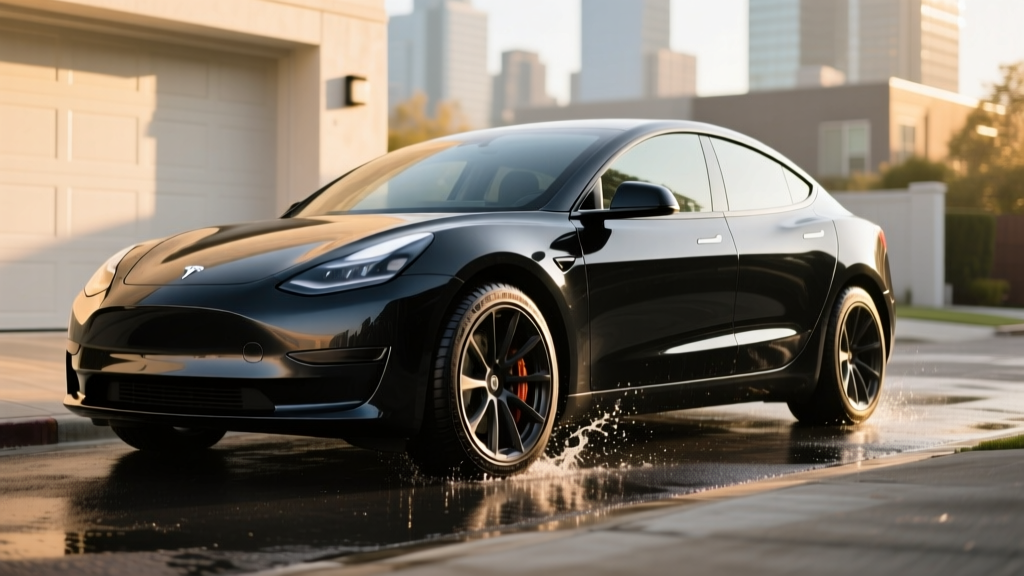
The refreshed Tesla Model 3 (internally dubbed "Highland") entered its second full model year for 2026 with minor trim and packaging tweaks, but the core formula remains one of the most compelling in the EV sedan segment. With up to 363 miles of EPA-estimated range, access to the 60,000+ stall Supercharger network, and a starting price that undercuts several luxury rivals, the Model 3 continues to set the benchmark for premium electric sedans. But the real question for many buyers in 2026 is how the shifting landscape of federal incentives for Tesla Model 3 ownership affects the total cost equation.
In this review, we break down every spec that matters — from real-world range and charging curves to the exact IRS §30D tax credit rules that determine whether you'll save thousands at the point of sale. We've driven multiple trims, charged at dozens of Supercharger and third-party stations, and cross-referenced EPA data with our own logged efficiency figures.
| Spec | Long Range AWD | Performance AWD | Rear-Wheel Drive |
|---|---|---|---|
| EPA Range | 363 mi | 315 mi | 272 mi |
| Battery (usable) | ~75 kWh (NMC) | ~75 kWh (NMC) | ~57.5 kWh (LFP) |
| Peak DC Fast Charge | 250 kW | 250 kW | 170 kW |
| 10–80% DCFC Time | ~25 min | ~25 min | ~30 min |
| Level 2 Home Charging | 11.5 kW (~44 mi/hr) | 11.5 kW (~44 mi/hr) | 11.5 kW (~44 mi/hr) |
| 0–60 mph | 4.2 sec | 2.9 sec | 5.8 sec |
| Horsepower | ~346 hp | ~510 hp | ~271 hp |
| Drivetrain | Dual-Motor AWD | Dual-Motor AWD | RWD |
| MPGe (combined) | 132 MPGe | 119 MPGe | 132 MPGe |
| Efficiency | 25 kWh/100 mi | 28 kWh/100 mi | 25 kWh/100 mi |
| Base MSRP | $42,490 | $52,990 | $38,990 |
Real-World Range: What the EPA Number Doesn't Tell You
Range is where the Model 3 Long Range earns its keep. The 363-mile EPA figure is among the highest of any sedan in its class, trailing only the Lucid Air Pure (419 mi) while costing tens of thousands less. However, EPA testing uses a specific drive cycle that doesn't fully replicate sustained highway speeds or extreme temperatures.
On a 280-mile road trip from Denver to Grand Junction at highway speeds with elevation changes, our Long Range test car arrived with 18% state of charge remaining — consistent with roughly 320 miles of real-world range on that route. Cold weather is the bigger equalizer: lithium-ion batteries lose efficiency in freezing temperatures, and cabin heating (even with the Model 3's standard heat pump) draws significant energy. If you live in a northern climate and commute more than 60 miles round-trip, the Long Range trim is the pragmatic choice over the RWD.
The RWD model uses an LFP (lithium iron phosphate) battery, which is more tolerant of regular 100% charging — Tesla actually recommends charging LFP packs to 100% at least weekly for calibration. The NMC packs in the Long Range and Performance trims benefit from daily charging limits of 80–90% for longevity, reserving 100% for road trips. This is a meaningful ownership distinction that affects usable daily range.
Charging Speed and Infrastructure: Supercharger Advantage
| Charging Level | Power / Rate | Miles Added per Hour | Typical Use Case |
|---|---|---|---|
| Level 1 (120V household) | ~1.4 kW | ~5 mi/hr | Emergency / trickle top-up |
| Level 2 (240V home) | 11.5 kW | ~44 mi/hr | Daily overnight charging |
| DC Fast (Supercharger V3/V4) | Up to 250 kW (LR/Perf) 170 kW (RWD) | ~1,000+ mi/hr at peak | Road trips |
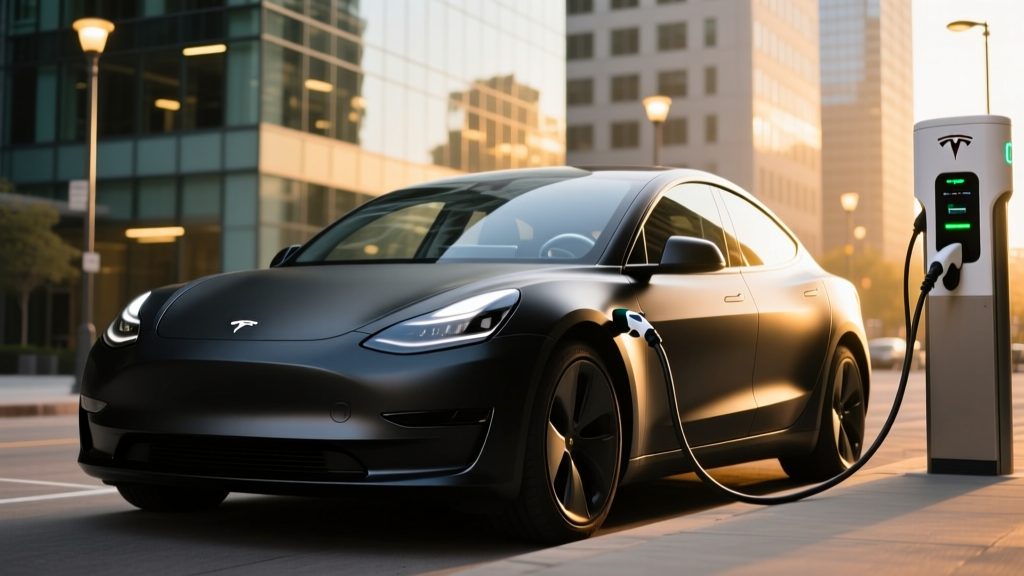
Tesla's Supercharger network remains the gold standard for public DC fast charging in 2026. With over 60,000 connectors globally and near-universal reliability (typically 99%+ uptime at well-maintained stations), it's a significant ownership advantage. The Model 3 Long Range and Performance can peak at 250 kW on V3 and V4 Superchargers, though sustained rates taper as the battery warms and state of charge climbs.
Here's what the charging curve actually looks like in practice: from 10% SoC, the Long Range ramps quickly to ~250 kW, holding near-peak rates until roughly 45% SoC, then stepping down through the 50–80% range. A 10–80% session takes approximately 25 minutes in ideal conditions (battery preconditioned via navigation routing to the charger). Without preconditioning — say, arriving at a Supercharger without the car having navigated there — that same session can stretch to 32–35 minutes as the battery warms up.
The RWD model's LFP chemistry limits peak DC charging to 170 kW. While slower on paper, the smaller ~57.5 kWh battery means the 10–80% session still completes in roughly 30 minutes. For most RWD owners who charge primarily at home, this difference is negligible on the rare road trip.
At home on a Level 2 Wall Connector (48-amp circuit), all trims accept 11.5 kW, adding roughly 44 miles of range per hour. A full overnight charge from 20% to 80% takes about 4 hours — well within the window of a typical night's sleep. Home charging installation costs vary widely: expect $500–$1,500 for a straightforward Wall Connector install if your electrical panel has capacity, or $2,000–$4,000+ if a panel upgrade to 200A is needed. Always get a quote from a licensed electrician before committing.
Performance and Driving Dynamics
The Model 3 Performance remains one of the quickest sedans under $60,000, hitting 0–60 mph in 2.9 seconds with roughly 510 horsepower from its dual-motor setup. The Long Range AWD delivers 4.2 seconds and ~346 hp — quick by any standard and more than adequate for highway merging and passing. The RWD, at 5.8 seconds and ~271 hp, is the efficiency-focused option that still feels brisk in daily driving thanks to instant electric torque.
The Highland refresh brought meaningful improvements to ride quality and cabin isolation. Revised suspension tuning and acoustic glass reduce road noise noticeably compared to pre-2024 Model 3s. The steering remains precise and communicative for an electric sedan, though the lack of a traditional instrument cluster (all information routes through the 15.4-inch center touchscreen) still divides opinion.
Regenerative braking in the Model 3 is aggressive by default, enabling near one-pedal driving in most conditions. Unlike some competitors, Tesla removed the adjustable regen setting in recent software updates — you get one strong regen profile, and most owners adapt within a week. The mechanical brakes are rarely needed in daily driving, which extends pad life considerably.
Federal Incentives for Tesla Model 3: What You Actually Qualify For
The federal EV tax credit under IRS §30D remains one of the most impactful — and most confusing — factors in the EV purchase decision. For 2026, the Model 3's eligibility depends on the specific trim, your income, and evolving battery-sourcing requirements.
| Trim | Base MSRP | MSRP Cap (§30D) | Max Credit | After Max Credit |
|---|---|---|---|---|
| Rear-Wheel Drive | $38,990 | $55,000 (sedan) ✓ | Up to $7,500 | ~$31,490 |
| Long Range AWD | $42,490 | $55,000 (sedan) ✓ | Up to $7,500 | ~$34,990 |
| Performance AWD | $52,990 | $55,000 (sedan) ✓ | Up to $7,500 | ~$45,490 |
All three Model 3 trims fall under the $55,000 MSRP cap for sedans set by the Inflation Reduction Act. However, qualifying for the full $7,500 credit is not automatic. The credit is split into two $3,750 halves:
- $3,750 — Critical Minerals Requirement: A percentage of the battery's critical minerals must be sourced from the U.S. or a free-trade-agreement country. This threshold increases annually.
- $3,750 — Battery Components Requirement: A percentage of battery components must be manufactured or assembled in North America. This threshold also increases annually.
Additionally, buyer income caps apply: modified adjusted gross income cannot exceed $150,000 (single), $225,000 (head of household), or $300,000 (joint filing). You can claim the credit on your tax return or, as of 2024, transfer it to the dealer for a point-of-sale price reduction — which is how most Tesla buyers now receive it, applied directly at delivery.
Tesla's battery sourcing has evolved significantly. As of 2026, the Model 3 Long Range and Performance (built in Fremont, CA, with NMC cells) generally qualify for the full $7,500 credit, but the RWD variant (which may use imported LFP cells from CATL) has seen its eligibility fluctuate between $3,750 and $7,500 depending on the specific production batch and current-year sourcing thresholds. Always verify current eligibility on the official fueleconomy.gov tax credit page and IRS §30D guidance before placing your order, as battery supply chains shift throughout the year.
State and local incentives can stack on top of the federal credit. California's CVRP, Colorado's innovative motor vehicle credit, and various utility rebates can reduce the effective price further — but these vary by jurisdiction, income, and utility territory. Check your state's energy office and local utility for current programs.
Interior, Tech, and Daily Livability
The Model 3's minimalist interior is either its greatest strength or its most polarizing trait, depending on your preferences. The 15.4-inch center touchscreen handles everything: navigation, climate, media, vehicle settings, and even the glovebox release. The Highland refresh added ventilated front seats, ambient lighting, rear-seat ventilation, and a rear touchscreen for climate and media control — addressing the most common complaints about the pre-refresh cabin.
Passenger space is adequate for a compact sedan. Front legroom measures 42.7 inches, rear legroom 35.2 inches. Two adults in the rear will be comfortable; three across is tight. Cargo volume is 23 cubic feet with the 60/40 rear seats upright, expanding to roughly 65 cubic feet folded — competitive with midsize sedans, helped by the trunk's wide hatchback-style opening and the front trunk (frunk) adding another ~3.1 cubic feet for charging cables or a small bag.
The infotainment system remains best-in-class for responsiveness and over-the-air update frequency. Tesla pushes software improvements regularly, adding features incrementally — recent updates have improved navigation routing, added new media apps, and refined Autopilot behavior. However, there is no Apple CarPlay or Android Auto, which remains a dealbreaker for some buyers accustomed to phone-mirroring their preferred ecosystem.
Driver Assistance: Autopilot and FSD Supervised
Every Model 3 ships with Tesla's Basic Autopilot, which includes Traffic-Aware Cruise Control and Autosteer (lane-centering). The optional Enhanced Autopilot ($6,000) adds features like Auto Lane Change, Autopark, and Summon. Full Self-Driving (Supervised), currently priced at $8,000 (or $99/month subscription), adds traffic light and stop sign recognition, city street autosteer, and more aggressive navigation-guided lane changes.
In practice, FSD Supervised in 2026 handles most highway and suburban scenarios competently but still requires regular interventions — particularly in construction zones, complex unprotected left turns, and adverse weather. It's an impressive technology demonstration but not a replacement for an attentive driver. The camera-only vision system (no LiDAR or radar) occasionally struggles with depth perception in high-glare conditions. Buyers should evaluate FSD as a convenience feature, not a path to hands-free commuting.
Warranty, Ownership Costs, and Long-Term Value
Tesla provides a 4-year/50,000-mile basic vehicle warranty and an 8-year/120,000-mile battery and drive unit warranty for the Long Range and Performance trims (8-year/100,000-mile for the RWD). The battery warranty guarantees at least 70% capacity retention over the warranty period — a standard threshold in the industry. Real-world degradation data from Tesla's fleet suggests most Model 3 batteries retain 90%+ capacity after 100,000 miles, with NMC packs showing slightly faster early degradation that stabilizes, while LFP packs degrade more linearly but slowly.
Insurance costs for the Model 3 are higher than average for its class — expect $1,800–$2,800 annually depending on your state, age, driving record, and trim. The Performance variant commands the highest premiums. Tesla Insurance is available in many states and can be competitive, though quotes vary significantly by driver profile.
Maintenance costs are minimal compared to internal-combustion vehicles: no oil changes, no spark plugs, reduced brake wear from regen. Budget for cabin air filter replacement (~$30–50 annually), tire rotation every 6,250 miles, and eventual tire replacement (EVs tend to wear tires faster due to instant torque and heavier weight — expect 30,000–40,000 miles from the stock Michelin or Hankook all-seasons).
Total cost of ownership over 5 years and 75,000 miles, factoring in electricity at $0.14/kWh (national average), insurance, maintenance, and depreciation, typically undercuts a comparably equipped BMW 3 Series or Audi A4 by $8,000–$15,000 — especially when the full $7,500 federal credit applies.
Pros and Cons: An Honest Assessment
Pros
- Class-leading EPA range (363 mi Long Range)
- Access to Supercharger network — the most reliable DC fast-charging infrastructure in North America
- Strong performance across all trims; 2.9s 0–60 in Performance
- Best-in-class infotainment and OTA update cadence
- Competitive pricing after federal tax credit
- Excellent efficiency (25 kWh/100 mi LR/RWD)
- Minimal scheduled maintenance
Cons
- No Apple CarPlay or Android Auto
- Rear visibility limited by sloping roofline and no rear wiper
- Insurance premiums above class average
- FSD Supervised still requires constant driver attention — not self-driving
- RWD trim's DCFC limited to 170 kW
- All controls through touchscreen can be distracting
- Tax credit eligibility for RWD trim may fluctuate
Who Should Buy the 2026 Tesla Model 3?
Choose the Model 3 Long Range AWD if: You commute 40+ miles daily, take regular road trips, live in a climate with cold winters, or want the best range-to-price ratio in a premium sedan. This is the default recommendation for most buyers.
Choose the Model 3 RWD if: You primarily drive in urban/suburban settings, have reliable home charging, want the lowest entry price, and don't plan frequent road trips exceeding 200 miles one-way. The LFP battery's tolerance for daily 100% charging is a bonus for high-mileage commuters who can charge at home.
Choose the Model 3 Performance if: You want supercar-rivaling acceleration in a practical daily driver and are willing to trade ~50 miles of range and higher insurance costs for 2.9-second sprints and track capability.
Look elsewhere if: You need more than 35 cubic feet of cargo space (consider the Model Y), require Apple CarPlay/Android Auto, want a more traditional luxury interior with physical controls (consider the BMW i4 or Hyundai Ioniq 6), or need towing capability (the Model 3 is not rated for towing).
Competitive Landscape: How the Model 3 Stacks Up
The Model 3's key competitors in 2026 include the Hyundai Ioniq 6 (361 mi range, from ~$37,500), BMW i4 eDrive40 (307 mi, from ~$52,200), and the Polestar 2 (320 mi, from ~$49,900). The Ioniq 6 comes closest on range and undercuts on price, but its public charging experience relies on third-party networks (CCS, though Hyundai is transitioning to NACS). The BMW i4 offers a more traditional luxury cabin and CarPlay but costs significantly more and delivers less range. The Polestar 2 has a distinctive Scandinavian design but trails on both range and charging speed.
The Model 3's combination of Supercharger access, efficiency, software maturity, and price (especially after the federal credit) makes it the segment default — not because it's perfect, but because its weaknesses are easier to live with than competitors' trade-offs for most buyers.
Frequently Asked Questions
Does the 2026 Tesla Model 3 qualify for the full $7,500 federal tax credit?
It depends on the trim and your income. All Model 3 trims fall under the $55,000 sedan MSRP cap. The Long Range and Performance trims have generally qualified for the full $7,500 as of early 2026, while the RWD trim's eligibility has fluctuated between $3,750 and $7,500 depending on battery-sourcing requirements for that production batch. Income caps apply ($150K single / $300K joint). Verify current eligibility at fueleconomy.gov before ordering.
What is the real-world range of the Tesla Model 3?
The Long Range AWD's 363-mile EPA rating translates to approximately 310–330 miles in mixed real-world driving, and 260–285 miles in sustained cold weather. The RWD's 272-mile EPA estimate delivers roughly 235–255 miles on the highway. The Performance sits around 275–290 real-world miles.
How fast does the Model 3 charge at home and on the road?
At home on Level 2 (240V, 48A), all trims charge at 11.5 kW, adding ~44 miles per hour — a full overnight charge is easy. On DC fast chargers, the Long Range and Performance peak at 250 kW (10–80% in ~25 minutes), while the RWD peaks at 170 kW (10–80% in ~30 minutes).
Is the Tesla Model 3 worth buying over the Hyundai Ioniq 6 or BMW i4?
For most buyers, yes — the Model 3 offers the best combination of range, charging infrastructure access, software, and price after incentives. The Ioniq 6 is a strong alternative if you prefer a more conventional interior and don't mind relying on non-Tesla charging networks. The BMW i4 suits buyers prioritizing traditional luxury and CarPlay but at a significant price premium.
How long will the Model 3 battery last?
Tesla warranties the battery for 8 years/120,000 miles (Long Range/Performance) or 8 years/100,000 miles (RWD) with at least 70% capacity retention. Real-world fleet data suggests most Model 3 batteries retain 88–92% capacity at 100,000 miles. A full battery replacement out of warranty currently costs approximately $12,000–$16,000 depending on the pack, though prices continue to decline.
Can I charge a Tesla Model 3 on non-Tesla chargers?
Yes. The Model 3 uses the NACS (North American Charging Standard) connector natively. With the growing adoption of NACS across the industry in 2025–2026, more third-party networks are adding NACS cables. You can also use a CCS-to-NACS adapter at Electrify America and other CCS stations. Tesla Superchargers remain the most seamless experience.
Is Tesla's Full Self-Driving worth the cost?
FSD Supervised ($8,000 or $99/month) is a Level 2 driver-assist system that handles many highway and city scenarios but still requires constant driver supervision. It's best evaluated as a convenience feature for long commutes, not a self-driving solution. Many owners find Basic Autopilot (included) sufficient and opt for the $99/month subscription to test FSD before committing to the full purchase.