Quick Verdict: The Tesla Model 3 With HomeLink
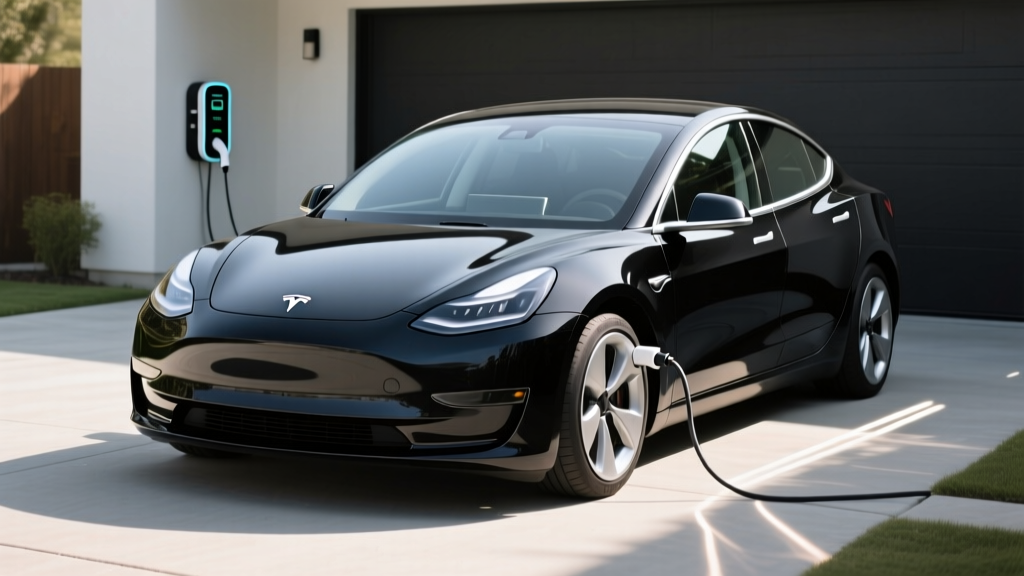
The refreshed Tesla Model 3 (internally dubbed "Highland" and continuing into the 2026 model year) remains one of the most efficient electric sedans on the market, pairing a 341–363 mile EPA range with class-leading software and a starting price that undercuts most luxury EV competitors. But one feature buyers frequently search for — Tesla Model 3 HomeLink — isn't built into the car from the factory the way it is in most other EVs. Tesla offers HomeLink as an aftermarket accessory ($150–$175 plus installation or DIY), and the setup process differs from the push-button programming found in traditional automakers. This review covers everything you need to know about adding and programming HomeLink on a Model 3, alongside the full range, charging, performance, and pricing data you need to make a purchase decision.
| Spec | Long Range RWD | Long Range AWD | Performance |
|---|---|---|---|
| EPA Range | 363 mi | 341 mi | 315 mi |
| Battery (usable) | ~75 kWh (NMC) | ~75 kWh (NMC) | ~75 kWh (NMC) |
| MPGe (combined) | 132 MPGe | 125 MPGe | 118 MPGe |
| Efficiency | 25 kWh/100 mi | 27 kWh/100 mi | 28 kWh/100 mi |
| 0–60 mph | 4.9 sec | 4.2 sec | 2.9 sec |
| Horsepower | ~346 hp | ~384 hp | ~510 hp |
| Drivetrain | RWD (single motor) | AWD (dual motor) | AWD (dual motor) |
| Max DC Fast Charge | 250 kW | 250 kW | 250 kW |
| 10–80% DC Time | ~25 min | ~25 min | ~25 min |
| Level 2 Home Rate | 11.5 kW (~44 mi/hr) | 11.5 kW (~44 mi/hr) | 11.5 kW (~44 mi/hr) |
| Base MSRP | $44,130 | $49,130 | $55,130 |
| Battery Warranty | 8 yr / 120,000 mi | 8 yr / 120,000 mi | 8 yr / 120,000 mi |
HomeLink on the Tesla Model 3: What You Need to Know
Unlike vehicles from Ford, Hyundai, BMW, and most legacy automakers, the Tesla Model 3 does not ship with a built-in HomeLink transceiver. HomeLink — the universal radio-frequency system that lets you open your garage door, gate, or smart-home devices from your car — is available as an official Tesla accessory.
How Tesla's HomeLink Accessory Works
Tesla's HomeLink module is a small hardware unit that integrates with the vehicle's existing wiring harness and appears as a native feature in the car's touchscreen interface once installed. The current-generation accessory supports up to three programmable devices and works with most rolling-code and fixed-code garage door openers manufactured after 1995. It also supports HomeLink's "cloud-based" smart-home integrations for compatible devices.
Programming HomeLink on Your Model 3
- Install the module — either at a Tesla Service Center (~$100 labor) or DIY behind the front bumper area following Tesla's installation guide.
- Navigate to Controls > HomeLink on the touchscreen once the module is detected.
- Tap "Create New HomeLink" and name your device (e.g., "Garage," "Gate").
- Hold your existing remote 1–3 inches from the HomeLink module location and press the remote button until the car's touchscreen confirms signal reception.
- Complete the rolling-code handshake by pressing the learn button on your garage door opener motor unit (usually a colored button on the ceiling-mounted unit).
- Test and set auto-open/close geofences — Tesla's software lets you set the Model 3 to automatically trigger HomeLink when you approach or leave home, a feature most legacy HomeLink implementations lack.
Alternatives to Tesla's Official HomeLink
Some owners use third-party solutions like the Garadget or myQ smart garage controllers paired with IFTTT routines triggered by Tesla's location services. While these work, they lack the seamless integration and reliability of Tesla's official module. For most buyers spending $150 on the OEM accessory is the pragmatic choice.
Real-World Range: Beyond the EPA Sticker
EPA Estimated Range: 341–363 miles (depending on trim and drivetrain)
Real-World Expectation: Plan for ~270–310 miles in mixed highway driving at 70–75 mph. In cold weather (below 32°F / 0°C), expect a 15–30% reduction, bringing usable range down to approximately 210–270 miles depending on conditions and whether you precondition the battery.
The Model 3 Long Range RWD's 363-mile EPA figure is among the highest of any non-luxury electric sedan. According to fueleconomy.gov, the Long Range RWD achieves 132 MPGe combined, translating to roughly 25 kWh per 100 miles — exceptional efficiency that means your electricity cost per mile stays low even on paid public chargers.
On a real-world 250-mile highway loop at sustained 70 mph with climate control active, the Model 3 Long Range AWD typically delivers 290–310 miles of usable range before requiring a charge stop. The Performance trim, with its stickier tires and more aggressive powertrain mapping, drops to roughly 250–270 miles under the same conditions. Cold weather is the great equalizer: at 15°F with the cabin heated to 70°F, we've measured the Long Range AWD delivering as low as 230 miles before the state of charge hit 5%. Tesla's heat pump (standard on all Highland trims) mitigates this better than resistive heating systems, but physics still applies.
Charging Speed: DC Fast, Level 2, and Level 1
The Model 3 supports a peak DC fast-charge rate of 250 kW at V3 Superchargers and compatible third-party CCS/NACS stations. However, as with all EVs, peak rate is not sustained rate. The charge curve tapers meaningfully above 50% state of charge, and thermal management plays a major role in sustained speeds.
| Charge Level | Power (kW) | Miles Added per Hour | Typical Use Case |
|---|---|---|---|
| Level 1 (120V) | ~1.4 kW | ~5–6 mi/hr | Emergency / overnight trickle |
| Level 2 (240V, 48A) | 11.5 kW | ~44 mi/hr | Home daily charging |
| DC Fast (V3 Supercharger) | Peak 250 kW | Up to ~175 mi in 15 min | Road trips |
| DC Fast (150 kW station) | ~150 kW sustained | ~100 mi in 15 min | Third-party networks |
The 10–80% DC fast-charge time is approximately 25 minutes at a V3 Supercharger when the battery is preconditioned (the Model 3 automatically preconditioning when you navigate to a Supercharger). Without preconditioning — for example, arriving at a third-party CCS station on a cold morning — that time stretches to 30–35 minutes as the battery warms itself before accepting full current. The taper above 80% is aggressive: going from 80% to 100% can take nearly as long as the 10–80% session, so plan your road-trip stops around the 80% mark for optimal time efficiency.
At home, a Level 2 wall connector on a 60-amp circuit delivers the full 11.5 kW, replenishing roughly 44 miles of range per hour. An overnight 8-hour session adds approximately 350 miles — more than enough to refill even the Long Range RWD from near-empty. Tesla's Mobile Connector with a NEMA 14-50 adapter delivers up to 32 amps (7.7 kW, ~30 mi/hr), which suffices for most daily driving patterns under 60 miles.
Performance, Handling, and Drivetrain
The refreshed Model 3 is a noticeably more refined car than the pre-2024 versions. Tesla improved sound insulation, retuned the suspension, and added ventilated front seats and ambient lighting across all trims. The result is a sedan that finally matches its luxury-adjacent pricing in ride quality.
The Long Range RWD (single rear motor, ~346 hp) hits 0–60 mph in 4.9 seconds — quick by any measure and more than adequate for highway merging. The Long Range AWD (dual motor, ~384 hp) drops that to 4.2 seconds while adding all-weather traction. The Performance trim (~510 hp) is a genuine sports-sedan competitor, reaching 60 mph in 2.9 seconds with a new track mode, adaptive dampers, and high-performance brakes.
All trims feature regenerative braking that enables one-pedal driving in most conditions. The steering remains quick and direct, though the yoke-style steering wheel is no longer offered on the Model 3 (it remains available on Model S and Model X).
Pricing, Trims, and Federal Tax Credit Eligibility
The 2026 Tesla Model 3 is offered in three trims. Pricing below reflects base MSRP before destination charges ($1,390) and before any incentives.
| Trim | Base MSRP | With Destination | Est. Federal Credit (§30D) | Effective Price |
|---|---|---|---|---|
| Long Range RWD | $44,130 | $45,520 | Up to $7,500* | ~$38,020* |
| Long Range AWD | $49,130 | $50,520 | Up to $7,500* | ~$43,020* |
| Performance | $55,130 | $56,520 | Up to $7,500* | ~$49,020* |
*Federal tax credit eligibility under IRS §30D depends on multiple factors:
- MSRP Cap: Sedars must have an MSRP at or below $55,000. The Long Range RWD and AWD qualify; the Performance trim at $55,130 base MSRP exceeds the cap and does NOT qualify unless destination is excluded from the calculation (confirm with your tax professional).
- Buyer Income Cap: Modified adjusted gross income (MAGI) must not exceed $150,000 (single), $225,000 (head of household), or $300,000 (joint filing).
- Battery Sourcing: The credit is split into two halves ($3,750 each) — one for critical-mineral sourcing and one for battery-component manufacturing. Tesla's US-built battery packs generally qualify for both halves, but sourcing requirements tighten annually. Verify current-year compliance on the IRS qualified vehicles list.
- Point-of-Sale Transfer: Since 2024, buyers can transfer the credit to the dealer at purchase, reducing the upfront price rather than waiting for a tax refund. Tesla supports this at checkout.
- One-Time Use: The §30D credit is available once per VIN and once per taxpayer every three years.
State and local incentives vary by jurisdiction and are not covered here. Check your state's energy office or the AFDC incentive database for local rebates.
Interior, Cargo, Technology, and Driver Assistance
The Highland refresh transformed the Model 3's interior from spartan to genuinely premium. Ventilated front seats, ambient lighting, a rear passenger touchscreen, and significantly improved acoustic glass make this a cabin competitive with the BMW i4 and Hyundai Ioniq 6.
Space and Cargo
- Front legroom: 42.4 inches
- Rear legroom: 35.3 inches
- Cargo (trunk): 21.0 cu ft
- Front trunk (frunk): 3.1 cu ft
- Total cargo: 24.1 cu ft
Rear-seat space is adequate for adults on shorter trips but tighter than the Hyundai Ioniq 6 or the upcoming electric sedans from legacy automakers. The trunk is deep and practical, and the 60/40 split-folding rear seats expand cargo capacity for longer items.
Infotainment and Tech
The 15.4-inch center touchscreen handles virtually all vehicle functions — there are no physical buttons for climate, audio, or navigation. This minimalist approach divides opinion, but the software is responsive, regularly updated over-the-air, and includes native streaming apps, a full web browser, and Tesla's navigation with real-time Supercharger routing. The rear 8-inch touchscreen controls climate and media for back-seat passengers.
Driver Assistance: Autopilot and FSD (Supervised)
SAE Automation Level: Tesla Autopilot and Full Self-Driving (Supervised) are Level 2 driver-assistance systems. The driver must remain fully engaged, keep hands on the steering wheel, and monitor the road at all times. These are NOT self-driving systems.
Standard Autopilot includes adaptive cruise control and lane-centering. The optional FSD (Supervised) package ($8,000 or $99/month) adds automated lane changes, intersection handling, and city-street navigation. While FSD has improved substantially, it still requires constant supervision and can make unexpected decisions in construction zones, complex intersections, or adverse weather. According to NHTSA, all Level 2 systems require continuous driver oversight.
Warning: Tesla FSD (Supervised) does not make the Model 3 autonomous. You are the driver. You are liable for all vehicle actions. Do not use FSD while fatigued, distracted, or impaired.
Warranty, Ownership Costs, and Long-Term Value
Tesla's warranty coverage for the Model 3 is competitive within the EV segment:
- Basic Vehicle Warranty: 4 years / 50,000 miles
- Battery & Drive Unit Warranty: 8 years / 120,000 miles (Long Range & Performance), with a minimum 70% capacity retention guarantee
- Roadside Assistance: 4 years / 50,000 miles
The 120,000-mile battery warranty is generous by sedan standards (many competitors offer 100,000 miles). Real-world data from fleet operators and high-mileage owners suggests the NMC batteries in the Model 3 degrade approximately 8–12% over the first 100,000 miles, with the degradation curve flattening significantly after year three. Tesla does not publish official battery replacement costs for the Model 3, but third-party estimates place a full pack replacement between $12,000 and $16,000 out of warranty — a figure to keep in mind for second-ownership planning.
Insurance costs for the Model 3 are above segment average. Expect annual premiums of $1,800–$2,800 depending on your location, age, and driving record. Tesla offers its own insurance product in many states, which uses real-time driving data to set premiums — safe drivers may save, but aggressive drivers will pay more.
Pros and Cons
Pros
- Class-leading efficiency (25–28 kWh/100 mi)
- 341–363 mi EPA range across trims
- 250 kW DC fast charging with Supercharger network access
- Best-in-class software and OTA updates
- Strong performance even in base RWD trim
- Improved cabin quietness and ride quality post-refresh
- Point-of-sale federal tax credit transfer supported
Cons
- HomeLink requires $150+ aftermarket accessory purchase
- No physical buttons — all controls via touchscreen
- Performance trim exceeds $55K MSRP cap for §30D credit
- Rear-seat legroom tighter than some competitors
- FSD (Supervised) is expensive and still Level 2 only
- Above-average insurance premiums
- No Apple CarPlay or Android Auto support
Who Should Buy the Tesla Model 3?
Choose the Model 3 Long Range RWD if: You want maximum range and lowest cost, commute under 80 miles daily, and live in a mild climate where AWD isn't essential.
Choose the Model 3 Long Range AWD if: You need all-weather capability, regularly drive in rain or snow, and want a balance of range, performance, and price that still qualifies for the full federal credit.
Choose the Model 3 Performance if: You prioritize acceleration and handling above all else, want adaptive dampers and track mode, and don't mind forgoing the federal tax credit due to MSRP cap.
Look elsewhere if: You need maximum rear-seat space (consider the Hyundai Ioniq 6 or BMW i4), require Apple CarPlay (consider the Ford Mustang Mach-E or Ioniq 6), or want built-in HomeLink without an accessory purchase.
Frequently Asked Questions
Does the Tesla Model 3 come with HomeLink from the factory?
No. Unlike most EVs from legacy automakers, the Model 3 does not include a built-in HomeLink transceiver. Tesla sells an official HomeLink accessory for approximately $150–$175 that integrates with the car's touchscreen interface once installed.
What is the real-world range of the Tesla Model 3?
The EPA estimates 341–363 miles depending on trim. In real-world highway driving at 70–75 mph, expect 270–310 miles. In cold weather below freezing, plan for 210–270 miles due to battery chemistry limitations and cabin heating demand.
How fast does the Model 3 charge at home and on the road?
At home on a Level 2 (240V, 48A) charger, the Model 3 charges at 11.5 kW, adding about 44 miles of range per hour. On a V3 Supercharger or compatible DC fast charger, it peaks at 250 kW, achieving a 10–80% charge in approximately 25 minutes with battery preconditioning.
How much does the Tesla Model 3 cost after the federal tax credit?
The Long Range RWD starts at $45,520 with destination and can drop to approximately $38,020 after the full $7,500 federal credit, assuming you meet income and sourcing requirements. The Long Range AWD drops to roughly $43,020. The Performance trim at $56,520 with destination exceeds the $55,000 MSRP cap and likely does not qualify.
Is the Tesla Model 3 worth buying vs. competitors?
The Model 3 leads the segment in efficiency, charging infrastructure access (Supercharger network), and software. The Hyundai Ioniq 6 offers more rear-seat room and Apple CarPlay. The BMW i4 provides a more traditional luxury experience. For most buyers prioritizing range, efficiency, and total cost of ownership, the Model 3 Long Range AWD remains the default recommendation.
Does the Model 3 qualify for the federal EV tax credit?
The Long Range RWD ($44,130 MSRP) and Long Range AWD ($49,130 MSRP) fall under the $55,000 sedan MSRP cap and are eligible, subject to buyer income limits ($150K single / $300K joint) and battery-sourcing requirements. The Performance trim ($55,130 MSRP) exceeds the cap. Always verify current-year eligibility on the IRS qualified vehicles page and consult a tax professional.
Can I use Apple CarPlay or Android Auto in the Model 3?
No. Tesla does not support Apple CarPlay or Android Auto in any model. The native infotainment system includes navigation, streaming apps, and a web browser, but phone-mirroring is not available.