Tesla Model 3 HomeLink: The Feature Owners Search For (And How It Fits the 2026 Package)
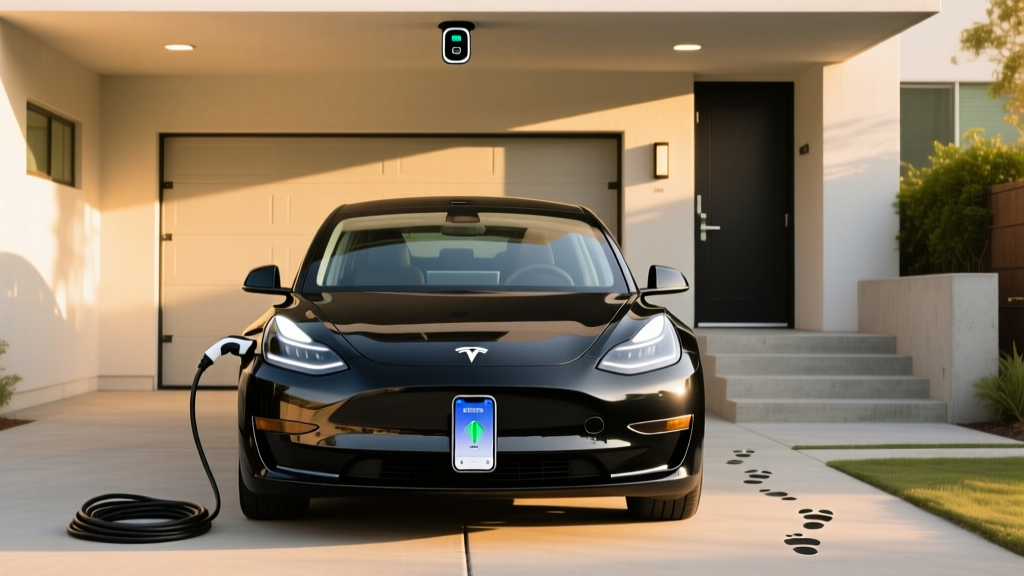
If you've landed here searching for Model 3 HomeLink, you're likely a current or prospective Tesla owner trying to open your garage door with your car. Here's the essential answer first: the Tesla Model 3 does not include a built-in HomeLink transceiver from the factory. Unlike traditional automakers that embed HomeLink in the rearview mirror or overhead console, Tesla requires you to purchase the Tesla HomeLink accessory separately (typically ~$175) and have it installed in the front bumper area, where it integrates with the car's touchscreen for programming.
Once installed, HomeLink on the Model 3 works like any other HomeLink system — you can program up to three RF devices (garage doors, gates, smart-home lights) and trigger them via the vehicle's touchscreen or set location-based auto-open when you approach home. The installation takes roughly 30 minutes at a Tesla Service Center, and the module mounts behind the front fascia near the lower grille.
But HomeLink is just one piece of ownership. Below, we break down the full 2026 Tesla Model 3 lineup — range, charging, pricing, tax credit eligibility, and how it stacks up against the Hyundai Ioniq 6, BMW i4, and Polestar 2 — so you can decide if the Model 3 is the right EV for your driveway (and your garage).
2026 Tesla Model 3 Lineup: Trims, Range, and Battery Specs
The 2026 Tesla Model 3 continues with the "Highland" refresh architecture introduced in late 2023, with incremental software and efficiency updates. Tesla offers three core trims in the US market:
| Spec | Model 3 RWD | Model 3 Long Range AWD | Model 3 Performance |
|---|---|---|---|
| EPA Range | 272 mi | 346 mi | 315 mi |
| Battery (usable) | ~60 kWh (LFP) | ~79 kWh (NMC) | ~79 kWh (NMC) |
| Drivetrain | RWD, single motor | AWD, dual motor | AWD, dual motor |
| Horsepower | 271 hp | 346 hp | 510 hp |
| 0–60 mph | 5.8 sec | 4.2 sec | 2.9 sec |
| MPGe (combined) | 132 MPGe | 130 MPGe | 116 MPGe |
| kWh/100 mi | 25 | 26 | 29 |
| Base MSRP | $38,990 | $45,990 | $52,990 |
| Destination Fee | $1,390 | $1,390 | $1,390 |
Source: fueleconomy.gov and Tesla US configurator. Specs reflect 2026 model year as of publication.
The Long Range AWD's EPA sticker reads 346 miles, but plan for ~270–290 miles on sustained highway driving at 70+ mph, and ~220–250 miles in sub-freezing winter conditions (LFP and NMC batteries both lose efficiency in cold weather, with LFP showing slightly more range loss). The RWD model's 272-mile EPA figure translates to roughly 210–230 miles highway, ~180 miles in winter cold. These aren't pessimistic — they reflect real-world physics: higher speeds increase aero drag, and cold temperatures increase internal battery resistance while consuming energy for cabin/battery heating.
Charging Speed: DC Fast Charging and Home Level 2
Charging speed remains one of the Model 3's strongest attributes, particularly with access to the Tesla Supercharger network (now 20,000+ stalls in North America). Here's what the numbers look like:
| Charging Level | Max Power | Speed / Time | Notes |
|---|---|---|---|
| Level 1 (120V household) | ~1.4 kW | ~3–4 mi/hr | Emergency/trickle only |
| Level 2 (240V home, 48A Wall Connector) | 11.5 kW | ~33–44 mi/hr | Full charge overnight in ~7–9 hrs |
| DC Fast (Supercharger V3) | 250 kW peak | 10–80% in ~25 min (Long Range) | Peaks at ~250 kW below 40% SoC, tapers significantly above 60% |
| DC Fast (Supercharger V4) | 250 kW (current) | Similar to V3 for Model 3 | V4 architecture supports higher future power; Model 3 architecture limits to ~250 kW |
| CCS Adapter (non-Tesla DCFC) | ~170 kW typical | 10–80% in ~32 min | Requires Tesla CCS adapter (~$175); Electrify America, EVgo compatible |
Charging-curve reality: The Model 3 Long Range peaks near 250 kW only when the battery is preconditioned (via navigation to a Supercharger) and at a low state of charge (below 30–40%). Above 60% SoC, the rate drops to roughly 100–120 kW, and above 80% it falls below 50 kW. This is standard lithium-ion behavior — the battery management system restricts current at higher SoC to protect cell longevity. Plan your road-trip stops around the 10–80% window for the fastest sessions.
The RWD model with its LFP battery has a slightly different charging profile: peak DC rate is roughly 170 kW, with a 10–80% time closer to ~30 minutes. LFP cells accept charge more conservatively at the top end, though Tesla recommends charging LFP batteries to 100% at least weekly to maintain accurate SoC calibration — a key ownership difference from the NMC Long Range and Performance models, which Tesla recommends keeping between 20–80% for daily use.
Pricing, Tax Credits, and True Cost
Tesla's pricing has stabilized after years of volatility. Here's the 2026 Model 3 pricing landscape with federal tax credit context:
| Trim | MSRP + Dest. | Federal §30D Credit | Effective Price (if eligible) |
|---|---|---|---|
| RWD | $40,380 | Up to $7,500 (point-of-sale) | ~$32,880 |
| Long Range AWD | $47,380 | Up to $7,500 (point-of-sale) | ~$39,880 |
| Performance | $54,380 | Up to $7,500 (point-of-sale) | ~$46,880 |
- Income caps: AGI ≤ $150,000 (single), $225,000 (head of household), $300,000 (joint)
- MSRP cap: ≤ $55,000 for sedans (all Model 3 trims qualify)
- Battery sourcing: Must meet critical minerals + battery component requirements per IRS — Tesla's US-built LFP (CATL cells) and NMC packs have varying compliance by build date. Verify current eligibility at fueleconomy.gov before purchase.
- Point-of-sale transfer: You can apply the credit as a down-payment reduction at delivery (requires dealer/manufacturer participation and IRS registration)
- Tax liability: Credit is now transferable at POS, so it's no longer limited by your personal tax liability — but income caps still apply
Credit rules change frequently. Consult a tax professional and verify at IRS.gov before committing.
Interior, Cargo, and Daily Usability
The refreshed Model 3 interior is markedly quieter and better-finished than pre-2024 versions. Tesla added acoustic glass, ventilated front seats, ambient lighting, and a rear touchscreen for passengers. The minimalist approach remains — no physical instrument cluster, no stalks (turn signals are on the steering wheel), and virtually all controls live on the 15.4-inch center touchscreen.
Dimensions and space:
- Front legroom: 42.7 inches
- Rear legroom: 35.2 inches
- Trunk (rear): 21.0 cu ft
- Frunk (front): 3.1 cu ft
- Total cargo: 24.1 cu ft (rear seats up), ~56 cu ft (seats folded)
- Curb weight: 3,862 lbs (RWD) / 4,034 lbs (Long Range AWD)
Compared to the Hyundai Ioniq 6 (12.3 cu ft trunk) or BMW i4 (16.6 cu ft), the Model 3's liftback design provides meaningfully better cargo flexibility. The frunk is small but useful for charging cables and a tire-inflation kit.
Notable drawbacks: The turn-signal buttons on the steering wheel remain polarizing — many owners adapt within weeks, but some never prefer them over a traditional stalk. Rear visibility is limited by the sloped roofline (a backup camera is essential). And the absence of Apple CarPlay/Android Auto continues to frustrate buyers who prefer phone-mirroring over Tesla's native infotainment, however capable it is.
Tech, Autopilot, and the HomeLink Integration
The Model 3 runs Tesla's latest infotainment software with Netflix/YouTube streaming (while parked), a strong navigation system with real-time Supercharger routing, and over-the-air updates that regularly add features.
Driver assistance: Every Model 3 ships with Basic Autopilot (adaptive cruise + lane centering), which is an SAE Level 2 system — meaning you must remain engaged, hands on or near the wheel, and eyes on the road at all times. Full Self-Driving (Supervised) is available as a $8,000 add-on (or $99/month subscription) and adds city-street navigation, traffic-light recognition, and more assertive lane changes — but it remains Level 2. The driver is legally and practically responsible for all vehicle operation.
HomeLink integration (when the accessory is installed) appears as a tile on the touchscreen. You can:
- Program up to 3 devices (garage door, gate, HomeKit-compatible smart-home triggers)
- Set geofenced auto-open/close when arriving/leaving home
- Name each device for easy identification
- Trigger manually from the touchscreen or via voice command
The HomeLink module communicates via RF (310–390 MHz range, compatible with most major garage-door opener brands including LiftMaster, Chamberlain, Genie, and Craftsman). For newer openers with rolling-code security, the programming process requires a ladder-and-button-press step on the opener motor itself — standard HomeLink protocol, not Tesla-specific.
Warranty, Battery Longevity, and Ownership Costs
| Coverage | Terms |
|---|---|
| Basic Vehicle Warranty | 4 years / 50,000 miles |
| Battery & Drive Unit (RWD, LFP) | 8 years / 100,000 miles (70% minimum capacity retention) |
| Battery & Drive Unit (Long Range / Performance, NMC) | 8 years / 120,000 miles (70% minimum capacity retention) |
| Roadside Assistance | 4 years / 50,000 miles |
Battery degradation reality: Tesla's LFP cells (RWD) are known for excellent cycle life — data from fleet analytics suggest ~5–8% degradation over 100,000 miles with regular 100% charging. The NMC packs in the Long Range and Performance models typically show ~8–12% degradation over 120,000 miles when kept in the 20–80% daily window. Full battery replacement out of warranty is expensive — roughly $12,000–$16,000 depending on pack size — but catastrophic failure within the first 150,000 miles is statistically rare based on current fleet data.
5-year ownership cost estimate (Long Range AWD, 15,000 mi/yr):
- Purchase (after $7,500 credit): ~$39,880
- Electricity (at $0.14/kWh national avg): ~$3,900 over 5 years
- Insurance (national EV avg): ~$9,500 over 5 years
- Maintenance (tires, cabin filter, wiper fluid): ~$2,200 over 5 years
- Estimated 5-yr depreciation: ~$14,000
- Total 5-yr cost of ownership: ~$69,480 (or ~$13,896/year)
For comparison, a similarly equipped Toyota Camry V6 or Honda Accord at ~$38,000 might total ~$62,000 over 5 years with higher fuel costs but lower insurance and depreciation. The Model 3's advantage is strongest in states with cheap electricity and where you can charge at home.
How It Compares: Model 3 vs. Ioniq 6, BMW i4, Polestar 2
✓ Pros
- Best-in-class Supercharger network access (reliability unmatched)
- Excellent efficiency (130 MPGe combined LR)
- Strong real-world range (346 mi EPA Long Range)
- OTA updates continuously add features
- Best resale value in the EV sedan segment
- HomeLink + geofencing for seamless garage entry
- Spacious liftback cargo area
✗ Cons
- No Apple CarPlay / Android Auto
- Turn-signal buttons (no stalk) polarizing
- HomeLink is a $175+ add-on, not standard
- Service center wait times can be long in some markets
- Insurance premiums above segment average
- Rear-seat headroom tight for 6'+ passengers
- Minimalist interior not for everyone
Model 3 vs. Hyundai Ioniq 6: The Ioniq 6 SE Long Range offers 361 miles EPA at a lower starting price (~$42,500), but its CCS charging network access is less reliable than Tesla's Supercharger ecosystem. The Ioniq 6 has CarPlay but a smaller trunk (12.3 cu ft). Choose the Ioniq 6 if you prioritize range-per-dollar and traditional controls; choose the Model 3 if charging infrastructure and software matter most.
Model 3 vs. BMW i4 eDrive40: The i4 is a premium alternative at ~$57,000 MSRP with a more traditional luxury interior, physical controls, and CarPlay. Range is 301 miles EPA. The i4 charges at up to 200 kW DC. Choose the i4 if build quality and dealer service matter; choose the Model 3 if you want lower cost and better efficiency.
Model 3 vs. Polestar 2: The Polestar 2 Long Range Dual Motor delivers 276 miles EPA at ~$54,000, with Google built-in and excellent build quality. It charges at 200 kW DC. The Model 3 wins on range, efficiency, and charging speed; the Polestar wins on interior materials and physical controls.
Who Should Buy the 2026 Tesla Model 3?
- Choose the Model 3 RWD if: You commute under 40 miles daily, charge at home, want the lowest entry price, and don't need AWD. LFP durability is excellent for daily 100% charging.
- Choose the Model 3 Long Range AWD if: You take regular road trips (300+ miles), live in a cold climate where AWD matters, or want the maximum range buffer for Supercharger-free stretches.
- Choose the Model 3 Performance if: You want sports-sedan acceleration (2.9s 0–60) and track-capable handling, and accept the 31-mile range trade-off vs. Long Range.
- Look elsewhere if: You need CarPlay, prefer physical controls, want a traditional dealer service experience, or need more than 24 cu ft of cargo space (consider the Model Y or Ioniq 5).
Frequently Asked Questions
How do I install HomeLink on my Tesla Model 3?
Purchase the Tesla HomeLink module from the Tesla Shop or your local Service Center (~$175 for the part). Schedule an installation appointment — the module mounts behind the front bumper fascia and connects to the vehicle's CAN bus. Installation typically takes 30–45 minutes. After installation, the HomeLink tile appears on your touchscreen for programming.
Does the Model 3 HomeLink work with my garage door opener?
HomeLink is compatible with most major garage door opener brands operating in the 310–390 MHz RF range, including LiftMaster, Chamberlain, Genie, Craftsman, and Overhead Door. For rolling-code openers (most units manufactured after 2000), you'll need to press the "learn" button on the opener motor unit during programming. Check your opener's manual for the exact procedure.
What is the real-world range of the 2026 Tesla Model 3 Long Range?
EPA-rated at 346 miles, real-world highway driving at 70–75 mph yields approximately 270–290 miles in moderate temperatures. In winter conditions (below 32°F), expect 220–250 miles due to battery heating demands and increased cabin energy use. City driving with regenerative braking can approach or slightly exceed the EPA figure.
Does the 2026 Tesla Model 3 qualify for the $7,500 federal tax credit?
The Model 3 qualifies for up to $7,500 under IRS §30D, but eligibility depends on your income (AGI caps apply), the vehicle's battery-sourcing compliance (which varies by build date and battery chemistry), and the MSRP cap ($55,000 for sedans — all Model 3 trims fall under this). Verify current eligibility at fueleconomy.gov and consult a tax professional. The credit can be transferred at point-of-sale as a purchase-price reduction.
How fast does the Model 3 charge at home?
Using a Tesla Wall Connector on a 60A circuit (48A continuous), the Model 3 charges at up to 11.5 kW, adding roughly 33–44 miles of range per hour. A full charge from 10% to 100% takes approximately 7–9 hours depending on the battery pack size. On a standard 240V/40A dryer-style circuit, expect ~7.7 kW and roughly 25–30 miles per hour of charging.
Is the Model 3 worth buying vs. the competition in 2026?
The Model 3 Long Range AWD at ~$39,880 (after federal credit) offers the best combination of range, charging infrastructure, efficiency, and software in the electric sedan segment. Its main advantages over the Ioniq 6, BMW i4, and Polestar 2 are Supercharger network reliability and over-the-air feature updates. Its main weaknesses are the lack of CarPlay, minimalist interior, and the HomeLink add-on cost. For most EV sedan buyers who can charge at home, the Model 3 remains the default recommendation — but test-drive competitors before committing if physical controls and premium interior finish are priorities.
Sources: fueleconomy.gov, IRS.gov §30D Clean Vehicle Credits, Tesla.com Model 3, NHTSA.gov.