Quick Verdict: The Refreshed Model 3 Remains the EV Benchmark — With One Expensive Caveat
The 2026 Tesla Model 3 (internally known as the "Highland" refresh) continues to dominate the compact electric sedan segment with industry-leading efficiency, a refined cabin, and one of the best DC fast-charging curves on the market. But beneath the minimalist interior lies a component that has quietly become one of the most expensive single-part repairs in the EV world: the steering wheel assembly. This review covers everything you need to know about the 2026 Model 3 — range, charging, pricing, tax credits, and the real story on Tesla steering wheel repair costs that every current and prospective owner should understand.
If you're cross-shopping the Model 3 against the Hyundai Ioniq 6, BMW i4, or Polestar 2, the Tesla still wins on charging infrastructure and software integration. But ownership costs beyond the purchase price deserve a hard look.
2026 Tesla Model 3: Full Specifications at a Glance
| Specification | Long Range AWD | Performance | RWD (Standard) |
|---|---|---|---|
| EPA Range | 341 miles | 315 miles | 272 miles |
| Battery (usable) | 75 kWh (NMC) | 75 kWh (NMC) | 57.5 kWh (LFP) |
| Drivetrain | Dual-Motor AWD | Dual-Motor AWD | Rear-Wheel Drive |
| Horsepower | 346 hp | 510 hp | 271 hp |
| 0–60 mph | 4.2 sec | 2.9 sec | 5.8 sec |
| Max DC Fast Charge | 250 kW | 250 kW | 170 kW |
| 10–80% DC Time | ~25 min | ~25 min | ~30 min |
| Level 2 Home Rate | 11.5 kW (~44 mi/hr) | 11.5 kW (~44 mi/hr) | 11.5 kW (~44 mi/hr) |
| MPGe (combined) | 132 MPGe | 117 MPGe | 138 MPGe |
| kWh/100 mi | 25 kWh | 29 kWh | 24 kWh |
| Base MSRP | $47,740 | $54,990 | $38,990 |
| Battery Warranty | 8 yr / 120,000 mi | 8 yr / 120,000 mi | 8 yr / 100,000 mi |
Source: EPA / fueleconomy.gov
Real-World Range: What the EPA Sticker Doesn't Tell You
Real-World Highway (70–75 mph, mild weather): ~285–305 miles
Real-World City/Mixed Commute: ~310–330 miles
Cold-Weather Highway (below 30°F): ~240–270 miles (20–30% reduction)
The Model 3 Long Range's 341-mile EPA figure is among the best in its class, but real-world results depend heavily on how and where you drive. Tesla's thermal management system is excellent — the heat pump (standard since the 2021 refresh) significantly reduces cold-weather cabin energy draw compared to older resistive heaters. However, highway driving at sustained 75+ mph speeds pushes consumption to roughly 280–300 Wh/mile, cutting effective range to around 285–305 miles on a full charge.
In winter conditions (20°F and below), expect a 20–30% range reduction on highway trips. The LFP battery in the RWD trim is more susceptible to cold-weather range loss because LFP chemistry has lower ionic conductivity at low temperatures. Preconditioning the battery via the Tesla app before departure mitigates some of this, but LFP owners in northern climates should plan for roughly 200–220 miles of usable winter range on the RWD model.
The RWD trim's 272-mile EPA rating, paired with its 138 MPGe combined efficiency, makes it the most energy-efficient Model 3 variant — a compelling option for commuters with reliable home charging who rarely road-trip beyond 200 miles.
Charging Speed and Infrastructure: Still the Gold Standard
| Charging Level | Power | Miles Added/Hour | Notes |
|---|---|---|---|
| Level 1 (120V outlet) | ~1.2 kW | ~4–5 mi/hr | Emergency/trickle only |
| Level 2 (240V home) | 11.5 kW | ~44 mi/hr | Full charge in ~7–8 hours |
| DC Fast Charge (Long Range) | 250 kW peak | ~1,000 mi/hr (peak) | 10–80% in ~25 min |
| DC Fast Charge (RWD/LFP) | 170 kW peak | ~700 mi/hr (peak) | 10–80% in ~30 min |
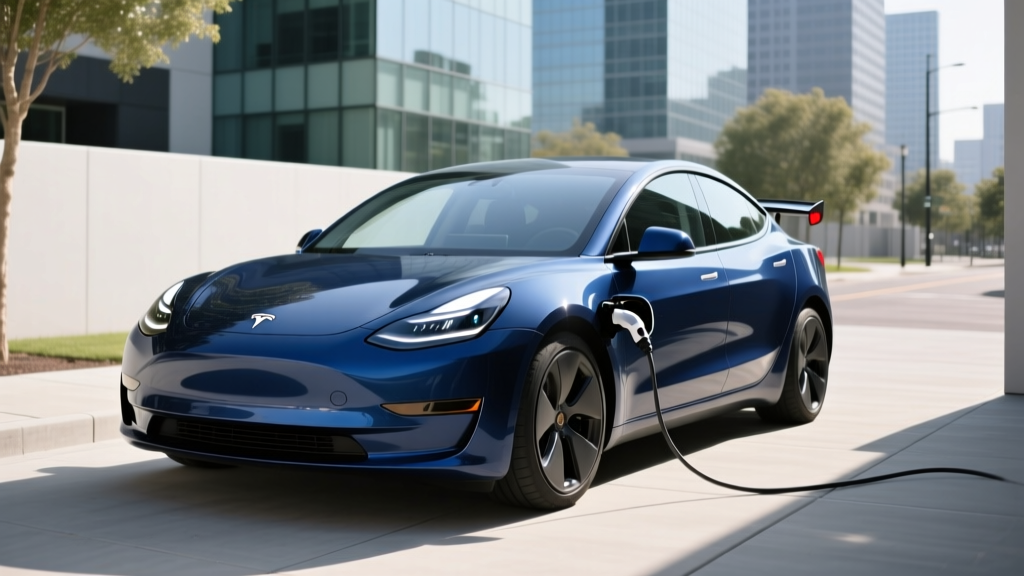
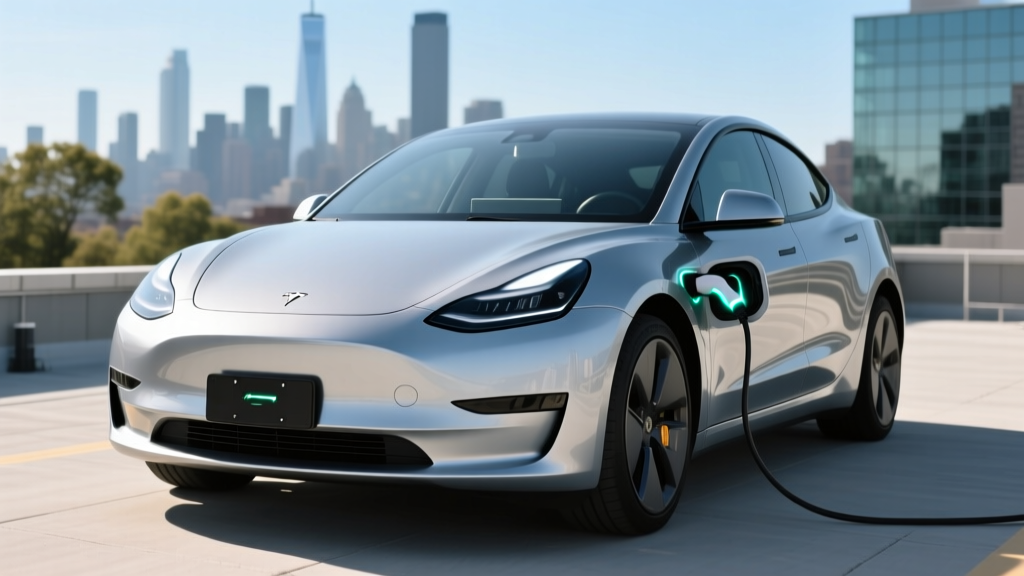
The Long Range and Performance trims peak at 250 kW on V3 Superchargers. In practice, the charge curve is aggressive early — you'll see 250 kW from roughly 5–30% SoC — before tapering to ~100 kW around 60% and dropping sharply past 80%. This is why Tesla (and every other manufacturer) quotes 10–80% times rather than 0–100%.
For home charging, a 48-amp Level 2 wall connector on a 60-amp circuit delivers the full 11.5 kW the Model 3's onboard charger can accept. Most owners report waking up to a full battery every morning with a standard overnight charge. Installation typically runs $800–$2,000 depending on your panel capacity and conduit run distance — factor in a possible $1,500–$3,000 panel upgrade if you're running a 200-amp service with limited headroom.
The RWD trim's LFP battery has one charging advantage: Tesla recommends charging LFP to 100% regularly (unlike NMC, where daily charging to 80% preserves longevity). This effectively gives the RWD its full 272-mile range every day, partially offsetting its smaller battery.
Tesla Steering Wheel Repair: The Ownership Cost Nobody Talks About
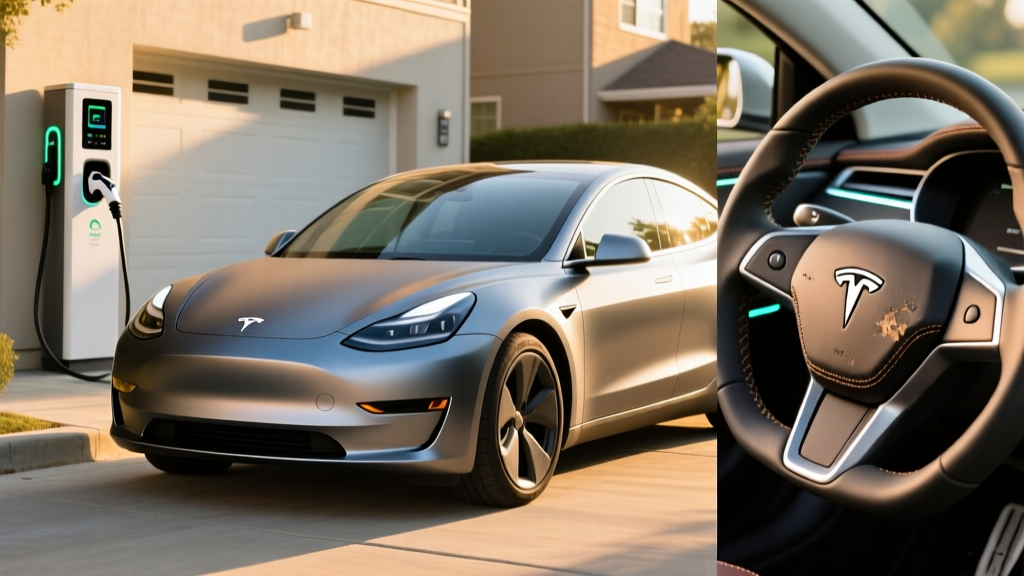
The 2026 Model 3 Highland features a redesigned, flat-bottom steering wheel with integrated capacitive touch controls, heated elements, and a tightly packaged electronics module behind the hub. While the wheel itself is an improvement over the pre-Highland generation in feel and ergonomics, it has introduced a repair complexity that catches many owners off guard.
Why Tesla steering wheel repair is expensive:
- Integrated electronics: The steering wheel houses capacitive touch sensors, scroll wheels, heating elements, and the airbag module as a single assembly. Damage to any one component often requires replacing the entire unit.
- Calibration requirement: Post-replacement, the steering angle sensor and Autopilot/FSD camera calibration must be re-verified through Tesla's diagnostic software — a dealer-only or mobile-ranger procedure.
- Parts cost: A replacement steering wheel assembly for the 2026 Model 3 Highland runs approximately $800–$1,400 for the part alone, depending on trim and whether the heated function is included.
- Labor: Tesla Service Centers typically quote 1.5–2.5 hours of labor at $175–$225/hr, adding $260–$560. Mobile Ranger service may be available in some markets at similar rates.
- Total out-of-pocket: Expect $1,100–$2,000 for a full steering wheel replacement outside of warranty coverage.
Common causes of steering wheel repair needs:
- Leather/synthetic material peeling or cracking (cosmetic, but worsens over time)
- Capacitive touch button failure (unresponsive scroll wheels or touch zones)
- Heated steering element failure (one side or full ring goes cold)
- Physical damage from collisions or improper aftermarket modifications
- Steering angle sensor faults triggering Autopilot warnings
Warranty coverage: The steering wheel assembly is covered under Tesla's 4-year/50,000-mile New Vehicle Limited Warranty. If a capacitive button or heating element fails within that window, Tesla covers it. Outside warranty, owners are on the hook. Some have reported success with third-party leather wrapping services ($200–$400) for cosmetic peeling issues that don't affect electronics.
This is a real ownership cost to budget for, especially as Highland Model 3s age past the 50,000-mile warranty threshold. It's not a dealbreaker, but it's the kind of specific, non-obvious expense that separates informed buyers from surprised ones.
Pricing, Trims, and Federal Tax Credit Eligibility
| Trim | Base MSRP | §30D Credit Eligibility | Effective Price (with max credit) |
|---|---|---|---|
| RWD (Standard) | $38,990 | Eligible (below MSRP cap, meets sourcing) | ~$31,490 |
| Long Range AWD | $47,740 | Eligible (below $55K sedan cap) | ~$40,240 |
| Performance | $54,990 | Eligible (below $55K sedan cap) | ~$47,490 |
Key §30D federal tax credit rules for 2026 (source: IRS.gov):
- MSRP cap: Sedans must be at or below $55,000. All three Model 3 trims currently qualify.
- Buyer income cap: Modified AGI must not exceed $150,000 (single), $225,000 (head of household), or $300,000 (joint). You lose eligibility dollar-for-dollar above these thresholds.
- Battery sourcing: At least 60% of critical minerals and 75% of battery components must be sourced from the US or FTA-partner nations. Tesla's current Model 3 battery supply chain meets these thresholds, but this is subject to annual IRS updates — verify at point of sale.
- Point-of-sale transfer: You can transfer the credit to the dealer at purchase, reducing the purchase price directly rather than waiting for a tax refund. This is available regardless of tax liability.
- One credit per vehicle, one per taxpayer: You can claim one new EV credit per year. The VIN must not have been previously transferred with a credit.
Important: Tax credit eligibility can change based on IRS sourcing determinations and your personal tax situation. Always verify current-year rules at IRS.gov and consult a tax professional before relying on the credit in your purchase decision.
Performance, Interior, and Tech: What Daily Ownership Feels Like
The 2026 Model 3 Highland is noticeably quieter than its predecessor. Tesla added acoustic glass to all four doors and redesigned suspension bushings, which together reduce highway cabin noise by a measurable margin. The ride quality on 18-inch Photon wheels is compliant enough for rough pavement, though the 19-inch Nova wheels trade some comfort for sharper turn-in.
Interior dimensions:
- Front legroom: 42.7 inches
- Rear legroom: 35.2 inches
- Trunk cargo: 23 cu ft (rear seats up), 60 cu ft (seats folded)
- Frunk: 3.1 cu ft
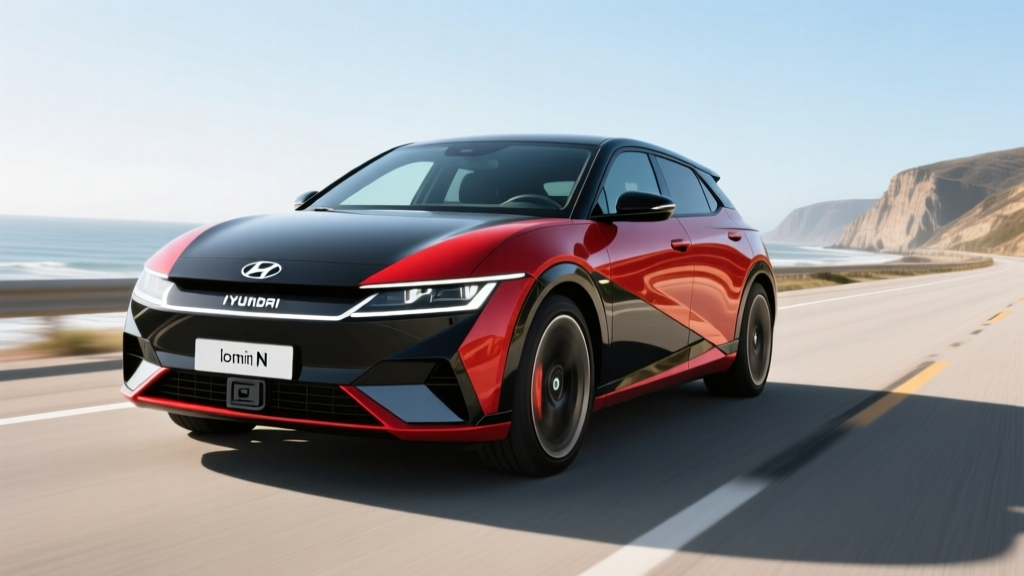
The rear seat remains the Model 3's weakest point versus competitors. The Hyundai Ioniq 6 offers 38.4 inches of rear legroom in a similarly priced package, and the BMW i4 provides a more traditional sedan experience with comparable rear headroom. If you regularly carry adults in the back, test-fit them before committing.
Standout tech:
- 15.4-inch center touchscreen with Ryzen-based processor — responsive and lag-free
- 8.0-inch rear passenger screen (Highland addition) for climate and media control
- Ventilated front seats (new for Highland) — a welcome addition for warm climates
- Ambient lighting integrated into the dash and door panels
- Autopilot standard (SAE Level 2 driver assistance — requires active driver supervision at all times)
- Full Self-Driving (Supervised) available as a $8,000 add-on — still Level 2, not autonomous
Autopilot and FSD (Supervised) are driver-assistance systems. The driver must remain fully attentive, hands on or near the wheel, and ready to intervene at any moment. These are not self-driving systems. Only Level 4 services like Waymo operate without a human driver — and those are geofenced robotaxis, not consumer vehicles.
Pros, Cons, and Who Should Buy the 2026 Model 3
Pros
- Best-in-class Supercharger network (17,000+ V3/V4 stalls in North America)
- Class-leading efficiency (24–29 kWh/100 mi depending on trim)
- 250 kW DC fast charging with aggressive early charge curve
- Over-the-air updates continuously add features
- LFP RWD option allows daily 100% charging without degradation concern
- Low running costs: ~$0.04–$0.06/mile on home electricity
- Strong resale value relative to most EVs
Cons
- Steering wheel repair costs $1,100–$2,000 out of warranty
- Rear seat space tighter than Ioniq 6 and BMW i4
- No physical buttons — all controls through touchscreen (polarizing)
- FSD (Supervised) remains Level 2 despite the name and $8K price
- No Apple CarPlay or Android Auto
- Insurance premiums 15–30% higher than comparable gas sedans
- Ride can be firm on 19-inch wheels over expansion joints
Who the 2026 Model 3 suits best:
- Commuters with home charging: The RWD at ~$31,500 after the tax credit is one of the cheapest ways into a 270+ mile EV with access to the Supercharger network for occasional road trips.
- Tech-forward buyers: If you value OTA updates, integrated navigation, and a software-first experience, Tesla's ecosystem is unmatched.
- Road trippers: The Long Range with 341 EPA miles and the Supercharger network removes most charging-planning friction on long drives.
Who should look elsewhere:
- Families needing rear seat room: Consider the Hyundai Ioniq 5, Kia EV6, or Tesla Model Y instead.
- Buyers who want physical controls: The BMW i4 or Polestar 2 offer more traditional interfaces.
- High-mileage drivers in cold climates: The LFP RWD's cold-weather range loss may make the Long Range AWD a necessary upgrade, adding ~$9,000 to the purchase price.
2026 Tesla Model 3 vs. Key Competitors
| Spec | Tesla Model 3 LR | Hyundai Ioniq 6 SEL | BMW i4 eDrive40 |
|---|---|---|---|
| EPA Range | 341 mi | 342 mi | 301 mi |
| Battery | 75 kWh (NMC) | 77.4 kWh (NMC) | 81.5 kWh (NMC) |
| Max DC Charge | 250 kW | 240 kW | 200 kW |
| 10–80% Time | ~25 min | ~18 min | ~31 min |
| 0–60 mph | 4.2 sec | 5.1 sec | 5.5 sec |
| MPGe (combined) | 132 | 140 | 109 |
| Base MSRP | $47,740 | $42,450 | $52,200 |
| Rear Legroom | 35.2 in | 38.4 in | 34.6 in |
| Charging Network | Supercharger (native) | NACS adapter for Supercharger | NACS adapter for Supercharger |
The Ioniq 6 actually edges the Model 3 on EPA range and MPGe, and charges faster from 10–80% thanks to its 800V architecture. However, Tesla's native Supercharger access (no adapter needed) and the maturity of its route-planning software still give it the edge for road-trip convenience. The BMW i4 costs more and offers less range but appeals to buyers wanting a traditional luxury sedan feel with physical controls.
Frequently Asked Questions
What is the real-world range of the 2026 Tesla Model 3?
The Long Range AWD delivers approximately 285–305 miles on highway trips at 70–75 mph in mild weather, 310–330 miles in mixed city driving, and 240–270 miles in cold-weather highway conditions. The RWD with its LFP battery sees more cold-weather reduction — plan for 200–220 miles in sub-freezing highway driving.
How fast does the Model 3 charge at home and on DC fast chargers?
On a 48-amp Level 2 home charger, the Model 3 adds roughly 44 miles of range per hour, reaching a full charge overnight in 7–8 hours. On a V3 Supercharger, the Long Range peaks at 250 kW and charges from 10–80% in approximately 25 minutes. The RWD peaks at 170 kW with a 10–80% time of about 30 minutes. Remember: peak kW is not sustained kW — the charge curve tapers significantly above 60% SoC.
How much does a Tesla steering wheel repair cost?
Out-of-warranty Tesla steering wheel repair for the 2026 Model 3 Highland typically costs $1,100–$2,000 total (parts: $800–$1,400; labor: $260–$560). The high cost stems from integrated capacitive touch controls, heating elements, and mandatory post-install calibration for Autopilot. Within the 4-year/50,000-mile warranty, electronic failures are covered.
Does the 2026 Model 3 qualify for the $7,500 federal EV tax credit?
All three trims (RWD at $38,990, Long Range at $47,740, Performance at $54,990) fall below the $55,000 sedan MSRP cap and currently meet battery-sourcing requirements. However, buyer income must not exceed $150K (single) / $300K (joint), and sourcing rules are updated annually by the IRS. You can transfer the credit to the dealer at point of sale to reduce your purchase price directly. Verify current eligibility at IRS.gov.
Is the Model 3 worth buying vs. the Hyundai Ioniq 6 or BMW i4?
Choose the Model 3 if you prioritize native Supercharger access, OTA updates, and the lowest running costs. Choose the Ioniq 6 if you want more rear seat room, faster 10–80% charging (800V architecture), and a slightly lower price. Choose the BMW i4 if you prefer a traditional luxury sedan interface with physical controls and don't mind paying a premium for less range.
What is the battery warranty on the 2026 Model 3?
The Long Range and Performance trims carry an 8-year/120,000-mile battery and drive unit warranty. The RWD is covered for 8 years/100,000 miles. Tesla warrants that the battery will retain at least 70% of its original capacity during the warranty period. Real-world degradation data from Tesla's fleet suggests most Model 3 batteries retain 88–92% capacity at 100,000 miles — well above the warranty threshold.