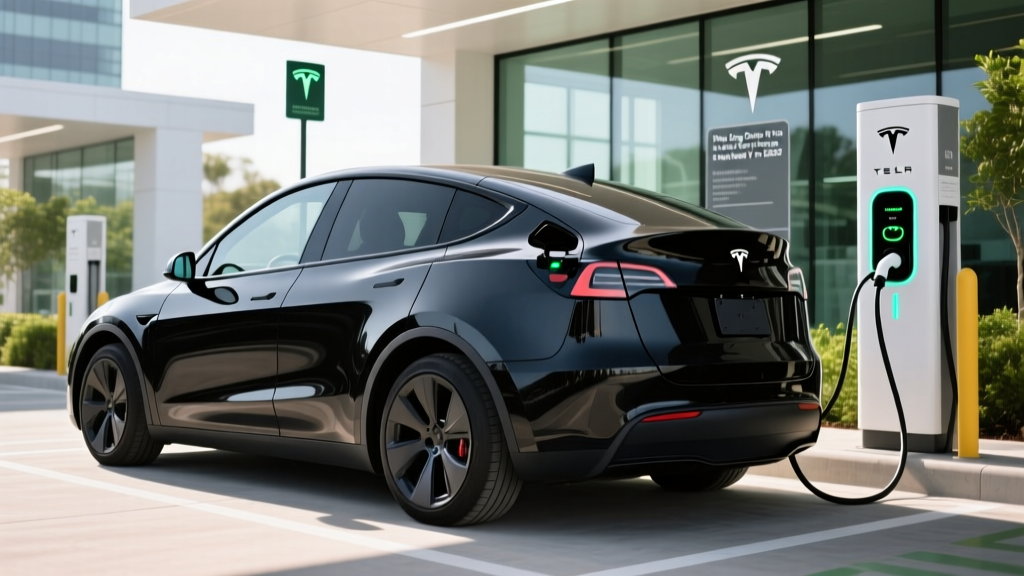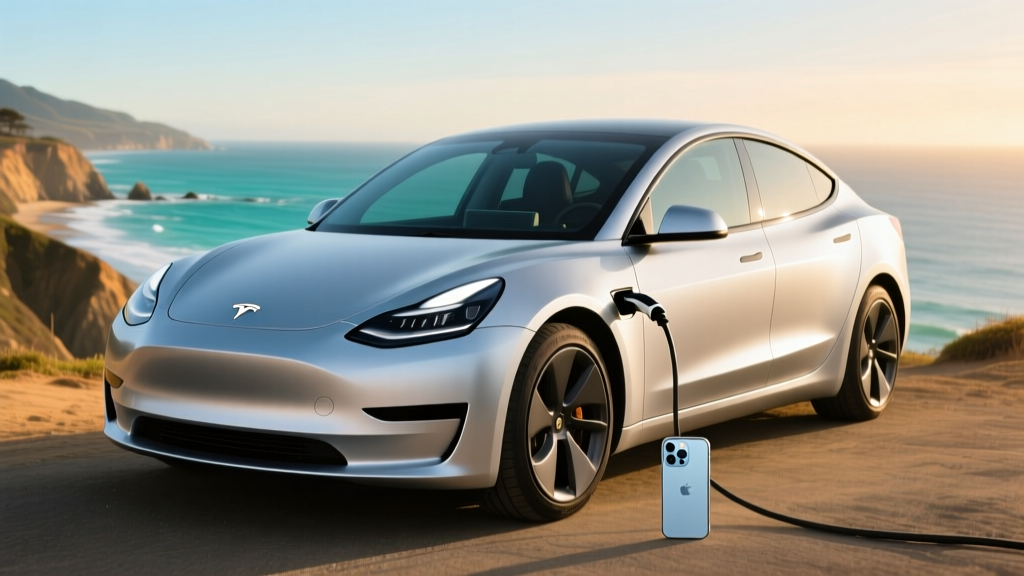
If you've searched for how to make Tesla fart from iPhone, you're probably already deep into Tesla's ecosystem — or considering joining it. The Tesla "fart" feature is part of the Boombox function, and yes, you can trigger it remotely from your phone. But gimmicks aside, the refreshed Tesla Model 3 (internally called "Highland") is a serious EV that competes at the top of the midsize electric sedan segment. This review covers the real-world range, charging speeds, pricing after federal tax credits, and everything you need to decide if the Model 3 earns a spot in your driveway.
Tesla Model 3 Specs at a Glance (2026 Model Year)
| Specification | Long Range AWD | Performance AWD | Rear-Wheel Drive |
|---|---|---|---|
| EPA Range | 363 miles | 315 miles | 272 miles |
| Battery (usable) | ~75 kWh (NMC) | ~75 kWh (NMC) | ~57.5 kWh (LFP) |
| Peak DC Fast Charge | 250 kW | 250 kW | 170 kW |
| 10–80% DC Charge Time | ~25 min | ~25 min | ~30 min |
| Level 2 Home Charging | 11.5 kW (~44 mi/hr) | 11.5 kW (~44 mi/hr) | 7.6 kW (~30 mi/hr) |
| 0–60 mph | 4.2 sec | 2.9 sec | 5.8 sec |
| Horsepower | 346 hp | 510 hp | 271 hp |
| Drivetrain | Dual-Motor AWD | Dual-Motor AWD | RWD (single motor) |
| MPGe (combined) | 132 MPGe | 119 MPGe | 142 MPGe |
| Efficiency | 25 kWh/100 mi | 28 kWh/100 mi | 24 kWh/100 mi |
| Base MSRP | $47,740 | $54,990 | $38,990 |
| Battery Warranty | 8 yr / 120,000 mi | 8 yr / 120,000 mi | 8 yr / 100,000 mi |
Source: EPA / fueleconomy.gov and Tesla.com. Pricing reflects 2026 model year MSRPs before destination fees and before any federal or state incentives.
Real-World Range: What the EPA Sticker Doesn't Tell You
EPA Estimate: 363 miles
Real-World Highway (70 mph, 75°F): ~290–310 miles
Real-World Cold Weather (30°F, mixed driving): ~240–270 miles
City / Moderate Conditions: ~330–350 miles
The Model 3 Long Range's 363-mile EPA rating is among the best in the segment, but real-world results depend heavily on how and where you drive. Highway speeds above 70 mph push aerodynamic drag up significantly — expect to lose roughly 15–20% versus the EPA sticker on sustained interstate runs. Cold weather compounds the loss: Tesla's heat pump (standard on all Highland trims) helps, but battery chemistry and cabin heating still cut range by 25–35% in sub-freezing temperatures.
The RWD model's LFP (lithium iron phosphate) battery has a key advantage: Tesla recommends charging it to 100% regularly, so you get the full 272 miles of usable range daily. NMC batteries in the Long Range and Performance trims are best kept between 20–80% for daily use, reserving 100% for road trips — effectively giving you about 302 usable daily miles.
Charging Speed: DC Fast Charging and Home Setup
| Charging Level | Power (kW) | Speed (mi/hr added) | Notes |
|---|---|---|---|
| Level 1 (120V household) | ~1.2 kW | ~3–5 mi/hr | Emergency/trickle only |
| Level 2 (240V, 48A Wall Connector) | 11.5 kW | ~44 mi/hr | Full charge overnight (~8–10 hrs) |
| Level 2 (240V, 32A Mobile Connector) | 7.6 kW | ~30 mi/hr | Portable option, slower |
| DC Fast (Supercharger V3) | 250 kW peak | ~180 mi in 15 min | Peak rate only; tapers above 50% SoC |
| DC Fast (Supercharger V4) | 250 kW peak | Similar to V3 | Newer stations with CCS adapter support |
Tesla's 250 kW peak DC fast-charge rate on the Long Range and Performance trims is competitive but no longer class-leading — the Hyundai Ioniq 6 peaks at 350 kW on 800V architecture. The critical nuance is the charge curve: the Model 3 hits 250 kW only at low state-of-charge (roughly 5–20% SoC), then tapers progressively. The 10–80% time of approximately 25 minutes is solid for road trips, but you won't see 250 kW sustained for more than a few minutes.
For home charging, the Tesla Wall Connector at 48 amps delivers 11.5 kW, which adds roughly 44 miles of range per hour — enough to replenish a full day's driving in about 2–3 hours. Installation typically runs $500–$1,500 depending on your electrical panel's proximity to the garage; a panel upgrade from 100A to 200A service can add $1,500–$3,000. Always get a quote from a licensed electrician before committing.
One ownership advantage: Tesla's Supercharger network now supports NACS natively, and Tesla opened the network to non-Tesla EVs via a built-in CCS adapter. As a Tesla owner, you still get the most seamless plug-and-charge experience on the network — no adapter needed, no app fumbling.
Performance and Driving Dynamics
The Performance trim's 2.9-second 0–60 mph time puts it in supercar territory, and the dual-motor AWD system delivers instant torque with zero lag. But even the base RWD model's 5.8-second sprint is quicker than most gas-powered midsize sedans. The Highland refresh brought meaningful improvements:
- Suspension: Retuned with new frequency-selective dampers — noticeably smoother over broken pavement compared to the pre-2024 Model 3
- NVH (noise, vibration, harshness): Acoustic glass front and rear, additional sound deadening — cabin noise at 70 mph drops roughly 3–5 dB versus the previous generation
- Steering: Slightly heavier feel with improved on-center feedback, though still numb compared to a BMW i4
- Regen braking: Single-mode regenerative braking (Tesla removed the adjustable regen toggle years ago) — strong enough for one-pedal driving in most conditions
The Performance model adds Track Mode, adaptive dampers, high-performance brakes, and 20-inch wheels. Worth noting: those 20-inch wheels reduce EPA range by roughly 10–15 miles versus the standard 19-inch setup.
Interior, Cargo, and Technology
The Highland interior is a study in minimalism — some call it elegant, others call it sparse. The 15.4-inch center touchscreen handles nearly every function: climate, media, navigation, vehicle settings, and yes, the Boombox/fart features.
Cargo and passenger dimensions:
- Front headroom: 40.3 in | Front legroom: 42.7 in
- Rear headroom: 37.8 in | Rear legroom: 35.2 in
- Trunk (rear): 21.0 cu ft | Frunk (front): 3.1 cu ft
- Total cargo: 24.1 cu ft (rear seats up)
Rear-seat space is adequate for adults on shorter trips but tight for anyone over 6 feet on long drives. The trunk is deep and well-shaped, and the frunk is small but useful for charging cables.
Standout tech features:
- Autopilot (standard): SAE Level 2 driver-assist with Traffic-Aware Cruise Control and Autosteer. This is NOT self-driving — you must keep hands on the wheel and eyes on the road at all times.
- Full Self-Driving (Supervised): $8,000 option (or $99/month subscription). Adds Navigate on Autopilot, Auto Lane Change, Autopark, Smart Summon, and traffic light/stop sign control. Still Level 2 — the driver is fully responsible. The "Supervised" label Tesla added in 2024 is a legally necessary clarification.
- Ventilated front seats: New for Highland — a long-requested feature, effective in hot climates
- Ambient lighting: Wraparound light bar across the dashboard — a meaningful upgrade from the previous flat-black dash
- Rear touchscreen: 8-inch display for rear passengers (climate, media) — a first for Model 3
Notable drawbacks:
- No physical stalks — turn signals are now steering-wheel-mounted buttons (controversial and takes 2–3 weeks of muscle-memory adjustment)
- No Apple CarPlay or Android Auto (Tesla's ecosystem is closed)
- Gear selection via touchscreen swipe (no column stalk) — backup physical buttons on the overhead console exist but are hidden
- Panel gap consistency has improved but still varies car-to-car
How to Make Tesla Fart From iPhone: Boombox Explained
Now to the question that brought you here. The Tesla Boombox feature lets your car play custom sounds through the external pedestrian warning speaker (PWS). The "fart" sound is one of the built-in presets, and there are two ways to trigger it:
Method 1: From Inside the Car
- Tap the car icon on the touchscreen to open Controls
- Select Boombox
- Choose a sound preset (Fart, applause, goat, etc.) or load a custom .mp3 via USB
- Set trigger to Manual (tap to play) or Drive (plays at low speed in place of the standard EV hum)
- Tap the sound to play it through the external speaker
Method 2: From Your iPhone (Remote)
- Open the Tesla app on your iPhone
- Swipe to the Toybox section (bottom of the main screen)
- Tap Boombox
- Select your sound preset (Fart, etc.)
- Tap Play — the sound plays through the car's external speaker wherever it's parked
This works over the internet, so you can trigger it from anywhere — your office, a restaurant, your couch — as long as the car has cellular connectivity (included with Tesla's Standard Connectivity for basic features; Premium Connectivity is $9.99/month and adds live traffic, satellite maps, and video streaming).
Important caveat: Boombox only works when the car is in Park. You cannot blast sounds through the external speaker while driving above ~15 mph (the PWS is regulated by NHTSA for pedestrian safety at low speeds). Tesla also disabled the Boombox "Drive" mode in 2023 following an NHTSA recall — you can still play sounds manually while parked, but the car won't replace its low-speed pedestrian warning hum with custom sounds while moving.
Pricing, Trims, and Federal Tax Credit Eligibility
| Trim | Base MSRP | Destination | Est. Total | §30D Credit Eligible? |
|---|---|---|---|---|
| Model 3 RWD | $38,990 | $1,390 | $40,380 | Yes — up to $3,750* |
| Model 3 Long Range AWD | $47,740 | $1,390 | $49,130 | Yes — up to $7,500* |
| Model 3 Performance AWD | $54,990 | $1,390 | $56,380 | Yes — up to $7,500* |
*Federal EV tax credit (IRS §30D) eligibility depends on multiple factors that change regularly. See the checklist below.
- Vehicle MSRP cap: Sedans must be ≤ $55,000 MSRP (vans/SUVs/trucks ≤ $80,000). Model 3 qualifies on all trims.
- Buyer income cap: Modified AGI ≤ $150,000 (single) / ≤ $300,000 (married filing jointly) / ≤ $225,000 (head of household)
- Battery sourcing: The credit splits into two halves ($3,750 + $3,750). The first half requires battery components manufactured in North America; the second half requires critical minerals sourced from the US or FTA partners. Eligibility shifts as supply chains change — always verify on the fueleconomy.gov tax credit page before purchasing.
- Point-of-sale transfer: Since 2024, you can transfer the credit to the dealer at purchase for an immediate price reduction rather than waiting for a tax refund. This requires dealer participation and IRS registration.
- New vs. used: The §30D credit applies to new vehicles only. A separate used-EV credit (up to $4,000) exists for qualifying pre-owned EVs under $25,000.
Tax credit rules are complex and subject to change. Consult a tax professional and verify current eligibility at IRS.gov.
After the maximum $7,500 credit, the Long Range AWD effectively starts around $41,630 — a compelling price for a 363-mile, dual-motor AWD sedan with this level of tech. The RWD model at roughly $36,630 after a $3,750 credit is one of the most affordable long-range EVs on the market.
Pros, Cons, and the Competition
- Class-leading efficiency (24–28 kWh/100 mi)
- Extensive Supercharger network — best public charging UX
- Over-the-air updates continuously add features
- Highland refresh fixes ride quality and noise complaints
- Strong resale value relative to EV segment average
- Boombox / Toybox features (fart mode, light show, etc.)
- No Apple CarPlay / Android Auto
- Turn signal buttons take significant adjustment
- FSD at $8,000 remains Level 2, not autonomous
- DC fast charge peaks at 250 kW — slower than 800V rivals
- Rear seat space is tighter than Hyundai Ioniq 6 or BMW i4
- Service center wait times can be long in some markets
Key competitors to cross-shop:
- Hyundai Ioniq 6: 361-mile range, 350 kW DC charging, physical buttons, CarPlay — but smaller dealer/charging network
- BMW i4 eDrive40: 307-mile range, superior driving dynamics, CarPlay — but starts ~$10K higher
- Polestar 2: 320-mile range, Google built-in, physical controls — but slower charging and less range
- Chevrolet Equinox EV (sedan cross-shopper): 319-mile range, lower starting price — but less performance and older tech
Who Should Buy the Tesla Model 3?
- Choose the Model 3 Long Range if: You want the best combination of range, AWD, and value in a premium electric sedan and you're comfortable with Tesla's minimalist interface and no-CarPlay ecosystem.
- Choose the Model 3 RWD if: You're budget-conscious, commute under 60 miles daily, can charge at home, and want the lowest entry price with LFP battery longevity (100% daily charging OK).
- Choose the Model 3 Performance if: You want sub-3-second acceleration and track capability but understand the 20-inch wheels sacrifice ~15 miles of range and ride comfort.
- Look elsewhere if: You need CarPlay, prefer physical buttons and stalks, want a back seat that comfortably fits tall adults for long trips, or need 350+ kW DC fast charging for frequent road trips.
The Model 3 remains the default answer for most EV sedan shoppers — not because it's perfect, but because the combination of range, efficiency, charging network, and price is hard to beat holistically. The Highland refresh addressed the biggest criticisms (ride, noise, ventilation), and the tech ecosystem — Boombox fart jokes included — is genuinely best-in-class for software integration.
Frequently Asked Questions
Can I make my Tesla fart while I'm not near the car?
Yes. The Tesla app's Toybox > Boombox feature works remotely over cellular. As long as your car has connectivity and is in Park, you can trigger fart sounds (or other presets) from anywhere with an internet connection. It's a popular prank among Tesla owners.
What is the real-world highway range of the Model 3 Long Range?
Expect approximately 290–310 miles at 70 mph in mild weather. The 363-mile EPA estimate includes significant city/regenerative driving. In cold weather (below 30°F), plan for 240–270 miles of mixed-use range. Preconditioning the battery while plugged in helps mitigate cold-weather losses.
Does the Tesla Model 3 qualify for the full $7,500 federal tax credit?
The Long Range and Performance trims currently qualify for up to $7,500, while the RWD trim qualifies for up to $3,750 (depending on battery component and critical mineral sourcing at the time of purchase). Eligibility depends on your income (≤$150K single / ≤$300K joint), the vehicle's MSRP (≤$55K for sedans), and battery sourcing requirements. Always verify current eligibility at fueleconomy.gov before purchasing.
How much does it cost to charge a Model 3 at home vs. Superchargers?
At the US average residential electricity rate of ~$0.16/kWh, a full 75 kWh charge (Long Range) costs about $12. Supercharger pricing varies by location but averages $0.25–$0.35/kWh, making a full charge roughly $19–$26. For comparison, filling a gas sedan with 30 MPG at $3.40/gallon for the same 363 miles would cost about $41.
Is the Model 3's Autopilot self-driving?
No. Autopilot and Full Self-Driving (Supervised) are both SAE Level 2 driver-assistance systems. You must remain fully attentive, keep your hands on the steering wheel, and be prepared to take over at any moment. Only Level 4 robotaxi services like Waymo operate without a driver — the Model 3 does not offer this capability.
How long will the Model 3 battery last?
Tesla warranties the Long Range/Performance NMC battery for 8 years or 120,000 miles (whichever comes first), guaranteeing at least 70% capacity retention. The RWD's LFP battery is warranted for 8 years or 100,000 miles. Real-world data from high-mileage Teslas suggests 10–15% degradation over 150,000 miles is typical. LFP batteries tend to degrade more slowly but have lower energy density.