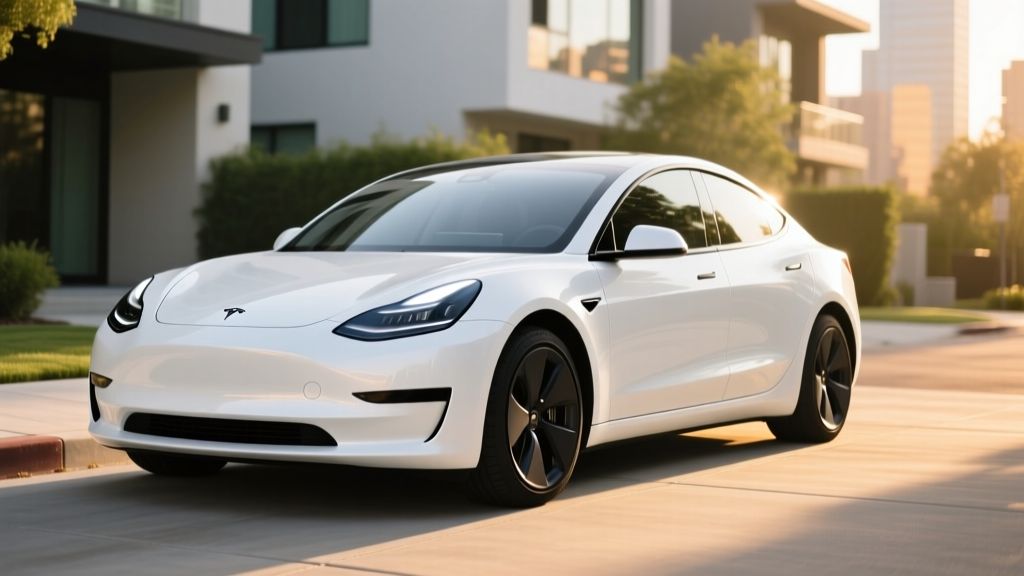
If you've been browsing Tesla forums or EV news since late 2023, you've likely encountered the term "Highland." But what is Model 3 Highland, exactly? It's the internal codename Tesla used for the comprehensive mid-cycle refresh of the Model 3 sedan — a redesign that touched nearly every panel, component, and system in the car. Now selling as the 2025 and 2026 Tesla Model 3, the Highland update transformed what was already the best-selling EV sedan into a quieter, more refined, and slightly longer-range machine.
This review covers the current 2026 Tesla Model 3 lineup — the RWD Long Range and the Performance AWD — with exact EPA figures, real-world range expectations, charging data, pricing, and federal tax credit eligibility under IRS §30D rules.
What Changed With the Highland Refresh
The Highland update wasn't a new platform, but it was far more than a facelift. Tesla re-engineered the Model 3's body structure, suspension, interior materials, lighting, and acoustic insulation. The result is a car that feels a full generation newer than the 2018–2023 Model 3, even though the basic dimensions and battery architecture carry over.
Key Highland changes include:
- Exterior: Slimmer LED headlights, new front and rear fascias, updated wheel designs, and a rear diffuser. The drag coefficient dropped to 0.219 Cd (from 0.23), directly improving highway efficiency.
- Suspension: New frequency-selective dampers and revised bushings reduce harshness over broken pavement — a frequent complaint on pre-Highland cars.
- Acoustic glass: Laminated glass all around (previously only front windows) cuts wind and road noise substantially.
- Interior: Ventilated front seats, ambient lighting, a rear 8-inch touchscreen for passengers, textile dash material replacing the old vinyl, and the removal of stalk-mounted turn signals (now on the steering wheel) and the ultrasonic parking sensors (replaced by Tesla Vision camera-based estimation).
- No more radar: The Highland Model 3 relies entirely on Tesla Vision (cameras only) for Autopilot and active safety features.
Range, Battery, and Efficiency
| Trim | EPA Range | Real-World Highway (70 mph) | Cold Weather (32°F, highway) |
|---|---|---|---|
| Long Range RWD | 363 mi | ~300–320 mi | ~250–270 mi |
| Long Range AWD | 341 mi | ~280–300 mi | ~230–250 mi |
| Performance AWD | 315 mi | ~260–280 mi | ~210–230 mi |
Real-world estimates based on sustained 70 mph driving, moderate climate use, and typical elevation changes. Cold-weather figures assume 32°F with cabin heating active. Per fueleconomy.gov.
The Long Range RWD is the efficiency champion of the lineup. Its 363-mile EPA rating is among the highest of any production EV sedan, and the car's low drag coefficient plus Tesla's excellent thermal management make it genuinely achievable in mixed driving. On the highway at 70 mph in mild weather, expect 300–320 real miles before hitting 0% — a buffer most drivers won't test.
Cold weather is the equalizer. Lithium-ion batteries lose efficiency in the cold, and cabin heating draws significant power. The Long Range AWD drops to roughly 230–250 miles of real-world range in freezing highway conditions. If you live in a northern climate and commute long distances, preconditioning (warming the battery and cabin while plugged in) is essential to preserve range.
| Spec | Long Range RWD | Long Range AWD | Performance AWD |
|---|---|---|---|
| Battery (usable) | ~79 kWh (NMC) | ~79 kWh (NMC) | ~79 kWh (NMC) |
| EPA Range | 363 mi | 341 mi | 315 mi |
| MPGe (combined) | 132 MPGe | 121 MPGe | 113 MPGe |
| kWh/100 mi | 25 kWh | 28 kWh | 30 kWh |
| 0–60 mph | 5.8 sec | 4.2 sec | 2.9 sec |
| Horsepower | ~271 hp | ~346 hp | ~510 hp |
| Drivetrain | RWD (single motor) | AWD (dual motor) | AWD (dual motor) |
| Top Speed | 125 mph | 125 mph | 163 mph |
The battery pack in all trims is an NMC (nickel manganese cobalt) chemistry unit with approximately 79 kWh of usable capacity. NMC offers higher energy density than LFP (lithium iron phosphate), which is why the Long Range trims achieve their range targets. The trade-off: Tesla recommends daily charging to 80% for NMC packs, reserving 100% for road trips. (The base RWD Standard Range, when available, uses an LFP pack that can be charged to 100% daily without degradation concerns — but it's not always in the lineup.)
Charging Speed: DC Fast Charge and Home Level 2
Charging speed is where Highland Model 3 owners see meaningful gains over the pre-refresh car. The updated thermal management system sustains higher DC charge rates for longer.
| Charging Level | Max Rate | Speed / Time | Notes |
|---|---|---|---|
| Level 1 (120V household) | ~1.4 kW | ~3–4 mi/hr | Emergency/trickle only |
| Level 2 (240V home, 48A) | 11.5 kW | ~37 mi/hr; full charge ~8.5 hr | Requires Wall Connector or equivalent |
| DC Fast Charge (Supercharger V3/V4) | 250 kW peak | 10–80% in ~25 min | Peak rate sustained to ~50% SoC, then tapers |
| DC Fast Charge (CCS adapter, non-Tesla) | ~170–200 kW typical | 10–80% in ~30–35 min | Speed depends on station; CCS adapter sold separately |
At a V3 or V4 Supercharger, the Highland Model 3 peaks at 250 kW and holds strong through roughly 50% State of Charge (SoC), then tapers progressively. A 10–80% session takes about 25 minutes in ideal conditions (battery preconditioned via navigation routing to the charger). Above 80%, the charge rate drops sharply — a characteristic of NMC chemistry — so plan to unplug at 80% on road trips unless you need the extra miles.
At home, the onboard charger accepts up to 11.5 kW on a 240V/48A circuit (Level 2). That translates to roughly 37 miles of range per hour of charging, or a full overnight replenishment in about 8.5 hours. Installation of a Tesla Wall Connector on a dedicated 60A circuit typically costs $800–$2,000 including electrician labor, depending on your panel proximity and local permit fees. Always consult a licensed electrician for final specs.
Interior, Cargo, and Daily Practicality
The Highland interior is a clear step up in material quality. The textile-wrapped dashboard, ambient lighting strips, and perforated ventilated seats (front) give the cabin a premium feel the pre-2024 Model 3 lacked. The rear 8-inch touchscreen lets passengers control climate, media, and even stream video — a nice touch for families.
Practical dimensions:
- Cargo (trunk + frunk): 23 cu ft total (trunk: 21 cu ft; frunk: ~2 cu ft)
- Front legroom: 42.7 in
- Rear legroom: 35.2 in
- Seating: 5 passengers (though the rear middle seat is narrow)
The trunk opening is a conventional sedan lid, not a hatchback — so loading bulky items (bicycles, large boxes) is less convenient than in the Model Y or Hyundai Ioniq 5. The frunk is small, suitable for a charging cable bag or a laptop backpack, not groceries.
Visibility is good forward and to the sides, but the rear window is narrow. The camera-based rearview mirror display (standard) helps compensate. The elimination of ultrasonic parking sensors means parking-distance estimation now relies on Tesla Vision's on-screen distance readouts, which are generally accurate but can lag in heavy rain or when the cameras are dirty.
Tech, Autopilot, and Driver Assistance
Tesla Autopilot and FSD (Supervised) are SAE Level 2 driver-assistance systems. The driver must remain fully engaged, hands on the wheel (or torque-applied), and eyes on the road at all times. These are not self-driving systems. Only Level 4 robotaxi services (Waymo, Zoox) operate without a human driver.
The Highland Model 3 comes standard with Tesla's Basic Autopilot: adaptive cruise control and lane-centering on divided highways. The optional FSD (Supervised) package ($8,000 one-time or $99/month as of 2026) adds automatic lane changes, navigation-guided on/off-ramp handling, traffic light and stop sign recognition, and the controversial "city streets" feature.
In practice, FSD (Supervised) handles many suburban and urban scenarios competently, but still requires frequent interventions — particularly in construction zones, unprotected left turns, and complex intersections. Think of it as an advanced cruise control that reduces fatigue on long drives, not a replacement for your attention.
The 15.4-inch center touchscreen runs Tesla's latest software, which is responsive and feature-rich. Wireless Apple CarPlay and Android Auto are not supported — Tesla uses its own infotainment ecosystem exclusively. If phone projection is a dealbreaker, this is a notable drawback.
Pricing, Trims, and Federal Tax Credit
| Trim | Base MSRP (2026) | Est. As-Tested* | §30D Credit Eligible? | Effective Price (with credit) |
|---|---|---|---|---|
| Long Range RWD | $42,490 | $43,500–$45,000 | Yes (up to $7,500) | ~$35,000–$37,500 |
| Long Range AWD | $47,490 | $48,500–$51,000 | Yes (up to $7,500) | ~$40,000–$43,500 |
| Performance AWD | $54,990 | $56,000–$59,000 | Yes (up to $7,500) | ~$48,500–$51,500 |
*As-tested includes destination fee ($1,390) and common options (paint color, wheels). FSD adds $8,000 if purchased outright.
All 2026 Model 3 trims fall under the $55,000 MSRP cap for sedans under IRS §30D rules. However, qualifying for the full $7,500 credit depends on several buyer-specific factors:
- Income caps: Modified AGI must not exceed $150,000 (single), $225,000 (head of household), or $300,000 (joint filers).
- Battery sourcing: The vehicle must meet critical-mineral and battery-component sourcing requirements that phase in more strictly each year. Tesla's supply chain has generally qualified, but verify the specific VIN on the DOE's qualifying vehicle list before purchasing.
- Point-of-sale transfer: As of 2024, you can transfer the credit to the dealer at purchase, reducing your out-of-pocket cost directly — rather than waiting to claim it on your tax return.
- Tax liability: The credit is non-refundable. You must have at least $7,500 in federal tax liability to benefit fully.
Always confirm eligibility with a tax professional and check the latest IRS guidance, as sourcing rules tighten annually.
Warranty and Long-Term Ownership
| Coverage | Term |
|---|---|
| Basic Vehicle Limited Warranty | 4 years / 50,000 miles |
| Battery & Drive Unit Warranty | 8 years / 120,000 miles (Long Range); 8 years / 100,000 miles (RWD Standard Range if offered) |
| Battery Capacity Retention Threshold | 70% of original capacity during warranty period |
Tesla's 8-year/120,000-mile battery warranty on Long Range trims is competitive with the industry standard (Hyundai offers 10yr/100k; most others match at 8yr/100k). The 70% retention threshold means Tesla will repair or replace the pack if it degrades below 70% of original capacity within the warranty window.
Real-world degradation data from fleet sources and owner reports suggests NMC packs in the Model 3 typically lose 5–8% capacity over the first 50,000 miles, then plateau. A well-maintained Highland Model 3 battery should comfortably exceed 150,000 miles before approaching the 70% threshold. Best practices: avoid frequent 100% charges, minimize DC fast-charging when Level 2 is available, and precondition in extreme temperatures.
Pros
- Class-leading EPA range (363 mi on Long Range RWD)
- Excellent DC fast-charge speed (250 kW peak, ~25 min 10–80%)
- Supercharger network access — still the most reliable public charging ecosystem
- Significantly quieter and more refined than pre-Highland Model 3
- Strong performance even in base RWD trim (5.8 sec 0–60)
- Over-the-air updates continuously add features
- Eligible for up to $7,500 federal tax credit (verify VIN)
Cons
- No Apple CarPlay or Android Auto
- Turn signals on steering wheel (not stalk) — polarizing adjustment
- No ultrasonic parking sensors — camera-only parking assist
- Rear middle seat is cramped for adults
- Sedan trunk opening limits cargo versatility vs hatchback/SUV
- FSD (Supervised) requires constant driver attention; not autonomous
- Insurance premiums run 15–30% higher than comparable gas sedans
Who Should Buy the Highland Model 3
Choose the Model 3 Highland if:
- You commute 30–80 miles daily and want to charge once or twice a week at home
- You take regular road trips and value Supercharger network reliability
- You want a premium EV sedan under $50K (after tax credit) with genuine 300+ mile real-world range
- You prioritize efficiency and technology over cargo space
Look elsewhere if:
- You need hatchback/SUV cargo flexibility (consider the Model Y or Ioniq 5)
- You frequently carry 3+ rear-seat passengers (rear legroom is tight)
- You rely on Apple CarPlay/Android Auto for navigation and media
- You live in an area with limited Supercharger coverage and no home charging option
The Highland Model 3 competes directly with the Hyundai Ioniq 6 (361 mi EPA, slower charging), the BMW i4 eDrive40 (307 mi, premium interior, no Supercharger access), and the Polestar 2 (276 mi, hatchback practicality). Against this field, the Model 3's combination of range, Supercharger access, and post-credit pricing remains the benchmark for the EV sedan segment.
Frequently Asked Questions
What is the real-world range of the Tesla Model 3 Highland?
The Long Range RWD achieves an EPA-estimated 363 miles. In real-world highway driving at 70 mph in mild weather, expect 300–320 miles. In cold weather (32°F), that drops to roughly 250–270 miles with cabin heating active. The Performance AWD delivers around 260–280 real-world highway miles.
How fast does the Model 3 Highland charge?
On a Tesla Supercharger (V3/V4), the Highland Model 3 peaks at 250 kW and charges from 10–80% in approximately 25 minutes with a preconditioned battery. At home on a 240V Level 2 charger (48A), it adds about 37 miles of range per hour, fully recharging overnight in roughly 8.5 hours.
Does the 2026 Tesla Model 3 qualify for the federal EV tax credit?
Yes — all Model 3 trims are under the $55,000 MSRP cap for sedans under IRS §30D. However, buyer eligibility depends on income limits ($150K single / $300K joint), battery sourcing compliance, and sufficient federal tax liability. The credit can be transferred at point of sale to reduce your purchase price directly. Always verify your specific VIN on the DOE's qualifying list and consult a tax professional.
Is the Model 3 Highland worth buying over competitors?
For most EV sedan buyers, yes. The 363-mile EPA range, 250 kW Supercharger access, and post-credit pricing under $35K (Long Range RWD) are difficult to match. The Hyundai Ioniq 6 comes closest on range but charges slower and lacks Supercharger access. The BMW i4 offers a more luxurious interior but costs significantly more and delivers less range. If cargo space is a priority, the Model Y or Ioniq 5 are better choices.
What are the biggest drawbacks of the Highland Model 3?
The most-cited complaints are the steering-wheel-mounted turn signals (no stalks), the absence of Apple CarPlay/Android Auto, and the camera-only parking assist (no ultrasonic sensors). The rear middle seat is tight for adults, and the sedan trunk limits cargo flexibility compared to a hatchback. Insurance costs also run higher than comparable gas sedans.
What battery chemistry does the Highland Model 3 use?
The Long Range and Performance trims use NMC (nickel manganese cobalt) chemistry with approximately 79 kWh usable capacity. NMC provides higher energy density than LFP, enabling the 363-mile range target, but Tesla recommends daily charging to 80% (not 100%) to minimize long-term degradation. Reserve 100% charges for road trips.