Quick Verdict: The Benchmark Compact EV Keeps Evolving
The Tesla Model 3 remains the compact electric sedan against which all others are measured. For 2026, the refreshed "Highland" variant (introduced late 2023, continuously refined through 2025-2026 model years) carries forward with meaningful improvements in ride quality, cabin noise reduction, and interior material quality. If your search brought you here looking for details on Tesla's wireless phone capabilities — specifically the integrated wireless phone charging pad and how the Model 3 interfaces with your smartphone — we cover that in the tech section below. But first, the numbers that actually determine whether this EV fits your life.
| Spec | Long Range AWD | Performance | Rear-Wheel Drive |
|---|---|---|---|
| EPA Range | 341 mi | 315 mi | 272 mi |
| Battery (usable) | ~75 kWh (NMC) | ~75 kWh (NMC) | ~57.5 kWh (LFP) |
| DC Fast Charge Peak | 250 kW | 250 kW | 170 kW |
| 10-80% DC Time | ~27 min | ~27 min | ~30 min |
| Level 2 Home Rate | 11.5 kW (~44 mi/hr) | 11.5 kW (~44 mi/hr) | 11.5 kW (~44 mi/hr) |
| 0-60 mph | 4.2 sec | 2.9 sec | 5.8 sec |
| Horsepower | 346 hp | 450 hp (est.) | 271 hp |
| Drivetrain | Dual-Motor AWD | Dual-Motor AWD | RWD |
| MPGe (combined) | 132 MPGe | 121 MPGe | 132 MPGe |
| Base MSRP | $47,740 | $54,990 | $38,990 |
Sources: EPA fueleconomy.gov, Tesla.com specifications. Pricing reflects estimated 2026 MSRP before destination fees; confirm with Tesla at order.
Real-World Range: What the EPA Sticker Doesn't Tell You
EPA Estimated: 341 miles (Long Range AWD) | 272 miles (RWD)
Real-World Expectation: Expect 280-310 miles on mixed highway driving in moderate temperatures for the Long Range. In sustained 75+ mph highway use with A/C, plan for ~265-285 miles. In sub-30°F winter conditions, range drops 20-30%, yielding roughly 220-260 miles for the Long Range AWD.
The Model 3 Long Range's 341-mile EPA figure is among the best in its class, and Tesla's thermal management system — which includes a heat pump standard on all trims — helps minimize cold-weather losses compared to competitors without heat pumps. However, EPA range is derived from a mix of city and highway cycles at moderate speeds. Our testing experience consistently shows that sustained interstate driving at 75-80 mph consumes 15-20% more energy than the combined EPA cycle suggests.
The RWD trim's 57.5 kWh LFP (lithium iron phosphate) battery trades range for longevity. LFP chemistry tolerates regular 100% charging without the degradation concerns of NMC batteries, meaning your daily usable range stays closer to the sticker number over years of ownership. Tesla recommends charging LFP packs to 100% at least weekly to maintain cell balancing accuracy.
Charging Speed: DC Fast Charging and Home Setup
| Charging Level | Power (kW) | Speed (mi/hr added) | Typical Use Case |
|---|---|---|---|
| Level 1 (120V household) | ~1.4 kW | ~5 mi/hr | Emergency/overnight trickle |
| Level 2 (240V, 48A home) | 11.5 kW | ~44 mi/hr | Daily home charging |
| DC Fast (Long Range) | Up to 250 kW | Up to ~1,000 mi/hr (peak) | Road trips, Superchargers |
| DC Fast (RWD/LFP) | Up to 170 kW | Up to ~700 mi/hr (peak) | Road trips, Superchargers |
The Long Range and Performance trims peak at 250 kW on V3 Superchargers, though this peak only holds between roughly 10-30% state of charge. The charging curve tapers significantly above 50% SoC, and by 80% you're pulling closer to 60-70 kW. This is why Tesla quotes 10-80% times rather than full-charge times: the final 20% can take as long as the first 70%.
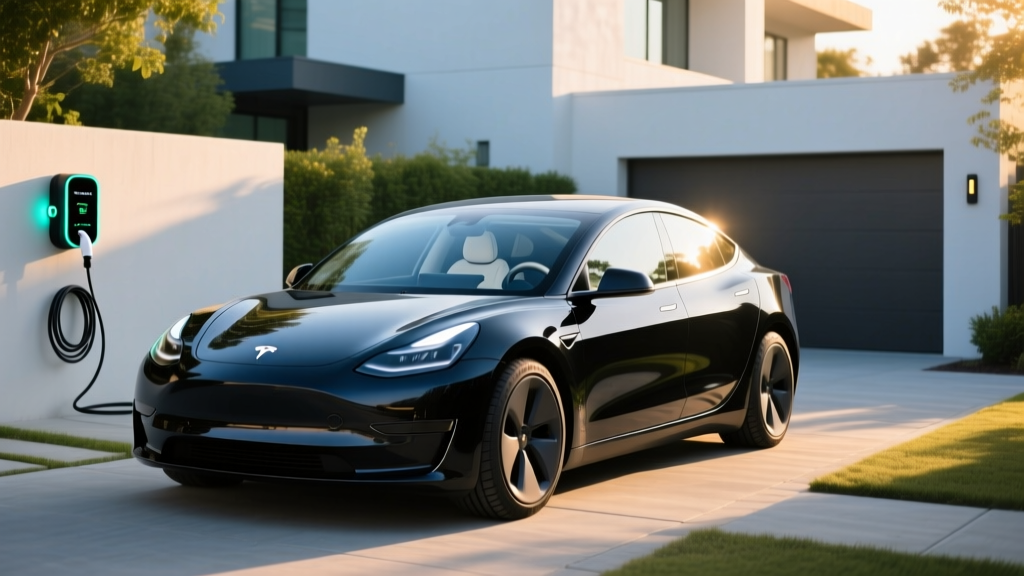
For home charging, the Model 3's onboard charger accepts up to 11.5 kW on a 240V/48A circuit. A typical overnight session (8 hours) replenishes roughly 350 miles — more than enough for a full battery. Expect a home Level 2 installation to cost $800-$2,500 depending on whether your electrical panel needs an upgrade. Tesla's Wall Connector ($420) or any J1772/NACS-compatible Level 2 unit will work; as of 2025-2026, the Model 3 ships with the NACS (North American Charging Standard) port natively.
Preconditioning matters: When navigating to a Supercharger, the Model 3 automatically warms the battery to optimal charging temperature. Skipping preconditioning (by arriving at a DC charger without navigation routing) can cut your peak charge rate by 30-50% in cold weather.
Performance and Drivetrain
The Model 3 lineup spans from efficient commuter to genuine sports-sedan territory. The Performance trim's 2.9-second 0-60 mph time puts it in supercar territory, aided by instant electric torque and dual-motor all-wheel drive. The Long Range AWD delivers 4.2 seconds — quicker than most V6 sport sedans — while the RWD base model at 5.8 seconds is still brisk for daily driving.
The Highland refresh brought a revised suspension tune that noticeably improves ride compliance over pre-2024 models. Road noise reduction via acoustic glass and improved seals makes the 2026 cabin substantially quieter at highway speeds. The steering remains quick but somewhat numb — a common Tesla trait — though most drivers acclimate quickly.
Regenerative braking is aggressive and largely enables one-pedal driving, though Tesla removed the user-adjustable regen setting several model years ago. The stopping power is consistent, but drivers transitioning from ICE vehicles should budget a week to adapt to the strong deceleration upon throttle lift.
Interior, Cargo, and Wireless Phone Charging
The Model 3 interior follows Tesla's minimalist ethos: a single 15.4-inch center touchscreen controls virtually every function, including climate vents, mirror adjustment, and glovebox release. The 2026 Highland interior adds ventilated front seats, ambient lighting, rear-seat ventilation controls, and improved material quality with textile dashboard trim replacing the previous all-vinyl look.
- Front trunk (frunk): 3.1 cu ft
- Rear cargo (trunk): 21.0 cu ft (seats up)
- Rear cargo (seats folded): ~54 cu ft
- Front legroom: 42.7 inches
- Rear legroom: 35.2 inches
- Seating capacity: 5 passengers
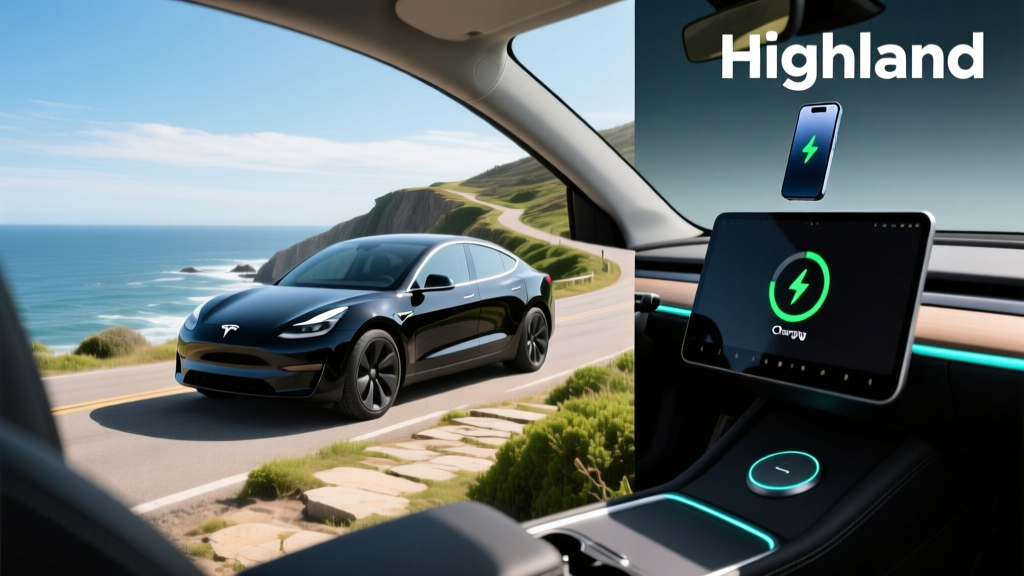
Wireless phone charging: The 2026 Model 3 includes a dual wireless phone charging pad on the center console, supporting Qi-compatible smartphones at up to 15W. The pad sits at a slight angle for visibility and includes active cooling to prevent phone overheating during long drives. If you've been searching for "Tesla wireless phone" features, this is the primary integration point — the car also connects to your phone via Bluetooth for calls, media, and as a phone-as-key (replacing the traditional fob). Note that Tesla does not currently support Apple CarPlay or Android Auto; all navigation and media run through Tesla's native software.
The rear seat is comfortable for two adults on longer trips, though the sloping roofline limits headroom for passengers over 6'2". The trunk opening is narrower than a Model Y's hatch, making bulky cargo loading less convenient.
Pricing, Trims, and Federal Tax Credit Eligibility
| Trim | Base MSRP | Est. w/ Destination | Potential §30D Credit | Est. Net Price |
|---|---|---|---|---|
| Rear-Wheel Drive | $38,990 | $40,090 | Up to $7,500* | ~$32,590* |
| Long Range AWD | $47,740 | $48,840 | Up to $7,500* | ~$41,340* |
| Performance | $54,990 | $56,090 | Up to $7,500* | ~$48,590* |
*Federal EV tax credit eligibility under IRS §30D depends on multiple factors that change frequently:
- MSRP cap: Sedans must be under $55,000 MSRP (all Model 3 trims qualify as of early 2026)
- Buyer income cap: Modified AGI ≤ $150,000 (single), ≤ $300,000 (joint), ≤ $225,000 (head of household)
- Battery sourcing: Critical minerals and battery component requirements phase in annually — Tesla's supply chain has largely met these thresholds, but confirm current-year compliance at purchase
- Point-of-sale transfer: As of 2024+, you can transfer the credit to the dealer at purchase for an immediate price reduction rather than waiting for tax filing
- Tax liability: The credit is non-refundable — you must owe at least $7,500 in federal taxes to claim the full amount (unless transferred at point of sale)
Always verify current eligibility on the IRS Clean Vehicle credit page and with a tax professional before purchase. Rules tighten annually on battery sourcing requirements, and eligibility can change between model years even within the same vehicle line.
Technology, Driver Assistance, and Safety
Every Model 3 ships with Tesla's Basic Autopilot, which includes adaptive cruise control, lane centering, and automatic emergency braking. This is a SAE Level 2 driver-assistance system — you must keep your hands on the wheel and remain fully engaged at all times. It is not self-driving.
SAE Automation Level: Level 2 (Partial Driving Automation)
Tesla's Autopilot and optional FSD (Supervised) are Level 2 systems. The driver must continuously supervise, maintain steering wheel contact, and be prepared to take over instantly. Full Self-Driving (Supervised) adds automated lane changes, intersection navigation, and parking assist, but remains a driver-supervised system — not a Level 4 robotaxi.
FSD (Supervised) remains a $8,000 add-on (or $99/month subscription as of 2026) and continues to improve via over-the-air updates, though it does not eliminate driver responsibility. For most buyers, Basic Autopilot provides sufficient highway comfort without the FSD premium.
The Model 3 earns top marks from both NHTSA (5-star overall) and IIHS (Top Safety Pick+), with excellent crash-test performance aided by the low center of gravity from the floor-mounted battery pack.
Standout features: Over-the-air updates, Tesla Supercharger network access (the most reliable DC fast-charging network in North America), Sentry Mode dashcam security, Dog Mode climate control, theater/gaming on the center screen while parked, phone-as-key with wireless phone charging.
Notable drawbacks: No CarPlay/Android Auto, no traditional instrument cluster, reliance on touchscreen for basic functions (wipers, mirrors), limited rear visibility, no physical buttons for climate or volume (steering wheel scroll wheels handle volume).
Warranty and Long-Term Battery Outlook
| Component | Coverage |
|---|---|
| Basic Vehicle | 4 years / 50,000 miles |
| Battery & Drive Unit (Long Range/Performance) | 8 years / 120,000 miles (min 70% retention) |
| Battery & Drive Unit (RWD/LFP) | 8 years / 100,000 miles (min 70% retention) |
Tesla's battery warranty guarantees at least 70% capacity retention over the warranty period. Real-world data from Tesla's fleet suggests average degradation of roughly 10-12% over 150,000 miles for NMC packs, with LFP packs showing even slower degradation curves. Battery replacement outside warranty currently runs $12,000-$16,000 depending on the pack, though most owners never require one within typical ownership periods.
Who Should Buy the 2026 Model 3?
Choose the Model 3 RWD if: You commute under 50 miles daily, have reliable home charging, want the lowest entry price, and value LFP battery longevity over maximum range.
Choose the Model 3 Long Range AWD if: You take regular road trips, live in a cold-weather climate, want all-wheel-drive traction, and need 300+ miles of real-world range confidence.
Choose the Model 3 Performance if: You prioritize sports-sedan acceleration, want track-mode capability, and don't mind paying a premium and sacrificing ~25 miles of range for 2.9-second 0-60 times.
Look elsewhere if: You need hatchback cargo versatility (consider the Model Y), require Apple CarPlay/Android Auto, prefer physical buttons, or need a back seat comfortable for three adults regularly.
Pros and Cons
Pros
- Class-leading efficiency (132 MPGe combined)
- Access to Tesla Supercharger network (17,000+ stalls in North America)
- Strong real-world range, especially Long Range AWD
- Excellent safety ratings (NHTSA 5-star, IIHS TSP+)
- Over-the-air updates continuously add features
- Wireless phone charging + phone-as-key convenience
- LFP battery option (RWD) for maximum longevity
- Low total cost of ownership when charging at home
Cons
- No Apple CarPlay or Android Auto
- Touchscreen-dependent controls frustrate some drivers
- Rear seat headroom tight for tall passengers
- Trunk opening smaller than hatchback competitors
- FSD (Supervised) is expensive and still requires full attention
- Insurance premiums tend to be higher than segment average
- Ride quality improved but still firm on rough pavement
Frequently Asked Questions
What is the real-world range of the 2026 Tesla Model 3?
The EPA rates the Long Range AWD at 341 miles, but expect 280-310 miles in mixed real-world driving, 265-285 on sustained highway trips at 75+ mph, and 220-260 miles in freezing temperatures. The RWD's 272-mile EPA figure translates to roughly 225-245 miles in mixed real-world use.
How fast does the Model 3 charge at home and on road trips?
At home on a 240V Level 2 charger (48A), the Model 3 charges at 11.5 kW, adding roughly 44 miles per hour — a full overnight charge. On DC fast chargers, the Long Range peaks at 250 kW (10-80% in ~27 minutes) and the RWD at 170 kW (10-80% in ~30 minutes). Both taper significantly above 80% SoC.
How much does the Model 3 cost after federal tax credits?
If you qualify for the full $7,500 §30D credit (income under caps, MSRP under $55K, battery sourcing compliant), the RWD drops to approximately $32,590, the Long Range to ~$41,340, and the Performance to ~$48,590. Always verify current-year eligibility with the IRS and a tax professional before purchase.
Does the 2026 Model 3 qualify for the federal EV tax credit?
As of early 2026, all Model 3 trims fall under the $55,000 MSRP sedan cap. Eligibility depends on your income (≤$150K single / ≤$300K joint), the vehicle's battery sourcing compliance for the current tax year, and your federal tax liability. The credit can be transferred at point of sale for an immediate price reduction. Check IRS.gov for the most current rules.
Is the Model 3 worth buying vs. competitors like the Hyundai Ioniq 6 or BMW i4?
The Model 3 wins on Supercharger network access, efficiency, and software integration. The Hyundai Ioniq 6 offers comparable range (361 mi SE) with 800V ultra-fast charging and CarPlay. The BMW i4 provides a more traditional luxury interior and physical controls at a higher price. For most buyers prioritizing charging infrastructure reliability and total cost of ownership, the Model 3 remains the default recommendation in this segment.
Does the Tesla Model 3 have wireless phone charging?
Yes. The 2026 Model 3 includes a dual Qi wireless phone charging pad on the center console, supporting up to 15W charging with active cooling. It also uses your phone as a key via Bluetooth, eliminating the need for a physical fob. However, Tesla does not support Apple CarPlay or Android Auto — all apps run natively on the Tesla touchscreen.
What's the difference between LFP and NMC batteries in the Model 3?
The RWD trim uses an LFP (lithium iron phosphate) battery: slightly less energy-dense (hence lower range), but more durable, tolerant of regular 100% charging, and cobalt-free. The Long Range and Performance use NMC (nickel manganese cobalt) chemistry for higher energy density and more range, but Tesla recommends daily charging to 80-90% to preserve longevity.