The Infotainment Upgrade That Redefined the Model 3 Cabin
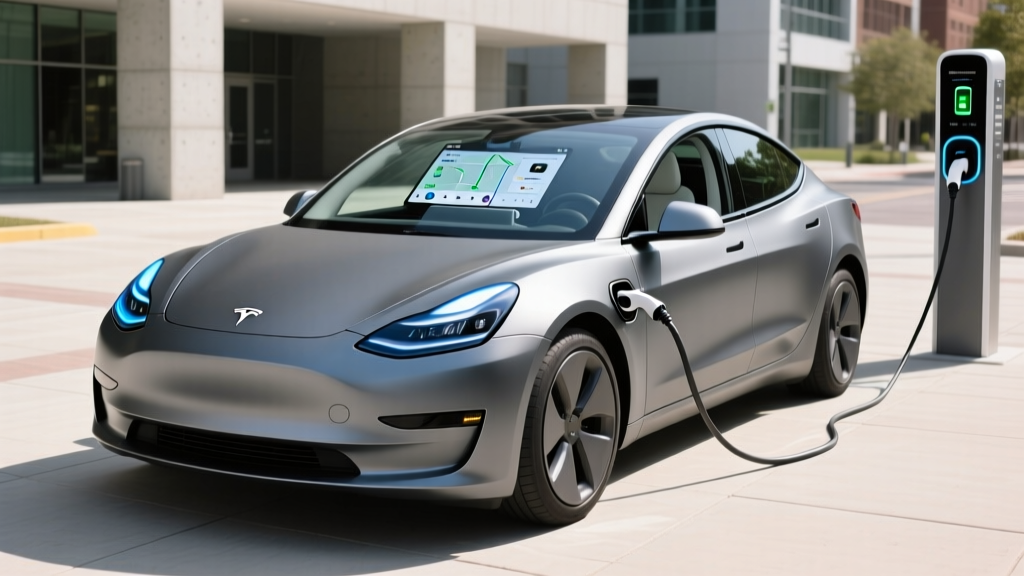
The 2026 Tesla Model 3 Highland carries forward the most significant interior overhaul the nameplate has ever received. At the center of that transformation is the Tesla infotainment upgrade — a 15.4-inch center touchscreen running an AMD Ryzen processor that delivers snappier response times, wireless Apple CarPlay integration (finally added for the 2025 model year and carried into 2026), and a redesigned UI with customizable widget panels. A secondary 8-inch rear touchscreen now controls climate, media, and entertainment for back-seat passengers — a feature previously exclusive to the Model S and Model X.
Beyond the screens, the cabin gets ventilated front seats, ambient lighting, acoustic glass across all windows (not just the front), and a power-folding second row. These aren't minor tweaks — they represent Tesla's response to years of criticism that the Model 3 interior felt stripped-down compared to rivals like the Hyundai Ioniq 6 and BMW i4.
Range, Battery, and Real-World Efficiency
The 2026 Model 3 is offered in three trims, each with distinct battery chemistry and range profiles:
| Trim | Battery (usable kWh) | Chemistry | EPA Range | MPGe (combined) | kWh/100 mi |
|---|---|---|---|---|---|
| Long Range RWD | 75 kWh | NMC | 363 mi | 132 MPGe | 25 |
| Long Range AWD | 75 kWh | NMC | 341 mi | 125 MPGe | 27 |
| Performance AWD | 75 kWh | NMC | 315 mi | 115 MPGe | 29 |
Tesla continues to use NMC (nickel manganese cobalt) chemistry in all 2026 Model 3 trims sold in the U.S., prioritizing energy density over the cycle-life advantage of LFP. For buyers who prioritize long-term degradation resistance and don't mind lower range, the LFP-equipped Standard Range RWD (sold in some global markets) may eventually reach U.S. shores — but as of early 2026, it remains unavailable domestically.
Charging Speed: DC Fast, Level 2, and the Supercharger Advantage
Charging remains one of Tesla's strongest ownership propositions, largely because the Supercharger network — now exceeding 6,500 stations and 70,000 stalls in North America — offers reliability that third-party networks still struggle to match consistently.
| Charging Level | Power / Rate | Time / Miles Added |
|---|---|---|
| Level 1 (120V household) | ~1.4 kW | ~5 miles per hour |
| Level 2 (240V home, 48A) | 11.5 kW | ~44 miles per hour; full charge in ~8 hrs |
| DC Fast Charge (V3 Supercharger) | Peak 250 kW | 10–80% in ~25 minutes |
| DC Fast Charge (V4 Supercharger) | Peak 250 kW (architecture-limited) | 10–80% in ~25 minutes |
The Model 3 Highland's 400-volt architecture caps peak DC charging at 250 kW — respectable but behind the 800V architectures in the Hyundai Ioniq 5/6 and Kia EV6, which can peak at 350 kW and complete a 10–80% charge in roughly 18 minutes. Tesla's charging curve holds strong through 50% SoC before tapering noticeably above 80%, which is standard behavior for NMC cells protecting longevity.
The native NACS (North American Charging Standard) port means no adapter is needed at Superchargers. For CCS-equipped public chargers (Electrify America, EVgo), Tesla provides a NACS-to-CCS adapter — included with the vehicle. Home Level 2 charging at 11.5 kW via a Tesla Wall Connector or any J1772 charger (with adapter) replenishes the battery overnight comfortably.
Performance, Drivetrain, and Cargo
| Trim | Drivetrain | 0–60 mph | Horsepower | Top Speed |
|---|---|---|---|---|
| Long Range RWD | Rear-Wheel Drive | 5.8 sec | 271 hp | 125 mph |
| Long Range AWD | Dual-Motor AWD | 4.2 sec | 346 hp | 125 mph |
| Performance AWD | Dual-Motor AWD | 2.9 sec | 510 hp | 163 mph |
The Performance trim's 2.9-second 0–60 time remains astonishing for a sedan at this price point. The Long Range AWD strikes the best balance for most buyers — dual-motor traction for snow and rain, 4.2-second acceleration, and 341 miles of range.
Cargo and passenger space:
- Total cargo volume: 23 cu ft (rear trunk + front trunk/frunk)
- Frunk: 3.1 cu ft — enough for a charging cable bag and small groceries
- Rear legroom: 35.3 inches — adequate for adults on shorter trips, tight for taller passengers on long drives
- Front headroom: 40.3 inches
- Rear headroom: 37.8 inches (slightly reduced by the sloping roofline)
Compared to the Hyundai Ioniq 6 (which offers similar total cargo but more rear legroom at 36.5 inches), the Model 3 cabin prioritizes sleek design over maximum interior volume. If rear-seat comfort is a priority for your household, test-sit the back row before committing.
Pricing, Trims, and Federal Tax Credit Eligibility
| Trim | Base MSRP | As-Tested (typical config) | Est. After §30D Credit |
|---|---|---|---|
| Long Range RWD | $44,130 | $46,630 (w/ FSD, paint) | ~$36,630 |
| Long Range AWD | $47,130 | $50,130 | ~$39,630 |
| Performance AWD | $54,630 | $58,130 | ~$47,130 |
All 2026 Model 3 trims fall under the IRS §30D MSRP cap of $55,000 for sedans. However, tax credit eligibility is not automatic. Buyers must meet these requirements:
- Income caps: Modified AGI ≤ $150,000 (single), $225,000 (head of household), $300,000 (joint)
- MSRP cap: Vehicle base MSRP ≤ $55,000 for sedans (all Model 3 trims qualify)
- Battery sourcing: Critical minerals and battery components must meet escalating percentage thresholds from U.S. or FTA-partner countries — Tesla's supply chain has largely complied, but verify current-year status at IRS qualified vehicles list
- Point-of-sale transfer: The $7,500 credit can now be transferred to the dealer at purchase, reducing your out-of-pocket cost immediately rather than waiting for tax filing
Prices above exclude the $1,390 destination fee. FSD (Supervised) adds $8,000 as a one-time purchase or $99/month. Premium paint colors (Ultra Red, Deep Blue, Quicksilver) add $1,500–$2,500. Always verify eligibility with a tax professional and the latest IRS guidance before relying on the credit in your budget.
Driver Assistance: Autopilot and FSD Supervised
Tesla Autopilot and Full Self-Driving (Supervised) are driver-assistance systems, not autonomous driving. The driver must remain fully engaged — hands on or near the wheel, eyes on the road — at all times. Tesla's cabin camera monitors attention. This is fundamentally different from Level 4 robotaxi services like Waymo, which operate without a human driver in geofenced areas.
Standard Autopilot includes Traffic-Aware Cruise Control and Autosteer (lane centering on marked highways). The optional FSD (Supervised) package adds automatic lane changes, Navigate on Autopilot (highway on/off-ramp routing), traffic light and stop sign recognition, and Smart Summon (low-speed parking lot navigation to the driver).
- Drive you while you sleep, text, or look away
- Handle all construction zones, unmapped roads, or severe weather reliably
- Replace driver judgment — disengagements are still required regularly
- Make the vehicle "self-driving" in any legal or technical sense
Warranty and Long-Term Ownership
Tesla's warranty structure for the 2026 Model 3:
- Basic vehicle: 4 years / 50,000 miles
- Battery & drive unit: 8 years / 120,000 miles (Long Range & Performance) with a minimum 70% capacity retention guarantee
- Roadside assistance: 4 years / 50,000 miles
The 70% retention threshold over 8 years is industry-standard (matching Hyundai, Ford, and GM). Real-world data from Tesla's fleet suggests NMC packs in the Model 3 typically retain 85–90% capacity at 100,000 miles with normal charging habits — avoiding repeated 100% charges and frequent DC fast charging extends longevity. Tesla's over-the-air update model means software-dependent features (including the infotainment system, driver assists, and efficiency optimizations) can improve post-purchase, though hardware limitations remain fixed.
Pros and Cons
Pros
- Best-in-class EPA range (363 mi Long Range RWD)
- Supercharger network reliability unmatched by third-party networks
- Infotainment upgrade: rear screen, ventilated seats, CarPlay
- Over-the-air updates continuously improve the vehicle
- Strong resale value relative to EV segment average
- Performance trim: supercar-level 2.9s 0–60 at sedan pricing
Cons
- No physical buttons — all climate/media via touchscreen
- Rear seat legroom tight for tall adults (35.3 in)
- 400V architecture limits DC charge speed vs 800V rivals
- FSD (Supervised) costs $8,000 extra and remains Level 2
- Build quality inconsistencies still reported by some owners
- No LFP battery option in U.S. market (2026)
Who Should Buy the 2026 Tesla Model 3?
Choose the Long Range AWD if: You need all-weather traction, carry rear-seat passengers regularly, and want the best balance of range, performance, and price.
Choose the Performance if: Acceleration thrills matter, you don't mind sacrificing 50+ miles of range, and you want the most engaging EV sedan under $60,000.
Look elsewhere if: You need maximum rear-seat space (consider the Ioniq 6 or BMW i4), want 800V ultra-fast charging (Ioniq 5/EV6), or prefer physical controls and a traditional instrument cluster.
Frequently Asked Questions
What is the real-world range of the 2026 Tesla Model 3?
The Long Range RWD achieves an EPA-estimated 363 miles, but expect 300–320 miles in real-world highway driving and 250–280 miles in freezing temperatures. The AWD and Performance trims deliver proportionally less.
How fast does the Model 3 charge at home and on the road?
At home on a 240V Level 2 charger (48A), the Model 3 adds roughly 44 miles of range per hour, fully charging in about 8 hours. On a V3 or V4 Supercharger, it peaks at 250 kW and charges from 10–80% in approximately 25 minutes.
Does the 2026 Model 3 qualify for the $7,500 federal EV tax credit?
All trims fall under the $55,000 MSRP cap for sedans. Eligibility depends on your income (≤$150K single / $300K joint), battery sourcing compliance, and purchasing new. Verify on the IRS qualified vehicle list and consult a tax professional.
Is the Tesla infotainment upgrade worth it over the pre-Highland Model 3?
The Highland infotainment overhaul — AMD Ryzen chip, rear touchscreen, ventilated seats, wireless CarPlay, acoustic glass — is a substantial improvement. If you're comparing a used pre-2024 Model 3 to a new Highland, the cabin experience gap is significant enough to justify the premium for most buyers.
How does the Model 3 compare to the Hyundai Ioniq 6 and BMW i4?
The Ioniq 6 offers 800V charging (18-min 10–80%), more rear legroom, and a lower starting price, but lacks Supercharger access and Tesla's software ecosystem. The BMW i4 provides a more traditional luxury interior with physical controls and a head-up display, but sacrifices range (EPA ~307 mi) and costs more. The Model 3 wins on range, charging network, and OTA updates; rivals win on cabin materials, charging architecture, and rear-seat comfort.
What is the battery warranty on the 2026 Model 3?
Tesla covers the battery and drive unit for 8 years or 120,000 miles (whichever comes first) with a guaranteed minimum 70% capacity retention. This applies to the Long Range and Performance trims.