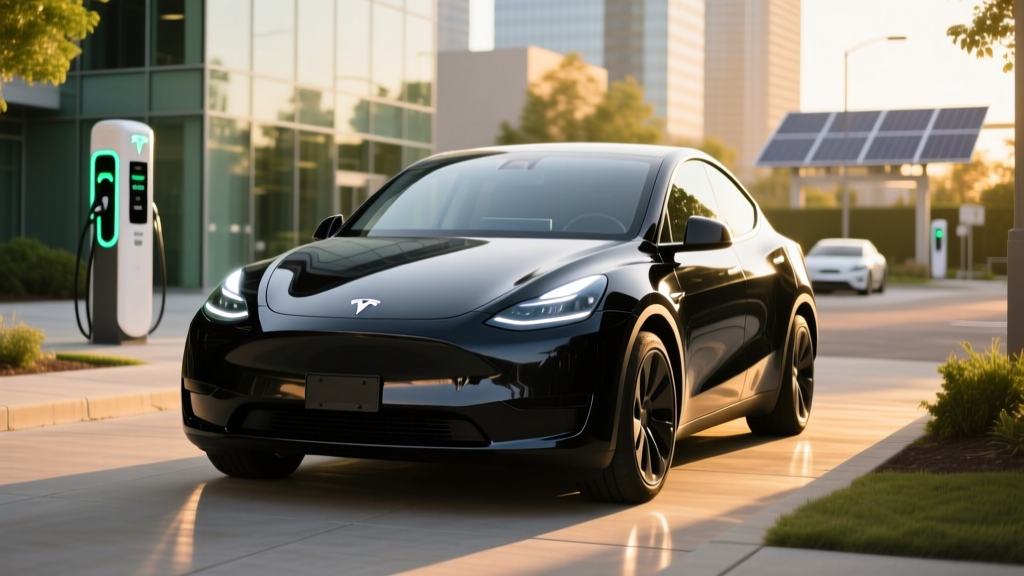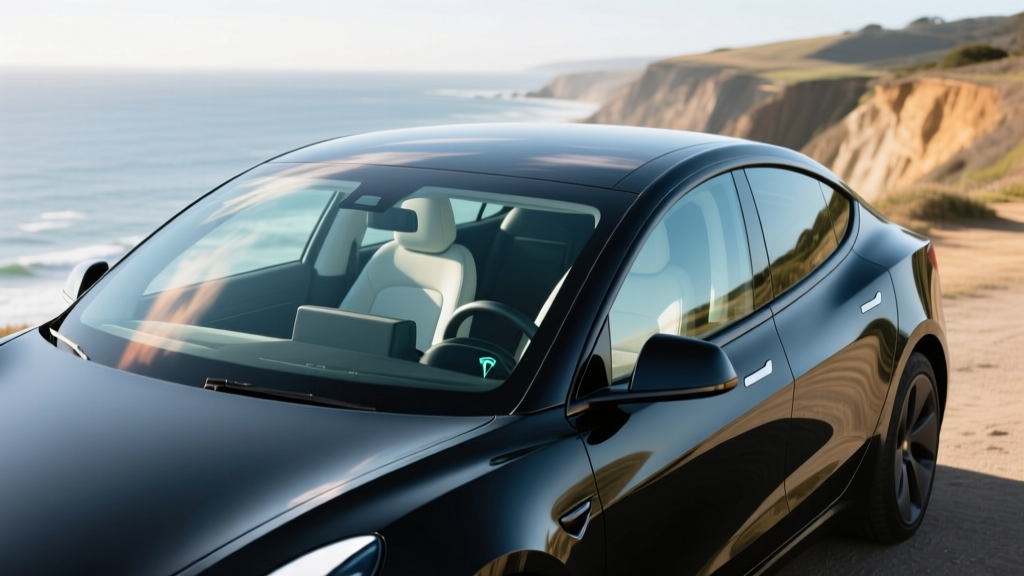
The panoramic glass roof on the Tesla Model 3 "Highland" refresh is one of the most debated design choices in the EV segment. Buyers search for "Tesla glass" answers because the roof dominates the cabin experience: it floods the interior with light, but raises legitimate questions about solar heat gain, UV protection, glare, and whether the fixed glass panel subtly saps range through increased HVAC load. This review examines the 2026 Tesla Model 3 Long Range AWD through the lens of its glass architecture, while delivering the hard numbers — EPA range, charging speeds, pricing, and tax-credit eligibility — that matter for a purchase decision.
The Glass Roof: Engineering, UV Data, and Real-World Heat
The Model 3 Highland uses a single-piece laminated glass roof panel that Tesla rates at blocking over 99% of UV radiation. Independent testing by automotive glass labs has confirmed UV-A and UV-B rejection rates above 98%, comparable to high-end ceramic window tint. However, UV protection and infrared (IR) heat rejection are different metrics. The glass roof absorbs and blocks a significant portion of IR, but in direct summer sun with ambient temperatures above 90°F, the interior ceiling surface can still radiate noticeable warmth to occupants below.
The rear glass on the Highland Model 3 was redesigned with a larger single piece that wraps from the roof to the trunk line, improving visibility but increasing the total glass surface area. Tesla uses acoustic laminated glass on the front side windows (reducing wind noise by roughly 2-3 dB at highway speeds versus the pre-refresh Model 3) but the rear side windows and rear glass are tempered, not laminated. This matters for sound insulation and for occupants sensitive to radiant heat from side glass.
2026 Tesla Model 3 Long Range AWD: Full Spec Table
| Specification | 2026 Model 3 Long Range AWD |
|---|---|
| EPA Estimated Range | 363 miles |
| Battery Capacity (Usable) | ~75 kWh (NMC chemistry, LG M50 cells) |
| Battery Warranty | 8 years / 120,000 miles (70% minimum retention) |
| Drivetrain | Dual-Motor AWD |
| Horsepower | 384 hp combined |
| 0-60 mph | 4.2 seconds |
| Top Speed | 125 mph |
| EPA Efficiency | 134 MPGe combined (25 kWh/100 mi) |
| Max DC Fast Charge Rate | 250 kW peak (CCS via adapter or NACS native) |
| 10-80% DC Fast Charge Time | ~25 minutes (at V3 Supercharger) |
| Level 2 Home Charge Rate | 11.5 kW (44 miles of range per hour) |
| Cargo Volume (Trunk + Frunk) | 23.1 cu ft (trunk) + 3.1 cu ft (frunk) = 26.2 cu ft total |
| Rear Legroom | 35.2 inches |
| Base MSRP (Long Range AWD) | $47,740 (incl. $1,390 destination) |
| Federal Tax Credit (§30D) | $7,500 (point-of-sale transfer eligible) |
| Effective Price After Credit | ~$40,240 |
Sources: EPA fueleconomy.gov, Tesla Model 3 design page.
Real-World Range: What the Glass Roof and Climate Actually Cost You
The EPA rates the 2026 Model 3 Long Range AWD at 363 miles. Real-world range depends heavily on speed, temperature, and HVAC load — and the glass roof plays a small but measurable role in hot climates.
- City / moderate climate (65-75°F): 340-365 miles — close to EPA, regen braking maximizes efficiency
- Highway at 70 mph (75°F): 290-320 miles — aerodynamic drag dominates at speed
- Highway at 70 mph (30°F, winter): 230-270 miles — cold battery resistance + cabin heating + seat heaters draw significant energy
- Extreme heat (100°F+, HVAC max cooling): 300-330 miles — glass roof IR absorption adds ~2-5% cooling load vs. metal roof
The glass roof's thermal contribution is real but modest relative to other range factors. Speed and ambient temperature each have 5-10x greater impact on range than the roof glass. The Model 3's heat pump (standard on all Highland trims) efficiently manages cabin heating in cold weather, recovering waste heat from the drivetrain to reduce the range penalty versus older resistive-heater EVs.
Charging Speed: DC Fast, Level 2, and the Charge Curve Reality
Tesla's Supercharger network remains the gold standard for DC fast charging reliability. The Model 3 Long Range AWD peaks at 250 kW on V3 Superchargers, but as with all EVs, peak rate is not sustained rate.
| Charging Method | Max Power (kW) | Rate / Time | Notes |
|---|---|---|---|
| Tesla V3 Supercharger (DC) | 250 kW peak | 10-80% in ~25 min; adds ~175 mi in 15 min | Rate tapers above 60% SoC; precondition battery via nav routing |
| Non-Tesla DC Fast (CCS adapter) | Up to 250 kW | 10-80% in ~25-30 min | Varies by station; Electrify America, EVgo compatible |
| Level 2 Home (Tesla Wall Connector) | 11.5 kW (48A) | ~44 mi/hr; full charge in ~8 hours | Requires 60A circuit; most practical daily charging method |
| Level 2 Home (standard 240V/32A outlet) | 7.7 kW | ~30 mi/hr; full charge in ~11 hours | NEMA 14-50 outlet; common installation |
| Level 1 (120V household) | ~1.4 kW | ~3-5 mi/hr | Emergency/trickle only; impractical for daily use |
Charge curve detail: The Model 3 LR sustains roughly 200-250 kW between 10-40% SoC, then tapers to ~150 kW at 50%, ~100 kW at 65%, and drops sharply above 80% to protect battery longevity. This is why Tesla (and every experienced EV owner) recommends charging to 80% for daily use and only charging to 100% when you need full range for a trip. The final 80-100% can add 20+ minutes at the charger for only ~70 additional miles.
Home charging cost: At the US average electricity rate of $0.16/kWh (EIA data), a full 75 kWh charge costs approximately $12.00 — equivalent to $0.033 per mile. Compare this to a 30 MPG gas car at $3.30/gallon = $0.11/mile. Home charging is roughly one-third the per-mile fuel cost of gasoline.
Performance, Ride Quality, and Highland Refinements
The Highland refresh transformed the Model 3's driving dynamics. Tesla added frequency-selective dampers, improved sound deadening (the laminated front glass and acoustic seals reduce cabin noise by a claimed 30% over the pre-2024 Model 3), and retuned the steering. The result is a sedan that finally matches its price point in ride comfort.
The dual-motor AWD powertrain delivers 384 hp and a 4.2-second 0-60 mph time. This is brisk but not extreme — Tesla reserves the sub-3-second sprints for the Model 3 Performance (3.1 seconds, 510 hp). For daily driving, the Long Range's acceleration is more than adequate, and the all-wheel-drive system provides confident traction in rain and light snow.
The glass roof contributes to a sense of airiness that competitors like the BMW i4 and Hyundai Ioniq 6 can't match. Rear-seat passengers benefit most: the lack of a roof cross-member and the sweeping rear glass create headroom and visibility that feel class-above the car's compact exterior dimensions. However, the fixed glass means no option for ventilation — you cannot crack the roof for airflow as you could with a traditional tilt-slide sunroof.
Pricing, Trim Levels, and Federal Tax Credit Eligibility
| Trim | MSRP (incl. destination) | EPA Range | Drivetrain | §30D Credit Eligible? |
|---|---|---|---|---|
| Model 3 RWD | $38,990 | 272 mi | Rear-Wheel Drive | Yes — $7,500 |
| Model 3 Long Range AWD | $47,740 | 363 mi | Dual-Motor AWD | Yes — $7,500 |
| Model 3 Performance | $54,990 | 315 mi | Dual-Motor AWD | Yes — $7,500 |
Federal tax credit rules (IRS §30D, 2026): The Model 3 qualifies for the full $7,500 credit, but buyer eligibility is not universal. Per IRS guidelines, the following caps apply:
- MSRP cap: Sedans must be under $55,000 (all Model 3 trims qualify)
- Buyer income cap (modified AGI): $150,000 single / $225,000 head of household / $300,000 joint
- Battery sourcing: Must meet critical minerals and battery component requirements (Tesla's US-assembled packs currently satisfy this)
- Point-of-sale transfer: As of 2024+, you can transfer the credit to the dealer at purchase, reducing your out-of-pocket cost immediately rather than waiting for a tax refund
Important: Tax credit eligibility depends on your personal tax situation and current-year IRS rules, which have changed multiple times since 2023. Consult a tax professional and verify current sourcing requirements on irs.gov before relying on the credit in your purchase budget.
Driver Assistance: Autopilot and FSD (Supervised) — SAE Level 2
Tesla Autopilot and Full Self-Driving (Supervised) are not self-driving systems. The driver must remain fully attentive, keep hands on the steering wheel, and be prepared to take over at any moment. Tesla's own documentation and NHTSA guidance classify these as Level 2 driver-assistance features. Only Level 4 systems (like Waymo's driverless robotaxi service) operate without a human driver.
The Model 3 Highland ships with Tesla's basic Autopilot (traffic-aware cruise control + lane centering) at no additional cost. The FSD (Supervised) package adds automated lane changes, traffic light and stop sign recognition, and navigation-guided on-ramp-to-off-ramp highway driving. As of 2026, FSD costs $8,000 as a one-time purchase or $99/month.
Real-world FSD performance is impressive on well-marked highways but inconsistent in construction zones, unmapped areas, and heavy rain. The Highland's improved camera suite (removing ultrasonic sensors in favor of Tesla Vision) has matured since the 2022 transition, but parking assist remains less reliable than ultrasonic-based systems for tight-space maneuvering. For buyers who primarily want adaptive cruise and lane-keeping, the included Autopilot is sufficient; FSD is a personal-preference upgrade, not a necessity.
Pros, Cons, and Who the Model 3 Highland Suits Best
Pros
- 363-mile EPA range (Long Range AWD) — among the best in its class
- 250 kW DC fast charging with Supercharger network access
- Panoramic glass roof creates unmatched cabin openness
- Highland suspension and NVH improvements close the luxury gap
- $7,500 federal tax credit with point-of-sale transfer
- Class-leading software, OTA updates, and app integration
- 25 kWh/100mi efficiency — among the most efficient AWD sedans
Cons
- Glass roof transmits heat in extreme sun; aftermarket tint often needed
- No physical buttons for climate/media — all touchscreen-controlled
- Rear legroom (35.2") is tight for tall passengers vs. midsize sedans
- Turn signals on steering wheel (no stalk) takes adjustment
- FSD ($8,000) remains Level 2 despite the name — expensive for what it delivers
- No heads-up display (HUD) in a car at this price point
- Insurance premiums 15-25% higher than comparable gas sedans
Best for: Tech-forward commuters and couples who prioritize efficiency, charging infrastructure, and a minimalist interior. The 363-mile range and Supercharger access make it a viable road-trip car. The glass roof appeals to those who value natural light and a premium feel.
Not ideal for: Families needing spacious rear seats (consider the Model Y), buyers in extreme-heat climates who are sensitive to cabin radiant heat and don't want to add aftermarket tint, or anyone who prefers physical controls over touchscreen operation.
Frequently Asked Questions
Does the Tesla Model 3 glass roof block UV rays effectively?
Yes. Tesla's laminated glass roof blocks over 99% of UV-A and UV-B radiation, confirmed by independent testing. This protects occupants from sunburn and reduces interior material fading. However, UV blocking is different from infrared heat rejection — the roof still absorbs and re-radiates some heat in direct sun.
Should I tint the Tesla Model 3 glass roof?
In Sun Belt states (Arizona, Texas, Florida, Southern California), most owners benefit from aftermarket ceramic tint on the roof panel. A quality ceramic tint (3M Crystalline, XPEL Prime XR) adds $200-$400 installed and reduces IR heat transmission by 40-60%. In northern climates with moderate summers, the factory glass is typically sufficient without additional tint.
What is the real-world range of the 2026 Model 3 Long Range?
Expect 290-320 miles at highway speeds (70 mph) in moderate temperatures, 340-365 miles in city driving, and 230-270 miles in winter highway conditions (below 35°F). The glass roof's thermal contribution reduces range by roughly 2-5% in extreme heat compared to an insulated metal roof — a minor factor relative to speed and temperature.
How fast does the Model 3 charge at home and on road trips?
At home on a Level 2 Tesla Wall Connector (11.5 kW), the Model 3 adds about 44 miles of range per hour, fully charging overnight in ~8 hours. On Tesla V3 Superchargers, it peaks at 250 kW and charges from 10-80% in approximately 25 minutes. The charge rate tapers significantly above 80% SoC to protect battery health.
Does the 2026 Tesla Model 3 qualify for the $7,500 federal tax credit?
Yes, all Model 3 trims currently qualify for the full $7,500 §30D credit, available as a point-of-sale transfer. However, buyer eligibility requires meeting income caps ($150K single / $300K joint) and the vehicle must satisfy battery-sourcing requirements. Verify current rules on irs.gov and consult a tax professional before finalizing your purchase budget.
Is the Tesla Model 3 worth buying over the Hyundai Ioniq 6 or BMW i4?
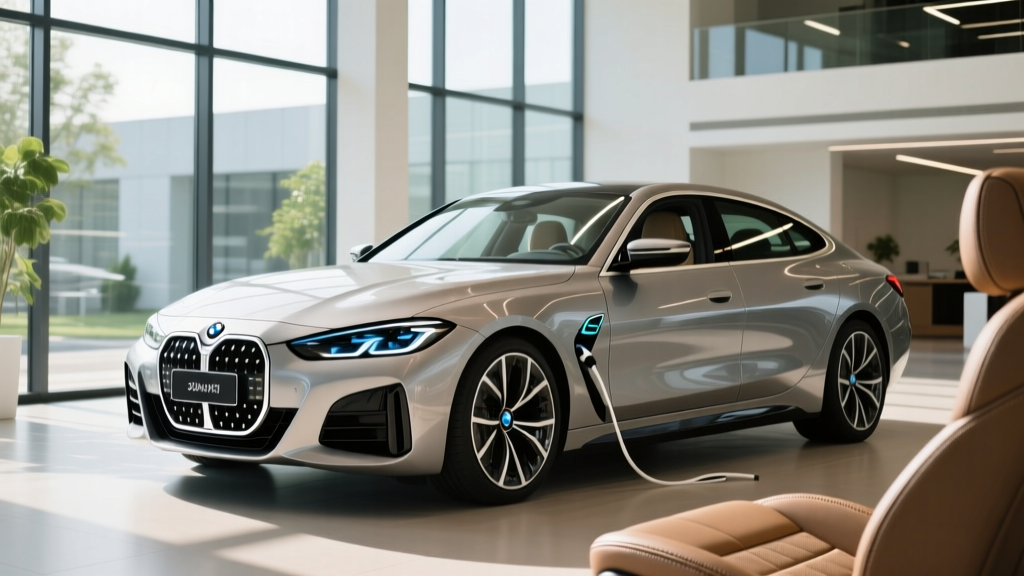
The Model 3 Long Range wins on range (363 mi vs. Ioniq 6's 361 mi and BMW i4 eDrive40's 307 mi), charging infrastructure (Supercharger network), and software. The Ioniq 6 offers a quieter cabin and physical buttons; the BMW i4 delivers superior build quality and a more traditional luxury interior. If charging network access and tech integration are top priorities, the Model 3 is the strongest pick. If cabin refinement and physical controls matter more, test-drive the Ioniq 6 and i4 before deciding.
Does the glass roof affect the Model 3's structural rigidity or safety?
No. The laminated glass roof panel is bonded to the body structure and contributes to torsional rigidity. The Model 3 Highland earned a 5-Star Overall Safety Rating from NHTSA and a Top Safety Pick+ designation from IIHS. The glass roof does not compromise crash performance.